Custom Articulate Storyline Development for Compliance and Safety Training

Compliance training failures rarely happen because companies don’t care—they happen because generic courses don’t change real-world behavior. Custom Articulate Storyline courses transform regulations into realistic, job-specific simulations that employees actually remember , making them a critical part of custom elearning development strategies.
If you are planning compliance or safety training, speak with IKHYA eLearning specialists at info@ikhya.com to design Storyline courses that reduce risk, improve audit readiness, and ensure global compliance.
Why Is Articulate Storyline Ideal for Compliance and Safety Training?
Articulate Storyline is ideal for compliance and safety training because it allows developers to create realistic simulations, scenario-based assessments, and decision-driven interactions that mirror workplace risks. It supports SCORM, xAPI, and accessibility standards, ensuring training meets OSHA, HSE, and ISO compliance while tracking learner performance for audit evidence.
Organizations implementing LMS-compatible elearning solutions can ensure seamless compliance tracking and reporting across global training environments.
Compliance training is not just about presenting information. Regulators in the United States, United Kingdom, Australia, UAE, and other countries require organizations to prove that employees understand and can apply safety procedures. This requires measurable learning outcomes, scenario-based validation, and trackable completion records—all of which Articulate Storyline supports at an advanced level.
Key Capabilities That Make Storyline Effective for Compliance Training
1. Scenario-Based Learning with Realistic Consequences
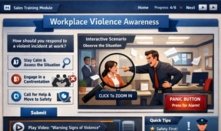
Compliance failures often occur due to poor decision-making, not lack of knowledge. Storyline enables branching scenarios where learners make decisions and see consequences.
This level of interactivity is achieved through advanced articulate storyline development tailored for compliance and safety training environments.
Example: OSHA Lockout-Tagout Training
- Incorrect choice → simulated injury consequence
- Correct choice → safe procedure validation
- LMS records decision path for compliance evidence
This approach improves retention by up to 60% compared to passive slide-based training.
Organizations in industrial environments can implement manufacturing training solutions to standardize safety procedures and reduce compliance risks.
2. Simulation of High-Risk Situations Without Real-World Danger
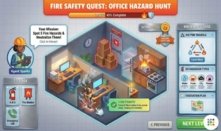
Storyline allows organizations to simulate hazardous environments safely.
This approach is widely used in simulation-based training programs to replicate real-world risks without exposing employees to actual danger.
Examples:
| Industry | Simulation Example | Compliance Standard |
|---|---|---|
| Oil & Gas (UAE) | Confined space entry simulation | ADNOC HSE |
| Manufacturing (USA) | Machine guarding procedure | OSHA 1910 |
| Construction (UK) | Working at heights risk assessment | HSE UK |
| Mining (Australia) | Equipment safety inspection | Safe Work Australia |
These simulations prepare employees for real situations without exposure to actual danger.
3. Full Compliance Tracking with LMS Integration
Storyline supports all major compliance tracking standards:
- SCORM 1.2 and SCORM 2004
- xAPI (Tin Can API)
- AICC
- cmi5
This allows organizations to track:
- Completion status
- Pass/fail results
- Assessment scores
- Time spent
- Decision paths
This data is critical during compliance audits.
4. Accessibility Compliance (WCAG 2.1 and Section 508)
Compliance training must be accessible to all employees, including those with disabilities.
A healthcare compliance training case study demonstrates how accessible eLearning improves training effectiveness while meeting regulatory requirements.
Storyline supports:
- Screen readers
- Keyboard navigation
- Closed captions
- Accessible player controls
- Alternative text for visuals
This ensures compliance with:
- ADA (USA)
- Equality Act (UK)
- Accessibility standards in Australia and UAE
5. Rapid Updates When Regulations Change
Compliance regulations change frequently. Using rapid elearning development approaches allows organizations to quickly update compliance training without disrupting operations. Custom Storyline courses allow quick updates without rebuilding the entire course.
Examples of frequent regulatory updates:
- OSHA safety requirements
- GDPR compliance training
- Workplace harassment laws
- Fire safety regulations
- Environmental compliance standards
Storyline allows modular updates to specific sections.
6. Realistic Software and Equipment Simulations
Storyline can replicate real systems used in compliance workflows.
Examples:
- Safety reporting software simulations
- Incident reporting systems
- Equipment inspection checklists
- Compliance audit procedures
Employees practice real tasks before performing them live.
7. Multimedia-Rich Learning Improves Retention
Storyline supports:
- Video-based training
- Interactive diagrams
- Animated procedures
- Voice narration
- Knowledge checks
Research shows interactive training improves retention compared to passive learning formats.
8. Mobile-Compatible Training for Field Workers
Many compliance-sensitive industries have mobile workforces.
Storyline courses work on:
- Tablets
- Mobile phones
- Desktop computers
- LMS mobile apps
This is critical for industries like construction, oil and gas, and logistics.
Organizations deploying mobile learning solutions can ensure compliance training reaches field workers anytime, anywhere.
Real-World Compliance Training Example: Global Manufacturing Company
Problem:
A manufacturing company operating in the USA, UK, and UAE experienced repeated OSHA and HSE safety violations due to ineffective training.
Solution using Storyline:
- Created equipment-specific safety simulations
- Added decision-based hazard identification scenarios
- Integrated LMS tracking for audit records
Results:
- 47% reduction in safety incidents
- 100% audit compliance documentation
- Faster employee certification process
Why Generic Compliance Courses Fail
Generic courses fail because they lack relevance to actual workplace risks.
Common problems:
- No workplace-specific scenarios
- No simulation of real equipment
- No decision-making practice
- Low engagement
- Poor retention
Custom Storyline courses solve these problems.
How Does Custom Articulate Storyline Development Improve Compliance Outcomes?
Custom Articulate Storyline development improves compliance outcomes by aligning training with actual workplace hazards, regulatory standards, and job roles. It uses realistic scenarios, role-specific simulations, and measurable assessments that prove employee competency, reduce violations, and provide audit-ready records required by regulators like OSHA, HSE, and Safe Work Australia.
Generic compliance training often satisfies minimum requirements but fails to change behavior.
Organizations modernizing legacy content can leverage PPT to elearning conversion to transform static materials into interactive compliance training experiences.
Custom Storyline development focuses on operational risk reduction, not just course completion. This distinction is critical for industries where compliance violations can result in fines, shutdowns, injuries, or criminal liability.
Role-Specific Training Reduces Real Operational Risk
Custom Storyline courses target specific job roles instead of delivering generic information.
Example: Forklift Operator vs Warehouse Supervisor
Generic Training (Ineffective):
- General safety guidelines
- No equipment-specific simulation
- No role-based assessment
Custom Storyline Training (Effective):
Forklift Operator module:
- Pre-operation inspection simulation
- Load balancing decision scenarios
- Hazard identification in warehouse environment
Supervisor module:
- Incident reporting simulation
- Compliance documentation workflow
- Risk escalation decision training
Result: Employees learn what applies directly to their job.
Scenario-Based Assessments Provide Proof of Competency
Regulators increasingly require proof that employees can apply safety knowledge—not just complete training.
Storyline enables:
- Decision-based assessments
- Branching scenarios
- Failure-based learning paths
- Competency validation
Example: Lockout-Tagout Compliance Scenario
| Learner Action | System Response | Compliance Evidence |
|---|---|---|
| Incorrect lock procedure | Simulated equipment restart injury | Recorded failure event |
| Correct isolation procedure | Safe completion validation | Recorded competency pass |
This creates measurable evidence during audits.
Interactive Training Improves Knowledge Retention and Behavior Change
Interactive Storyline training improves retention because learners actively participate instead of passively reading slides.
Retention comparison:
| Training Method | Average Retention |
|---|---|
| Slide-based compliance training | 20–30% |
| Video-only training | 30–40% |
| Interactive Storyline training | 60–80% |
This directly reduces safety violations.
LMS and xAPI Tracking Provide Audit-Ready Records
Compliance audits require verifiable training records.
Storyline enables tracking of:
- Course completion
- Assessment scores
- Time spent
- Scenario decisions
- Attempt history
This data is stored in LMS systems such as:
- Cornerstone
- SAP SuccessFactors
- Docebo
- Moodle
Auditors can access detailed proof of training effectiveness.
Custom Training Aligns with Actual Equipment and Procedures
Every workplace uses different equipment, workflows, and safety procedures.
Custom Storyline courses can simulate:
- Actual machinery used in the company
- Real workplace environments
- Internal compliance procedures
- Company-specific safety policies
Example: Oil & Gas Company in UAE
Custom course included:
- ADNOC-specific permit-to-work system simulation
- Confined space entry procedures
- Gas detection protocol scenarios
This ensures regulatory and operational compliance.
Faster Employee Certification and Onboarding
Custom Storyline compliance training accelerates onboarding.
Benefits:
- Employees reach competency faster
- Reduced supervisor training time
- Standardized certification process
- Consistent training across global locations
Example results from global logistics company:
- Reduced certification time from 5 days to 2 days
- Reduced safety violations by 39%
Global Compliance Requirements: USA, UK, Australia, and UAE Comparison
Compliance training requirements vary by country, but all major regulators require documented training, competency validation, and audit-ready records. OSHA (USA), HSE (UK), Safe Work Australia, and UAE authorities mandate structured safety training, risk awareness, and measurable employee competency to reduce workplace incidents and legal liability.
Global companies must design training that satisfies multiple regulatory frameworks simultaneously. Custom Storyline development makes this possible through modular course structures.
United States: OSHA Compliance Requirements
OSHA requires employers to provide training that ensures employees understand workplace hazards and safety procedures.
Key OSHA standards requiring training:
| OSHA Standard | Training Requirement |
|---|---|
| OSHA 1910 | General industry safety |
| OSHA 1926 | Construction safety |
| Hazard Communication | Chemical safety |
| Lockout-Tagout | Equipment isolation |
| Fall Protection | Working at heights |
Training must include:
- Hazard identification
- Safe operating procedures
- Emergency response
Storyline supports simulation of these scenarios.
United Kingdom: HSE Compliance Requirements
The UK Health and Safety Executive requires employers to provide “adequate information, instruction, and training.”
Examples:
- Working at Height Regulations
- COSHH (Chemical safety)
- Fire safety training
- Risk assessment training
Employers must prove competency—not just attendance.
Australia: Safe Work Australia Compliance
Australian regulations require documented safety training aligned with WHS (Work Health and Safety) laws.
Training includes:
- Equipment safety training
- Hazard identification
- Incident reporting procedures
- Risk management training
Training must be documented and verifiable.
UAE: ADNOC, Dubai Municipality, and MOHRE Requirements
UAE organizations must comply with:
- ADNOC HSE standards (Oil & Gas)
- Dubai Municipality safety regulations
- MOHRE workplace safety requirements
Training must include:
- Equipment safety procedures
- Emergency response training
- Risk awareness training
Storyline enables compliance across these standards.
What Is the Custom Articulate Storyline Development Process for Compliance Training?
The custom Articulate Storyline development process involves analyzing regulatory requirements, identifying workplace risks, designing realistic scenarios, developing interactive simulations, integrating LMS tracking, and validating compliance accuracy. This structured workflow ensures training meets OSHA, HSE, WHS, and UAE safety standards while improving employee competency and audit readiness.
Custom compliance training is not just course creation—it is a controlled instructional engineering process that converts regulations into measurable workplace behaviors.
Phase 1: Regulatory and Risk Analysis
This phase identifies exactly what employees must learn to remain compliant.
Key Activities
- Review applicable regulations (OSHA, HSE, WHS, ADNOC, ISO)
- Analyze workplace hazards
- Identify high-risk job roles
- Review incident and audit reports
- Define measurable learning objectives
Example: Manufacturing Compliance Analysis (USA)
Identified risks:
- Machine guarding violations
- Lockout-Tagout failures
- Improper PPE usage
Defined learning objectives:
- Perform proper lockout procedure
- Identify unsafe machine conditions
- Select correct PPE for specific tasks
This ensures training directly addresses compliance gaps.
Phase 2: Instructional Design and Scenario Architecture
Instructional designers convert regulations into realistic learning scenarios.
Strong instructional design services ensure compliance training is structured around measurable learning outcomes and real-world application.
Deliverables
- Detailed storyboard
- Scenario decision trees
- Assessment structure
- Visual interface design
Example Scenario Structure: Chemical Spill Response
| Step | Learner Decision | Outcome |
|---|---|---|
| Identify spill type | Correct/Incorrect selection | Determines next action |
| Select PPE | Proper or improper equipment | Affects safety outcome |
| Initiate containment | Correct or delayed response | Shows risk consequence |
This creates measurable competency validation.
Phase 3: Visual and Interaction Development in Articulate Storyline
This phase transforms instructional design into interactive training.
Storyline development includes:
- Interactive simulations
- Branching scenarios
- Software simulations
- Knowledge assessments
- Audio narration
- Interactive diagrams
Technical Elements Built in Storyline
- Variables to track learner decisions
- Triggers to control scenario flow
- Layers for feedback and consequences
- Motion paths for realistic interactions
- Interactive objects and controls
This enables realistic training experiences.
Phase 4: Compliance Validation and SME Review
Subject Matter Experts (SMEs) validate training accuracy.
SMEs include:
- Safety officers
- Compliance managers
- Legal teams
- Equipment specialists
Validation ensures:
- Regulatory accuracy
- Technical correctness
- Operational realism
This is critical for audit defensibility.
Phase 5: LMS Integration and Compliance Tracking Setup
Training must integrate with LMS systems to track compliance.
Supported Standards
| Standard | Purpose |
|---|---|
| SCORM 1.2 | Basic compliance tracking |
| SCORM 2004 | Advanced tracking and sequencing |
| xAPI | Detailed learner behavior tracking |
| cmi5 | Modern LMS compatibility |
LMS Tracking Includes
- Completion status
- Assessment results
- Time spent
- Scenario decisions
- Certification records
This provides audit evidence.
Phase 6: Testing, Deployment, and Compliance Documentation
Before deployment, courses undergo strict testing.
Testing includes:
- LMS compatibility testing
- Mobile responsiveness testing
- Accessibility testing (WCAG 2.1)
- Scenario functionality validation
Final deliverables include:
- LMS-ready course package
- Compliance documentation
- Source files for future updates
What Technical Features of Articulate Storyline Support Compliance Tracking and Audit Requirements?
Articulate Storyline supports SCORM, xAPI, and cmi5 standards, enabling organizations to track completion, assessment scores, time spent, and learner decisions. This provides verifiable compliance records required by OSHA, HSE, ISO, and other regulators. These tracking capabilities ensure organizations can prove employee competency during audits and investigations.
Compliance training must produce verifiable records—not just deliver content.
Modern compliance training solutions focus on measurable outcomes, audit readiness, and risk reduction across industries.
SCORM Compliance Tracking
SCORM is the global standard for compliance training tracking.
SCORM tracks:
- Completion status
- Pass/fail status
- Assessment scores
- Time spent
Example audit report:
| Employee | Course | Score | Completion |
|---|---|---|---|
| John Smith | Lockout Safety | 92% | Completed |
| Ahmed Khan | Fire Safety | 88% | Completed |
This proves training completion.
xAPI: Advanced Compliance Behavior Tracking
xAPI tracks detailed learner actions beyond basic completion.
xAPI tracks:
- Specific decisions made
- Errors and corrections
- Time spent on each activity
- Simulation performance
Example xAPI record:
“Employee selected incorrect PPE before correcting to proper equipment.”
This provides deeper audit evidence.
Assessment and Certification Tracking
Storyline enables automated certification workflows.
Features include:
- Pass/fail scoring
- Certification generation
- Expiry tracking
- Recertification reminders
This ensures ongoing compliance.
Accessibility Compliance Tracking (WCAG and Section 508)
Accessibility compliance is legally required in many countries.
Storyline supports:
- Screen reader compatibility
- Keyboard navigation
- Closed captions
- Accessible interaction controls
This ensures training meets accessibility laws globally.
How Much Does Custom Articulate Storyline Compliance Training Cost?
Custom Articulate Storyline compliance training typically costs between $3,000 and $15,000 per finished hour, depending on interactivity, simulations, regulatory complexity, and localization requirements. Highly interactive safety simulations with branching scenarios, equipment replication, and xAPI tracking cost more but significantly reduce compliance violations, audit risks, and incident-related expenses.
Compliance training cost should be evaluated against regulatory fines, incident costs, and operational risk—not just development expense.
Cost Breakdown by Interactivity Level
| Level | Description | Typical Cost per Hour | Best Use Case |
|---|---|---|---|
| Basic | Slides, narration, simple quiz | $3,000–$5,000 | Policy training |
| Intermediate | Interactions, knowledge checks | $5,000–$8,000 | Compliance awareness |
| Advanced | Scenario-based training | $8,000–$12,000 | Safety and operational training |
| Simulation-Based | Equipment and software simulations | $10,000–$15,000+ | High-risk industries |
Most compliance and safety training falls in the advanced or simulation category.
Factors That Affect Compliance Training Cost
1. Regulatory Complexity
Courses covering multiple standards cost more.
Example:
- OSHA only → lower cost
- OSHA + HSE + WHS + UAE compliance → higher cost
2. Level of Simulation
Simulation complexity directly impacts development time.
Examples:
- Basic PPE selection → low cost
- Full equipment operation simulation → high cost
3. Custom Visual and Environment Design
Custom workplace replication increases realism and effectiveness.
Includes:
- Equipment illustrations
- Workplace environment design
- Interactive safety hazards
4. LMS and xAPI Integration Requirements
Advanced tracking requires additional configuration.
Includes:
- xAPI integration
- Certification workflows
- Compliance reporting setup
5. Localization for Global Workforce
Global compliance training often requires multiple languages.
Examples:
- English (USA, UK, Australia)
- Arabic (UAE)
- Spanish (USA workforce)
- Hindi (India workforce)
Localization adds 20–40% to development cost.
Global organizations investing in elearning localization can ensure compliance training is effective across multilingual workforces and regulatory environments.
Cost Comparison: Custom Storyline vs Compliance Violation Costs
| Compliance Failure | Typical Cost |
|---|---|
| OSHA serious violation fine | $15,625 per violation |
| OSHA willful violation | $156,259 per violation |
| Workplace injury claim | $40,000–$150,000 |
| Equipment damage incident | $10,000–$500,000 |
Custom compliance training often pays for itself after preventing a single incident.
Global Case Study: How Custom Storyline Training Reduced Safety Incidents by 47%
A global oil and gas company operating in the UAE, USA, and Australia needed to improve confined space safety compliance. Their existing training was slide-based and failed to prepare workers for real-world risk situations, resulting in repeated safety violations and audit concerns.
The Compliance Challenges
Key problems included:
- Employees completing training but failing to follow procedures
- Poor hazard recognition
- Lack of real-world practice
- Inadequate audit documentation
Regulatory exposure included:
- ADNOC HSE violations (UAE)
- OSHA compliance risk (USA)
- WHS violations (Australia)
The Custom Storyline Solution
Custom training included:
- Confined space entry simulation
- Gas detection decision scenarios
- Permit-to-work workflow simulation
- Emergency response scenarios
Technical implementation included:
- SCORM LMS integration
- xAPI behavior tracking
- Mobile compatibility for field workers
Results Achieved
Measured outcomes within 12 months:
| Metric | Before | After |
|---|---|---|
| Safety incidents | 23 per year | 12 per year |
| Compliance audit findings | 14 issues | 3 issues |
| Training completion rate | 76% | 98% |
| Audit documentation readiness | Limited | Fully compliant |
This demonstrated measurable ROI.
You can explore a detailed custom elearning case study to understand how tailored training solutions improve performance and compliance outcomes.
Why Global Organizations Choose IKHYA for Custom Articulate Storyline Compliance Training
Organizations evaluating partners should understand how to choose the elearning vendor that aligns with compliance, scalability, and industry requirements.
Organizations choose IKHYA because custom Storyline development aligns training with real workplace risks, regulatory standards, and LMS tracking requirements. IKHYA designs simulation-driven compliance training that improves audit readiness, reduces incidents, and ensures employees demonstrate measurable competency across OSHA, HSE, WHS, and international safety regulations.
IKHYA Custom Compliance Training Capabilities
IKHYA provides:
- Custom Articulate Storyline development
- OSHA, HSE, WHS, and UAE compliance training expertise
- Scenario-based safety simulations
- LMS and xAPI integration
- Global localization
Industries Supported
- Oil and Gas
- Manufacturing
- Construction
- Healthcare
- Aviation
- Logistics
What Makes IKHYA Different
- Deep compliance expertise
- Simulation-driven learning approach
- Global regulatory experience
- Audit-ready LMS integration
Frequently Asked Questions (FAQ)
How long does it take to develop a custom compliance course in Articulate Storyline?
Most custom compliance courses take 4 to 10 weeks depending on complexity, simulation requirements, SME availability, and review cycles. Highly interactive safety simulations or multi-language compliance courses may take longer due to regulatory validation, scenario development, and LMS integration testing requirements.
Does Articulate Storyline support OSHA, HSE, and global compliance standards?
Yes. Articulate Storyline supports SCORM, xAPI, and accessibility standards required for OSHA, HSE, WHS, and UAE compliance. It enables organizations to track completion, competency, and certification records, which auditors require as proof of employee training and regulatory compliance.
Can compliance training be updated when regulations change?
Yes. Custom Storyline courses are modular, allowing specific sections to be updated without rebuilding the entire course. This reduces update cost and ensures training remains compliant with changing regulations.
Is Storyline training compatible with all LMS platforms?
Yes. Storyline works with all major LMS platforms including Cornerstone, Docebo, Moodle, SAP SuccessFactors, and others using SCORM, xAPI, or cmi5 standards.
Start Building Audit-Ready Compliance Training with IKHYA
Organizations looking to implement simulation-driven compliance programs can book a free elearning demo to explore tailored Storyline solutions.
Enterprises planning large-scale compliance initiatives can request rfp to receive a tailored proposal aligned with regulatory requirements.
Compliance training is only effective if it prepares employees for real-world risk and produces verifiable audit evidence. Custom Articulate Storyline development ensures your training meets OSHA, HSE, WHS, and UAE standards while improving safety performance and reducing regulatory exposure.
Contact IKHYA – eLearning Solutions Company at info@ikhya.com to discuss your compliance training requirements and develop simulation-based Storyline courses tailored to your organization.