
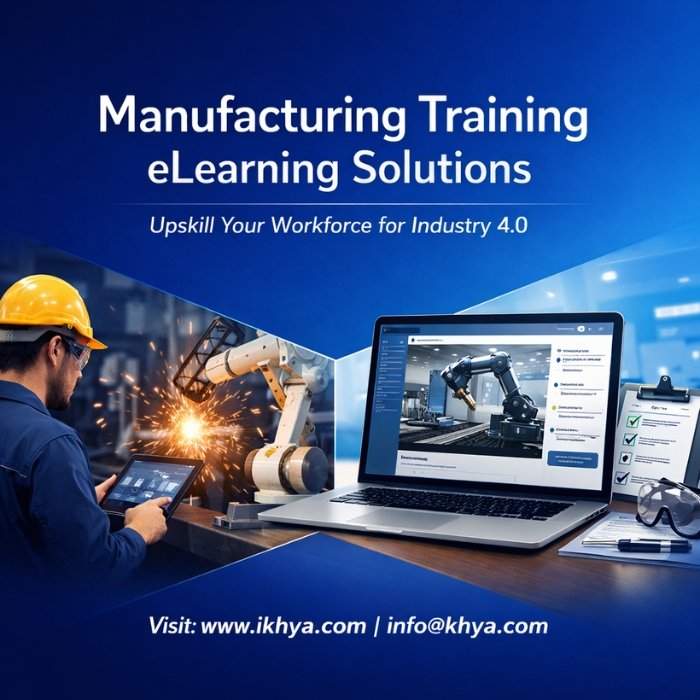


Manufacturing Training eLearning Solutions
Manufacturing companies face constant pressure to improve workplace safety, production efficiency, and workforce skills. Traditional classroom training often fails to reach large factory teams across multiple locations. Manufacturing Training eLearning Solutions help organizations deliver scalable, consistent, and engaging training for machine operators, engineers, supervisors, and plant workers.
IKHYA – eLearning Solutions Company develops custom digital training programs for global manufacturing organizations. Our solutions improve safety compliance, equipment training, and operational performance.
Request a proposal or schedule a consultation at info@ikhya.com
Get a Free eLearning Consultation / Proposal
Manufacturing training programs require careful planning to ensure they align with plant operations, safety regulations, and workforce skill requirements. Every organization has unique equipment, workflows, and compliance requirements.
IKHYA offers a free consultation to help organizations design an effective manufacturing training strategy.
What We Discuss During the Consultation
- Current manufacturing training challenges
- Workforce skill gaps
- Safety and compliance training requirements
- Equipment operation training needs
- LMS integration requirements
- Digital transformation goals
- Estimated training project scope and timeline
What You Receive
After the consultation, our team provides:
- Training strategy recommendations
- Suggested learning formats
- Estimated project scope
- Budget range guidance
- Implementation timeline
This consultation helps decision-makers understand how digital training can improve production efficiency, safety compliance, and workforce productivity.
Who Should Request a Consultation
Our manufacturing training solutions are designed for:
- Manufacturing companies
- Industrial production facilities
- Automotive manufacturers
- Electronics manufacturing companies
- Pharmaceutical manufacturing organizations
- Heavy equipment manufacturers
Training leaders often contact us when they need to:
- Train employees across multiple factory locations
- Standardize training processes globally
- Improve safety compliance
- Reduce production errors
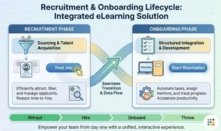
- Accelerate onboarding for new employees
Start Your Manufacturing Training Project
If your organization is planning to implement manufacturing training eLearning programs, our team can help design a scalable digital learning solution.
📩 Contact IKHYA – eLearning Solutions Company
Email: info@ikhya.com
What is Manufacturing Training eLearning?
Manufacturing Training eLearning refers to digital training programs designed for factory workers, engineers, technicians, and production managers. These programs help employees learn how to operate machinery, follow safety procedures, maintain quality standards, and understand manufacturing processes.
Instead of relying only on classroom training or printed manuals, companies use interactive digital learning modules that employees can access through a Learning Management System (LMS), mobile devices, or internal training portals.
These courses often include:
- Interactive learning modules
- Equipment operation simulations
- Scenario-based safety training
- Video demonstrations
- Knowledge assessments
- Mobile learning modules for shop floor access
Manufacturing eLearning helps organizations train employees faster, safer, and more consistently across multiple plants or production sites.
Types of Manufacturing Training Programs Delivered Through eLearning
Manufacturing companies require several types of training programs. Digital learning solutions can support nearly all operational training needs.
Safety Training
Safety training is one of the most critical areas in manufacturing environments.
Typical safety training topics include:
- Workplace hazard awareness
- Lockout/tagout procedures
- Chemical safety training
- PPE usage training
- Emergency response procedures
- Fire safety training
Interactive scenario-based training helps employees understand real workplace risks before they encounter them on the factory floor.
Equipment Operation Training
Manufacturing employees often operate complex machinery and production equipment. Training must ensure that workers understand proper operation procedures.
Equipment training modules may include:
- CNC machine operation training
- Packaging machinery operation
- Assembly line equipment training
- Robotics system training
- Maintenance procedures
Simulation-based training allows employees to practice machine operation virtually before working on real equipment.
Quality Control Training
Quality issues can lead to product recalls, customer dissatisfaction, and financial losses. Manufacturing companies use digital training to ensure workers understand quality standards and inspection procedures.
Examples of quality training include:
- Product inspection training
- Defect identification training
- ISO quality standard training
- Manufacturing quality documentation procedures
These programs help ensure consistent product quality across production facilities.
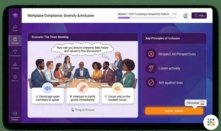
Compliance Training
Manufacturing organizations must comply with several regulatory standards depending on their industry and region.
Common compliance training programs include:
- OSHA safety regulations
- environmental compliance training
- workplace ethics training
- regulatory manufacturing standards
- data security and operational compliance
Digital training makes it easier to track employee completion and compliance records using LMS reporting systems.
Process and Production Training
Manufacturing organizations constantly optimize their production processes. Employees must understand workflows, operating procedures, and production guidelines.
Process training modules may include:
- production line workflow training
- manufacturing process training
- lean manufacturing principles
- Six Sigma process training
- ERP system usage training
These courses help ensure employees follow standard operating procedures (SOPs) accurately.
How Manufacturing eLearning is Delivered
Manufacturing eLearning solutions are typically delivered using several learning formats.
Interactive eLearning Modules
Developed using tools such as:
- Articulate Storyline
- Adobe Captivate
- Lectora Inspire
- iSpring Suite
These modules include interactions, animations, and quizzes.
Simulation-Based Training
Simulation training replicates real workplace situations such as:
- machine operation
- safety incidents
- production line decisions
This type of training improves knowledge retention and decision-making skills.
Microlearning Modules
Microlearning delivers training in short lessons lasting 3–7 minutes. These are ideal for:
- quick safety refreshers
- equipment updates
- SOP training
Mobile Learning
Factory workers may not always have desktop access. Mobile learning allows employees to complete training using:
- tablets
- smartphones
- shop floor kiosks
LMS Integration and Training Tracking
Manufacturing eLearning solutions are usually deployed through a Learning Management System (LMS).
LMS platforms allow organizations to:
- assign training to employees
- track completion
- monitor assessment results
- generate compliance reports
- analyze workforce skill development
Courses are typically published using standards such as:
- SCORM
- xAPI
These standards ensure compatibility across different LMS platforms.
Manufacturing organizations increasingly rely on digital training to support Industry 4.0 transformation, workforce upskilling, and global operational consistency.
Why Organizations Need Manufacturing Training eLearning Solutions
Manufacturing environments are complex. Employees must operate advanced machinery, follow strict safety regulations, and maintain high production quality. Traditional training methods such as classroom sessions and printed manuals are often time-consuming, inconsistent, and difficult to scale across multiple facilities.
Manufacturing eLearning solutions allow organizations to deliver standardized training programs to thousands of employees across different locations. Digital training improves safety, productivity, and operational consistency while reducing training costs.
Below are common scenarios where manufacturing companies implement digital training solutions.
Workforce Upskilling in the United States
Manufacturing companies in the United States are rapidly adopting automation, robotics, and advanced manufacturing systems. Employees must constantly update their skills to work with new technologies.
Digital training programs help organizations train workers on:
- robotic system operation
- automated production lines
- manufacturing software systems
- quality control procedures
- equipment maintenance
For example, an automotive manufacturer may deploy simulation-based training to help technicians understand robotic assembly systems before working on the production floor.
This approach reduces operational errors and improves production efficiency.
Compliance and Safety Training in the United Kingdom
Manufacturing companies in the UK must comply with strict workplace safety regulations and industry standards. Failure to follow safety procedures can lead to serious incidents and regulatory penalties.
Digital training solutions help organizations deliver consistent safety programs covering:
- workplace hazard awareness
- machinery safety procedures
- chemical handling protocols
- emergency response training
- compliance documentation procedures
With LMS-based training programs, companies can track employee training completion and maintain compliance records for regulatory audits.
Heavy Equipment Training in Australia
Australia has strong manufacturing sectors in mining equipment, heavy engineering, and industrial machinery production. Employees working with large equipment require specialized operational training.
Manufacturing eLearning solutions enable companies to create training modules that demonstrate:
- equipment operation procedures
- maintenance guidelines
- troubleshooting processes
- workplace safety scenarios
Simulation-based training helps workers practice equipment operation in a safe virtual environment, reducing the risk of workplace accidents.
Industrial Workforce Expansion in the UAE
The UAE is investing heavily in industrial manufacturing and smart factory initiatives. Rapid workforce growth means companies must train large numbers of employees quickly.
Digital training programs allow organizations to:
- onboard new employees faster
- standardize training across factories
- provide multilingual training content
- ensure safety compliance
Manufacturing training modules can also be localized into multiple languages to support a diverse international workforce.
Global Manufacturing Organizations Need Scalable Training
Large manufacturing organizations often operate multiple plants across different countries. Training programs must be scalable, consistent, and easy to update.
Manufacturing eLearning solutions help organizations:
- deliver the same training across global locations
- reduce travel and instructor costs
- update training content quickly when procedures change
- ensure consistent quality standards
Digital training also supports remote learning and mobile access, allowing employees to complete courses from training rooms, tablets, or shop floor kiosks.
Supporting Industry 4.0 Workforce Transformation
Manufacturing is evolving with technologies such as:
- smart factories
- industrial IoT
- robotics and automation
- data-driven production systems
Employees must learn how to work with these technologies. eLearning programs help organizations provide continuous workforce upskilling as manufacturing processes evolve.
Reducing Operational Errors and Safety Incidents
Poorly trained employees can cause production delays, equipment damage, and workplace accidents.
Interactive training modules allow employees to practice decision-making through:
- scenario-based training
- equipment simulations
- troubleshooting exercises
These learning experiences help employees understand the real-world consequences of operational mistakes.
Manufacturing organizations are increasingly adopting digital training to improve workforce readiness, safety performance, and operational efficiency.
Benefits of Manufacturing Training eLearning Solutions
Manufacturing organizations operate in environments where safety, efficiency, and consistency are critical. Training employees effectively can significantly impact production performance and operational reliability.
Manufacturing Training eLearning Solutions provide several strategic benefits for organizations managing large industrial workforces.
Improved Workplace Safety
Manufacturing environments involve heavy machinery, hazardous materials, and complex operational procedures. Proper safety training is essential to prevent workplace accidents.
Digital safety training programs allow employees to learn through:
- scenario-based safety training
- hazard identification exercises
- interactive emergency response simulations
- PPE usage demonstrations
Employees can practice decision-making in a risk-free learning environment, which improves safety awareness on the factory floor.
Organizations that implement structured safety training programs often see:
- fewer workplace incidents
- improved regulatory compliance
- reduced insurance and liability costs
Faster Employee Onboarding
Manufacturing companies frequently hire new employees to support production growth. Traditional onboarding programs can take weeks and require extensive instructor involvement.
eLearning solutions allow organizations to deliver structured onboarding programs that include:
- workplace safety training
- factory policies and procedures
- equipment operation basics
- quality control guidelines
- operational workflow training
New employees can complete training modules before starting their roles, which helps them become productive faster.
Standardized Training Across Multiple Facilities
Large manufacturing organizations may operate several factories in different locations or countries. Delivering consistent training across all facilities can be challenging with classroom training.
Digital training ensures that:
- every employee receives the same training content
- standard operating procedures are consistently followed
- quality standards are maintained across production plants
Training programs can be easily updated and distributed across all facilities through a Learning Management System (LMS).
Reduced Operational Errors
Manufacturing mistakes can lead to:
- product defects
- equipment damage
- production delays
- customer complaints
Interactive training modules help employees understand:
- correct production workflows
- machine operation procedures
- quality inspection steps
- troubleshooting techniques
Scenario-based learning allows workers to practice solving real production problems, which reduces operational mistakes.
Scalable Workforce Training
Manufacturing organizations often need to train hundreds or thousands of employees. Instructor-led training programs may not scale efficiently.
eLearning allows companies to deliver training programs that can be accessed:
- across multiple locations
- by employees on different shifts
- through mobile devices or training kiosks
This scalability is particularly important for organizations expanding their manufacturing operations globally.
Continuous Workforce Upskilling
Manufacturing processes evolve constantly with new technologies, equipment, and production systems. Employees must update their skills regularly.
Digital learning platforms make it easy to deliver:
- refresher training programs
- new equipment training
- updated compliance training
- advanced technical training
Organizations can maintain a continuous learning culture within their workforce.
Improved Training Tracking and Analytics
Manufacturing companies must track training completion for safety and compliance purposes.
By deploying training through an LMS or LXP platform, organizations can monitor:
- course completion rates
- assessment scores
- employee skill development
- compliance training records
Training analytics help managers identify skill gaps and areas where additional training may be required.
Reduced Training Costs
Traditional instructor-led training often requires:
- travel expenses
- training facilities
- printed materials
- instructor availability
Digital training significantly reduces these costs by delivering courses online.
Training modules can be reused for future employees, making eLearning a cost-effective long-term training solution.
Manufacturing Training eLearning Solutions help organizations build a safer, more skilled, and more productive workforce while supporting large-scale training across global operations.
Real Enterprise Manufacturing Training Project Examples
Manufacturing training programs vary depending on the industry, workforce size, equipment complexity, and compliance requirements. Large organizations often require customized digital learning programs tailored to their specific production processes and operational environments.
Below are realistic examples of enterprise manufacturing training projects to illustrate typical scope, timelines, and budgets.
Example 1: Factory Safety Training Program
Client: US Industrial Manufacturing Company
Industry: Heavy Equipment Manufacturing
Project Scope
- Workplace safety awareness training
- Lockout/tagout procedures
- PPE usage training
- Hazard identification scenarios
Training Format
- Interactive eLearning modules
- Scenario-based safety simulations
- Knowledge assessments
Project Details
| Item | Details |
|---|---|
| Number of Modules | 12 modules |
| Duration per Module | 5–8 minutes |
| Development Timeline | 6–8 weeks |
| Estimated Cost | $18,000 – $35,000 |
This training program helped the company reduce workplace safety incidents and improve OSHA compliance.
Example 2: CNC Machine Operation Simulation Training
Client: Global Automotive Components Manufacturer
Industry: Automotive Manufacturing
Project Scope
- CNC machine operation training
- equipment setup procedures
- troubleshooting scenarios
- maintenance guidelines
Training Format
- simulation-based learning
- step-by-step guided simulations
- interactive troubleshooting exercises
Project Details
| Item | Details |
|---|---|
| Number of Modules | 15 simulations |
| Duration per Module | 6–10 minutes |
| Development Timeline | 8–10 weeks |
| Estimated Cost | $40,000 – $70,000 |
Simulation-based learning allowed employees to practice machine operations before working with real equipment.
Example 3: Manufacturing Quality Control Training
Client: Electronics Manufacturing Company
Industry: Consumer Electronics Production
Project Scope
- quality inspection procedures
- defect identification training
- ISO compliance training
- manufacturing documentation procedures
Training Format
- scenario-based learning
- product inspection simulations
- knowledge assessments
Project Details
| Item | Details |
|---|---|
| Number of Modules | 10 modules |
| Duration per Module | 5–7 minutes |
| Development Timeline | 5–7 weeks |
| Estimated Cost | $20,000 – $38,000 |
The program improved product inspection accuracy and reduced manufacturing defects.
Example 4: Manufacturing ERP System Training
Client: European Industrial Manufacturing Company
Industry: Industrial Machinery Manufacturing
Project Scope
- ERP system navigation training
- production workflow training
- inventory management procedures
- reporting and data entry training
Training Format
- software simulations
- guided workflow exercises
- interactive learning modules
Project Details
| Item | Details |
|---|---|
| Number of Modules | 20 modules |
| Duration per Module | 4–6 minutes |
| Development Timeline | 8–12 weeks |
| Estimated Cost | $45,000 – $75,000 |
Employees learned how to perform key ERP tasks through realistic system simulations.
Example 5: Global Manufacturing Onboarding Program
Client: International Pharmaceutical Manufacturing Company
Industry: Pharmaceutical Manufacturing
Project Scope
- company onboarding training
- manufacturing compliance training
- GMP procedures training
- workplace safety training
Training Format
- microlearning modules
- interactive eLearning courses
- mobile-friendly training content
Project Details
| Item | Details |
|---|---|
| Number of Modules | 25 modules |
| Duration per Module | 3–6 minutes |
| Development Timeline | 10–14 weeks |
| Estimated Cost | $60,000 – $95,000 |
This program helped the organization onboard employees across multiple manufacturing facilities worldwide.
Typical Development Timeline by Project Size
| Project Scope | Estimated Timeline |
|---|---|
| 1 module | 2–3 weeks |
| 5 modules | 4–6 weeks |
| 10 modules | 6–8 weeks |
| 30 modules | 12–16 weeks |
Timelines depend on factors such as:
- content complexity
- availability of subject matter experts
- level of interactivity required
- multimedia production needs
Typical Pricing for Manufacturing eLearning Development
| Training Type | Estimated Cost |
|---|---|
| Basic eLearning module | $1,000 – $2,500 |
| Interactive training module | $2,500 – $6,000 |
| Simulation-based training | $6,000 – $15,000 |
These estimates vary based on:
- number of modules
- custom graphics or animations
- language localization
- integration with LMS or enterprise systems
Organizations investing in digital training often see improvements in workforce productivity, safety performance, and operational consistency.
IKHYA Process for Manufacturing Training eLearning Solutions
Developing effective manufacturing training programs requires a structured process that ensures the training reflects real production workflows, safety procedures, and operational requirements.
IKHYA – eLearning Solutions Company follows a systematic development approach based on the ADDIE framework. This ensures that every training program is designed to achieve measurable learning outcomes while supporting enterprise deployment at scale.
The process also integrates learning science frameworks such as Bloom’s Taxonomy and evaluation methods such as the Kirkpatrick Model to measure training effectiveness.
Analysis
The first stage focuses on understanding the manufacturing environment and identifying the exact training needs of the organization.
During the analysis phase, our team works closely with:
- manufacturing training managers
- operations leaders
- safety officers
- subject matter experts (SMEs)
Key activities include:
- analyzing workforce skill gaps
- reviewing standard operating procedures (SOPs)
- identifying compliance training requirements
- evaluating equipment operation training needs
- assessing existing training materials
We also review the company’s Learning Management System (LMS) and technical infrastructure to ensure compatibility with the training solution.
At the end of this stage, we define:
- learning objectives
- course structure
- training formats
- project scope and timeline
Instructional Design
In the instructional design stage, the training program is structured to ensure effective learning outcomes.
Our instructional designers apply proven learning methodologies such as:
- Bloom’s Taxonomy to structure knowledge progression
- scenario-based learning to simulate workplace situations
- microlearning strategies to improve retention
- experiential learning techniques for operational training
The instructional design phase includes:
- course storyboarding
- interaction design
- assessment development
- scenario creation
- learner journey mapping
Manufacturing training modules are often designed using real production scenarios so that employees can relate the training to their daily tasks.
Development
Once the course design is finalized, our development team builds the digital training modules using advanced eLearning authoring tools.
Common tools used in development include:
- Articulate Storyline
- Adobe Captivate
- Lectora Inspire
- iSpring Suite
The development stage may include:
- interactive learning modules
- software simulations
- animated process demonstrations
- video-based training content
- knowledge assessments
Courses are developed following global eLearning standards such as:
- SCORM
- xAPI
- WCAG accessibility guidelines
This ensures compatibility with most enterprise LMS platforms.
Quality Assurance
Quality assurance is a critical stage in the development process. Every training module undergoes multiple rounds of testing to ensure accuracy and usability.
The QA process includes:
- content accuracy verification
- functionality testing
- LMS compatibility testing
- accessibility validation
- user experience testing
Subject matter experts also review the training to ensure that manufacturing procedures and technical instructions are accurate.
Deployment
Once the training modules are approved, they are deployed through the organization’s Learning Management System (LMS) or digital learning platform.
Deployment activities include:
- uploading SCORM or xAPI packages to the LMS
- configuring course assignments
- enabling training completion tracking
- setting up reporting dashboards
- supporting administrator onboarding
After deployment, organizations can track training performance through analytics such as:
- learner completion rates
- assessment scores
- compliance reports
- workforce skill development metrics
Using the Kirkpatrick Model, companies can also evaluate training effectiveness by measuring:
- learner satisfaction
- knowledge improvement
- behavior changes in the workplace
- business performance impact
The structured development process ensures that manufacturing training programs are accurate, engaging, scalable, and aligned with operational goals.
Technologies and Tools Used
Effective manufacturing training programs rely on modern learning technologies that support interactive learning, LMS integration, scalability, and global workforce access. IKHYA uses industry-standard authoring tools, learning technologies, and eLearning standards to develop enterprise-ready manufacturing training solutions.
These technologies ensure that training programs are interactive, trackable, and compatible with enterprise learning platforms.
eLearning Authoring Tools
Authoring tools are used to design and develop interactive digital training modules for manufacturing employees. These tools allow developers to create simulations, assessments, and interactive learning experiences.
Common tools used include:
Articulate Storyline
Articulate Storyline is widely used to create interactive courses with advanced interactions, branching scenarios, and simulation-based training. It is ideal for:
- equipment operation simulations
- safety scenario training
- troubleshooting exercises
- compliance training modules
Adobe Captivate
Adobe Captivate is often used for developing software simulations and process training modules. Manufacturing companies use Captivate to train employees on:
- manufacturing software systems
- ERP workflows
- production management tools
- operational dashboards
Lectora Inspire
Lectora Inspire is known for its flexibility and accessibility features. It is often used for large enterprise training projects that require:
- multi-language localization
- accessibility compliance
- complex learning structures
- enterprise LMS deployment
iSpring Suite
iSpring Suite is commonly used for rapid development projects and converting existing training materials into interactive eLearning modules.
It is effective for:
- PowerPoint to eLearning conversion
- quick compliance training updates
- microlearning development
- knowledge assessment modules
Learning Management Systems (LMS)
Manufacturing training programs are typically delivered through a Learning Management System (LMS). The LMS allows organizations to manage training delivery, track completion, and generate compliance reports.
An LMS enables companies to:
- assign training courses to employees
- monitor learning progress
- track certification requirements
- generate compliance reports
- analyze workforce skill development
Training modules developed by IKHYA are compatible with most enterprise LMS platforms.
Learning Experience Platforms (LXP)
Some organizations implement Learning Experience Platforms (LXP) to support personalized learning and employee-driven training.
LXPs allow employees to:
- discover relevant training content
- access learning resources anytime
- receive personalized course recommendations
LXPs are often integrated with traditional LMS systems to create a modern learning ecosystem.
Digital Adoption Platforms
Manufacturing companies increasingly use Digital Adoption Platforms (DAPs) to train employees directly within software systems.
DAP-based training supports:
- real-time system guidance
- step-by-step process walkthroughs
- contextual learning support
- workflow assistance
This approach is useful for training employees on ERP systems, production software, and digital manufacturing tools.
Mobile Learning Technology
Many factory employees work on the shop floor and may not have regular access to desktop computers. Mobile learning allows employees to access training using:
- smartphones
- tablets
- training kiosks
- shop floor devices
Mobile-friendly training modules allow employees to complete short training lessons during scheduled learning periods.
eLearning Standards for Enterprise Compatibility
To ensure compatibility across enterprise learning systems, training modules are developed using recognized industry standards.
SCORM (Sharable Content Object Reference Model)
SCORM allows training modules to communicate with LMS platforms and track learner progress, completion, and assessment results.
xAPI (Experience API)
xAPI provides advanced tracking capabilities and allows organizations to capture detailed learning analytics, including:
- user interactions
- simulation performance
- learning behavior data
WCAG Accessibility Standards
Manufacturing organizations often need to ensure training content is accessible for all employees. Courses are designed following WCAG accessibility guidelines, making training usable for learners with different accessibility needs.
Integrated Learning Ecosystem
Modern manufacturing training environments often combine multiple technologies such as:
- LMS platforms
- mobile learning apps
- digital adoption platforms
- simulation-based training tools
By integrating these technologies, organizations can build a scalable and data-driven workforce training ecosystem.
Industries We Serve
Organizations across many industries rely on structured training programs to maintain safety standards, regulatory compliance, operational efficiency, and workforce productivity. IKHYA – eLearning Solutions Company develops digital learning solutions tailored to the specific training needs of different industries.
Our experience across multiple sectors allows us to design training programs that reflect real workplace environments, operational workflows, and compliance requirements.
Manufacturing
Manufacturing organizations require training programs for factory workers, engineers, supervisors, and production managers. Training must support safety, quality, and operational efficiency.
Common manufacturing training programs include:
- workplace safety training
- equipment operation training
- quality control procedures
- production workflow training
- compliance and regulatory training
Digital training helps manufacturing companies deliver consistent training across multiple factories and production facilities.
Healthcare
Healthcare organizations require strict compliance training to ensure patient safety and regulatory adherence.
Healthcare eLearning programs often include:
- medical compliance training
- patient safety procedures
- clinical workflow training
- healthcare software training
- infection control training
Digital learning helps healthcare organizations maintain consistent training for medical professionals and support staff.
Finance
Financial institutions must comply with regulatory standards and maintain high levels of data security.
Training programs for financial organizations often focus on:
- regulatory compliance training
- financial risk management training
- anti-money laundering (AML) training
- cybersecurity awareness training
- financial software training
eLearning solutions allow financial organizations to deliver mandatory compliance training and track employee certifications.
Construction
Construction companies operate in high-risk environments where safety training is essential.
Typical construction training programs include:
- workplace hazard awareness
- heavy equipment operation training
- construction site safety procedures
- environmental safety compliance
- emergency response training
Digital training modules allow construction companies to train workers before they enter job sites, improving workplace safety and regulatory compliance.
Oil and Gas
The oil and gas industry involves complex operations and strict safety standards. Employees must understand operational procedures, environmental regulations, and safety protocols.
Training programs often include:
- offshore safety training
- drilling operation procedures
- environmental compliance training
- equipment maintenance training
- emergency response simulations
Simulation-based training can help employees practice high-risk operational scenarios in a safe learning environment.
Aviation
The aviation industry requires precise training to maintain safety and operational standards.
Aviation training programs may include:
- aircraft maintenance procedures
- aviation safety training
- ground operations training
- regulatory compliance training
- aviation software systems training
Digital training allows aviation organizations to maintain consistent training standards across global operations.
IKHYA develops customized training programs that align with industry regulations, operational requirements, and workforce skill development needs.
Digital Transformation in Manufacturing Training
Manufacturing is rapidly evolving with the adoption of Industry 4.0 technologies, including automation, robotics, smart factories, and connected production systems. As manufacturing processes become more advanced, employee training must also evolve.
Traditional training methods cannot fully prepare workers for modern digital manufacturing environments. Organizations now rely on advanced eLearning solutions to train employees on complex systems and technologies.
Manufacturing training programs increasingly include simulation learning, microlearning, and interactive digital training modules that help employees understand modern production environments.
Industry 4.0 Workforce Training
Industry 4.0 focuses on integrating technologies such as:
- industrial Internet of Things (IIoT)
- robotics and automation
- smart manufacturing systems
- connected production equipment
- data-driven production monitoring
Employees must learn how to interact with these technologies in daily operations.
Digital training programs help workers understand:
- smart factory workflows
- automated production processes
- real-time monitoring systems
- data-driven decision making
Interactive training modules make complex technologies easier to understand.
Smart Factory Skills Development
Smart factories use connected systems where machines, sensors, and software communicate continuously. Employees must learn how to monitor and manage these systems effectively.
Training programs often include:
- smart production system monitoring
- predictive maintenance procedures
- machine data analysis
- automated workflow management
Digital training helps workers understand how different production systems interact within the factory environment.
Robotics and Automation Training
Many manufacturing companies now use robotic systems for assembly, packaging, and quality inspection. Workers must understand how to operate and monitor these systems.
Training programs may include:
- robotic system operation training
- robot safety procedures
- automation troubleshooting scenarios
- system monitoring dashboards
Simulation-based learning allows employees to practice working with robotic systems before interacting with real machines.
Machine Operation Simulations
Simulation learning is especially effective for manufacturing training because it allows employees to practice complex procedures safely.
Machine operation simulations can demonstrate:
- machine startup and shutdown procedures
- production workflow steps
- equipment troubleshooting scenarios
- maintenance procedures
Employees can repeat training simulations multiple times, improving confidence and operational accuracy.
Digital Twin Training Environments
Some advanced manufacturing organizations use digital twin technology to replicate real production systems in virtual environments.
Digital twins allow employees to:
- explore virtual factory environments
- test operational decisions
- simulate machine failures
- practice maintenance procedures
This approach helps employees understand complex production systems without disrupting real factory operations.
Continuous Learning for Manufacturing Employees
Manufacturing technology continues to evolve. Organizations must provide continuous training to ensure employees stay updated with new equipment and production methods.
Digital learning ecosystems allow companies to deliver:
- refresher training modules
- new technology training
- process update training
- advanced skill development programs
Employees can access training whenever needed, supporting a culture of continuous improvement and workforce development.
Modern manufacturing training programs combine interactive eLearning, simulations, and mobile learning to prepare employees for the future of industrial production.
Why Choose IKHYA – eLearning Solutions Company
Selecting the right eLearning partner is critical for organizations implementing enterprise-level training programs. Manufacturing companies need a vendor that understands industrial operations, workforce training challenges, and global training deployment requirements.
IKHYA – eLearning Solutions Company delivers customized digital learning solutions designed to support large-scale workforce training, compliance requirements, and operational excellence.
Proven Global Experience
IKHYA has supported organizations across multiple industries with scalable digital learning solutions.
Our experience includes:
- 300+ global clients
- 1000+ digital learning courses delivered
- 25+ years of combined industry experience
- 20+ industries served worldwide
Our team understands the training needs of organizations operating in complex industrial environments.
Expertise in Manufacturing Training
Manufacturing organizations require training programs that accurately reflect real production environments and operational procedures.
IKHYA develops manufacturing training solutions for:
- equipment operation training
- safety and compliance training
- production process training
- quality control training
- ERP and manufacturing software training
Our instructional designers collaborate with subject matter experts and operational teams to ensure training content reflects real workplace scenarios.
Enterprise-Ready Learning Solutions
Manufacturing organizations often need training programs that can scale across multiple plants and global operations.
IKHYA develops training solutions that support:
- enterprise LMS integration
- SCORM and xAPI compatibility
- mobile learning for factory environments
- multilingual training localization
- global workforce training deployment
These capabilities ensure training programs can be delivered consistently across large and distributed teams.
Strong Instructional Design Expertise
Effective training requires more than just content delivery. It requires well-designed learning experiences that help employees apply knowledge in real-world situations.
IKHYA uses proven instructional design frameworks including:
- ADDIE model for structured course development
- Bloom’s Taxonomy for learning progression
- Kirkpatrick Model for training evaluation
These methodologies help ensure training programs deliver measurable learning outcomes.
Scalable Development Capabilities
Large organizations often need to develop multiple training modules within tight timelines.
IKHYA supports enterprise projects through:
- rapid eLearning development workflows
- scalable production processes
- dedicated instructional design teams
- structured project management
This allows us to deliver high-quality training programs within defined project timelines.
Post-Deployment Support
Successful training implementation requires ongoing support after deployment.
IKHYA provides support services including:
- LMS deployment assistance
- training analytics guidance
- content updates and revisions
- localization for global training programs
Our goal is to help organizations maintain long-term training effectiveness and continuous workforce development.
Focus on Business Outcomes
Manufacturing training programs should contribute directly to business performance.
IKHYA designs training solutions that help organizations:
- improve workplace safety
- reduce operational errors
- increase workforce productivity
- support compliance requirements
- accelerate employee onboarding
Our approach ensures training programs deliver measurable operational impact.
Start your manufacturing training transformation today.
📩 IKHYA – eLearning Solutions Company
Email: info@ikhya.com
Schedule a consultation or submit your RFP to discuss your training requirements.
Related eLearning Services
Manufacturing training initiatives often require multiple digital learning solutions working together. In addition to manufacturing-specific training programs, organizations may need course design, rapid content development, LMS deployment, and learning modernization services.
IKHYA – eLearning Solutions Company offers a complete range of enterprise training solutions that support large-scale workforce learning programs.
Custom eLearning Development
Manufacturing companies often need fully customized training programs tailored to their equipment, processes, and compliance requirements.
Custom eLearning programs can include:
- safety and compliance training
- equipment operation simulations
- manufacturing process training
- quality inspection training
- onboarding programs for factory employees
Learn more about our custom eLearning development services for enterprise training programs.
Rapid eLearning Development
Manufacturing procedures and safety regulations often change quickly. Organizations sometimes need training programs developed within tight deadlines.
Rapid eLearning development allows companies to convert existing training materials such as:
- PowerPoint presentations
- instructor-led training manuals
- operational documentation
- policy documents
into digital learning modules within a short timeframe.
Explore our rapid eLearning development services for faster training delivery.
Instructional Design Services
Well-designed training programs ensure employees understand and apply what they learn.
Our instructional design services focus on:
- learning strategy development
- course structure design
- scenario-based learning development
- assessment design
- learner engagement strategies
Instructional designers apply proven learning frameworks to create effective training experiences.
Microlearning Development
Manufacturing employees often have limited time for long training sessions. Microlearning modules deliver short lessons that employees can complete quickly.
Microlearning programs are effective for:
- safety refreshers
- SOP training
- equipment updates
- compliance reminders
Discover how our microlearning development solutions help deliver quick and focused training.
LMS Integration Services
Many manufacturing organizations deploy training through a Learning Management System (LMS).
Our LMS integration services help organizations:
- deploy training programs
- configure course tracking
- generate compliance reports
- monitor employee progress
- manage certification programs
We ensure training modules integrate smoothly with enterprise learning platforms.
PPT to eLearning Conversion
Many organizations already have training materials created in PowerPoint presentations. These materials can be converted into interactive eLearning modules.
Our PPT to eLearning conversion services transform presentations into engaging digital courses with:
- interactive elements
- assessments
- animations
- multimedia content
This approach helps organizations modernize existing training content.
ILT to eLearning Conversion
Instructor-led training programs can be converted into scalable digital learning programs.
Our ILT to eLearning conversion services help organizations transform classroom training into interactive online courses.
Benefits include:
- scalable workforce training
- reduced instructor dependency
- improved training accessibility
- consistent training delivery
Combining these services allows organizations to build comprehensive digital training ecosystems that support workforce development across multiple departments.
Frequently Asked Questions
Manufacturing Training eLearning Solutions are digital training programs designed to help factory workers, technicians, engineers, and supervisors learn operational procedures, safety guidelines, and production processes.
These training solutions typically include:
- interactive eLearning modules
- equipment operation simulations
- safety and compliance training
- production workflow training
- quality control training
Courses are delivered through a Learning Management System (LMS) so organizations can track training completion, assessments, and compliance records.
Manufacturing organizations use eLearning to deliver many types of training programs, including:
- workplace safety training
- machine operation training
- quality inspection training
- regulatory compliance training
- manufacturing process training
- ERP system training
- maintenance and troubleshooting training
Digital training allows companies to deliver these programs consistently across multiple factories and production facilities.
Development timelines depend on the complexity and number of modules.
Typical timelines include:
Project Scope | Estimated Timeline |
1 module | 2–3 weeks |
5 modules | 4–6 weeks |
10 modules | 6–8 weeks |
30 modules | 12–16 weeks |
Factors that influence development timelines include:
- availability of source materials
- SME collaboration
- complexity of interactions
multimedia production requirements
Costs vary based on content complexity, interactivity level, and the number of modules.
Typical pricing ranges include:
Training Type | Estimated Cost |
Basic eLearning module | $1,000 – $2,500 |
Interactive module | $2,500 – $6,000 |
Simulation-based training | $6,000 – $15,000 |
Large enterprise projects may involve multiple modules and additional services such as localization and LMS integration.
Yes. Simulation-based learning is widely used in manufacturing training.
Simulations allow employees to practice tasks such as:
- machine startup procedures
- equipment troubleshooting
- production workflow decisions
- safety incident responses
This type of training improves knowledge retention and prepares employees for real operational scenarios.
Yes. Most manufacturing eLearning programs are delivered through an LMS.
Courses are developed using standards such as:
- SCORM
- xAPI
These standards allow training modules to integrate with enterprise LMS platforms and track:
- learner progress
- assessment scores
- certification status
compliance training records
Yes. Many manufacturing organizations operate in multiple countries and require multilingual training programs.
eLearning courses can be localized to support:
- multiple languages
- regional compliance requirements
- culturally relevant examples
- localized audio and video content
Localization ensures training programs remain effective for diverse workforces.
Manufacturing training courses are commonly developed using industry-standard authoring tools such as:
- Articulate Storyline
- Adobe Captivate
- Lectora Inspire
- iSpring Suite
These tools enable developers to create interactive modules, simulations, and assessments.
Yes. Many organizations implement mobile learning to support training for factory workers.
Mobile-friendly courses allow employees to access training using:
- smartphones
- tablets
- shop floor training kiosks
This approach improves training accessibility for employees who do not regularly use desktop computers.
Organizations often evaluate training effectiveness using models such as the Kirkpatrick Model.
Evaluation methods may include:
- learner satisfaction surveys
- knowledge assessment results
- workplace behavior improvements
- operational performance improvements
These metrics help determine whether training programs achieve their intended objectives.
Yes. Microlearning is widely used for delivering short training lessons lasting 3–7 minutes.
Microlearning is particularly effective for:
- safety refreshers
- SOP updates
- equipment operation reminders
- compliance training updates
Short lessons improve retention and allow employees to complete training quickly.
Simulation-based learning replicates real workplace scenarios so employees can practice tasks before performing them in real environments.
Benefits include:
- improved knowledge retention
- safer training environment
- reduced operational errors
- better decision-making skills
Employees gain practical experience without risking equipment damage or workplace incidents.
Manufacturing training solutions are used across many industrial sectors, including:
- automotive manufacturing
- electronics production
- pharmaceutical manufacturing
- industrial equipment manufacturing
- consumer goods production
Each industry requires training tailored to its specific processes and compliance requirements.
Yes. Many organizations already have training content in formats such as:
- PowerPoint presentations
- training manuals
- policy documents
- instructor-led training materials
These materials can be converted into interactive digital courses through PPT to eLearning or ILT to eLearning conversion services.
Digital training programs are highly scalable.
Organizations can train:
- hundreds of employees
- multiple factory locations
- global manufacturing teams
Once a course is developed, it can be delivered repeatedly without requiring additional instructors.
When training modules are deployed through an LMS, organizations can track compliance through:
- course completion reports
- certification tracking
- automated training reminders
- compliance dashboards
These features help companies maintain accurate records for regulatory audits and safety inspections.
Yes. Interactive assessments help verify that employees understand the training content.
Common assessment formats include:
- multiple-choice quizzes
- scenario-based questions
- simulation exercises
- knowledge checks
Assessments ensure employees can apply what they learn in real workplace situations.
Manufacturing training programs should be updated whenever:
- equipment changes
- production processes are updated
- safety regulations change
- new compliance standards are introduced
Regular updates ensure employees always receive accurate and relevant training.
Instructional design ensures that training programs are structured in a way that improves learning outcomes.
Instructional designers use frameworks such as:
- ADDIE modelfor course development
- Bloom’s Taxonomyfor knowledge progression
- scenario-based learningfor practical application
These methods help ensure training programs are engaging and effective.
Organizations typically begin by identifying:
- training objectives
- workforce skill gaps
- compliance requirements
- equipment training needs
- LMS deployment plans
Working with an experienced eLearning development partner helps organizations design scalable training programs tailored to their operation
Request Your Manufacturing Training eLearning Proposal
Manufacturing companies cannot afford training gaps. Poor training can lead to workplace accidents, production delays, quality issues, and compliance risks. A well-designed digital training program ensures that every employee understands the correct procedures, safety standards, and operational workflows.
IKHYA – eLearning Solutions Company helps manufacturing organizations design scalable training programs that improve safety performance, workforce productivity, and operational efficiency.
Whether you need:
- factory safety training programs
- equipment operation simulations
- manufacturing process training
- quality control training
- ERP or manufacturing software training
- global workforce onboarding programs
our team can design a custom digital learning solution tailored to your manufacturing environment.
Start Your Project with IKHYA
If you are planning a manufacturing training initiative, our experts can help you:
- evaluate your training needs
- define the project scope
- estimate timelines and costs
- design a scalable training strategy
- deploy training across your workforce
Speak with Our eLearning Experts
Get expert guidance on building a modern manufacturing training program.
Request your consultation today.
IKHYA – eLearning Solutions Company
📩 Email: info@ikhya.com
Submit your RFP, request a project estimate, or schedule a consultation with our team to begin your manufacturing training transformation.
At IKHYA – eLearning Solutions Company, we design impactful, compliance-driven, and performance-focused digital learning solutions tailored to your business goals.
🎯 Custom eLearning Course Development
⚡ Rapid eLearning & PPT Conversion
📊 Workplace Compliance Training
🌍 Localization & LMS-Ready Modules



Reviews
There are no reviews yet.