
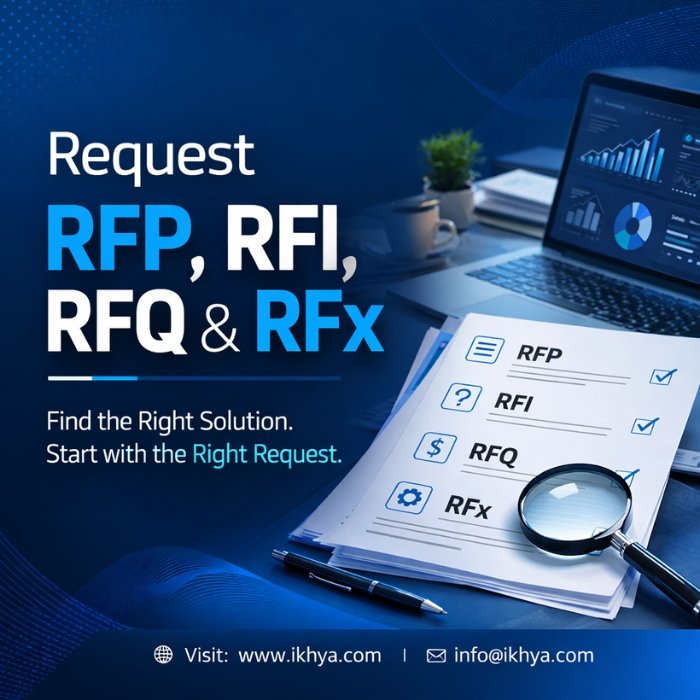



RFP, RFI, RFQ, RFx, Vendor, Bidder and Tenderer in eLearning Procurement
Organizations planning large-scale corporate training initiatives must carefully select the right custom eLearning development partner. Procurement teams often use structured processes such as RFI, RFP, RFQ, RFx, and tender submissions to evaluate vendors and compare proposals. These frameworks help enterprises identify the most capable training provider based on expertise, cost, scalability, and technology compatibility.
IKHYA – eLearning Solutions Company supports organizations worldwide in responding to procurement requests and delivering enterprise-grade eLearning consulting services and digital learning solutions.
If your organization is evaluating vendors or preparing a procurement request, submit your RFP or schedule a consultation today at info@ikhya.com
Get a Free eLearning Consultation / Proposal
Selecting the right eLearning vendor requires clear planning, accurate scope definition, and alignment between learning goals and technology platforms. Many organizations begin the procurement process by consulting with experienced vendors to understand project feasibility, expected timelines, and cost structures.
IKHYA provides free consultation and proposal support to help organizations plan successful digital learning initiatives before issuing formal procurement documents such as RFPs or RFQs.
Our consultation helps organizations:
- Define the training objectives and learning outcomes
- Estimate project scope and development timelines
- Identify the most appropriate learning formats such as microlearning, simulation training, or scenario-based modules
- Evaluate LMS compatibility and technical requirements
- Estimate project budgets and development costs
Organizations that request a consultation typically gain clarity on:
| Procurement Planning Area | What We Help You Define |
|---|---|
| Training scope | Number of courses, modules, and learning formats |
| Instructional design approach | ADDIE model, scenario-based training, microlearning |
| Technology environment | LMS, LXP, mobile learning compatibility |
| Development timeline | Project milestones and delivery schedule |
| Budget estimation | Transparent pricing expectations |
What You Can Expect from the Consultation
During the consultation, our experts review:
- Your training goals and business challenges
- Existing training materials such as PPT training content, instructor-led training, or documentation
- LMS or digital learning platforms currently in use
- Required learning formats and interactivity level
- Deployment scale and localization needs
Based on this discussion, IKHYA can provide a structured proposal or respond to your organization’s RFP or RFQ document.
Submit Your Procurement Request
If your organization is preparing to issue a vendor request, you can:
- Submit your RFP or RFQ
- Request budget estimates
- Schedule a vendor consultation
- Discuss enterprise training requirements
IKHYA – eLearning Solutions Company
Email: info@ikhya.com
What are RFP, RFI, RFQ, RFx, Vendor, Bidder, and Tenderer?
Organizations planning enterprise training programs often follow a structured procurement process to evaluate vendors and ensure the best value for their investment. Procurement documents such as RFI, RFP, RFQ, and RFT allow companies to collect information, compare solutions, and select the most capable vendor.
These procurement frameworks are commonly used when organizations plan large projects such as custom eLearning development, LMS implementation, compliance training programs, or enterprise digital learning transformation.
Understanding these terms helps procurement teams run an efficient eLearning vendor selection process.
Organizations preparing procurement documentation can also review our eLearning RFP template guide.
RFI — Request for Information
A Request for Information (RFI) is usually the first step in the procurement process.
Organizations issue an RFI when they want to:
- Gather information about potential vendors
- Understand available solutions and technologies
- Explore different training approaches
- Identify qualified vendors for future projects
An RFI does not request pricing or final proposals. Instead, it helps companies understand the market and shortlist vendors.
Example use case:
A global manufacturing company planning a digital training transformation may issue an RFI to learn about eLearning technologies, LMS platforms, and instructional design capabilities before issuing a formal RFP.
Typical information requested in an RFI:
- Company background and experience
- Industries served
- Technology platforms used
- Instructional design capabilities
- Example training projects
RFP — Request for Proposal
A Request for Proposal (RFP) is issued when an organization has clearly defined its project requirements and wants vendors to submit a detailed solution.
An RFP usually includes:
- Training objectives
- Target audience
- Course formats
- technical requirements
- integration requirements
- project timeline
Vendors respond with a complete proposal explaining how they will deliver the project.
Typical RFP responses include:
- instructional design approach
- technology tools used
- development methodology
- project timeline
- estimated cost
Example use case:
A financial services company issues an RFP for developing 40 compliance training modules for global employees.
RFQ — Request for Quotation
A Request for Quotation (RFQ) focuses primarily on pricing.
Organizations issue an RFQ when:
- project scope is already defined
- training content requirements are clear
- vendors only need to provide cost estimates
RFQs are often used when organizations already know the solution they want and simply need vendor pricing.
Example use case:
A healthcare organization requests an RFQ for converting 20 PowerPoint presentations into SCORM eLearning modules.
RFT — Request for Tender
A Request for Tender (RFT) is commonly used in government procurement and large public sector projects.
The tender process typically requires:
- formal bid submissions
- strict compliance with procurement rules
- detailed evaluation criteria
- contract negotiation procedures
Tenders are frequently used for large-scale training initiatives involving multiple vendors.
Example use case:
A government agency issues a tender for developing nationwide compliance training programs for healthcare workers.
RFx — Procurement Umbrella Term
The term RFx refers to a collection of procurement documents used in vendor selection.
RFx may include:
- RFI (Request for Information)
- RFP (Request for Proposal)
- RFQ (Request for Quotation)
- RFT (Request for Tender)
Organizations use RFx frameworks to ensure transparent, competitive, and well-documented vendor evaluation processes.
Vendor vs Bidder vs Tenderer
Understanding these roles is important in procurement terminology.
| Term | Meaning |
|---|---|
| Vendor | A company that provides products or services such as eLearning development |
| Bidder | A vendor that submits a proposal or price quote in response to an RFP or RFQ |
| Tenderer | A company that formally submits a bid in response to a tender |
In many procurement processes:
- vendors provide services
- bidders compete for contracts
- tenderers submit formal bids for large government or enterprise projects
Organizations evaluating digital learning providers often request proposals from multiple vendors before selecting the most qualified partner.
Companies looking for an experienced training partner can submit an RFP or request a consultation with IKHYA – eLearning Solutions Company.
Email: info@ikhya.com
Why Organizations Use RFP, RFI, RFQ and Tender Processes
Large organizations rarely select training vendors through informal discussions. Instead, they follow structured procurement frameworks such as RFI, RFP, RFQ, and tender processes. These frameworks ensure transparency, competitive evaluation, and accountability when selecting vendors for enterprise projects.
Corporate training initiatives often involve significant investment. Programs may include hundreds of training modules, global employee deployment, LMS integration, and multilingual localization. Procurement processes help organizations evaluate vendors based on experience, capability, pricing, and scalability.
Structured vendor procurement reduces the risk of selecting the wrong partner and ensures that training solutions align with business goals.
Standardizing Vendor Evaluation
One of the main reasons organizations use RFP or RFQ processes is to standardize vendor evaluation.
When multiple vendors respond to the same procurement document, procurement teams can compare:
- instructional design capabilities
- learning technologies used
- LMS compatibility
- development timelines
- pricing models
- project management approach
This structured comparison helps organizations select the vendor that provides the best balance of expertise, scalability, and cost efficiency.
Ensuring Transparency in Procurement
Enterprise procurement teams must maintain transparency when awarding contracts. Procurement documents such as RFPs and tenders create a documented evaluation process.
This is especially important in:
- public sector procurement
- regulated industries
- multinational corporations
Transparent procurement ensures that vendor selection decisions are fair, auditable, and compliant with organizational policies.
Reducing Project Risk
Training initiatives often impact thousands of employees across multiple departments and regions. Selecting the wrong vendor can lead to project delays, cost overruns, and poor learning outcomes.
Procurement processes reduce risk by evaluating vendors based on:
- past project experience
- instructional design expertise
- technology capabilities
- global deployment experience
- quality assurance processes
Organizations can also verify vendor credibility through case studies, client references, and portfolio examples.
Supporting Large-Scale Enterprise Training Programs
Global enterprises frequently run complex training programs that require structured vendor selection.
Examples include:
- enterprise onboarding programs
- digital transformation training
- compliance and regulatory training
- system adoption training (ERP, CRM, HR platforms)
These projects often involve dozens of courses and large learner audiences, making vendor selection a critical decision.
Global Procurement Examples
Organizations across different regions rely on structured procurement frameworks when selecting training vendors.
United States
Large US enterprises often issue RFPs for custom eLearning development or LMS implementation projects. Procurement teams evaluate multiple vendors before awarding contracts.
Example:
A US healthcare provider issues an RFP for HIPAA compliance training modules for 10,000 employees.
United Kingdom
UK public sector organizations frequently use formal tender processes for training programs funded by government budgets.
Example:
A public health agency issues a training development tender for safety and regulatory compliance courses.
Australia
Australian companies commonly use RFIs and RFPs when exploring digital learning transformation initiatives.
Example:
A mining company issues an RFI to evaluate vendors capable of developing safety simulation training for remote workers.
United Arab Emirates
Government organizations and large enterprises in the UAE frequently use tender processes for large corporate training projects.
Example:
A government department issues a tender for multilingual eLearning programs supporting workforce development initiatives.
Supporting Enterprise Procurement Teams
Procurement frameworks help organizations manage complex vendor selection decisions by providing:
- structured evaluation criteria
- standardized proposal formats
- clear project scope documentation
- transparent pricing comparisons
- defined implementation timelines
This structured approach ensures that organizations select vendors capable of delivering high-quality, scalable digital learning solutions.
Organizations planning enterprise training programs can book a free eLearning demo or discuss project requirements with IKHYA – eLearning Solutions Company.
Email: info@ikhya.com
Benefits of RFP, RFI, RFQ and Tender-Based Vendor Procurement
Using structured procurement methods such as RFI, RFP, RFQ, and tender processes provides organizations with a reliable framework for selecting the right vendor. Instead of relying on informal vendor discussions, procurement teams can evaluate vendors systematically based on experience, capability, technology, and cost.
For enterprise learning initiatives, this structured approach ensures that training solutions meet organizational requirements and support long-term workforce development goals.
Improved Vendor Comparison
One of the biggest advantages of issuing an RFP or RFQ is the ability to compare multiple vendors using the same evaluation criteria.
When vendors respond to a standardized procurement document, organizations can evaluate proposals based on:
- instructional design expertise
- technology capabilities
- LMS integration experience
- development methodology
- pricing structure
- project delivery timeline
This structured comparison makes it easier for procurement teams to identify the vendor that provides the best value and technical capability.
Clear Project Scope Definition
Procurement documents encourage organizations to clearly define their project requirements before selecting a vendor.
Typical project scope details included in an RFP:
- number of courses or modules
- learning formats (microlearning, simulation, scenario-based training)
- multimedia requirements
- LMS compatibility requirements
- localization or translation needs
Clear project scope helps vendors prepare accurate proposals and reduces misunderstandings during development.
Better Cost Transparency
Another major benefit of RFQ and RFP processes is pricing transparency.
When vendors provide detailed cost estimates, organizations can compare:
| Pricing Element | What It Includes |
|---|---|
| Course development | instructional design, multimedia, interactions |
| Authoring tool development | Storyline, Captivate, Lectora |
| Localization services | translation and voiceover |
| LMS integration | SCORM or xAPI packaging |
| Maintenance and updates | post-deployment support |
This transparency helps procurement teams understand total project cost and long-term maintenance expenses.
Reduced Project Risk
Large enterprise training programs involve multiple stakeholders, technical systems, and global learners. Selecting the wrong vendor can create significant risks.
Structured procurement processes help reduce risk by evaluating vendors on:
- past project experience
- instructional design methodology
- development process
- quality assurance procedures
- technology infrastructure
Organizations can also verify vendor reliability through client references and portfolio examples.
Improved Vendor Accountability
Formal procurement processes create clear contractual expectations between organizations and vendors.
When a project is awarded through an RFP or tender process, vendors must meet defined requirements such as:
- project delivery timelines
- quality standards
- technology compatibility
- reporting and analytics requirements
This accountability ensures that vendors deliver training solutions that meet the organization's expectations.
Supporting Large-Scale Global Training Initiatives
Many enterprise learning projects involve global employee populations, multiple languages, and complex technology environments. Structured procurement processes help organizations select vendors capable of managing these complexities.
Examples of large enterprise training initiatives include:
- digital transformation training programs
- ERP and CRM system adoption training
- compliance and regulatory training
- leadership development programs
- global employee onboarding
These initiatives often involve dozens or even hundreds of learning modules, making vendor selection a strategic decision.
Enabling Long-Term Vendor Partnerships
RFP and tender processes do not only help organizations select a vendor for a single project. They often help companies identify long-term strategic learning partners.
Organizations may choose vendors capable of supporting:
- continuous learning program development
- LMS and learning technology integration
- content updates and maintenance
- global training deployment
Companies that establish strong vendor partnerships can scale their learning ecosystem more effectively over time.
Organizations planning enterprise learning initiatives can submit procurement documents, request pricing estimates, or contact our team to schedule a consultation.
Email: info@ikhya.com
Enterprise Vendor Evaluation Criteria
Selecting the right eLearning vendor is a critical decision for enterprise training programs. Procurement teams must evaluate vendors based on multiple factors beyond pricing. A structured evaluation process ensures that the selected vendor can deliver scalable, high-quality training solutions aligned with business goals.
Enterprise organizations typically assess vendors based on technical capability, instructional design expertise, project experience, and long-term support.
Below are the most common evaluation criteria used by procurement teams when reviewing RFP or tender responses.
Instructional Design Expertise
Effective digital learning requires more than converting content into slides or videos. Vendors must demonstrate strong instructional design capabilities to ensure that training programs improve learner engagement and knowledge retention.
Organizations often evaluate vendors based on their ability to apply proven learning frameworks such as:
- ADDIE model for structured course development
- Bloom’s Taxonomy for designing measurable learning outcomes
- Kirkpatrick Model for evaluating training effectiveness
Vendors should also demonstrate experience developing different learning formats, including:
- microlearning modules
- scenario-based training
- simulation learning
- compliance training programs
Strong instructional design ensures that training programs deliver measurable performance improvements.
Learning Technology Compatibility
Enterprise learning programs are often delivered through digital platforms such as Learning Management Systems (LMS) or Learning Experience Platforms (LXP).
Vendors must demonstrate compatibility with the organization’s existing learning technology infrastructure.
Key technology considerations include:
- LMS integration capability
- SCORM or xAPI compliance
- mobile learning compatibility
- accessibility standards such as WCAG
- analytics and learner tracking
Compatibility with enterprise learning systems ensures that training programs can be deployed efficiently across the organization.
Development Tools and Technology Stack
Procurement teams also evaluate the technology tools used by vendors for course development.
Common enterprise authoring tools include:
These tools support interactive learning experiences such as:
- simulations
- branching scenarios
- assessments and quizzes
- multimedia storytelling
Using modern authoring tools ensures that training content is interactive, scalable, and compatible with enterprise learning systems.
Scalability and Global Deployment
Large organizations often require training programs that can scale across multiple regions and languages.
Vendors should demonstrate their ability to support:
- large learner audiences
- multilingual course development
- localization and translation services
- global training deployment
Scalability is especially important for organizations operating in multiple countries or regulatory environments.
Vendor Experience and Portfolio
Procurement teams typically review a vendor’s previous project experience to assess credibility and expertise.
Evaluation criteria may include:
- number of training programs developed
- industries served
- complexity of previous projects
- client references
- portfolio examples
Vendors with extensive experience in enterprise training programs are more likely to deliver successful outcomes.
Security and Compliance
Organizations operating in regulated industries such as healthcare, finance, and government must ensure that vendors follow strict security and compliance standards.
Procurement teams may evaluate vendors based on:
- data security practices
- secure content hosting
- compliance with accessibility standards
- protection of confidential training materials
Security compliance is especially important when training content includes sensitive operational or regulatory information.
Post-Deployment Support
Enterprise training programs often require ongoing support after initial deployment.
Vendors should provide services such as:
- content updates and maintenance
- LMS troubleshooting
- analytics and reporting support
- learner feedback analysis
Long-term vendor support ensures that training programs remain effective and up to date.
Pricing Transparency
Pricing transparency is another important factor in vendor evaluation. Organizations need a clear understanding of the total project cost before awarding contracts.
Typical cost elements evaluated in vendor proposals include:
| Cost Category | Description |
|---|---|
| Instructional design | learning strategy and course structure |
| multimedia production | video, animation, graphics |
| course development | interactive modules and assessments |
| localization | translation and voiceover |
| LMS integration | SCORM or xAPI packaging |
Clear pricing helps procurement teams evaluate vendors fairly and select the most suitable partner.
Organizations evaluating vendors for enterprise training programs can submit RFP documents or discuss project requirements with IKHYA – eLearning Solutions Company.
Email: info@ikhya.com
Real Enterprise eLearning Procurement Examples
Enterprise organizations often use RFP, RFQ, or tender processes when launching large digital training programs. These projects usually involve multiple learning modules, complex instructional design requirements, and integration with enterprise learning platforms.
Below are realistic examples of how organizations procure eLearning development services through structured vendor selection processes.
Example: SAP ERP System Simulation Training
Client: Global Manufacturing Company
Industry: Manufacturing
A multinational manufacturing company implemented a new SAP ERP system across its operations. The organization required simulation-based training to help employees learn system workflows before deployment.
Project Scope
- 30 system simulation modules
- Each module duration: 5–7 minutes
- Interactive system walkthroughs
- Scenario-based practice simulations
- Knowledge assessments
Training Format
- Software simulations
- Scenario-based learning
- Guided system walkthroughs
Technology
- Articulate Storyline development
- SCORM-compliant modules
- LMS deployment
Estimated Timeline
8–10 weeks
Estimated Cost
$40,000 – $75,000
The company issued an RFP to evaluate vendors with experience in ERP simulation training before awarding the contract.
Example: Salesforce CRM Simulation Training
Client: US Technology Company
Industry: Software / Technology
A technology company migrating to Salesforce CRM needed structured training for sales teams across multiple regions.
The organization issued an RFQ to compare pricing from vendors capable of developing CRM simulation training modules.
Project Scope
- 20 guided simulation modules
- Sales workflow training
- Customer data management simulations
- Sales pipeline management training
Training Format
- Interactive software simulations
- Microlearning modules
- Scenario-based learning exercises
Technology
- Articulate Storyline
- xAPI tracking
- LMS integration
Estimated Timeline
6 weeks
Estimated Cost
$25,000 – $45,000
Example: Global Compliance Training Program
Client: International Financial Services Organization
Industry: Finance
A global financial institution required a new compliance training program for employees across North America, Europe, and Asia.
Because of regulatory requirements, the organization issued a formal RFP to evaluate vendors capable of delivering high-quality compliance training modules.
Project Scope
- 40 compliance training modules
- 6–8 minutes per module
- Interactive scenarios and assessments
- Multilingual course development
Training Format
- Scenario-based learning
- compliance simulations
- knowledge assessments
Technology
- Adobe Captivate
- SCORM packaging
- LMS integration
Estimated Timeline
10–12 weeks
Estimated Cost
$70,000 – $120,000
Example: Global Employee Onboarding Program
Client: International Logistics Company
Industry: Transportation and Logistics
A logistics company with operations in more than 20 countries required a new digital onboarding training program for new employees.
The procurement team issued an RFI followed by an RFP to evaluate vendors capable of supporting large-scale training deployment.
Project Scope
- 25 onboarding training modules
- corporate culture and policies training
- safety procedures training
- role-based learning pathways
Training Format
- microlearning modules
- interactive scenario-based training
- video-based learning
Technology
- Lectora Inspire
- mobile learning compatibility
- LMS deployment
Estimated Timeline
8–10 weeks
Estimated Cost
$45,000 – $80,000
What These Examples Demonstrate
These enterprise scenarios illustrate how organizations use procurement frameworks to select the most capable training vendor.
Key evaluation factors typically include:
- instructional design expertise
- experience with similar projects
- technology capabilities
- development timelines
- pricing transparency
Structured procurement ensures that organizations select vendors capable of delivering scalable, high-quality digital learning solutions.
Organizations planning similar initiatives can submit RFP documents or request project estimates from IKHYA – eLearning Solutions Company.
Email: info@ikhya.com
IKHYA Process for Responding to RFP, RFQ and Tender Requests
When organizations issue procurement documents such as RFP, RFQ, or tender requests, vendors must provide structured proposals that clearly explain how the project will be delivered. A transparent development process helps procurement teams understand the vendor’s methodology, delivery capability, and quality assurance practices.
IKHYA – eLearning Solutions Company follows a structured development framework based on proven instructional design methodologies and enterprise project management practices.
Our process ensures that training programs are designed to meet business objectives, learner needs, and technology requirements.
Analysis
The first stage focuses on understanding the training objectives, learner audience, and technical requirements defined in the procurement document.
Key activities during the analysis phase include:
- reviewing RFP or RFQ documentation
- identifying learning objectives and business goals
- analyzing target learner profiles
- evaluating existing training materials
- identifying LMS or technology requirements
The analysis stage ensures that the project scope is clearly defined before development begins.
Instructional design strategies are often aligned with frameworks such as:
- ADDIE model for structured development
- Bloom’s Taxonomy for defining measurable learning outcomes
This foundation ensures that training programs are aligned with organizational performance goals.
Instructional Design
Once project requirements are defined, the instructional design team develops a learning strategy and course structure.
Instructional designers focus on creating engaging learning experiences that improve knowledge retention and learner performance.
Key activities include:
- defining course structure and learning flow
- designing interactive learning scenarios
- developing storyboards and scripts
- aligning learning outcomes with assessments
Different learning approaches may be used depending on the training objective, including:
- microlearning modules
- simulation learning
- scenario-based training
- experiential learning
Instructional design ensures that the training program delivers measurable learning outcomes.
Development
After instructional design approval, the development team builds the digital learning modules using enterprise authoring tools.
Common tools used during development include:
- Articulate Storyline
- Adobe Captivate
- Lectora Inspire
- iSpring Suite
Development activities include:
- multimedia production
- animation and visual design
- interaction development
- assessment creation
- SCORM or xAPI packaging
These tools allow the creation of interactive learning experiences that can be deployed through corporate learning platforms.
Quality Assurance
Quality assurance is a critical stage in enterprise training development. The goal is to ensure that courses meet technical standards, learning objectives, and user experience expectations.
Quality checks typically include:
- content accuracy verification
- functionality testing
- LMS compatibility testing
- accessibility compliance (WCAG)
- cross-device compatibility testing
Quality assurance ensures that courses perform correctly across desktop, mobile, and tablet environments.
Deployment
The final stage involves deploying the training program through the organization’s learning platform.
Deployment activities may include:
- LMS or LXP integration
- SCORM or xAPI upload
- learner testing and feedback
- analytics configuration
- post-deployment support
Training effectiveness may be evaluated using the Kirkpatrick Model, which measures:
- learner reaction
- knowledge acquisition
- behavioral change
- business impact
This structured development process ensures that enterprise learning programs deliver measurable results.
Organizations issuing procurement requests can submit their RFP, RFQ, or tender documents to IKHYA – eLearning Solutions Company for evaluation and proposal submission.
Email: info@ikhya.com
Technologies and Tools Used
Enterprise eLearning development requires reliable tools and technology standards to ensure scalability, compatibility, and performance across corporate learning platforms. Organizations issuing RFPs or RFQs for training projects often evaluate vendors based on their technology stack and development capabilities.
IKHYA – eLearning Solutions Company uses industry-leading authoring tools and standards to create interactive, scalable, and LMS-compatible learning experiences.
Authoring Tools for Course Development
Professional eLearning development requires specialized authoring tools that support interactive learning experiences. These tools allow developers to build courses with simulations, branching scenarios, assessments, and multimedia content.
Common authoring tools used in enterprise projects include:
Articulate Storyline
Articulate Storyline is one of the most widely used tools for developing interactive eLearning courses. It supports advanced features such as:
- scenario-based learning
- branching interactions
- interactive quizzes and assessments
- software simulation training
Storyline is commonly used for compliance training, system training, and corporate onboarding programs.
Adobe Captivate
Adobe Captivate is widely used for software simulation training and technical learning programs.
Key capabilities include:
- software system simulations
- responsive course design
- virtual reality learning experiences
- interactive demonstrations
Captivate is frequently used for ERP, CRM, and enterprise software training.
Lectora Inspire
Lectora Inspire is often selected for large enterprise training programs because of its flexibility and accessibility features.
Capabilities include:
- responsive course design
- advanced scripting for complex interactions
- accessibility compliance support
- multilingual learning deployment
Many global organizations use Lectora to develop large-scale corporate training programs.
iSpring Suite
iSpring Suite is commonly used for converting PowerPoint presentations into interactive eLearning modules.
Capabilities include:
- PPT to eLearning conversion
- interactive quizzes and assessments
- video lectures
- rapid course development
This tool is often used for rapid eLearning projects and internal training programs.
eLearning Standards for Enterprise Compatibility
Corporate learning platforms require training content that follows industry standards to ensure compatibility and tracking.
Common standards include:
SCORM (Sharable Content Object Reference Model)
SCORM is the most widely used eLearning standard for LMS deployment. It allows organizations to track learner progress, completion status, and assessment results.
SCORM compatibility ensures that training modules work across most Learning Management Systems.
xAPI (Experience API)
xAPI is a modern learning standard that enables advanced learning analytics.
It allows organizations to track:
- learner interactions
- simulation performance
- real-world learning activities
- mobile learning engagement
xAPI is increasingly used in organizations implementing data-driven learning strategies.
Accessibility Standards
Organizations operating in regulated industries must ensure that digital learning content is accessible to all employees.
WCAG (Web Content Accessibility Guidelines) standards help ensure that training content is accessible to learners with disabilities.
Accessibility features may include:
- screen reader compatibility
- keyboard navigation
- captioned videos
- alternative text for images
Following accessibility standards ensures compliance with global workplace inclusion policies and regulations.
Learning Technology Integration
Enterprise training programs often integrate with multiple learning technologies.
Common learning technologies include:
- Learning Management Systems (LMS)
- Learning Experience Platforms (LXP)
- Digital adoption platforms
- mobile learning applications
These platforms allow organizations to deliver training programs to global employees, remote workers, and distributed teams.
Organizations planning large training initiatives often evaluate vendor technology capabilities before awarding contracts. Companies can submit RFP or RFQ documents to IKHYA – eLearning Solutions Company to discuss project requirements and technology compatibility.
Email: info@ikhya.com
Industries We Serve
Organizations across many industries rely on structured procurement processes such as RFI, RFP, RFQ, and tender requests when selecting vendors for corporate training initiatives. Each industry has unique regulatory requirements, operational workflows, and workforce development challenges.
IKHYA – eLearning Solutions Company supports organizations in multiple sectors by developing scalable digital learning solutions tailored to industry-specific needs.
Healthcare
Healthcare organizations require training programs that ensure compliance with strict regulatory standards while improving patient care and safety.
Common healthcare training programs include:
- medical compliance training
- patient safety protocols
- healthcare data privacy training
- medical device operation training
- hospital onboarding programs
Healthcare organizations often issue RFPs when developing large compliance training programs for medical staff and administrators.
Manufacturing
Manufacturing companies rely on training programs that support operational safety, equipment operation, and system adoption.
Common training areas include:
- workplace safety training
- equipment operation training
- production process training
- quality assurance training
- ERP system training
Manufacturing organizations often issue RFIs or RFPs when implementing new digital training programs for factory workers and operational teams.
Finance
Financial institutions operate in highly regulated environments where employee training plays a critical role in maintaining compliance and protecting customer data.
Common finance training programs include:
- regulatory compliance training
- anti-money laundering (AML) training
- cybersecurity awareness training
- financial ethics training
- internal policy training
Large financial institutions often use formal procurement processes to select vendors capable of developing high-quality compliance training modules.
Construction
Construction companies require training programs focused on safety procedures, operational standards, and equipment handling.
Typical training programs include:
- construction site safety training
- heavy equipment operation training
- workplace hazard awareness
- regulatory compliance training
- contractor onboarding programs
Because of safety regulations, construction companies frequently use tender processes to select training providers.
Oil and Gas
Oil and gas companies operate in complex and high-risk environments where workforce training is critical for safety and operational efficiency.
Training areas often include:
- safety and hazard management
- operational procedures training
- emergency response training
- environmental compliance training
- equipment maintenance training
Large oil and gas organizations often issue tenders or RFPs when launching global training initiatives.
Aviation
The aviation industry requires highly structured training programs for pilots, maintenance teams, and operational staff.
Common aviation training programs include:
- aviation safety training
- aircraft maintenance procedures
- regulatory compliance training
- airport operations training
- emergency response training
Airlines and aviation authorities frequently use formal procurement frameworks when selecting training vendors.
Organizations across these industries use procurement processes to ensure that training vendors meet their technical, regulatory, and operational requirements.
Companies planning enterprise learning initiatives can submit RFP, RFQ, or tender documents to IKHYA – eLearning Solutions Company to discuss project scope and vendor evaluation.
Email: info@ikhya.com
Enterprise Procurement Strategy for Selecting an eLearning Vendor
Selecting an eLearning vendor is a strategic decision that impacts training effectiveness, employee performance, and long-term learning infrastructure. Enterprise procurement teams often evaluate multiple vendors through RFI, RFP, RFQ, or tender processes to ensure the selected partner can deliver scalable and high-quality training solutions.
A structured procurement strategy helps organizations compare vendors objectively while minimizing operational and financial risk.
Defining Clear Training Objectives
Before issuing procurement documents, organizations should clearly define their training goals and expected business outcomes.
Typical objectives may include:
- improving employee onboarding efficiency
- supporting digital transformation initiatives
- enabling software or system adoption
- meeting compliance or regulatory requirements
- enhancing workforce productivity
Clear objectives help procurement teams create detailed RFP documentation that vendors can respond to accurately.
Creating a Vendor Evaluation Scorecard
Enterprise procurement teams often use a vendor evaluation scorecard to compare proposals from multiple bidders.
A typical evaluation framework may include:
| Evaluation Criteria | Importance |
|---|---|
| Instructional design expertise | High |
| Technology capabilities | High |
| Industry experience | Medium |
| Pricing transparency | High |
| Project timeline | Medium |
| Post-deployment support | High |
Using standardized evaluation criteria ensures that procurement decisions are objective and well documented.
Comparing Vendor Proposals
After receiving responses from vendors, procurement teams compare proposals based on several factors.
Important comparison points include:
- learning design approach
- development tools and technology
- LMS compatibility
- development timeline
- cost structure
- vendor experience with similar projects
This comparison helps organizations identify vendors capable of delivering the training program within the required timeframe and budget.
Evaluating Total Cost of Ownership
The initial project price is only one part of the overall investment. Procurement teams must also evaluate the total cost of ownership (TCO) for the training solution.
Costs may include:
- course development
- multimedia production
- localization and translation
- LMS integration
- ongoing content updates
- maintenance and support
Understanding total project cost helps organizations make financially sustainable vendor decisions.
Mitigating Procurement Risks
Vendor selection carries several risks, especially for large enterprise training initiatives. Procurement strategies should include risk mitigation measures.
Common risk mitigation strategies include:
- verifying vendor references
- reviewing past project portfolios
- requesting pilot modules or prototypes
- evaluating project management processes
- confirming technology compatibility
These steps reduce the likelihood of project delays, budget overruns, or poor training outcomes.
Establishing Long-Term Vendor Partnerships
Many organizations aim to build long-term partnerships with trusted eLearning vendors rather than selecting vendors for one-time projects.
Long-term partnerships allow organizations to:
- maintain consistent instructional design quality
- scale training programs globally
- update learning content efficiently
- integrate new learning technologies
Selecting a vendor capable of supporting long-term learning initiatives helps organizations build a sustainable digital learning ecosystem.
Organizations planning enterprise training initiatives can submit procurement documents or request consultation from IKHYA – eLearning Solutions Company to evaluate project requirements and vendor selection strategies.
Email: info@ikhya.com
Why Choose IKHYA – eLearning Solutions Company
Selecting the right eLearning vendor is critical for the success of enterprise training initiatives. Organizations issuing RFI, RFP, RFQ, or tender requests need partners who can deliver high-quality learning solutions, scale across global workforces, and integrate seamlessly with enterprise technology environments.
IKHYA – eLearning Solutions Company provides end-to-end digital learning services designed for modern corporate training environments.
Proven Global Experience
IKHYA has extensive experience delivering digital learning solutions for organizations across multiple industries.
Our experience includes:
- 300+ global clients
- 1000+ eLearning courses delivered
- 25+ years of industry expertise
- 20+ industries served
This experience enables us to understand complex training requirements and deliver scalable learning solutions.
Enterprise-Grade Instructional Design
Effective training requires strong instructional design expertise. Our instructional designers create learning experiences that improve knowledge retention and learner engagement.
We apply proven learning frameworks such as:
- ADDIE model for structured course development
- Bloom’s Taxonomy for defining measurable learning outcomes
- Kirkpatrick Model for evaluating training effectiveness
Our instructional design approach ensures that training programs align with business objectives and workforce performance goals.
Advanced Learning Technologies
IKHYA uses modern authoring tools and learning technologies to build interactive training programs.
Our technology capabilities include:
- Articulate Storyline development
- Adobe Captivate simulations
- Lectora Inspire course development
- iSpring Suite rapid eLearning development
Courses are delivered using industry standards such as SCORM and xAPI, ensuring compatibility with most corporate learning platforms.
Scalable Global Training Solutions
Large organizations often require training programs that support global teams, multiple languages, and large learner audiences.
IKHYA supports enterprise clients by providing:
- multilingual course development
- localization services
- LMS integration support
- mobile learning compatibility
- scalable learning deployment
This scalability enables organizations to deliver training programs across multiple regions and workforce segments.
Transparent Pricing and Project Planning
Many organizations prefer vendors who provide clear project planning and pricing expectations.
IKHYA helps procurement teams understand:
- project scope and course structure
- estimated development timelines
- pricing ranges for different training formats
- technology integration requirements
This transparency helps organizations make informed vendor selection decisions.
End-to-End Training Development Support
IKHYA supports the entire training lifecycle from planning to deployment.
Our services include:
- training needs analysis
- instructional design and storyboarding
- multimedia production
- interactive course development
- LMS integration and deployment
- ongoing content maintenance and updates
This end-to-end capability ensures smooth implementation of enterprise learning programs.
Organizations evaluating vendors for corporate training initiatives can submit their RFP, RFQ, or tender documents to IKHYA – eLearning Solutions Company.
Email: info@ikhya.com
Related eLearning Services
Organizations issuing RFP, RFQ, or tender requests for training initiatives often require a range of digital learning services beyond a single course or module. Enterprise training programs typically involve multiple learning formats, instructional design strategies, and technology integrations.
IKHYA – eLearning Solutions Company provides a comprehensive portfolio of eLearning services that support corporate learning transformation across industries.
Custom eLearning Development
Custom eLearning development allows organizations to create training programs tailored to their specific business processes, systems, and workforce requirements.
Typical custom training programs include:
- employee onboarding training
- compliance and regulatory training
- leadership development programs
- system adoption training
- product knowledge training
Custom development ensures that training content aligns with organizational policies, workflows, and learning objectives.
Rapid eLearning Development
Rapid eLearning solutions help organizations convert existing training materials into digital learning modules quickly.
Rapid development is commonly used when companies need to:
- update outdated training materials
- convert instructor-led training into online courses
- deliver training during digital transformation initiatives
- launch learning programs within short timelines
Rapid eLearning tools enable efficient development while maintaining instructional quality.
Instructional Design Services
Instructional design services focus on transforming raw content into structured learning experiences that improve learner engagement and knowledge retention.
Instructional designers develop:
- learning strategies
- course structures
- interactive scenarios
- assessments and knowledge checks
Applying proven frameworks such as ADDIE and Bloom’s Taxonomy ensures that training programs achieve measurable learning outcomes.
Microlearning Development
Microlearning programs deliver training content in short, focused learning modules that are easy for employees to complete during busy work schedules.
Microlearning is commonly used for:
- compliance training updates
- product knowledge training
- sales enablement training
- software adoption training
These short learning modules help improve retention and learner engagement.
LMS Integration Services
Many organizations deploy training programs through Learning Management Systems (LMS) or Learning Experience Platforms (LXP).
LMS integration services ensure that training modules function correctly within these systems.
Typical LMS integration activities include:
- SCORM or xAPI course packaging
- learner tracking configuration
- reporting and analytics setup
- platform compatibility testing
Effective LMS integration ensures smooth training deployment across the organization.
PPT to eLearning Conversion
Many organizations already have training materials in PowerPoint format. These presentations can be converted into interactive digital courses.
PPT to eLearning conversion may include:
- adding multimedia elements
- interactive quizzes and assessments
- narration and voiceover
- SCORM packaging for LMS deployment
This conversion process helps organizations modernize existing training materials.
ILT to eLearning Conversion
Instructor-led training programs can also be transformed into digital learning modules that employees can complete online.
ILT to eLearning conversion typically involves:
- restructuring training content for self-paced learning
- adding interactive learning elements
- developing scenario-based exercises
- integrating assessments and quizzes
Digital conversion allows organizations to scale training programs for remote and global teams.
Organizations planning enterprise training initiatives can submit procurement requests or schedule consultations with IKHYA – eLearning Solutions Company to discuss these services.
Email: info@ikhya.com
Frequently Asked Questions
RFI, RFP, RFQ, and RFT are procurement documents used to evaluate vendors during a purchasing process.
RFI (Request for Information) is used to gather general information about vendors and available solutions before defining a project scope.
RFP (Request for Proposal) is issued when an organization has clear requirements and wants vendors to submit detailed solutions and project plans.
RFQ (Request for Quotation) focuses mainly on pricing when the scope and requirements are already defined.
RFT (Request for Tender) is commonly used in government or public sector procurement where vendors submit formal bids under strict evaluation rules.
Organizations often use these procurement methods when selecting vendors for large projects such as corporate training development or technology implementation.
RFx is a general term used to describe the entire family of procurement documents used during vendor selection.
RFx may include:
Request for Information (RFI)
Request for Proposal (RFP)
Request for Quotation (RFQ)
Request for Tender (RFT)
The RFx process helps procurement teams gather information, evaluate vendor capabilities, compare pricing, and select the most suitable vendor for a project.
Organizations issue an RFI when they are still exploring available solutions and want to understand vendor capabilities before defining a project.
An RFI is useful when:
the organization is researching the market
project requirements are not fully defined
multiple solution approaches are being evaluated
procurement teams want to shortlist potential vendors
After collecting information through an RFI, companies often issue a formal RFP to request detailed proposals from selected vendors.
An effective eLearning RFP should clearly define the project scope and requirements so vendors can prepare accurate proposals.
Typical elements included in an eLearning RFP include:
training objectives and learning goals
target learner audience
number of courses or modules required
preferred learning formats (microlearning, simulations, scenario-based learning)
LMS compatibility requirements
development timeline
evaluation criteria for vendor selection
Providing detailed project information helps vendors deliver realistic timelines and cost estimates.
Procurement teams typically evaluate vendor proposals based on several criteria.
Common evaluation factors include:
instructional design expertise
experience with similar training projects
technology tools and authoring platforms
LMS compatibility
development timeline
pricing transparency
post-deployment support services
Many organizations use vendor evaluation scorecards to compare proposals and select the most qualified vendor.
These terms are commonly used in procurement processes.
A vendor is a company that provides products or services.
A bidder is a vendor that submits a proposal or quotation in response to an RFP or RFQ.
A tenderer is a vendor that submits a formal bid during a tender process, typically used in government procurement.
Although these terms may overlap, they refer to different stages of the vendor selection process.
The timeline for vendor selection depends on project complexity and procurement procedures.
Typical timelines include:
| Procurement Stage | Typical Duration |
|---|---|
| RFI stage | 1–2 weeks |
| RFP preparation | 2–3 weeks |
| Proposal evaluation | 2–4 weeks |
| Vendor selection and contract negotiation | 1–2 weeks |
In many organizations, the full procurement process may take 4–8 weeks before the project begins.
The cost of eLearning development varies depending on course complexity, interactivity, multimedia requirements, and the number of modules.
Typical pricing ranges include:
| Training Type | Estimated Cost |
|---|---|
| Basic eLearning module | $1,000 – $2,500 per module |
| Interactive eLearning module | $2,500 – $6,000 per module |
| Advanced scenario-based learning | $6,000 – $15,000 per module |
Large enterprise training programs involving multiple courses may require detailed pricing proposals through an RFP or RFQ process.
Professional eLearning vendors use specialized authoring tools and standards to ensure compatibility with corporate learning platforms.
Common technologies include:
Authoring tools
Articulate Storyline
Adobe Captivate
Lectora Inspire
iSpring Suite
eLearning standards
SCORM
xAPI
These technologies allow organizations to track learner progress, assessments, and training completion through their LMS.
Organizations planning enterprise training initiatives can submit procurement documents directly to an eLearning vendor for review.
Typical steps include:
Preparing an RFP or RFQ document
Defining project scope and training objectives
Sending the document to selected vendors
Evaluating vendor proposals
Selecting the vendor and signing the contract
Organizations looking for experienced digital learning partners can submit RFP, RFQ, or tender documents to IKHYA – eLearning Solutions Company for evaluation and proposal submission.
Request Your Proposal
Organizations planning corporate training initiatives often begin with a structured procurement process such as RFI, RFP, RFQ, or tender requests. Choosing the right eLearning vendor is critical for delivering scalable, engaging, and effective learning programs that support workforce development and business goals.
IKHYA – eLearning Solutions Company helps organizations design, develop, and deploy enterprise eLearning solutions tailored to their training objectives, technology environment, and global workforce needs.
Whether your organization is planning a new learning initiative or evaluating vendors through a procurement process, our team can support you with:
- RFP and RFQ response support
- project scope evaluation
- instructional design strategy
- development timeline planning
- transparent pricing estimates
Our experts work closely with procurement teams, learning leaders, and corporate training managers to ensure that digital learning programs are delivered efficiently and aligned with business outcomes.
Start Your Vendor Evaluation Process
If your organization is preparing a procurement request or evaluating training vendors, you can:
- Submit your RFP or RFQ
- Request a project estimate
- Schedule a consultation
- Discuss enterprise training requirements
IKHYA – eLearning Solutions Company
Email: info@ikhya.com
Connect with our team to discuss your corporate training needs and begin planning your next eLearning initiative.
At IKHYA – eLearning Solutions Company, we design impactful, compliance-driven, and performance-focused digital learning solutions tailored to your business goals.
🎯 Custom eLearning Course Development
⚡ Rapid eLearning & PPT Conversion
📊 Workplace Compliance Training
🌍 Localization & LMS-Ready Modules



Reviews
There are no reviews yet.