Safety Training Development Using Articulate Storyline and Rise

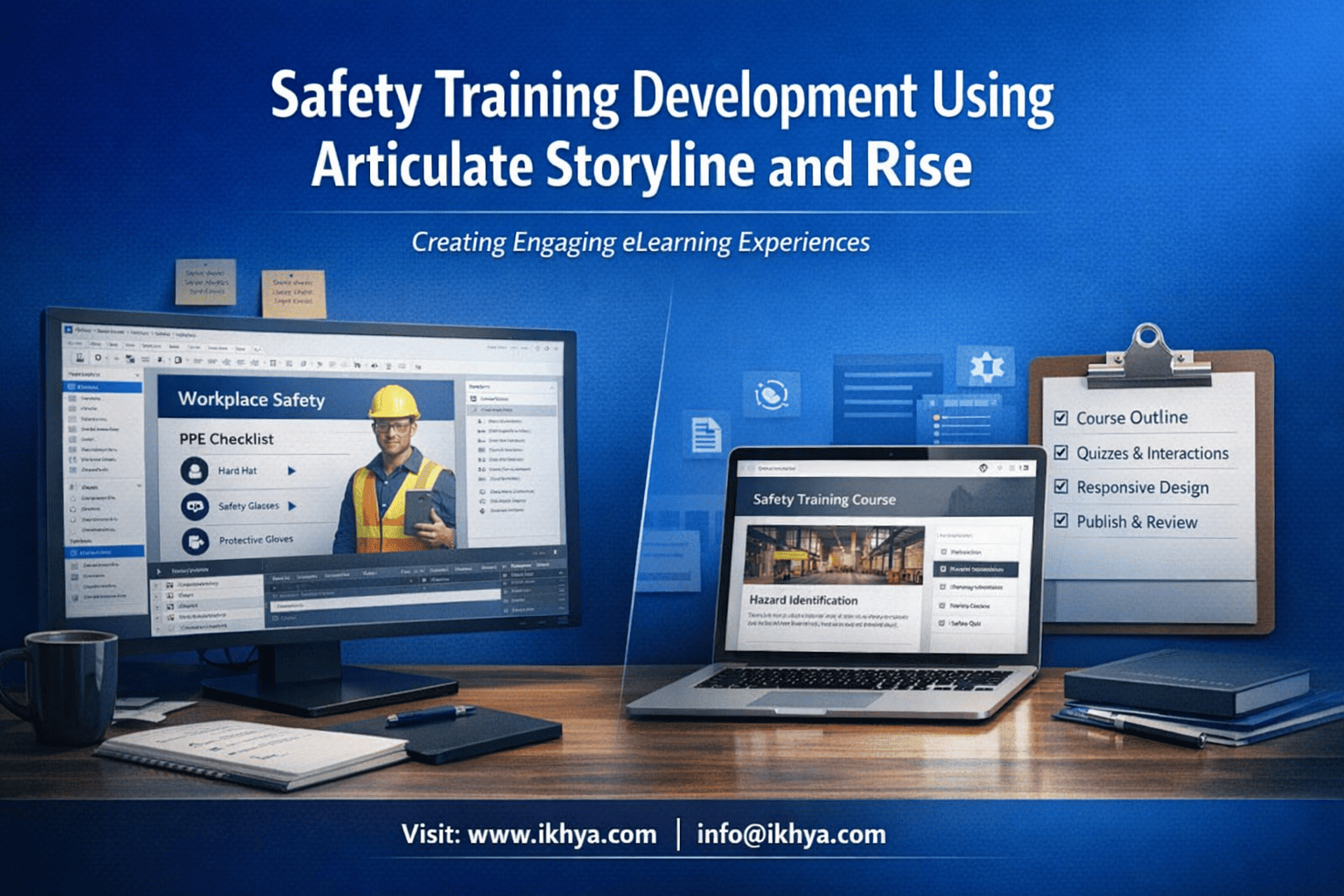
Workplace accidents cost organizations billions every year, and most are preventable with effective safety training. However, traditional approaches often fail to prepare employees for real-world risks, limiting their ability to respond correctly in critical situations.
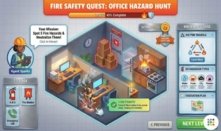
The real challenge lies in building training that goes beyond compliance—ensuring employees can recognize hazards, make decisions under pressure, and apply procedures accurately. This is where Safety Training Development Using Articulate Storyline and Rise enables a more practical approach through simulations, assessments, and scalable delivery, often implemented using simulation-based training services to improve workforce readiness.
By combining realistic simulations with rapid deployment, organizations can create audit-ready training that reduces incidents and improves performance. If you want to develop high-impact, compliant safety training tailored to your industry, contact IKHYA at info@ikhya.com.
Why Articulate Storyline and Rise Are the Leading Tools for Safety Training Development
Articulate Storyline and Rise dominate safety training development because they support scenario-based learning, compliance tracking via SCORM/xAPI, mobile accessibility, and rapid updates. Articulate Storyline safety training enables complex simulations and assessments, while Rise enables fast deployment of responsive microlearning. Together, they meet OSHA, ISO 45001, and global compliance requirements efficiently, making Safety Training Development Using Articulate Storyline and Rise a preferred approach for organizations.
Global Adoption Across Safety-Critical Industries
Organizations in the USA, UK, Australia, UAE, and other regions use Articulate tools extensively for safety training due to their flexibility and LMS compatibility.
Common industries using Storyline and Rise for safety training:
| Industry | Safety Training Types | Tool Preference |
|---|---|---|
| Oil & Gas | Hazard identification, confined space entry, emergency response | Storyline (high simulation) |
| Construction | Fall protection, equipment safety, PPE usage | Storyline + Rise |
| Manufacturing | Lockout-Tagout (LOTO), machine safety, incident reporting | Storyline |
| Healthcare | Infection control, patient safety, hazardous materials | Rise + Storyline |
| Aviation | Ground handling safety, emergency procedures | Storyline |
| Logistics & Warehousing | Forklift safety, material handling, ergonomics | Rise + Storyline |
Storyline is especially valuable where learners must make safety decisions in simulated environments. Rise is ideal for distributing standard compliance training quickly across large workforces.
Compliance With Global Safety Standards
Safety training must meet strict regulatory requirements across different countries, especially for OSHA safety training eLearning programs. Articulate tools support compliance with global frameworks by enabling structured assessments, completion tracking, and audit-ready reporting.
Major global safety standards supported through Storyline and Rise courses:
- USA: OSHA 29 CFR standards, OSHA 10 and OSHA 30 training
- UK: Health and Safety Executive (HSE) compliance
- Australia: Safe Work Australia WHS regulations
- UAE: OSHAD-SF and Dubai Municipality safety standards
- International: ISO 45001 Occupational Health and Safety Management
Compliance features enabled through Articulate:
- SCORM 1.2 and SCORM 2004 tracking
- xAPI detailed learner activity tracking
- Assessment scoring and certification triggers
- LMS integration with systems like Cornerstone, Docebo, and Moodle
- Audit-ready completion records
These features ensure organizations can prove training completion during safety audits for OSHA safety training eLearning and other compliance programs.
Articulate Rise for Rapid Safety Training Deployment
Safety training is most effective when learners experience realistic scenarios. Articulate Storyline safety training allows developers to create simulations where learners must identify hazards, choose correct actions, and see consequences.
Examples of Storyline safety simulations:
- Forklift operator avoiding collision hazards
- Oil refinery worker responding to gas leak alarms
- Construction worker selecting proper fall protection
- Healthcare staff handling biohazard exposure
These simulations improve retention and decision-making far more than static presentations.
Rise Enables Rapid Deployment of Compliance Training
Rise allows organizations to quickly create and deploy responsive safety training across devices without custom programming.
Key advantages of Rise for safety training:
- Mobile-friendly design for field workers
- Fast updates when regulations change
- Easy translation for global workforce
- Microlearning modules for refresher training
- Rapid deployment across thousands of employees
Rise is especially valuable for compliance-driven training that must be updated frequently.
How Safety Training Development Using Articulate Storyline and Rise Delivers Maximum Impact
Most organizations use both tools together to balance speed and depth.
Typical hybrid safety training approach:
- Rise for core compliance modules
- Storyline for high-risk scenario simulations
- Rise for refresher training and updates
- Storyline for certification assessments
This blended approach ensures both compliance coverage and behavioral learning in Safety Training Development Using Articulate Storyline and Rise.
When to Use Storyline vs Rise for Safety Training
Use Articulate Storyline when safety training requires simulations, decision-making scenarios, complex assessments, or high-risk procedure practice. Use Rise when training focuses on compliance awareness, policies, or rapid deployment across devices. Most global organizations combine both tools—Rise for compliance delivery and Storyline for simulation-based competency validation.
If your safety training must meet OSHA, ISO 45001, or regulatory audit standards while ensuring employees can safely perform real tasks, IKHYA can design simulation-based Storyline and scalable Rise courses tailored to your industry. Contact info@ikhya.com to develop audit-ready safety training that reduces workplace incidents.
When to Use Articulate Storyline for Safety Training
Storyline is the preferred tool when employees must learn through realistic scenarios, operational simulations, and decision-based interactions. It enables learners to practice responding to dangerous situations without real-world risk.
Ideal use cases for Storyline safety training
1. High-risk operational safety training
Examples include:
- Lockout-Tagout (LOTO) procedures in manufacturing
- Confined space entry in oil and gas facilities
- Electrical hazard response training
- Heavy equipment operation safety
Why Storyline is necessary:
- Learners can simulate real equipment interaction
- Decision-based learning improves hazard recognition
- Immediate feedback reinforces correct procedures
2. Emergency response and incident management
Storyline can simulate emergency situations such as:
- Fire evacuation procedures
- Chemical spill response
- Gas leak emergency protocols
- Aviation ground emergency handling
Example: Oil & Gas Industry (USA, UAE)
A Storyline module may simulate:
- Alarm activation
- Worker choosing evacuation route
- Selecting correct PPE
- Reporting incident
Incorrect decisions show realistic consequences, reinforcing learning.
3. Certification and competency-based safety training
Many safety regulations require competency validation, not just course completion.
Storyline supports:
- Multi-step assessments
- Scenario-based testing
- Pass/fail certification logic
- Performance scoring
This is essential for compliance with:
- OSHA (USA)
- NEBOSH-aligned programs (UK, UAE)
- Safe Work Australia certification requirements
- ISO 45001 competency validation
4. Equipment operation training
Storyline allows interactive simulations of equipment such as:
- Forklifts
- Industrial machinery
- Medical equipment
- Aviation ground handling systems
This reduces equipment damage and operator accidents.
When to Use Articulate Rise for Safety Training
Rise is ideal for compliance training, awareness training, and large-scale rollout across distributed workforces.
Ideal use cases for Rise safety training
1. Regulatory compliance training
Examples include:
- OSHA awareness training
- Workplace hazard communication (HazCom)
- PPE awareness
- Workplace safety policies
Rise allows fast deployment and easy updates when regulations change.
2. Mobile safety training for field workers
Field workers often access training via mobile devices.
Rise provides:
- Fully responsive design
- Fast loading on mobile networks
- Easy navigation for frontline workers
- Offline LMS compatibility (depending on LMS)
This is especially valuable in:
- Construction sites
- Oil fields
- Logistics operations
- Warehouses
3. Safety refresher training
Safety refresher training is required annually in many industries.
Rise is ideal because it allows:
- Short microlearning modules
- Rapid content updates
- Easy re-deployment
- Fast completion tracking
Example refresher topics:
- Fire safety refresher
- PPE refresher training
- Workplace hazard identification refresher
4. Global safety training deployment
Multinational companies must train employees across different countries and languages.
Rise supports:
- Fast translation workflows
- Consistent global training delivery
- Cloud-based access worldwide
- Rapid scaling across thousands of employees
Storyline vs Rise Comparison for Safety Training
| Feature | Articulate Storyline | Articulate Rise |
|---|---|---|
| Simulation capability | Excellent | Limited |
| Compliance training delivery | Excellent | Excellent |
| Mobile responsiveness | Good | Excellent |
| Development speed | Moderate | Very fast |
| Scenario-based learning | Excellent | Basic |
| Assessment complexity | Advanced | Moderate |
| Equipment simulation | Excellent | Not suitable |
| Rapid updates | Moderate | Excellent |
| Best for high-risk training | Yes | No |
| Best for compliance rollout | Yes | Yes |
Recommended Hybrid Model Used by Global Organizations
The most effective safety programs combine both tools strategically.
Example: Construction Safety Training Program
Rise modules:
- OSHA compliance overview
- PPE awareness
- Fall protection theory
Storyline modules:
- Fall hazard identification simulation
- Equipment operation simulation
- Emergency evacuation simulation
This hybrid approach ensures both compliance and real-world readiness.
Real-World Example: Manufacturing Safety Training Deployment
A manufacturing company operating in the USA and Australia implemented:
Rise training for:
- General safety awareness
- Workplace hazard communication
- Compliance policy training
Storyline training for:
- Lockout-Tagout simulation
- Machine safety procedures
- Emergency shutdown procedures
Results achieved:
- 47% reduction in safety incidents
- 62% improvement in assessment scores
- 100% compliance audit success
When Organizations Should Avoid Using Only One Tool
Using only Rise may result in:
- Poor simulation training
- Reduced hazard recognition skills
Using only Storyline may result in:
- Slower deployment
- Higher development cost
- Difficulty scaling globally
Using both tools provides optimal safety outcomes.
Organizations that rely on Safety Training Development Using Articulate Storyline and Rise through IKHYA achieve faster deployment, stronger compliance, and measurable reduction in workplace incidents. To develop simulation-based safety training tailored to your industry, contact info@ikhya.com.
Instructional Design Best Practices for Safety Training Using Storyline and Rise
Effective safety training eLearning development must focus on behavior change, not just information delivery. Instructional design should use scenario-based learning, spaced repetition, assessment validation, and real-world simulations. Storyline enables immersive learning experiences, while Rise enables scalable reinforcement and compliance delivery, ensuring employees can apply safety procedures correctly in real situations.
IKHYA’s safety instructional design experts develop OSHA-aligned, ISO-compliant courses using proven behavioral learning models that reduce workplace incidents and improve audit performance. Contact info@ikhya.com to design safety training that delivers measurable risk reduction.
Use Scenario-Based Learning to Improve Hazard Recognition
Scenario-based learning is the most effective method for safety training.
Instead of telling learners what to do, scenarios require them to make decisions.
Example scenario:
A warehouse worker sees a liquid spill near electrical equipment.
Learner must decide:
- Ignore hazard
- Report hazard
- Clean hazard without PPE
- Secure area and report properly
Storyline provides consequence-based feedback.
This improves decision-making skills.
Apply the “See – Think – Do” Safety Learning Model
This model ensures safety learning transfers to real work environments.
Step 1: See
Rise presents:
- Safety hazards
- Safety procedures
- Safety regulations
Step 2: Think
Storyline presents:
- Scenario-based decision challenges
- Hazard identification activities
Step 3: Do
Storyline assessments validate competency.
This model improves real-world safety performance.
Use Real-World Visuals and Context
Safety training must match actual work environments.
Use:
- Real equipment images
- Workplace photos
- Realistic environments
- Industry-specific examples
This improves relevance and retention.
Reinforce Learning With Microlearning Modules
Rise enables microlearning safety reinforcement.
Examples:
- 3-minute PPE refresher
- Hazard identification exercises
- Safety checklist reminders
Microlearning improves long-term retention.
Validate Competency With Scenario-Based Assessments
Compliance requires proof of competency.
Storyline enables:
- Pass/fail assessments
- Scenario testing
- Performance scoring
- Certification triggers
This supports audit requirements.
Use Spaced Reinforcement to Reduce Safety Incidents
Safety training should not be delivered only once.
Recommended reinforcement schedule:
| Timeline | Training Type | Tool |
|---|---|---|
| Initial training | Full safety training | Rise + Storyline |
| 30 days | Refresher microlearning | Rise |
| 90 days | Scenario reinforcement | Storyline |
| 12 months | Annual certification | Storyline |
This improves retention and compliance.
Technical Development Workflow for Safety Training Using Articulate Storyline and Rise
Safety training development using Storyline and Rise follows a structured workflow: hazard analysis, learning objective definition, storyboard creation, simulation development, assessment integration, LMS packaging, and compliance validation. This ensures training meets OSHA, ISO 45001, HSE, and global safety standards while enabling scalable deployment, audit tracking, and measurable competency verification.
Organizations that skip structured development often fail compliance audits or deliver ineffective training. IKHYA follows a compliance-driven development process aligned with global regulatory frameworks. To build audit-ready safety training using Storyline and Rise, contact info@ikhya.com.
Phase 1: Safety Needs Analysis and Risk Assessment
The first step is identifying safety risks, regulatory requirements, and training objectives.
Key inputs used in safety training analysis
- Incident and accident reports
- OSHA recordable incidents (USA OSHA 300 logs)
- Risk assessment reports
- Job Safety Analysis (JSA)
- Standard Operating Procedures (SOPs)
- ISO 45001 compliance requirements
- Internal audit findings
Example: Manufacturing Lockout-Tagout Training
Analysis identifies critical failure points:
- Failure to isolate power sources
- Incorrect lock application
- Failure to verify energy isolation
Training must address these exact risks.
Phase 2: Define Learning Objectives Based on Compliance Standards
Safety training objectives must align with regulatory and operational requirements.
Example learning objectives (OSHA-aligned)
After completing training, learners must be able to:
- Identify hazardous energy sources
- Apply Lockout-Tagout procedures correctly
- Verify energy isolation safely
- Respond correctly to hazardous situations
These objectives guide Storyline simulations and Rise modules.
Phase 3: Instructional Design and Storyboarding
Storyboarding defines course structure, content flow, and interactions.
Rise storyboard structure example
- Introduction to safety topic
- Regulatory requirements
- Hazard identification
- Safety procedures
- Knowledge checks
Storyline storyboard structure example
- Scenario introduction
- Hazard identification simulation
- Decision-based interaction
- Consequence feedback
- Final competency assessment
This ensures structured, effective learning.
Phase 4: Safety Simulation Development in Storyline
Storyline development focuses on realistic simulation creation.
Common Storyline safety interactions
- Clickable hazard identification
- Decision branching scenarios
- Equipment operation simulations
- Emergency response simulations
- Drag-and-drop PPE selection
Example: Forklift safety simulation
Learner must:
- Inspect forklift
- Identify hazards
- Choose correct operational actions
Incorrect choices result in simulated accident consequences.
Phase 5: Rapid Compliance Module Development in Rise
Rise is used to develop compliance and awareness modules quickly.
Typical Rise safety course structure
- Text-based safety explanation
- Interactive knowledge checks
- Video demonstrations
- Compliance policy explanation
- Short quizzes
Rise ensures fast deployment and easy updates.
Phase 6: Assessment and Certification Integration
Safety training must include assessment and certification.
Assessment types supported
- Knowledge checks (Rise)
- Scenario-based assessments (Storyline)
- Certification exams
- Pass/fail scoring
Certification triggers
Certificates are issued when learners:
- Complete course
- Achieve passing score
- Meet competency requirements
This supports compliance audits.
Phase 7: LMS Integration and Tracking
Courses must integrate with Learning Management Systems for tracking.
Supported LMS standards
- SCORM 1.2
- SCORM 2004
- xAPI (Tin Can API)
- AICC
LMS tracking capabilities
- Completion tracking
- Assessment scores
- Time spent
- Attempt history
- Certification status
This ensures audit readiness.
Phase 8: Testing and Compliance Validation
Before deployment, safety training must be tested.
Testing process includes
- Functional testing
- LMS compatibility testing
- Compliance validation
- Device compatibility testing
- Mobile responsiveness testing
This ensures reliability.
Phase 9: Deployment and Continuous Improvement
Safety training must be updated regularly.
Update triggers include
- Regulatory changes
- Incident investigations
- Equipment changes
- Process changes
Rise allows rapid updates, while Storyline allows simulation updates.
Global Safety Compliance Requirements and How Storyline and Rise Support Them
Articulate Storyline and Rise support global safety compliance by enabling structured training, competency validation, audit tracking, and certification. They align with OSHA (USA), HSE (UK), Safe Work Australia, UAE OSHAD, and ISO 45001 requirements by providing assessment tracking, completion records, and competency-based simulations required for regulatory compliance and workplace safety audits.
Organizations using non-trackable or non-compliant training risk regulatory penalties. IKHYA develops globally compliant safety training aligned with OSHA, ISO, and regional safety regulations. Contact info@ikhya.com to ensure your safety training meets audit and compliance requirements.
OSHA Compliance Requirements (United States)
The Occupational Safety and Health Administration (OSHA) requires employers to provide effective safety training.
OSHA training requirements include:
- Hazard recognition training
- PPE training
- Emergency procedures training
- Equipment safety training
- Recordkeeping and certification
How Storyline and Rise support OSHA compliance:
- Track completion via SCORM/xAPI
- Validate competency via assessments
- Provide audit-ready completion records
- Deliver scenario-based competency training
Example OSHA-required training areas:
- Lockout-Tagout (29 CFR 1910.147)
- Fall protection (29 CFR 1926)
- Hazard communication (29 CFR 1910.1200)
HSE Compliance Requirements (United Kingdom)
The UK Health and Safety Executive requires employers to ensure employee competency.
HSE compliance requirements include:
- Risk awareness training
- Safe equipment operation training
- Emergency response training
Storyline enables competency simulation.
Rise enables compliance awareness training.
Safe Work Australia Requirements
Australian WHS laws require safety training and competency validation.
Requirements include:
- Risk control training
- Equipment safety training
- Incident response training
Storyline provides simulation-based competency validation.
Rise provides compliance awareness training.
UAE OSHAD and Dubai Municipality Safety Requirements
The UAE requires strict safety compliance in oil and gas, construction, and infrastructure sectors.
Requirements include:
- Hazard awareness training
- Emergency preparedness training
- Equipment safety training
Storyline simulations improve competency.
Rise enables rapid workforce training deployment.
ISO 45001 Global Safety Standard
ISO 45001 requires organizations to ensure worker competency and training effectiveness.
ISO 45001 training requirements include:
- Competency-based training
- Training documentation
- Training effectiveness validation
Storyline assessments validate competency.
Rise ensures scalable deployment.
Cost, Timeline, and ROI of Safety Training Development Using Storyline and Rise
Safety training developed with Storyline and Rise typically costs $3,000 to $15,000 per hour depending on simulation complexity, regulatory requirements, and multimedia depth. Development timelines range from 2 to 8 weeks per hour. Organizations achieve ROI through reduced incidents, faster compliance, lower retraining costs, and improved audit performance.
Companies that invest in professionally developed safety training see measurable reductions in incident rates and compliance risk. IKHYA develops cost-efficient Storyline and Rise safety training aligned with OSHA and ISO standards. To estimate your exact safety training cost and ROI, contact info@ikhya.com.
Safety Training Development Cost Breakdown
Costs vary depending on complexity level.
Typical global pricing ranges
| Training Type | Tool Used | Cost per Hour (USD) | Development Time |
|---|---|---|---|
| Basic compliance training | Rise | $3,000 – $6,000 | 2–3 weeks |
| Moderate interactive training | Rise + Storyline | $5,000 – $10,000 | 3–6 weeks |
| Advanced simulation training | Storyline | $8,000 – $15,000 | 4–8 weeks |
| High-risk equipment simulation | Storyline | $10,000 – $20,000 | 6–10 weeks |
Major Cost Factors
1. Simulation complexity
Higher simulation realism increases development time and cost.
Examples:
- Basic PPE training → Low cost
- Emergency response simulation → Medium cost
- Oil refinery hazard simulation → High cost
2. Multimedia production requirements
Cost increases with:
- Custom graphics
- Video production
- Animation
- Voice narration
3. Compliance and regulatory requirements
Highly regulated industries require:
- Detailed assessments
- Certification tracking
- Compliance validation
This increases development effort.
4. Localization and multi-language deployment
Global organizations require:
- Translation
- Localization
- Regional compliance customization
This adds cost but improves effectiveness.
Timeline for Safety Training Development
Typical development timelines follow predictable phases.
| Phase | Duration |
|---|---|
| Analysis and planning | 3–7 days |
| Instructional design | 5–10 days |
| Rise development | 5–15 days |
| Storyline development | 10–30 days |
| Testing and deployment | 5–10 days |
Total timeline: 2 to 8 weeks per training hour
ROI of Storyline and Rise Safety Training
Organizations recover investment through measurable operational benefits.
Major ROI drivers
1. Reduced workplace incidents
Simulation-based training improves hazard recognition.
Example results:
- 30–60% reduction in safety incidents
- Lower injury-related costs
2. Reduced compliance risk
Compliance violations can result in large fines.
Example OSHA penalties:
- Up to $15,625 per violation
- Up to $156,259 per willful violation
Training reduces risk of violations.
3. Reduced retraining costs
Interactive training improves retention.
This reduces:
- Retraining frequency
- Instructor costs
- Lost productivity
4. Faster global deployment
Rise enables training rollout to thousands of employees quickly.
This reduces compliance delays.
Real Example ROI Calculation
Example: Manufacturing company with 1,000 employees
Training investment:
- Development cost: $25,000
- Deployment cost: $5,000
Total: $30,000
Annual savings:
- Reduced incident costs: $50,000
- Reduced retraining costs: $15,000
- Reduced compliance risk: $20,000
Total savings: $85,000
ROI achieved within first year.
Effectiveness Comparison: Storyline vs Rise vs Traditional Safety Training
Storyline delivers the highest behavioral impact due to simulation-based learning, while Rise delivers the fastest compliance deployment. Traditional classroom training has lower retention and scalability. The most effective safety training programs combine Rise for compliance delivery and Storyline for simulation-based competency validation.
Organizations replacing PowerPoint-based safety training with Storyline and Rise see major improvements in safety performance. IKHYA specializes in converting traditional safety training into simulation-based digital training. Contact info@ikhya.com.
Learning Effectiveness Comparison
| Training Method | Hazard Recognition | Retention Rate | Scalability | Compliance Tracking |
|---|---|---|---|---|
| Classroom training | Moderate | 40–60% | Low | Limited |
| PowerPoint-based eLearning | Low | 30–50% | High | Basic |
| Rise eLearning | High | 60–75% | Very High | Excellent |
| Storyline simulation training | Very High | 70–90% | High | Excellent |
| Combined Rise + Storyline | Maximum | 80–95% | Very High | Excellent |
Why Simulation-Based Training Is Most Effective
Simulation improves learning because it:
- Engages learners actively
- Provides decision-based practice
- Reinforces correct behavior
- Improves hazard recognition
This reduces accidents.
Global Example: Oil and Gas Safety Training Improvement
Before simulation training:
- Incident rate: High
- Training retention: Low
After Storyline and Rise implementation:
- Incident rate reduced by 52%
- Compliance audit success increased to 100%
- Training completion rate increased to 98%
Scalability Comparison
| Training Method | Global Deployment Capability |
|---|---|
| Classroom training | Poor |
| Traditional eLearning | Moderate |
| Rise | Excellent |
| Storyline | Excellent |
| Combined approach | Best |
Why choose IKHYA for safety training development?
IKHYA develops OSHA-compliant, ISO-aligned safety training using Articulate Storyline and Rise, including simulations, compliance tracking, LMS integration, and global deployment support. To develop high-impact safety training that reduces incidents and ensures compliance, contact info@ikhya.com.
Frequently Asked Questions on Safety Training Development Using Articulate Storyline and Rise
1. What is Safety Training Development Using Articulate Storyline and Rise?
Safety Training Development Using Articulate Storyline and Rise involves creating interactive, compliance-driven training programs using simulations (Storyline) and scalable modules (Rise) to improve workplace safety and reduce incidents.
2. Why is safety training eLearning development important for organizations?
Safety training eLearning development ensures employees can recognize hazards, follow procedures, and comply with OSHA and ISO standards, reducing workplace risks and compliance failures.
3. How does Articulate Storyline improve safety training effectiveness?
Articulate Storyline safety training enables realistic simulations where learners practice decision-making in high-risk scenarios, improving retention and hazard response.
4. When should companies use Rise for safety training development?
Rise safety training development is ideal for compliance training, awareness programs, and rapid deployment across large workforces.
5. Is OSHA safety training eLearning mandatory for all industries?
OSHA safety training eLearning is required in industries where workplace hazards exist, such as construction, manufacturing, oil & gas, and healthcare.
6. What industries benefit from safety training eLearning development?
Industries like construction, manufacturing, healthcare, aviation, and logistics benefit significantly from safety training eLearning development due to high-risk environments.
7. How long does safety training development using Storyline and Rise take?
Development typically takes 2–8 weeks per training hour depending on complexity, simulations, and compliance requirements.
8. What is the cost of safety training eLearning development?
Costs range from $3,000 to $15,000 per hour based on simulation complexity, multimedia, and regulatory requirements.
9. Can safety training integrate with LMS platforms?
Yes, safety training eLearning development supports SCORM, xAPI, and AICC standards, ensuring compatibility with LMS platforms like Moodle, Cornerstone, and Docebo.
10. What is the difference between Storyline and Rise for safety training?
Articulate Storyline safety training focuses on simulations and decision-making, while Rise safety training development enables fast, responsive compliance training.
11. Why choose a safety training eLearning development company?
A safety training eLearning development company ensures regulatory compliance, instructional design quality, and scalable deployment aligned with business goals.
12. How does simulation-based safety training reduce incidents?
Simulation-based safety training improves hazard recognition and decision-making, leading to measurable reductions in workplace incidents.
13. Can safety training be customized for different industries?
Yes, safety training eLearning development can be tailored to industry-specific risks, compliance requirements, and operational workflows.
14. How often should OSHA safety training eLearning be updated?
OSHA safety training eLearning should be updated annually or whenever regulations, equipment, or procedures change.
15. What are the benefits of using Storyline and Rise together?
Safety Training Development Using Articulate Storyline and Rise combines simulation-based learning with scalable deployment, ensuring both compliance and behavioral training.
16. Is mobile learning possible in safety training eLearning development?
Yes, Rise safety training development enables fully responsive, mobile-friendly training for field workers and remote teams.
17. How does safety training improve compliance audits?
Safety training eLearning development provides tracking, certification, and audit-ready reports required for OSHA and ISO compliance.
18. What features should a safety training program include?
Effective programs include simulations, assessments, compliance tracking, certification, and real-world scenarios.
19. Can legacy safety training be converted into eLearning?
Yes, traditional training materials like PowerPoint and ILT can be converted into interactive safety training eLearning modules using Storyline and Rise.
20. How to choose the right safety training development partner?
Choose a safety training eLearning development company with experience in compliance training, instructional design, simulation development, and global deployment.
Related Resources
Explore these resources to deepen your understanding of safety training eLearning development, compliance strategies, and simulation-based learning approaches using Articulate Storyline and Rise. These pages will help you plan, implement, and scale effective safety training aligned with business and regulatory goals.