Adaptive Learning with Variables in Lectora Inspire: Step-by-Step Guide for Personalized eLearning

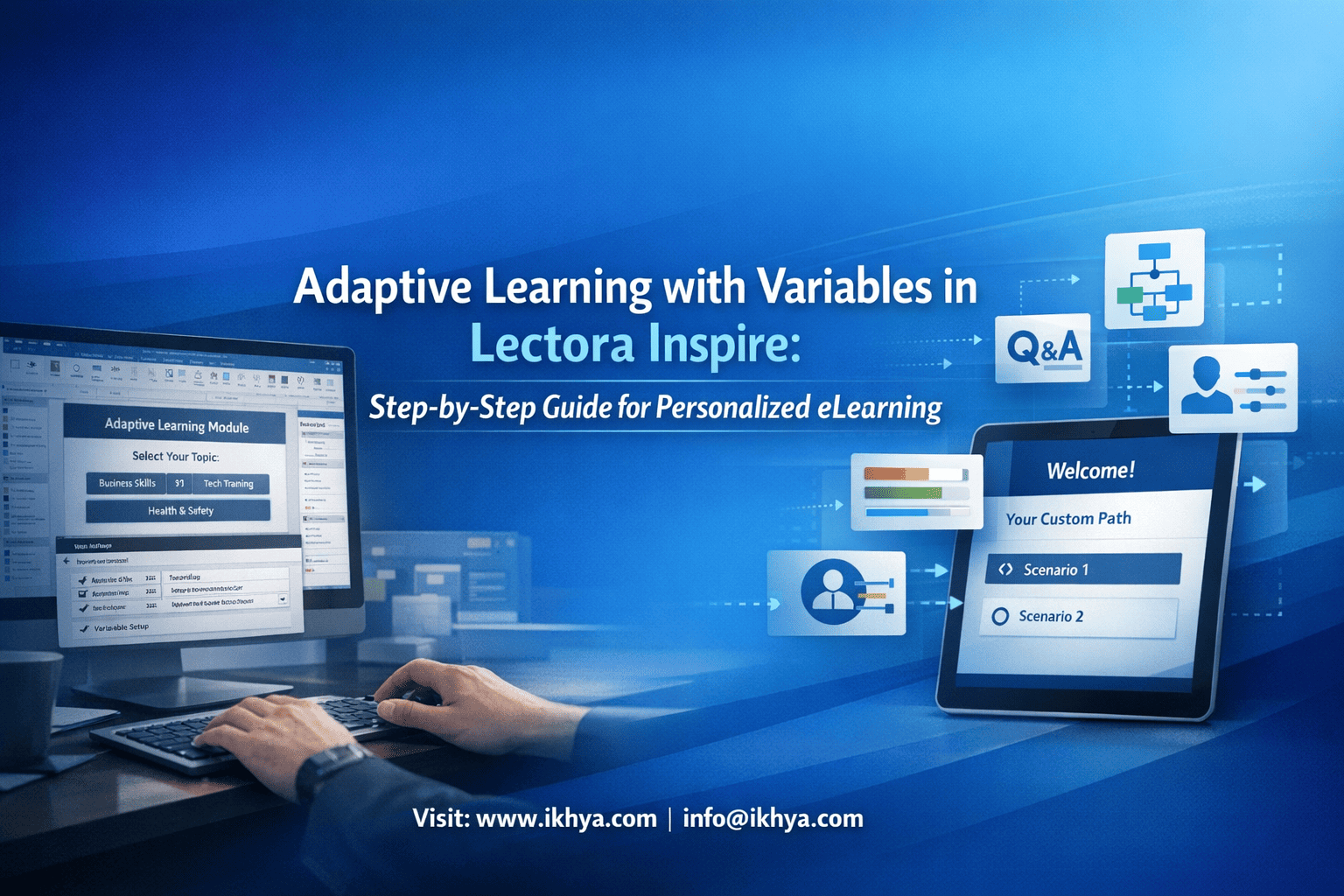
Adaptive learning is a powerful approach that customizes the learning experience based on each learner’s inputs, performance, and preferences. In Lectora Inspire, adaptive learning is achieved using variables that track user behavior and dynamically adjust course content. This personalization improves engagement, retention, and overall learning effectiveness. Organizations across healthcare, finance, manufacturing, and retail are leveraging adaptive Lectora courses to create tailored training paths that meet individual learner needs.
Whether you are designing compliance modules or product training, understanding how to effectively use variables can transform standard courses into dynamic, learner-centric experiences. Early implementation allows instructional designers to plan branching scenarios, conditionally display content, and provide a truly interactive learning journey. Explore how you can create adaptive Lectora courses that respond to each learner’s unique profile and progress. For a hands-on experience, you can book a free eLearning demo to see adaptive learning in action.
Understanding Variables in Lectora Inspire
Variables are the backbone of adaptive learning in Lectora Inspire. They store data about the learner, such as answers, completion status, or choices made during the course, and trigger content changes based on predefined conditions.
Types of Variables
- Text Variables – Store string data such as user names, course selections, or survey responses.
- Number Variables – Track scores, progress, or numeric input for branching scenarios.
- True/False Variables – Used for yes/no conditions, showing or hiding content dynamically.
How Variables Influence Content Flow
Variables determine which content learners see next, creating a personalized path. For example:
- Display a remedial module if the learner scores below a certain threshold.
- Unlock bonus content for high performers.
- Adjust navigation menus based on completed sections.
By combining multiple variables and triggers, Lectora allows you to build complex adaptive logic that tailors the course experience to individual needs. This level of personalization not only enhances engagement but also reduces knowledge gaps and training inefficiencies. For deeper guidance on implementing Lectora courses, IKHYA’s Lectora Inspire development services offer structured support for adaptive learning projects.
Creating Adaptive Learning Scenarios
Adaptive learning scenarios in Lectora Inspire allow you to deliver personalized content paths based on learner inputs, assessment results, or interactions. By combining variables with triggers, you can create dynamic courses that respond to individual progress and preferences.
Step-by-Step Setup
- Define your learning objectives – Identify which parts of the course should adapt based on learner behavior.
- Determine key variables – Choose the appropriate variable types (text, number, true/false) to track learner choices and performance.
- Set up triggers – Assign actions to variable conditions, such as showing or hiding slides, unlocking modules, or redirecting to specific content.
- Test branching logic – Simulate different learner paths to ensure triggers activate correctly and content flows smoothly.
- Iterate and refine – Adjust conditions and variables based on learner feedback and test results to optimize personalization.
Triggering Content Based on Learner Input
Variables in Lectora allow you to trigger content dynamically:
- Assessment-based branching: Show remedial modules for low scores and advanced content for high performers.
- Navigation control: Enable or restrict access to certain sections depending on completed content or choices made.
- User preference adaptation: Store learner preferences (e.g., learning style or pace) and adjust content delivery accordingly.
Example: Branching Based on Assessment Scores
Consider a safety training course in manufacturing:
- Scenario: Learners complete a quiz at the end of a module.
- Variable:
QuizScore(number) - Logic:
- If
QuizScore< 70 → Show remedial module - If
QuizScore≥ 70 → Unlock next advanced module
- If
This simple setup ensures learners only move forward once they have mastered foundational knowledge, reinforcing learning and improving retention. You can expand this further by using multiple variables to track cumulative performance across modules or dynamically display real-world examples relevant to the learner’s role. For practical implementation support, IKHYA’s instructional design services can help you design adaptive scenarios that align with learning objectives.
Best Practices for Using Variables in Lectora Inspire
Implementing variables effectively is crucial for creating adaptive courses that are maintainable, scalable, and engaging. Following best practices ensures smooth course functionality and maximizes the learner experience.
Avoiding Complexity
- Limit the number of variables per module – Too many variables can make logic difficult to manage.
- Use descriptive variable names – Names like
QuizScoreorModuleCompletedmake debugging and maintenance easier. - Organize variables systematically – Group related variables for clear structure and avoid overlap.
Testing and Debugging
- Simulate multiple learner paths – Test different scenarios to ensure triggers work correctly.
- Use Lectora’s debug tools – Monitor variable values and check trigger execution to catch errors early.
- Iterate gradually – Implement one adaptive feature at a time before adding more complexity.
Maintaining Scalability
- Reusable triggers and templates – Create modular triggers that can be applied across multiple courses.
- Document variable logic – Maintain a logic map that explains each variable and its role.
- Plan for updates – Ensure adaptive logic can accommodate future content changes without breaking existing triggers.
By following these best practices, your adaptive Lectora courses will remain flexible, efficient, and learner-focused. Organizations can achieve better engagement and measurable training outcomes while reducing development errors. For expert guidance on structured adaptive course development, IKHYA’s Lectora Inspire development services offer tailored support for creating scalable, variable-driven courses.
Vendor Selection & Outsourcing Strategy
Developing adaptive Lectora Inspire courses can be complex, and organizations often face the choice between in-house development or outsourcing to a specialized vendor. A structured approach ensures high-quality, cost-effective outcomes.
When to Outsource Adaptive Course Development
- Limited in-house expertise – Your team lacks advanced Lectora skills or experience with variables and branching.
- Tight timelines – Projects need rapid deployment, and outsourcing accelerates development.
- Complex adaptive logic – Courses require sophisticated triggers, multi-variable tracking, or personalized branching.
- Industry compliance – Vendors with experience in healthcare, finance, or safety training can ensure regulatory compliance.
Criteria for Selecting a Lectora Vendor
- Experience with adaptive learning – Verify prior projects that use variables and branching logic effectively.
- Industry knowledge – Healthcare, manufacturing, finance, or retail expertise ensures relevant examples and realistic scenarios.
- Scalability & support – Vendor should provide reusable templates, maintenance support, and updates.
- Technical compatibility – Ability to deliver SCORM/xAPI-compliant courses compatible with your LMS.
- Project management & timelines – Clear communication, milestones, and realistic timelines reduce risks.
Cost & Timeline Frameworks
- Small module (1–2 topics, 15–20 min)
- Timeline: 2 weeks
- Cost: $2,500–$4,000
- Medium module (3–5 topics, 30–45 min)
- Timeline: 4 weeks
- Cost: $5,000–$8,000
- Large adaptive program (multi-module, 1–2 hours per learner)
- Timeline: 6–8 weeks
- Cost: $10,000–$15,000
Outsourcing to an experienced Lectora vendor like IKHYA – eLearning Solutions Company ensures professional instructional design, compliance with corporate standards, and reliable delivery timelines. Clear communication, project scoping, and using a vendor with proven adaptive learning experience help reduce risks and maximize learner engagement.
Lectora Inspire vs Other Tools for Adaptive Learning
Choosing the right authoring tool is critical for developing effective adaptive learning courses. Lectora Inspire offers robust variable and branching capabilities, but it’s important to compare it with alternatives like Articulate Storyline, Rise, and Adobe Captivate.
Lectora Inspire
- Strengths:
- Advanced variable and trigger logic for adaptive learning
- SCORM/xAPI compliant and LMS-friendly
- Multi-device responsive design
- Ideal for complex branching scenarios and compliance-heavy industries
- Limitations:
- Slightly steeper learning curve
- Less template-driven than Storyline or Rise
Articulate Storyline
- Strengths:
- Intuitive interface with slide-based design
- Rich interactive elements
- Popular for rapid eLearning development
- Limitations:
- Adaptive learning logic is possible but less flexible for multi-variable scenarios
- Requires more manual setup for complex personalization
Articulate Rise
- Strengths:
- Web-based, mobile-friendly
- Quick, responsive course creation
- Easy for SMEs to update content
- Limitations:
- Limited variable and branching capability
- Best suited for linear or lightly personalized content
Adobe Captivate
- Strengths:
- Powerful branching and responsive design
- VR and simulation capabilities
- Limitations:
- Interface can be complex
- Adaptive learning setup requires significant technical expertise
Comparison Summary Table:
| Tool | Adaptive Logic | Ease of Use | Multi-Device Support | Best Use Case |
|---|---|---|---|---|
| Lectora Inspire | High | Medium | Excellent | Complex adaptive, compliance-heavy courses |
| Storyline | Medium | High | Good | Interactive modules, rapid development |
| Rise | Low | Very High | Excellent | Mobile-first linear content |
| Captivate | High | Medium | Excellent | Simulation, VR, complex branching |
Lectora Inspire stands out for complex, variable-driven adaptive learning, particularly in industries requiring compliance, multi-device delivery, and LMS integration. For organizations needing high personalization, IKHYA’s Lectora Inspire development services provide expert support in building scalable, adaptive courses.
Industry-Specific Applications
Adaptive learning with variables in Lectora Inspire can be tailored to meet the unique challenges and requirements of different industries. By adjusting content dynamically, organizations can improve engagement, compliance, and knowledge retention.
Healthcare: Compliance Training Personalization
- Use case: Mandatory compliance courses (e.g., HIPAA, patient safety).
- Adaptive approach:
- Track learner quiz performance with number variables.
- Provide remedial content for low scores or advanced modules for high performers.
- Display role-specific scenarios using text variables (e.g., nurse, doctor, administrative staff).
- Benefit: Ensures all employees meet compliance standards while minimizing unnecessary repetition.
Manufacturing: Safety Training Adaptive Modules
- Use case: Workplace safety and equipment handling.
- Adaptive approach:
- Monitor completion of safety modules via true/false variables.
- Unlock site-specific safety scenarios only after core module completion.
- Provide scenario-based assessments tailored to the machinery or process the learner interacts with.
- Benefit: Reduces workplace incidents by targeting relevant safety content to each role.
Finance & Retail: Customer-Service Adaptive Learning
- Use case: Employee training on compliance, fraud detection, or customer service.
- Adaptive approach:
- Use number variables to track knowledge checks.
- Personalize content based on learner location, role, or past training history.
- Provide additional case studies or simulations based on performance.
- Benefit: Improves service quality, compliance, and role-specific decision-making.
IT / Software: Software Training Personalization
- Use case: Tool onboarding or system updates.
- Adaptive approach:
- Track learner interactions and progress using variables.
- Show advanced modules for users demonstrating proficiency.
- Provide guided tutorials for users needing extra assistance.
- Benefit: Ensures effective adoption of tools while accommodating varying skill levels.
By applying adaptive learning scenarios tailored to each industry, organizations can maximize learner engagement and training ROI. For professional guidance in developing industry-specific adaptive courses, IKHYA’s eLearning consultancy services provide end-to-end support, from instructional design to LMS integration.
Real-World Examples & Case Scenarios
Practical examples help illustrate how variables and adaptive logic in Lectora Inspire translate into effective corporate training. Below are scenarios showing timelines, costs, and outcomes across different industries.
Example 1: Healthcare Compliance Module
- Objective: Ensure hospital staff understand patient privacy regulations.
- Adaptive setup:
- Variables used:
Role(text),QuizScore(number),ModuleCompleted(true/false) - Logic:
- Nurses receive nursing-specific scenarios.
- Staff scoring below 80% are redirected to remedial content.
- Timeline: 4 weeks (analysis → design → development → testing)
- Cost: $6,000–$8,000 per module
- Variables used:
- Outcome: 95% staff completion with measurable knowledge retention improvements.
Example 2: Manufacturing Safety Training
- Objective: Train workers on machinery safety protocols.
- Adaptive setup:
- Variables used:
MachineType(text),QuizScore(number),SafetyCheckPassed(true/false) - Logic:
- Workers receive modules based on assigned machinery.
- Low-scoring learners access additional practice simulations.
- Timeline: 2-week pilot module
- Cost: $3,000–$4,500 per module
- Variables used:
- Outcome: Reduced on-the-job safety incidents by 20% in first quarter post-training.
Example 3: Retail Customer-Service Training
- Objective: Improve frontline staff’s handling of customer interactions.
- Adaptive setup:
- Variables used:
Region(text),AssessmentScore(number),ModuleProgress(true/false) - Logic:
- Staff see region-specific scenarios.
- Additional case studies unlock for employees scoring below threshold.
- Timeline: 3-week deployment for multi-location rollout
- Cost: $5,000–$7,000 for full adaptive course
- Variables used:
- Outcome: Enhanced customer satisfaction metrics by 15%, faster onboarding, and better compliance with service protocols.
Key Lessons from Case Scenarios
- Variable planning is essential – Clearly define what each variable tracks before development begins.
- Iterative testing reduces errors – Simulate all learner paths to ensure triggers and branching logic function correctly.
- Tailoring content increases ROI – Adaptive modules reduce wasted learning time and improve retention compared to static courses.
For organizations seeking expert assistance, IKHYA’s custom eLearning development services can design adaptive, variable-driven courses tailored to industry needs and corporate objectives.
Conclusion
Adaptive learning with variables in Lectora Inspire transforms standard eLearning into a personalized, engaging, and efficient learning experience. By leveraging text, number, and true/false variables, instructional designers can create courses that respond dynamically to learner input, assessment performance, and role-specific needs. Organizations across healthcare, manufacturing, retail, finance, and IT can benefit from adaptive modules that improve knowledge retention, compliance, and employee engagement.
Key takeaways:
- Variables drive personalization – They determine content visibility, branching, and learner paths.
- Testing ensures reliability – Simulating multiple scenarios prevents errors in adaptive logic.
- Vendor expertise accelerates success – Partnering with experienced Lectora developers ensures scalability, compliance, and on-time delivery.
- Cost and timeline planning matters – Adaptive courses range from $2,500–$15,000 depending on complexity and duration.
To implement adaptive learning successfully, organizations should start with clear objectives, define variables carefully, and choose the right approach—whether in-house development or outsourcing. For a professional demonstration of how adaptive Lectora courses can enhance learning outcomes, book a free eLearning demo with IKHYA. For detailed project planning or to discuss custom adaptive course development, you can contact our team or request an RFP to get started.
FAQs
1. Can Lectora Inspire courses be fully adaptive?
Yes, using variables and triggers, courses can dynamically adjust content, branching, and navigation based on learner input and performance.
2. What types of variables does Lectora Inspire support?
Lectora supports text, number, and true/false variables to track learner progress, responses, and preferences.
3. How do variables control content flow?
Variables determine which content appears, unlock modules, or redirect learners based on conditions like scores or choices.
4. Is adaptive learning suitable for all industries?
Yes, adaptive learning benefits healthcare, manufacturing, finance, retail, IT, and more by personalizing content to learner roles and compliance requirements.
5. How long does it take to develop an adaptive course in Lectora?
Small modules: 2 weeks; Medium modules: 4 weeks; Large multi-module programs: 6–8 weeks, depending on complexity.
6. What is the cost range for adaptive Lectora courses?
Costs typically range from $2,500–$15,000 per module, based on length, interactivity, and branching complexity.
7. Can adaptive courses be SCORM or xAPI compliant?
Yes, Lectora supports SCORM and xAPI, ensuring compatibility with most LMS platforms.
8. How can I test adaptive logic before deployment?
Use Lectora’s debugging tools and simulate multiple learner paths to verify triggers and branching.
9. Should we outsource adaptive course development?
Outsourcing is recommended if your team lacks Lectora expertise, tight deadlines exist, or courses involve complex adaptive logic.
10. How do you choose a Lectora Inspire vendor?
Evaluate vendor experience with adaptive learning, industry knowledge, project timelines, and technical compliance.
11. Can learners see only relevant content?
Yes, adaptive courses show modules and content tailored to the learner’s role, choices, and performance.
12. Are variables reusable across modules?
Yes, but it’s best to document and standardize variable usage for maintainability and scalability.
13. Can adaptive learning improve retention?
Studies show personalized adaptive courses improve knowledge retention and engagement compared to static modules.
14. Does adaptive learning work on mobile devices?
Yes, Lectora Inspire courses are fully responsive and mobile-friendly.
15. Can adaptive courses integrate multimedia content?
Absolutely, variables can trigger videos, simulations, images, and interactive elements.
16. How do variables handle assessments?
Assessment scores can be stored in number variables to unlock remedial or advanced modules automatically.
17. Can adaptive courses track learner behavior over time?
Yes, using xAPI statements or LMS tracking, you can monitor interactions, progress, and performance.
18. Are adaptive courses suitable for compliance training?
Yes, adaptive logic ensures learners meet mandatory compliance standards without unnecessary repetition.
19. Can user preferences affect course flow?
Yes, storing learner preferences in variables allows customized navigation, pace, and content display.
20. How do we maintain adaptive courses long-term?
Maintain a variable map, reusable triggers, and thorough documentation to simplify updates and future course enhancements.
Related Resources
For readers looking to expand their knowledge and explore more about Lectora Inspire and adaptive eLearning, these resources provide in-depth guidance and actionable insights: