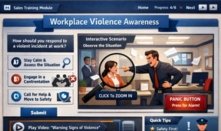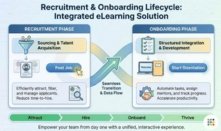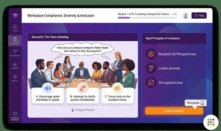
Custom eLearning for Organizations in Qatar, in Arabic and English
For L&D, HR and compliance teams in Qatar that need custom courses their staff will finish and remember.
IKHYA designs, builds and localizes eLearning around your people, your rules and your LMS, so you can replace long classroom days and slide decks with training that works on any device.
Running a formal tender? Submit an RFP →
- 2010Delivering eLearning since
- 500+Projects
- 40+Countries with clients
- 120+Specialists
Comparing eLearning companies in Qatar? IKHYA is a custom eLearning development company that builds courses for organizations in Qatar. We build new courses, convert classroom and PowerPoint training, and translate and localize courses into 40+ languages. Courses run in your LMS as SCORM 1.2, SCORM 2004 or xAPI packages, and every free quote includes a recommended route and a timeline.

What Changes When You Build Training for Qatar?
Many provider pages in Qatar talk about engagement and flexibility. Those matter, but a few local rules and calendar facts change how a course should be planned, written and scheduled. Here are the ones we check at the start of a Qatar project.
| Local fact | What it says | What it means for your course |
|---|---|---|
| Arabic is the official language | The Permanent Constitution, Article 1 names Arabic as the official language of the State. | Plan the Arabic version at the start, not as a translation added at the end. |
| Arabic in the public sector | Law No. 7 of 2019 on Protecting the Arabic Language, Article 2 requires ministries, government bodies and public institutions to use Arabic in their instructions, documents, programs and publications, among other things. The same rule covers associations, private foundations, private public-benefit institutions and bodies funded by the state budget. | If you are a public or state-funded body, treat Arabic as the main version and ask your legal team how the law applies to training content. |
| Arabic in HR documents | The Labour Law (Law No. 14 of 2004), Article 9 says contracts and other documents under the law are written in Arabic. An employer may attach a translation, and the Arabic text prevails if the two differ. | Onboarding courses that explain contracts or HR policies should use the same Arabic terms as the official documents. |
| Safety briefing from day one | Labour Law Article 99 requires the employer to inform each worker, when they start, of the risks of the job and how to protect against them, and to post detailed health and safety instructions. | Safety induction modules fit this well: short, scenario-based and tracked in the LMS, with practical checks kept on site. |
| Qatarization (job localization) | Law No. 12 of 2024 obliges covered private-sector employers to employ, train and qualify Qatari job seekers. It has been in force since April 17, 2025. | Covered employers must carry out the training the Ministry of Labour sets, so onboarding and upskilling for national hires need a clear plan. More below. |
| Data privacy training | Law No. 13 of 2016 on Personal Data Privacy Protection, Article 11 lists, among a controller's duties, training and raising the awareness of those who process personal data on its behalf. | This is a natural topic for a short awareness course. Your LMS also holds learner names and scores, so your legal team decides how the law applies there. |
| Working week and Ramadan | Labour Law Article 75 makes Friday the normal weekly rest day. Article 73 sets a 48-hour week (8 hours a day), reduced to 36 hours (6 hours a day) in Ramadan. | Avoid Friday launches and deadlines. During Ramadan, short modules fit shorter working days better than long ones. |
| Time zone | Qatar uses UTC+3 all year with no daylight saving (IANA time zone database, Asia/Qatar). | The time gap to Europe and North America changes when those regions change their clocks, so review calls need a fixed slot. |
This table is general information, not legal advice. Your legal or compliance team confirms how each rule applies to your organization.
How to Compare eLearning Companies in Qatar
When you search for eLearning companies in Qatar, you see four very different kinds of provider. We read every page that ranks for this search, and they fall into these groups. Each can be the right choice, depending on what you need.
| Provider type | Good for | Check before you sign |
|---|---|---|
| Local LMS and software resellers | Buying and running a learning platform, local support hours | Whether they also design courses, or only host and configure them |
| Regional digital learning vendors | A platform plus a ready-made bilingual course library | How much of the content is custom to your roles, rules and equipment |
| Training institutes and course catalogs | Instructor-led courses, exam preparation, teacher development | Whether they build eLearning you can own and run in your LMS |
| Custom eLearning development companies (like IKHYA) | Courses built from your own processes, sites and policies, delivered as SCORM or xAPI for any LMS | Their process, review rounds, language workflow and proof from similar projects |
If a ready-made library already covers your topic well, it is usually faster and cheaper than a custom build. Custom eLearning earns its cost when the training depends on your own procedures, equipment, sites or regulations.
Six questions to ask any eLearning company before you sign
- 01
How do you build the Arabic version: translated text on an English layout, or a full right-to-left build with mirrored navigation, Arabic fonts and Arabic voiceover?
- 02
Which authoring tool will you use, and does it support right-to-left languages for every interaction we need?
- 03
Will you test the course in our own LMS before launch, and in which standard (SCORM 1.2, SCORM 2004 or xAPI)?
- 04
Who reviews the content in Arabic, and at which stages?
- 05
Do we receive the editable source files for future updates?
- 06
Can you show a project with a similar audience, such as frontline, technical or regulated staff?
Not sure which kind of provider fits your project?
What IKHYA Builds for Organizations in Qatar
IKHYA offers a wide range of eLearning services, from a single course to a multi-language program. These are the services Qatar teams ask about most.
Custom courses
Courses built around your roles, procedures and brand, with scenarios and assessments written for your staff. See custom eLearning development.
Translation and localization
Courses adapted into 40+ languages, with human or AI voiceover. See our eLearning translation services.
Compliance training
Policy, privacy, conduct and safety courses with tracked completion and scored assessments. See compliance eLearning.
Oil and gas and energy
Safety inductions, procedures and scenario-based training for technical and field teams. See oil and gas eLearning.
Aviation
Recurrent and safety training for airline, ground and maintenance staff. See aviation eLearning.
Banking and financial services
Onboarding, product and regulatory training for banks, insurers and financial firms. See financial services eLearning.
We also convert PowerPoint and instructor-led (ILT) material into eLearning, redesign legacy Flash or old SCORM courses into HTML5, and build microlearning, mobile learning, software simulations, gamified learning, interactive video and 360-degree photo and video scenarios built in Adobe Captivate. For platforms, we offer LMS selection, setup, implementation and migration.
Deliverables on every project
SCORM 1.2, SCORM 2004, xAPI or HTML5 output, tested in your LMS.
Courses built in Articulate Storyline 360, Articulate Rise 360, Adobe Captivate, Lectora, iSpring Suite, dominKnow ONE or Elucidat.
The editable source files, so your team can update the course later.
Accessible eLearning built to WCAG 2.1 AA and Section 508 when you need it.
Arabic and English Courses
A good bilingual course is more than translated text. Arabic reads right to left, so menus, progress bars, buttons, drag-and-drop items and quiz layouts need to mirror, and numbers and mixed English terms need care inside Arabic sentences.
Authoring tools handle this differently, which is why the tool choice matters before the build starts:

- Articulate Storyline 360: Articulate states that Storyline supports right-to-left languages such as Hebrew and Arabic.
- Adobe Captivate: Adobe documents right-to-left authoring, switched on in Preferences. Text fields, buttons, widgets and quizzes support right-to-left text, and mixed right-to-left and left-to-right text works. In the table of contents, labels such as "Table of Contents", "Slide Title" and "Duration" stay in English or the system language, and only a limited set of Arabic fonts is supported.
- Other tools: right-to-left support varies, so confirm it for every interaction type you need before you choose a tool.
Language register matters too. Modern Standard Arabic is formal and understood across the Arab world, while Gulf Arabic is closer to everyday speech. One practical approach: use Modern Standard Arabic for on-screen text, and decide case by case for scenario dialogue and voiceover.
How we build a bilingual course
- 01
We agree the language plan at kick-off: which version is the main one, which Arabic register to use, and who reviews each language.
- 02
We write the storyboard with Arabic in mind, so screens leave room for both languages and examples make sense in a Qatar workplace.
- 03
We build the Arabic version as a full right-to-left course, not as Arabic text on an English layout, and record separate Arabic voiceover.
- 04
Your Arabic reviewer checks the storyboard and the built course. We test both versions in your LMS before launch.
For the full localization service, including other languages and voiceover options, see our eLearning translation services.
Training for Qatarization Hires
Qatar's job localization law ties private-sector hiring to training and qualification. If your organization is in scope, your onboarding and upskilling plan for national hires matters.
What the law says
- Law No. 12 of 2024 obliges the employers it covers to employ, train and qualify Qatari job seekers. Where no Qatari candidate is available, the children of Qatari mothers get priority (Article 2).
- It covers individuals who run private establishments listed in the commercial register, commercial companies operating in Qatar (state-owned, part-owned or private), and private public-benefit institutions, sports institutions and associations (Article 3).
- It does not apply to companies founded by or with a stake from QatarEnergy, or to companies carrying out petroleum exploration, production-sharing, field development or joint-venture agreements in petroleum operations and petrochemical industries (Article 3).
- The Ministry of Labour sets a localization plan that includes training, employment and qualification policies, and covered employers must carry out the training and qualification the Ministry sets (Article 4).
- The law took effect six months after its publication in the Official Gazette on October 17, 2024 (Article 17).
What to build
- Onboarding paths that explain your company, policies, systems and safety rules before and after day one.
- Role-based upskilling with software simulations (show me, try me, test me) for the systems new hires use.
- Blended learning packages that combine self-paced eLearning with in-person or virtual sessions, so mentors and supervisors keep the hands-on part.
- Microlearning refreshers that fit short gaps in the working day, including the shorter Ramadan schedule.
- Learning analytics with xAPI and Kirkpatrick-based measurement, so you can show progress, not just completions.
The law's details, such as job categories reserved for nationals, come from Ministry of Labour plans and decisions. Your HR and legal teams confirm what applies to you.
Industries We Build for in Qatar
Energy, oil and gas
Field safety, procedures, permit-to-work and hazard recognition, topics that suit scenario-based modules and 360-degree photo scenarios built in Adobe Captivate. Note the QatarEnergy exclusion in the localization law above: your training needs may still be the same, but the legal driver differs. See oil and gas eLearning.
Aviation
IKHYA has built aviation courses for training programs under FAA Part 121, Part 135 and Part 145, EASA, IATA Dangerous Goods Regulations (DGR), TSA security programs and ICAO standards. The regulator approves your training program; we build the courses inside it. We have also built courses for Qatari rules, including the Qatar Civil Aviation Authority, Qatar Central Bank and the Ministry of Public Health. See aviation eLearning.
Banking and financial services
Onboarding, product knowledge, customer conduct and anti-money laundering awareness, with scored assessments and completion records for audits. See financial services eLearning.
Public sector and public-benefit bodies
Courses where Arabic is the main version from the start, in line with the Arabic language law above, with English versions where staff need them.
We also build for healthcare and life sciences, manufacturing, retail and IT and software teams.
Working With IKHYA From Qatar
Qatar is on UTC+3 all year, Friday is the normal weekly rest day under the Labour Law, and working hours are shorter in Ramadan. We plan the project calendar around these facts.
Meetings: we schedule kick-off and review calls Sunday to Thursday, inside Qatar working hours.
Ramadan: we move review deadlines earlier in the day and avoid launching during the last days of the month.
Replies: you get one named project contact and a reply within one working day.
- 01
Free quote and call
You share your goals, audience and source material. We recommend a route and a timeline.
You, then IKHYA - 02
Design document
Learning objectives, course structure, language plan and LMS details.
IKHYA drafts, you review - 03
Storyboard
Every screen, script and question, in the main language first.
IKHYA drafts, you review - 04
Build and voiceover
We build the course in the agreed tool and record voiceover.
IKHYA - 05
Review rounds and localization
You review the built course; then the second language version is built and reviewed by your Arabic or English reviewer.
IKHYA drafts, you review - 06
LMS testing and launch
We test SCORM or xAPI tracking in your LMS and hand over the course and the editable source files.
IKHYA, with your LMS admin
We have delivered courses to LMS platforms including Moodle, TalentLMS, Docebo and Cornerstone, and we build courses that track in any LMS that supports SCORM 1.2, SCORM 2004 or xAPI.
Proof From a Gulf Aviation Project
 Aviation ground handling
Ramp Safety Scenarios: First-Attempt Practical Fails Down From 18% to 7% for 1,200 Ground Staff
A ground-handling services company at 6 airports in the United Arab Emirates and the wider Gulf region ran recurrent ramp safety training as a full classroom day at each station. Content varied by airport, and 18% of staff failed the practical check at their first attempt.
- What we built
- 5 scenario-based modules on marshalling signals, safe ground support equipment approach, FOD prevention, ramp vehicle safety, and hazard spotting and reporting.
- 24 interactive 360-degree photo scenes shot on the client's own stands, built in Adobe Captivate and responsive for station tablets.
- English and Arabic versions with human voiceover, delivered as SCORM 2004 and tested in the client's LMS.
- A blended design: the 1-hour practical sign-off stays with station trainers, using one shared checklist.
- Results
- 94% of the 1,200 staff completed within 8 weeks of launch (LMS reports).
- First-attempt practical fails fell from 18% to 7% (station trainer checklists, 6 months before and after).
- Recurrent training time per person fell from about 7 hours to about 3 hours, about 57% less (training records).
"Our staff now practice on photos of our own stands before they step onto the ramp, so trainers spend the practical session checking skills instead of repeating slides."
What Drives the Cost of eLearning in Qatar?
We quote every project individually, because the price depends on what you need. The main cost drivers are:
Length: how many minutes of learning, and how many modules.
Interactivity: simple click-through, scenarios, software simulations or 360-degree scenes.
Media: custom graphics, animation, video and voiceover.
Languages: each extra language adds translation, a separate build or layout check, voiceover and review. A full right-to-left Arabic build takes more work than translated text alone.
Authoring tool: some tools suit fast builds, others complex interactions.
Review rounds: how many rounds, and how many reviewers per language.
LMS testing: the standard (SCORM or xAPI) and how many platforms we test in.
For an accurate quote, send us
your source material (slides, manuals, procedures or an existing course);
the audience, their roles and how many learners;
the languages you need, and which one is the main version;
your LMS and the standard it uses;
your target launch date.
FAQ
They range from LMS resellers and ready-made course libraries to training institutes and custom development companies. IKHYA is a custom eLearning development company: we build, convert and localize courses for your own processes and deliver them for your LMS.
Yes. We translate and localize courses into 40+ languages, and we plan the Arabic version from the start so layout, voiceover and review fit a right-to-left course.
Law No. 12 of 2024 obliges covered private-sector employers to employ, train and qualify Qatari job seekers, following Ministry of Labour plans. Companies linked to QatarEnergy and certain petroleum operations are excluded. Your HR and legal teams confirm what applies to you.
Law No. 13 of 2016 lists training and awareness for those who process personal data among a controller's duties, so a short privacy awareness course is a natural fit. Your LMS also stores learner names and scores; your legal team decides how the law applies to that data.
Yes, if your LMS supports SCORM 1.2, SCORM 2004 or xAPI. We test every course in your LMS before launch. LMS platforms we have delivered courses to include Moodle, TalentLMS, Docebo and Cornerstone.
It depends on length, interactivity, media, languages, the authoring tool, review rounds and LMS testing. We quote every project individually, and the quote is free.
It depends on the course length, the number of languages and how quickly reviews come back. Every free quote includes a timeline for your project, along with the route we recommend.
Qatar is on UTC+3 all year and Friday is the normal weekly rest day, so we plan calls, review deadlines and launches around the Qatar working week and the shorter Ramadan schedule.
Yes. You receive the editable source files, for example Storyline or Captivate files, so your team can update the course later.
Ready to Plan Your Qatar Training Project?
Tell us what your teams need to learn, in which languages and on which LMS. We will come back with a recommended route and a timeline.