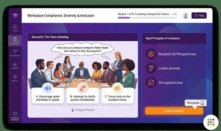
Custom eLearning for US Organizations
For US L&D, HR and compliance teams that need training built around state and federal rules, not a generic course.
IKHYA builds custom eLearning for organizations across the United States: compliance courses designed around state harassment prevention laws, OSHA and HIPAA, accessible courses built to WCAG 2.1 AA and Section 508, and versions in 40+ languages for multilingual teams.
- 2010Delivering eLearning since
- 500+Projects
- 40+Countries with clients
- 120+Specialists
If you are comparing eLearning companies in the USA, check four things: whether the vendor builds custom courses or resells a library, whether it designs for your state and federal training rules, whether courses meet Section 508 and WCAG 2.1 AA, and whether it can deliver Spanish versions and work in your time zone.

What US Teams Need From an eLearning Company
Courses built for US rules
State harassment prevention laws, OSHA and HIPAA each say who must be trained, how often and what to record. We have built harassment prevention courses for employers across all US states, and we design the course structure, tracking and records around the rules you name.
Accessible from the first storyboard
We build accessible eLearning to WCAG 2.1 AA and Section 508, so employees who use a keyboard or a screen reader take the same course as everyone else.
Spanish for frontline teams
We have delivered Spanish versions for US frontline teams, and we plan them from the storyboard: room for longer text, Spanish voiceover, translated screenshots and the same LMS tracking as the English course.
Your LMS, your source files
We build in SCORM 1.2, SCORM 2004 and xAPI, test in your LMS, and hand over the editable source files (for example Storyline or Captivate files) for future revisions.
Which Kind of eLearning Company Do You Need?
Most "top eLearning companies in the USA" lists mix four very different things. Decide which one you need before you build a shortlist.
| What to compare | Custom development company | Off-the-shelf course library | LMS platform | Your state's free or model course |
|---|---|---|---|---|
| What you get | Courses built for your people, policies, equipment and rules | Ready-made courses on common topics, usually by subscription | Software that hosts, assigns and tracks training | A free online course or a model program from the state agency |
| Best for | Company-specific procedures, safety on your own equipment, role-based compliance, multilingual rollouts | Generic topics where speed matters more than fit | Delivering and reporting on training you already have | Meeting a state's minimum harassment training rule at no cost |
| Watch for | Takes longer than buying a library course; needs your experts' time for reviews | Content does not mention your policies, equipment or reporting lines | A platform does not write the course content | Generic, so it cannot reflect your policies, roles or reporting process |
Be honest with yourself about the last column. California, New York, Illinois and Connecticut all publish free or model harassment prevention training. If you only need that minimum, start there. A custom course makes sense when you want your own policy, reporting process, scenarios from your workplace and one course that covers employees in several states.
State Harassment Prevention Training Rules
Several states set their own training rules for private employers. The table summarizes what the official texts said when we checked them on October 18, 2026. It is a starting point for planning a course, not legal advice: confirm your obligations with your employment counsel.
| State | Who must train | How much and how often | Points that affect an eLearning course |
|---|---|---|---|
| California (Gov. Code 12950.1) | Employers with 5 or more employees or contractors | 2 hours for supervisors, 1 hour for other employees, every two years; new hires within 6 months; staff hired for under 6 months within 30 calendar days or 100 hours worked | "Classroom or other effective interactive training"; can be taken individually and in shorter segments if the hour total is met; must cover abusive conduct and harassment based on gender identity, gender expression and sexual orientation |
| New York (Labor Law 201-g) | Every employer | Every employee, every year | Must be interactive; minimum content set in the law, including supervisors' conduct and extra responsibilities; the policy and training notice goes out in English and in the employee's primary language when the state provides a template in that language |
| Illinois (Human Rights Act 2-109) | Most employers with staff in Illinois | All employees, once a year | Employers may build their own program if it covers the four required areas; the state offers free training |
| Connecticut (Time's Up Act) | Employers with 3 or more employees | 2 hours within 6 months of hire; supplemental training at least every 10 years | The state human rights commission offers a free online course |
What this means when you build a custom course
Seat time you can prove
California counts hours. Split the course into shorter modules that add up to the total, and make sure your LMS records each completion.
Interaction that is real
California and New York both ask for interactive training. Build in questions learners must answer and realistic scenarios, not a video with a "Next" button. Ask your counsel whether your design meets each state's definition.
One core course, state modules
A single core course with short state-specific modules (California's abusive conduct section, New York's supervisor content and notice) is easier to update than separate courses per state.
Expert review of the content
California requires the training to be presented by trainers or educators with knowledge and expertise in the prevention of harassment, discrimination and retaliation. Plan for your HR expert or counsel to review and approve the script before we build.
Need the full build? See our compliance eLearning page for formats, process and tracking.
Federal Training Rules That Shape US Courses
Federal rules rarely set a course length or format. They say who must be trained, when, and what must be recorded. Those three things decide how a course is structured.
| Rule | What the text says about training | What it means for the course |
|---|---|---|
| OSHA lockout/tagout (29 CFR 1910.147) | Different training for authorized, affected and other employees; the employer certifies training with each employee's name and dates | Role-based paths in one course, and completion records your LMS can export |
| OSHA bloodborne pathogens (29 CFR 1910.1030) | Training at initial assignment and at least once a year, including a chance for interactive questions and answers with the person conducting the training | eLearning plus access to a qualified trainer for questions |
| OSHA hazard communication (29 CFR 1910.1200) | Training at initial assignment and whenever a new chemical hazard is introduced | Short update modules you can release when a hazard changes |
| HIPAA Privacy Rule (45 CFR 164.530(b)) | Train all workforce members on privacy policies; new members within a reasonable period; train affected staff after a material change; document the training | No fixed interval, so the schedule follows your policy changes; keep completion records |
| Bank AML programs (31 CFR 1020.210) | The program must include training for appropriate personnel | Role-based modules for the staff your program names |
| FAA Part 121 and Part 145 (14 CFR 121.401, 145.163) | The FAA approves the certificate holder's training program | Under these rules, no eLearning company can sell you a ready-made FAA-approved course for your program; eLearning becomes part of your approved program |
Two OSHA points matter for anyone planning online safety training. In a 1997 letter, OSHA said computer-based training by itself would not meet the intent of most of its training requirements, and that a phone line to a qualified trainer may satisfy the question-and-answer need. OSHA's 2010 training policy statement adds that training "must be presented in a manner that employees can understand". That is why many US safety programs pair eLearning with live sessions, and why language matters (see Spanish versions).
IKHYA has built aviation courses for training programs under FAA Part 121, Part 135 and Part 145, TSA security programs, EASA, IATA Dangerous Goods Regulations and ICAO standards. The regulator approves your training program; we build the eLearning that goes into it.
Section 508, ADA Title II and Accessible Training
US accessibility rules reach further than many buyers expect.
Federal agencies
Section 508 applies when agencies develop, procure, maintain or use information and communication technology. The Revised 508 Standards, in effect since January 18, 2018, require WCAG 2.0 Level AA for web and non-web electronic content.
State and local governments
The Department of Justice's ADA Title II rule sets WCAG 2.1 AA for their web content and mobile apps. After an April 2026 interim final rule, compliance dates are April 26, 2027 for governments serving 50,000 people or more, and April 26, 2028 for smaller ones and special districts.
Private employers
The EEOC treats employer-sponsored training, including training from an outside provider, as one of the benefits and privileges of employment, so employees with disabilities need access to it.
WCAG 2.1 builds on WCAG 2.0 and is backwards compatible with it, so a course built to WCAG 2.1 AA covers the Section 508 level as well. IKHYA builds accessible eLearning to WCAG 2.1 AA and Section 508 from the storyboard: keyboard access, captions, alt text, reading order and color contrast are designed in, not added at the end.
Sample US project: accessible annual mandatory training
A US healthcare provider network with about 4,000 employees, including screen-reader users, needed annual mandatory training that everyone could take. We built it to WCAG 2.1 AA and Section 508 in Rise 360 and Storyline 360 and tested it with keyboard, JAWS, NVDA and VoiceOver. No separate accessible version was needed.
"For the first time, our colleagues who use screen readers took the same course, on the same day, as everyone else."
Spanish Versions for Frontline Teams
In the Census Bureau's 2018 to 2022 American Community Survey, 78.3% of people aged 5 and older spoke only English at home. Among those who spoke another language at home, 61.1% spoke Spanish. In warehouses, plants, hospitals, hotels and stores, that often means a Spanish version is the difference between training that was assigned and training that was understood.
The rules point the same way. OSHA expects training to be presented in a manner employees can understand. New York requires the harassment policy and training notice in English and in an employee's primary language when the state provides a template in that language. California's free harassment prevention course is offered in English, Spanish, Korean, Chinese, Vietnamese and Tagalog.
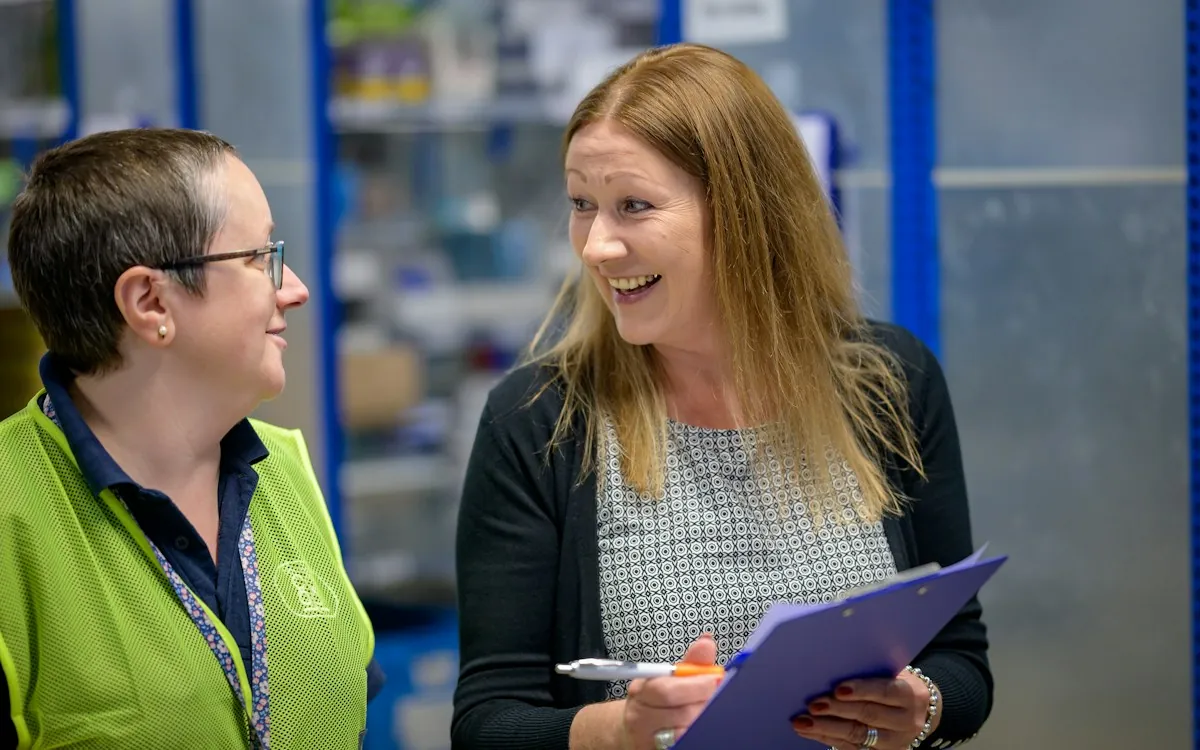
IKHYA localizes courses into 40+ languages, with human or AI voiceover. Our eLearning translation services page covers the full localization process.
How we build a Spanish version for US frontline staff
- 01
Plan it in the storyboard
Screens leave room for translated text, and on-screen text stays short.
- 02
Use neutral US Spanish
Wording that works for employees from different Spanish-speaking countries, with your own glossary for job terms, equipment names and policy titles.
- 03
Translate everything a learner sees
On-screen text, captions, buttons, quiz feedback, screenshots and downloadable job aids, not only the narration.
- 04
Spanish voiceover
Human or AI voice, chosen per course and budget.
- 05
Your reviewer signs off
A bilingual supervisor or SME on your side reviews the Spanish build in context before launch.
- 06
Same tracking
The Spanish course reports to your LMS the same way as the English one, so completion reports stay in one place.
Working Across US Time Zones
Federal law sets nine standard time zones for the United States and its territories. Most US teams work in four of them: Eastern (UTC-5 in standard time), Central (UTC-6), Mountain (UTC-7) and Pacific (UTC-8), plus Alaska and Hawaii. Most of Arizona and all of Hawaii stay on standard time all year. A national rollout with SMEs in New York and Los Angeles has a three-hour gap before shifts and plant schedules are even counted.
How we work with US teams
Calls in your business hours
We agree a fixed weekly review call in your time zone at kickoff, Eastern through Pacific.
One project manager
One contact for your team, who answers messages within one business day.
Reviews that fit shift work
Reviewers comment in a browser on their own schedule, so plant supervisors and nurses do not have to join a call.
Short, planned review rounds
Each stage (storyboard, first build, final build) has a set review round, with consolidated feedback from your side.
A free quote includes a recommended route for your project and a timeline.
How to Compare eLearning Companies in the USA
Use these questions on every vendor call. The right-hand column shows what a good answer sounds like.
| Question to ask | What a good answer sounds like |
|---|---|
| 1Who writes the content, and who confirms it is legally accurate? | The vendor designs and writes; your counsel or HR expert approves the script. Be wary of a vendor that offers legal sign-off. |
| 2How will you handle employees in different states? | One core course with state modules, and a clear plan for updating them when a law changes. |
| 3How do we prove completion and seat time? | Named tracking settings (SCORM 1.2, SCORM 2004 or xAPI) tested in your LMS, with the report you will show an auditor. |
| 4How do you build for Section 508 and WCAG 2.1 AA? | Accessibility planned from the storyboard and tested with a keyboard and screen readers, not checked at the end. |
| 5What does the Spanish version include? | Text, voice, captions, screenshots, quiz feedback and job aids, reviewed by a bilingual person on your side. |
| 6When are calls, and how many review rounds are included? | Fixed rounds per stage, written down in the proposal, with calls in your business hours. |
| 7Who owns the source files? | You receive the editable source files at the end of the project. |
| 8Will you test in our LMS before launch? | Yes, in your LMS or a test copy of it, not just a generic SCORM package. |
| 9Can we see work from our industry? | Examples or a demo close to your topic, with client details removed where needed. |
How IKHYA answers the questions about files and platforms: clients receive the editable source files, and LMS platforms we have delivered courses to include Moodle, TalentLMS, Docebo and Cornerstone. We build courses that track in SCORM 1.2, SCORM 2004 and xAPI LMSs.
What Drives the Cost of a Custom Course
Every IKHYA project is quoted individually. These are the factors that move the price:
Course length and how many modules you need.
Interactivity: click-to-reveal screens cost less than branching scenarios or software simulations.
Media: custom illustrations, animation, video and 360-degree photo scenarios.
Voiceover: human or AI, and how many voices.
Languages: each version, such as Spanish, adds translation, voice and testing.
State versions: extra modules for state-specific content.
Accessibility: WCAG 2.1 AA and Section 508 design and testing.
Authoring tool: for example Rise 360 for speed, Storyline 360 or Adobe Captivate for deeper interactions.
Review rounds and LMS testing.
Tell us what your US teams need to learn.
Your free quote includes a recommended route and a timeline.
Sample US Projects
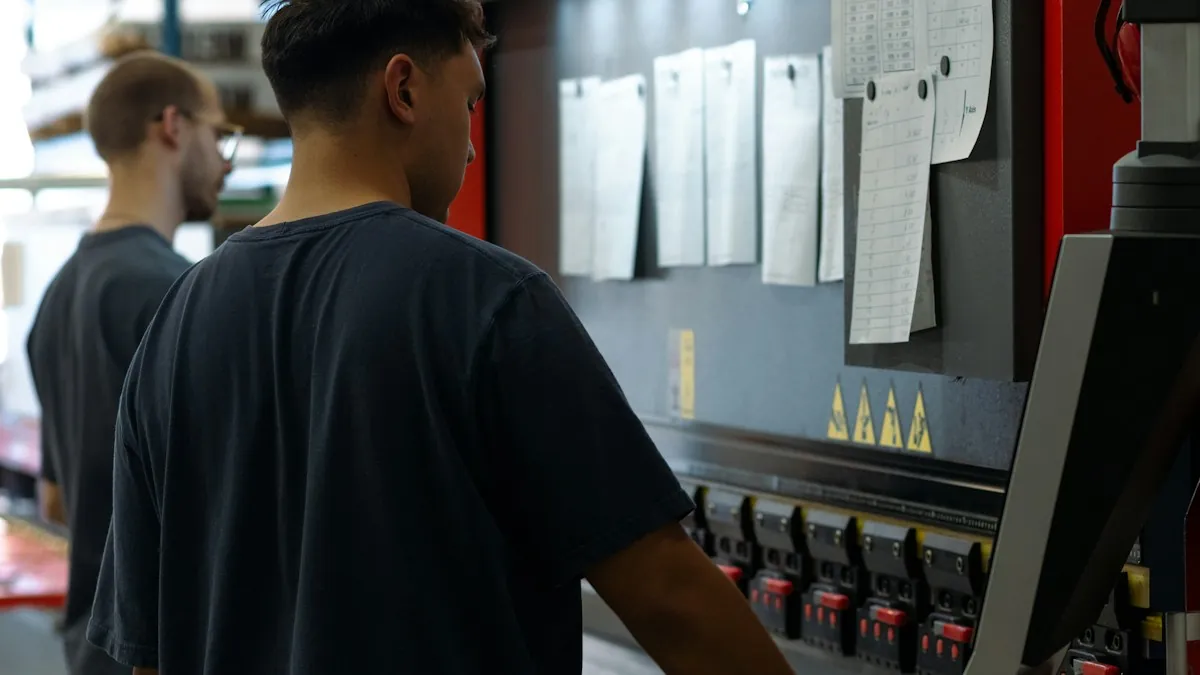 Manufacturing
: hazard spotting across three shifts
Client: a US metal-components manufacturer with 3 plants and about 2,100 floor employees on 3 shifts.
- What we built
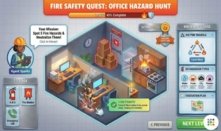
- A 360-degree hazard simulation in Adobe Captivate using photos of the client's own press lines, with a lockout/tagout game.
- Result
- Near-miss incidents fell by 40% across the 3 plants.
- In their words
- "Our people now spot hazards in photos of their own press line, not in a stock video. The lockout/tagout game made the steps stick, and near-miss reports dropped within months. IKHYA worked around our three shifts and kept every review round short." EHS Manager, manufacturing, United States
 Healthcare
: privacy and infection control on mobile
Client: a US regional hospital network with 5 hospitals and about 4,000 staff.
- What we built
- Mobile-first privacy and infection-control training that nurses can finish between patients.
- Result
- On-time completion rose from 71% to 94%.
- In their words
- "Nurses can finish a module on their phones between patients now. Completion stopped being a monthly chase for our managers, and the compliance officer signed off on every scenario before launch, so we had no surprises." Clinical Education Lead, hospital network, United States
IKHYA Services for US Teams
Custom eLearning development
Courses built from scratch for your people, policies and equipment.
See custom eLearning development →Compliance eLearning
Harassment prevention, safety, privacy and code-of-conduct courses with the tracking auditors ask for.
See compliance eLearning →Translation and localization
Spanish and 40+ other languages, with human or AI voiceover.
See eLearning translation services →All services
Rapid builds, PowerPoint and ILT conversion, simulations, microlearning, mobile learning, LMS setup and more.
See all eLearning services →We work in Articulate Storyline 360, Articulate Rise 360, Adobe Captivate, Lectora, iSpring Suite, dominKnow ONE and Elucidat, and publish to SCORM 1.2, SCORM 2004, xAPI and HTML5.
Frequently Asked Questions
California's law allows "classroom or other effective interactive training", lets employers develop their own training module, and lets employees complete it individually and in shorter segments if the hour total is met. Confirm your design with counsel. See the state rules table.
Every year, for every employee. The training must be interactive and meet the state's minimum standards. See the state rules table.
No fixed interval. The Privacy Rule requires training for all workforce members, for new members within a reasonable period, after a material change in policies, and documentation of the training. See the federal rules table.
Usually not on its own. OSHA has said computer-based training by itself would not meet the intent of most of its training requirements, so plan access to a qualified trainer for questions. See federal training rules.
Not necessarily. What matters is that the vendor builds for your state and federal rules, meets Section 508 and WCAG 2.1 AA, reviews work in your business hours and tests in your LMS. Use the vendor questions on every call.
It depends on length, interactivity, media, languages and review rounds. Your free quote includes a recommended route and a timeline for your project. See what drives the cost.
Yes. You receive the editable source files, and we build courses that track in SCORM 1.2, SCORM 2004 and xAPI LMSs, including Moodle, TalentLMS, Docebo and Cornerstone. See the vendor questions.
Ready to Plan Training for Your US Teams?
Tell us which rules, states and languages your course has to cover. We will reply with a recommended route and a timeline.