Employee Onboarding Training Solutions
For L&D, HR and compliance teams that need new hires productive faster and trained the same way in every location.
Employee onboarding training solutions are the courses, simulations and learning paths that take a new hire from first day to confident work. IKHYA designs and builds them as custom eLearning: role-based paths, microlearning, system simulations and scenarios, in the languages your workforce speaks, delivered through your LMS.
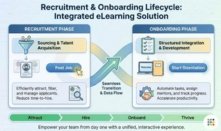
From preboarding to day 90
- Before day one
- Week one
- First 90 days
- Since 2010Delivering eLearning
- 500+Projects
- 40+Countries with clients
- 120+Specialists
Why teams choose IKHYA for onboarding training
One program, every location
New hires in every office, plant or store get the same core content, without waiting for a trainer to be free. Our 500th project was a global onboarding program for a FTSE 100 financial services company, localized into 12 languages.
Paths built around the role
A sales rep, a nurse and a warehouse operator need different things in week one. We split onboarding by department, role, seniority, region and compliance need, so each person sees only what applies to them.
Practice, not just reading
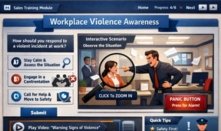
We build the moments new hires find hard: a customer conversation, a safety decision, a first run through the CRM, ERP or HRIS they must learn. Learners practice with feedback before they do it for real.
Built to report into your LMS
Courses publish as SCORM 1.2, SCORM 2004, xAPI or HTML5, so completion, scores and attempts reach the LMS you already use. We also help with LMS selection, setup, implementation and migration.
Which type of onboarding training fits your situation?
Most onboarding programs mix three formats. This is how they differ, so you can see what to ask for.

Not sure which option is right for you?
An off-the-shelf course library is the better choice when the topic is generic and the same for everyone, for example basic workplace conduct. Custom onboarding earns its cost where your systems, products, regulations and culture are the difference.
What we deliver
| Deliverable | What it includes | Typical use in onboarding |
|---|---|---|
| Onboarding learning strategy | Audience and role analysis, learning objectives, journey map from preboarding to day 90 | Decides what is taught, when and in what format |
| Instructional design | Storyboards and scripts, reviewed with your subject-matter experts before build | Keeps content accurate and focused on job tasks |
| Role-based eLearning and microlearning | Modules by department, role, region or seniority; knowledge checks; interactive and animated video | Company, policy, product and process training |
| Software simulations | Show-me, try-me and test-me modes for systems such as ERP, CRM or HRIS | Teaching the tools a hire must use from week one |
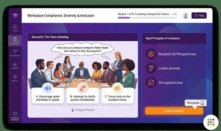
| Scenario-based training | Branching scenarios with feedback for customer, safety and compliance situations | Judgment and decision practice |
| Localization | Translation into 40+ languages, with human or AI voiceover | One program for a multinational workforce |
| Accessible output | Built to WCAG 2.1 AA and Section 508 | Courses every new hire can use |
| LMS-ready files and tracking | SCORM 1.2, SCORM 2004, xAPI or HTML5; learning analytics and ROI measurement (xAPI, Kirkpatrick) | Reporting on completion, scores and results |
We build in Articulate Storyline 360, Articulate Rise 360, Adobe Captivate, Lectora, iSpring Suite, dominKnow ONE and Elucidat, and choose the tool by what your course and LMS need. Onboarding often combines training with live elements, so we also design blended learning packages that pair eLearning with manager or buddy sessions.
How onboarding training fits the wider onboarding process
Onboarding training is one part of onboarding, not all of it.
SHRM defines onboarding as "the process of integrating new employees into an organization" and says orientation is necessary for completing paperwork and other routine tasks, while onboarding is a comprehensive process. SHRM names four parts of that process: preboarding, orientation, foundation building, and mentoring and buddy systems.
eLearning does the most work where content is the same for many people and must be learned accurately: policies, product knowledge, systems, safety and compliance. It does less for relationships, culture and judgment, which depend on managers, buddies and live conversation. Good programs plan both and link them, for example a manager checklist that opens once a hire finishes a module.

- 1Preboarding
- 2Orientation
- 3Foundation building
- 4Mentoring and buddy systems
How it works
- 01
Discovery and success measures
IKHYA and youA kickoff call to agree the roles, locations and languages, what a new hire must be able to do by day 30, 60 and 90, how you will measure it (for example time to first solo task, completion and manager sign-off) and your LMS. You get a written scope and schedule within 2 working days.
- 02
Audit of your current onboarding
You send, IKHYA reviewsWe review your decks, ILT materials, policies and the systems new hires use, and mark what can be reused and what is missing.
- 03
Journey design
IKHYA drafts, you reviewWe plan a shared core for everyone plus a path for each role, paced from preboarding to day 90, choose the format for each topic and mark which parts stay with managers and buddies.
- 04
Scripts and storyboards
IKHYA drafts, you reviewWe write every module, scenario and simulation for your subject-matter experts to approve before any build. Two review rounds are included.
- 05
Build, starting with a pilot module
IKHYAWe build one pilot module first, so you can approve the look and feel, then produce the rest in the agreed tool, with voiceover and media.
- 06
Test and review
IKHYA and youWe test on the devices your new hires use and in your LMS or a test LMS, check accessibility and every language version, and you review the finished modules. Two review rounds are included.
- 07
Deliver and measure
IKHYAYou receive LMS-ready packages (SCORM 1.2, SCORM 2004, xAPI or HTML5) plus the editable source files, with tracking set up so you can report against the measures agreed in step 1.
Timelines and team size depend on scope. We confirm them in the quote.
What drives the cost of onboarding training?
We quote each project individually. There is no standard price, because the same "onboarding course" can mean very different amounts of work. These factors decide the cost:
What you send us, and what we prepare
You send You
- Existing onboarding decks, policies and ILT guides
- Subject-matter experts for the review rounds
- Brand guidelines and logo files
- LMS name, version and tracking requirements
- Access or screens for systems to be simulated
- Languages needed
We prepare IKHYA
- A plan of paths by role
- Storyboards and scripts for review
- The interactive build, media and voiceover
- Localized versions where required
- LMS-ready files and tracking setup
- A test of the final course in your LMS or a test environment
Proof: onboarding results we can point to
Our 500th project was a global onboarding program for a FTSE 100 financial services company, localized into 12 languages. We also built B2B SaaS sales onboarding for 20 reps per quarter.
 Retail
New-hire onboarding cut from 12 days to 7 with blended eLearning
A retail enterprise cut new-hire onboarding time from 12 days to 7 with blended eLearning.
- Client
- A retail enterprise with 140 stores.
- Before
- Classroom induction at regional centers plus shadowing.
- What we built
- A blended path of 10 mobile microlearning modules (customer service, returns, POS basics, safety)
- 2 store-manager-led sessions
- Built in Rise 360 over 9 weeks
- How it was measured
- Days from start date to first solo shift, from client HR data across 3 intake cohorts. Mystery-shopper customer service score rose 11 points.
Read the full retail customer service training case study.
"New hires are on the floor in a week now, and they know how to handle a return without calling a manager. Before, they spent almost two weeks in classes and shadowing. The pilot in six stores caught every policy gap before rollout, and our own team now updates the modules when a policy changes."
Frequently asked questions
It is the structured learning a new hire completes to learn the company, the role, the systems and the rules. It sits inside the wider onboarding process.
It decides how quickly a new hire can work without help, and whether every hire learns the same rules, systems and standards wherever they start. Without it, onboarding depends on whoever has time to explain things that week.
At minimum: company and policy basics, role-specific skills, the systems used, safety or compliance topics where relevant, and a way to check understanding.
It depends on the role and the systems to learn. Spreading short modules over the first weeks avoids overloading day one. We agree the plan with you during discovery.
Yes. We turn existing decks and ILT sessions into interactive eLearning, usually restructuring them and adding practice and checks.
Yes. We localize into 40+ languages, with human or AI voiceover.
Yes. We build software simulations for systems such as ERP, CRM and HRIS, with show-me, try-me and test-me modes.
We publish SCORM 1.2, SCORM 2004, xAPI or HTML5 and test in your LMS.
We quote each project, because cost depends on length, interactivity, media, languages and review rounds.
Seven steps, from discovery to delivery and measurement, with a pilot module before the full build. Timelines depend on scope and are confirmed in the quote.
Only where your systems, products or regulations make the difference.
Ready to build onboarding that new hires finish?
Tell us who you hire, where, and what they must learn in the first weeks. We will reply with a plan and a quote.