How to Evaluate an eLearning Vendor’s Portfolio and Case Studies

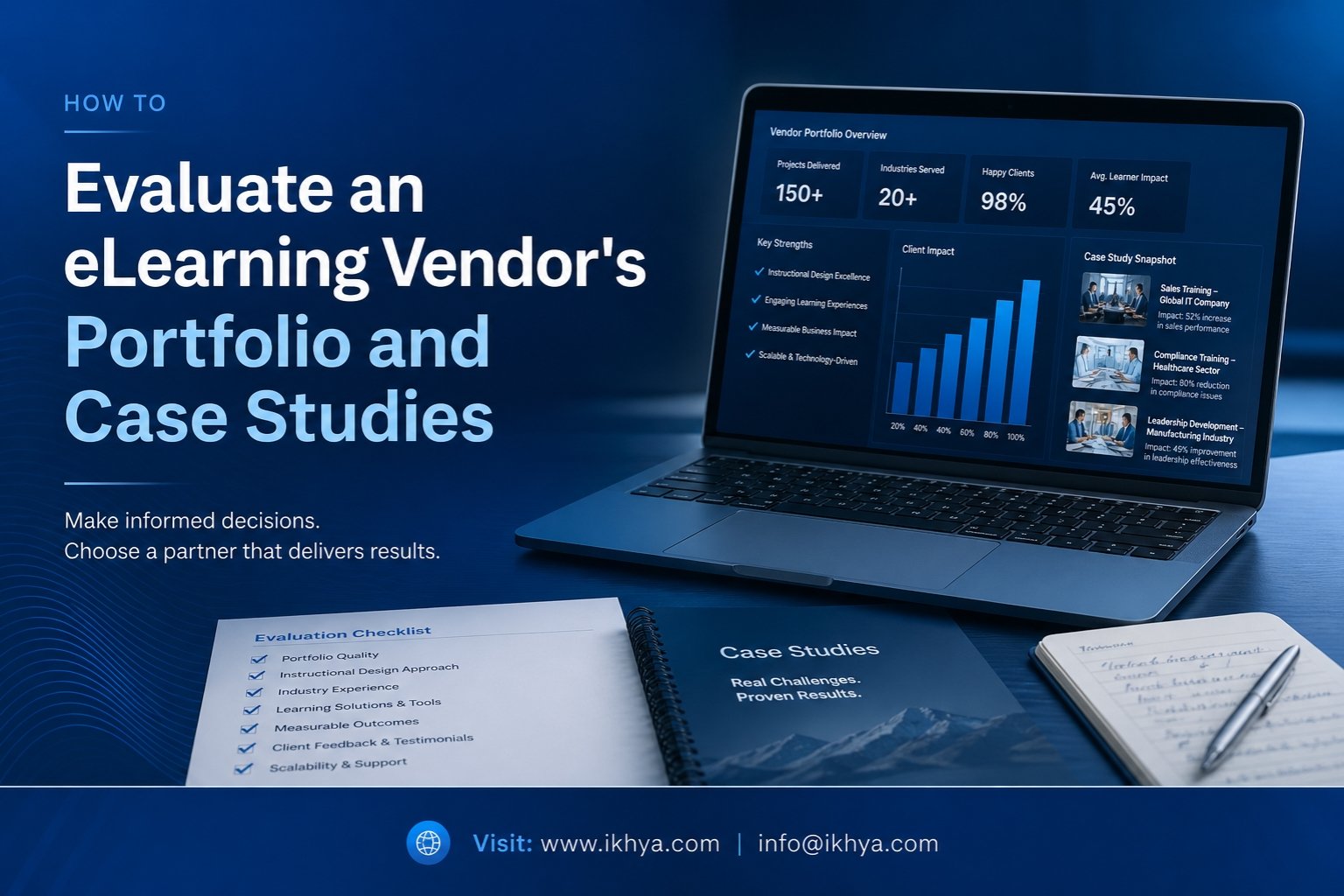
Choosing the right eLearning Vendor’s portfolio can directly impact your training success. Many businesses struggle to understand what actually matters when reviewing vendor work. This guide helps you evaluate portfolios and case studies in a simple and practical way so you can avoid costly mistakes and choose the right partner with confidence.
By the end, you will clearly know what to look for, what to avoid, and how to make the best decision for your business. If you need expert help, you can explore IKHYA – eLearning Solutions Company or Book a Free eLearning Demo to see how the process works in real scenarios.
Why Evaluating an eLearning Vendor’s Portfolio Matters
When reviewing an eLearning vendor, you are not just checking samples. You are evaluating their ability to deliver real business results.
A strong portfolio shows:
- Experience across industries
- Ability to solve real problems
- Quality of instructional design
- Consistent delivery standards
Choosing the wrong vendor can lead to poor learning outcomes and wasted investment. That is why many companies consult an experienced elearning development company before making a final decision.
What Decision-Makers Really Look for in an eLearning Vendor’s Portfolio
Decision-makers focus on more than visuals. They want results, reliability, and scalability.
They look for:
- Measurable learning outcomes
- Industry-specific experience
- Clear problem-solving approach
- Flexible and scalable solutions
Many organizations prefer vendors who provide customized e Learning Solutions tailored to their business goals instead of generic content.
Core Elements of a Strong eLearning Vendor’s Portfolio
Instructional Design Quality
Good instructional design ensures that learners actually understand and apply knowledge. For a deeper look into what defines effective instructional design in eLearning, this breakdown is useful.
Look for:
- Clear learning objectives
- Logical content structure
- Interactive elements
Vendors offering Instructional Design Services often deliver stronger learning results.
Visual Design and User Experience
A course should be simple, clean, and easy to navigate.
Check for:
- Smooth navigation
- Mobile-friendly design
- Consistent layout
Industry Relevance
A vendor with industry experience understands your challenges better and delivers more relevant content.
Learning Outcomes and Impact
Always focus on results.
Look for:
- Improved employee performance
- High engagement levels
- Measurable outcomes
How to Evaluate an eLearning Vendor’s Portfolio (Step-by-Step Framework)
Step 1: Review Course Samples
Start with real examples.
Check:
- Content clarity
- Interaction quality
- Practical relevance
If a vendor offers Custom eLearning Development Services, their samples should reflect customized solutions.
Step 2: Analyze Design Consistency
Consistency reflects professionalism.
Evaluate:
- Branding
- Layout
- Content tone
Step 3: Check Content Depth
Avoid vendors with shallow content.
Strong content includes:
- Clear explanations
- Examples
- Assessments
Step 4: Assess Technology and Tools Used
Technology plays a key role in eLearning.
Look for:
- LMS compatibility
- Mobile support
- Interactive features
Step 5: Evaluate Scalability
Ensure the vendor can grow with your needs.
They should be able to:
- Handle large audiences
- Update content easily
- Adapt for global use
Global companies often require eLearning Translation & Localization for wider reach.
How to Analyze eLearning Vendor Case Studies (Like an Expert)
What a High-Quality Case Study Should Include
A strong case study explains:
- The problem
- The solution
- The implementation
- The results
Red Flags in Case Studies
Be cautious if you notice:
- No clear results
- Vague information
- Overly promotional tone
Metrics That Actually Matter
Focus on real performance indicators:
- Learning retention
- Employee improvement
- Time saved
- Return on investment
Portfolio vs Case Studies: What Matters More?
Both play important roles in decision-making.
| Factor | Portfolio | Case Studies |
|---|---|---|
| Shows Design | Yes | Limited |
| Shows Results | No | Yes |
| Demonstrates Experience | Yes | Yes |
| Proves ROI | No | Yes |
Best approach: Use both together for a complete evaluation.
eLearning Vendor Evaluation Checklist
Use this quick checklist to simplify your decision:
| Criteria | What to Check | Importance |
|---|---|---|
| Instructional Design | Learning flow and engagement | High |
| Visual Design | Clean and user-friendly interface | Medium |
| Case Studies | Proven results | High |
| Technology | LMS and mobile compatibility | High |
| Scalability | Future readiness | High |
| Industry Experience | Domain knowledge | Medium |
Common Mistakes When Evaluating an eLearning Vendor’s
Avoid these common errors:
- Choosing based only on price
- Ignoring real results
- Overlooking scalability
- Not checking instructional quality
Making informed decisions helps avoid long-term issues.
Questions You Must Ask Before Finalizing an eLearning Vendor’s
Before choosing a vendor, ask:
- Can you show measurable results?
- How do you ensure learning effectiveness?
- What tools do you use?
- Can you scale for future needs?
These questions help you identify the right partner.
How IKHYA – eLearning Solutions Company Delivers Measurable Results
IKHYA – eLearning Solutions Company focuses on delivering real business outcomes.
Key strengths include:
- Strong instructional design
- Customized solutions
- Proven success across industries
Whether you need Rapid eLearning Development Services or course redesign, the focus is always on performance and impact.
To get started, you can:
- Request RFP
- Book a Free eLearning Demo
Pricing Overview for eLearning Development
Understanding pricing helps you plan better.
| Service Type | Estimated Cost (USD) |
|---|---|
| Basic Course | $1,000 – $3,000 |
| Interactive Course | $3,000 – $10,000 |
| Advanced Custom Course | $10,000 – $50,000+ |
| Localization Services | $500 – $5,000 |
Costs vary based on complexity, duration, and customization.
Final Thoughts: Choosing the Right eLearning Vendor’s with Confidence
Evaluating an eLearning Vendor’s portfolio and case studies becomes simple when you follow a structured approach. Focus on real outcomes, strong design, and scalability.
Avoid surface-level decisions and look deeper into how vendors solve real problems.
If you need expert guidance for your project, feel free to Contact Us and take the next step toward building effective learning solutions.
FAQs Related to How to Evaluate an eLearning Vendor’s
Q1. What is the best way to evaluate an eLearning vendor’s portfolio?
The best way is to follow a structured approach. Review course samples, check instructional design quality, analyze design consistency, and assess whether the content solves real business problems. Always focus on learning outcomes rather than just visuals.
Q2. What should I look for in an eLearning vendor’s case studies?
You should look for a clear problem, solution, implementation process, and measurable results. Strong case studies show real impact such as improved performance or learning outcomes, not just descriptions.
Q3. Why is evaluating an eLearning vendor’s portfolio important?
It helps you understand whether the vendor can deliver effective training solutions. A good portfolio shows experience, quality, and consistency, which reduces the risk of choosing the wrong partner.
Q4. How do I know if an eLearning vendor is reliable?
Check their past work, case studies, client results, and consistency in delivery. Reliable vendors provide clear data, transparent processes, and proven success across projects.
Q5. What are common mistakes when choosing an eLearning vendor?
Common mistakes include choosing based only on price, ignoring case study results, and not checking scalability or instructional design quality. These mistakes can lead to poor learning outcomes.
Q6. How important are case studies in selecting an eLearning vendor?
Case studies are very important because they show real results. They help you understand how the vendor solves problems and whether they can deliver measurable outcomes.
Q7. What makes a strong eLearning vendor portfolio?
A strong portfolio includes high-quality course samples, clear instructional design, industry-specific experience, and consistent design standards. It should also reflect real learning impact.
Q8. How can I compare different eLearning vendors effectively?
Use a checklist that includes instructional design, case study results, technology, scalability, and industry experience. Comparing these factors helps you make a better decision.
Q9. What questions should I ask an eLearning vendor before hiring?
Ask about their past results, development process, tools used, scalability, and how they measure learning effectiveness. These questions reveal their expertise and reliability.
Q10. What role does instructional design play in eLearning projects?
Instructional design ensures that learning is effective and engaging. It focuses on how content is structured and delivered so learners can understand and apply knowledge.
Q11. How do I evaluate the quality of eLearning course samples?
Check if the content is clear, engaging, interactive, and relevant to real-world scenarios. High-quality samples should show strong learning structure and user-friendly design.
Q12. What are red flags in eLearning vendor case studies?
Red flags include lack of measurable results, vague descriptions, overly promotional language, and missing client context. These indicate weak or unreliable performance.
Q13. How important is scalability when choosing an eLearning vendor?
Scalability is very important because your training needs may grow. A good vendor should be able to handle larger audiences and adapt content easily for future needs.
Q14. What technologies should an eLearning vendor support?
They should support LMS platforms, mobile learning, and interactive tools. Modern technology ensures better learning experiences and easier content management.
Q15. How much does eLearning development typically cost?
Costs can range from $1,000 for basic courses to $50,000 or more for advanced custom solutions. Pricing depends on complexity, interactivity, and customization.
Q16. Can an eLearning vendor customize courses for my business?
Yes, most professional vendors offer customized solutions based on your business needs, goals, and industry requirements to ensure better learning outcomes.
Q17. What is the difference between a portfolio and a case study?
A portfolio shows design and experience, while case studies show results and impact. Both are important for evaluating an eLearning vendor.
Q18. How do I ensure the vendor’s content matches my industry needs?
Check if they have worked in your industry before and review relevant samples. Industry experience helps them understand your challenges better.
Q19. When should I request a demo from an eLearning vendor?
You should request a demo after shortlisting vendors. It helps you understand their approach, tools, and quality before making a final decision.
Q20. How can I confidently choose the right eLearning vendor?
Follow a structured evaluation process, compare multiple vendors, review portfolios and case studies carefully, and ask the right questions. This helps you make a confident and informed choice.
Start Your eLearning Project with the Right Partner
Choosing the right eLearning Vendor’s portfolio and case studies can make a huge difference in the success of your training programs. With the right evaluation approach, you can avoid risks, save costs, and ensure real learning impact for your organization.
If you are ready to take the next step and work with a trusted partner, IKHYA – eLearning Solutions Company is here to help you build effective, scalable, and result-driven eLearning solutions tailored to your business needs.
You can get started easily:
- Share your requirements and Request RFP
- See real solutions in action with a Book a Free eLearning Demo
- Speak directly with experts through Contact Us
Make a confident decision today and create learning experiences that truly deliver results.