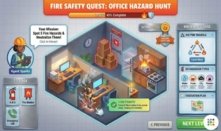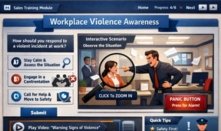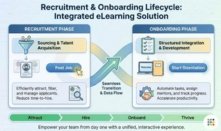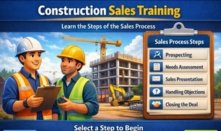
eLearning Solutions by Industry
For L&D, HR, compliance and safety teams that need training built around their own sector's work, rules and people.
Courses that use your procedures, your equipment, your systems and your regulations, so learners see their real job on screen.
- Since 2010Delivering eLearning
- 500+Projects
- 40+Countries with clients
- 120+Specialists
What eLearning by industry means
eLearning by industry means online training designed for one sector's rules, risks, audiences and records, not generic content. IKHYA has built custom eLearning since 2010 for organizations in 40+ countries, with industry-specific work for healthcare, manufacturing, oil and gas, aviation, financial services, retail, IT and software, and compliance teams. Pick your industry below or ask for a free quote.

eLearning by industry
Each industry page explains the training that sector usually needs, the formats that fit and how a project runs. Start with the group closest to your problem.
Regulated industries
Aviation eLearning for Airlines, MROs and Ground Teams
For airlines, charter operators and repair stations adding modules to their own training programs. We have built aviation courses for programs under FAA Part 121, Part 135 and Part 145, EASA, IATA Dangerous Goods Regulations, TSA security programs and ICAO standards.
Learn more →Custom Compliance eLearning Built Around Your Policies
For compliance and HR teams in any sector that need tracked courses on topics such as conduct, privacy and workplace safety, with clear records.
Learn more →Financial Services eLearning and Compliance Training
For banks, broker-dealers, insurers and lenders training staff on AML, conduct, data security and products.
Learn more →Healthcare and Life Sciences eLearning Solutions
For hospitals, clinics, pharma, life sciences and medical device teams training staff on privacy, safety, quality systems and products.
Learn more →Operations and frontline teams
Manufacturing Training Solutions and Safety eLearning
For plant, EHS and operations teams that need safety, equipment and procedure training for shift workers.
Learn more →Oil and Gas eLearning for HSE and Operations Training
For oil and gas and energy teams, onshore and offshore, training on process safety, emergency response and operating procedures.
Learn more →Retail Employee Training That Fits the Shop Floor
For retailers onboarding store teams fast, often on phones, across many locations.
Learn more →Customers and products
Not sure which page fits?
Tell us about your team and we will suggest an approach.
How does eLearning differ by industry?
The building blocks are the same everywhere: a course, a quiz, a tracking standard and an LMS. What changes is who must be trained, what the rules ask you to record, how often training repeats and how much of it can happen on screen. The table shows examples from US rules, read on the regulators' own texts.
| Industry | Example rules that shape training | What it means for the course design | What usually stays hands-on or live |
|---|---|---|---|
| Healthcare and life sciences | HIPAA asks covered entities to train all workforce members on privacy policies and document it (45 CFR 164.530(b)). OSHA bloodborne pathogens training is due at initial assignment and at least annually (29 CFR 1910.1030). | Role-based paths, completion records, yearly refreshers. | OSHA requires a chance for interactive questions and answers with the person conducting the bloodborne pathogens training. |
| Manufacturing | The lockout/tagout rule asks for different training for authorized, affected and other employees, and the employer certifies training with names and dates (29 CFR 1910.147). | Separate tracks per role, scenario practice, certificates with dates. | Site-specific procedures and practical checks on the actual equipment. |
| Oil and gas | Process safety management asks for refresher training at least every three years and a record of how understanding was verified (29 CFR 1910.119). | Procedure walkthroughs, hazard scenarios, documented assessments. | Drills and on-site verification. |
| Aviation | A Part 121 carrier must obtain FAA approval of its training program, and crewmembers need recurrent training within the preceding 12 calendar months (14 CFR 121.401, 121.433). | Modules built to slot into the carrier's own program. | Simulator sessions, checks and sign-offs. |
| Financial services | Bank AML programs must include training for appropriate personnel (31 CFR 1020.210). FINRA's Regulatory Element is due each year by December 31 (FINRA Rule 1240). | Role-based content, annual cycles, audit-ready records. | Supervision and sign-off on competence. |
| Retail | In 2025, US retail trade averaged a quits rate of 2.6% a month, against 2.2% across all private industries (BLS JOLTS). | Short, mobile courses that a new hire can finish in the first days. | On-the-floor coaching. |
| IT and software | No regulator; the driver is product change and customer adoption. | Software simulations (show-me, try-me, test-me) and short updates per release. | Live onboarding calls for complex accounts. |
| Compliance (all sectors) | The US Department of Justice asks whether training is risk-based and tailored, and the company's rationale for choosing online or in-person training (Evaluation of Corporate Compliance Programs, updated September 2024). | Risk-based topics per role, measurable checks. | Q&A channels and manager conversations. |
The pattern behind the table: rules usually say who must be trained, on what, how often and what you must record. They rarely set a course length or a format. That leaves you free to use eLearning for the knowledge part, as long as the course tracks completion and the hands-on part is covered elsewhere. OSHA has said that computer-based training "by itself" would not meet the intent of most of its training requirements, which is why many safety programs pair eLearning with live sessions.
What stays the same in every industry
Whatever your sector, an IKHYA project uses the same core services and standards.
Services
Custom eLearning development, rapid eLearning, PowerPoint and ILT to eLearning conversion, course redesign, instructional design, simulations and scenario-based training, software simulations, 360-degree photo and video scenarios built in Adobe Captivate, gamified learning, microlearning, mobile learning, interactive video, blended learning packages, translation and localization, LMS selection, setup, implementation and migration, consulting, and learning analytics and ROI measurement.
Authoring tools
Articulate Storyline 360, Articulate Rise 360, Adobe Captivate, Lectora, iSpring Suite, dominKnow ONE and Elucidat.
Outputs
SCORM 1.2, SCORM 2004, xAPI and HTML5. SCORM is the standard that lets a course run and report in most LMSs; xAPI can also record learning outside a formal course.
LMS platforms
LMS platforms we have delivered courses to include Moodle, TalentLMS, Docebo and Cornerstone, and we build courses that track in any SCORM 1.2, SCORM 2004 or xAPI LMS.
Accessibility
Accessible eLearning built to WCAG 2.1 AA and Section 508.
Languages
Translation and localization into 40+ languages, with human or AI voiceover.
Your files
You receive the editable source files (for example Storyline or Captivate files) for future revisions.
Results from real projects
Compliance overhaul
A compliance overhaul that raised completion/pass rates from 61% to 82% across 1,200 employees.
Safety simulation
A safety simulation that reduced near-miss incidents.
B2B SaaS sales onboarding
Sales onboarding for 20 reps per quarter.
Global onboarding, financial services
Our 500th project: a global onboarding program for a FTSE 100 financial services company, localized into 12 languages.
What drives the cost of industry eLearning?
Every project is quoted on its scope. The main cost drivers are the same in every sector:
Course length and the number of courses
Interactivity level (from click-through to branching scenarios and simulations)
Media: video, animation, 360-degree scenarios, voiceover
Number of languages
Authoring tool
Number of review rounds (regulated content often needs more, for example a compliance or quality sign-off)
LMS testing
To get an accurate quote, send us
Your industry, audience and number of learners
The source material you have (policies, procedures, slides, manuals, old courses)
The rules or standards the training must support
Your LMS and the tracking you need
Languages and deadline
If you are converting existing material, the free quote includes a recommended conversion route and a timeline for the project.
Frequently asked questions
It is online training built around one sector's work, rules, vocabulary and learners, for example lockout/tagout scenarios for a plant or AML cases for a bank. Generic courses teach the topic; industry-specific courses teach it in the learner's own workplace, so it is easier to apply and easier to evidence in an audit.
There is no reliable, current public ranking by industry. Grand View Research's e-learning services report segments the market by end use, not by industry: it found academic users had the largest revenue share in 2025 and expects the corporate segment to grow fastest.
Often for the knowledge part, yes. Most rules set who must be trained, on what, how often and what to record, not the format. Some expect practice or live questions as well, so a blended program is common.
Healthcare and life sciences, manufacturing and safety, oil and gas and energy, aviation, financial services, retail, IT and software (customer and product training), and compliance training across sectors.
Off-the-shelf is often faster and cheaper for generic topics. Custom is the better fit when the training must show your own procedures, products, systems or role-based rules. Many teams mix both.
Yes, if your LMS supports SCORM 1.2, SCORM 2004 or xAPI. LMS platforms we have delivered courses to include Moodle, TalentLMS, Docebo and Cornerstone, and we also offer LMS selection, setup, implementation and migration.
It depends on course length, interactivity, media, languages and review rounds. Send us your scope and your deadline and we will give you a timeline with the quote.
Tell us about your industry and your learners
Share your audience, your rules and your source material. We will suggest an approach and send a free quote.