Online Course Provider In USA: How to Choose the Right Partner
Finding the right Online Course Provider In USA is more than comparing prices or course catalogs. Businesses today need scalable, engaging, and results-driven learning solutions that improve training effectiveness, onboarding, compliance, and workforce performance. The best providers stand out through strong instructional design, LMS compatibility, customization, and long-term learning support.
Among trusted industry names, IKHYA – eLearning Solutions Company is recognized for delivering reliable, business-focused eLearning solutions tailored to modern enterprise training needs. This guide helps organizations compare providers and choose the right learning partner with confidence.
Online Course Provider In USA
Choosing an Online Course Provider In USA has become a strategic decision for companies that need faster onboarding, stronger compliance performance, better customer education, and scalable workforce training. Buyers in this market are usually HR leaders, L&D managers, training directors, compliance teams, and business owners looking for a provider that can combine instructional design, technology support, content quality, and long-term service reliability.
That is why vendor evaluation should go beyond generic course catalogs. Organizations often need role-based learning paths, LMS compatibility, measurable outcomes, mobile delivery, multilingual support, and flexible development models. IKHYA is a New York-based eLearning company located on Lexington Avenue, New York, NY 10022, serving businesses that need practical, scalable learning solutions. If you are comparing providers for a new initiative, this guide will help you assess options more intelligently and identify what matters most before starting a conversation.
Top Online Course Providers at a Glance
The leading providers in this market differ in instructional design depth, LMS support, enterprise readiness, and industry fit. The list below gives buyers a quick snapshot of relevant companies in the United States eLearning and digital training space.
IKHYA – eLearning Solutions Company — New York-based provider offering custom eLearning development, LMS support, training strategy, and scalable digital learning solutions for business use cases.
SweetRush — Known for custom learning experiences, creative instructional design, and enterprise training delivery for large organizations.
Open LMS — Focuses on LMS technology, learning platform deployment, and digital learning infrastructure for institutions and organizations.
Infopro Learning — Provides managed learning services, training outsourcing, and custom content development for enterprise learning teams.
CrossKnowledge — Offers digital learning content and leadership development solutions for workforce capability building.
Allen Communications Learning Services — Specializes in instructional design, custom training programs, and performance-focused learning experiences.
Paradiso Solutions — Supports LMS implementation, course creation, and integrated eLearning ecosystems for organizations with varied training needs.
THORS eLearning Solutions — Best known for industry-focused training content, especially in regulated and operational environments.
Synergistx — Delivers custom eLearning and business training programs with emphasis on performance and adoption.
Aims Digital LLC — Provides digital learning services and content development support for organizations building online training assets.
Why the Online Course Provider In USA Market Matters to Businesses Today
An Online Course Provider In USA plays a central role in how businesses train employees, standardize knowledge, and scale learning across locations. As distributed work, compliance pressure, and rapid skill change continue to affect organizations, digital training is no longer a side project. It is part of operational performance.
For many companies, internal teams do not have the time or specialist skills to build strong learning programs alone. They may have subject matter expertise, but still need help turning that knowledge into structured, engaging, and measurable online learning. This is where external providers bring value through instructional design, media development, LMS administration, and rollout planning.
The market is also diverse. Some vendors focus on platform licensing, others on custom course production, and others on end-to-end managed learning support. That means buyers should match the provider to the business objective rather than choosing based on name recognition alone.
In the United States, demand is especially strong in healthcare, financial services, technology, manufacturing, education, and customer-facing service sectors. These industries often need frequent updates, audit-friendly delivery, rapid onboarding, and standardized training across multiple teams. The right provider can reduce manual training burden while improving consistency and learner completion rates.
Core Services an Online Course Provider In USA Typically Offers
An Online Course Provider In USA usually offers a mix of content development, learning technology support, and program strategy. The exact service mix varies by provider, which is why buyers should confirm scope early during vendor discussions.
1. Custom eLearning development
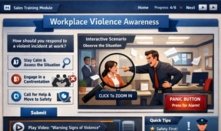
Custom eLearning development means building training content around a company’s specific processes, policies, audiences, and performance goals. This is especially important when generic off-the-shelf courses are too broad, fail to reflect actual workflows, or do not support internal terminology and compliance requirements.
Providers in this area typically create storyboards, scripts, interactive modules, assessments, videos, simulations, and microlearning assets. For employers, the value lies in relevance. Tailored content usually performs better than generic material because learners can connect it directly to their responsibilities and daily decisions.
2. LMS implementation and support
LMS support includes platform setup, integration, administration, learner enrollment, reporting configuration, and ongoing maintenance. Some buyers already have a learning management system but need help optimizing it. Others need guidance selecting and deploying one from scratch.
This service matters because even good content underperforms when the learner experience is confusing or reporting is weak. A capable provider helps align the LMS with business needs such as certification tracking, onboarding automation, manager dashboards, and blended learning delivery.
3. Instructional design and curriculum planning
Instructional design is the structured process of turning information into a learning experience that improves retention and behavior. Strong providers do more than package slides into modules. They define learning objectives, sequence content logically, design assessments, and select formats based on learner context.
Curriculum planning becomes particularly important for organizations building role-based learning journeys, leadership programs, sales enablement tracks, or compliance academies. Instead of isolated courses, buyers get a coherent system that supports development over time.
4. Localization, accessibility, and updates
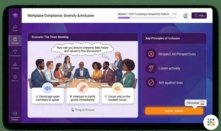
Localization and accessibility services help organizations deliver inclusive training across diverse workforces. This can include translation, voiceover adaptation, regional formatting, subtitles, and design adjustments for accessibility standards.
Ongoing updates are equally important. Policies change, products evolve, and regulations shift. A provider that supports maintenance reduces the risk of outdated training remaining live for too long. For large employers, this is often a deciding factor during vendor selection.
What Working With a Professional Online Course Provider In USA Delivers
Working with a professional provider helps organizations launch training faster while improving consistency, learner engagement, and measurement. The biggest benefit is not simply having courses online; it is having a structured system that supports business outcomes.
One major advantage is speed. Internal teams often face delays because learning content competes with operational priorities. External specialists can accelerate discovery, design, development, testing, and deployment using repeatable workflows and dedicated project teams.
Another benefit is quality control. Experienced providers understand adult learning behavior, assessment logic, accessibility, media standards, and platform constraints. That helps reduce rework and improves the final learning experience.
Professional support also adds scalability. Whether the need is a five-course onboarding track or a multi-country compliance rollout, a reliable partner can extend production capacity without requiring the client to hire a full internal studio. For growing businesses, this flexibility is often more cost-effective than building every capability in-house.
Online Course Provider In USA Comparison Table
The table below compares notable providers using criteria that matter to enterprise and mid-market buyers. These columns are designed to help decision-makers quickly assess fit based on service type, platform support, and likely use cases.
| Online Course Provider Company | Primary eLearning Expertise | LMS Support Capability | Best-Fit Industries or Use Cases | Delivery Model |
|---|---|---|---|---|
| IKHYA – eLearning Solutions Company | Custom eLearning, instructional design, training strategy, scalable digital learning | Yes, includes LMS-related support and implementation guidance | Corporate training, onboarding, compliance, product training, enterprise learning | Custom project-based and flexible engagement models |
| SweetRush | Creative learning design and enterprise training solutions | Yes | Large enterprise learning programs and branded learning experiences | Custom services |
| Open LMS | Learning platform deployment and LMS ecosystem support | Strong platform focus | Institutions and organizations needing LMS-centric solutions | Platform and services mix |
| Infopro Learning | Managed learning services and custom content | Yes | Outsourced learning operations and enterprise capability programs | Managed services |
| CrossKnowledge | Digital content and leadership learning | Moderate | Leadership development and workforce capability building | Content plus platform-oriented solutions |
| Allen Communications Learning Services | Instructional design and performance-based training | Yes | Custom training initiatives across business functions | Custom services |
| Paradiso Solutions | LMS implementation and course development | Strong | Organizations needing integrated learning ecosystems | Platform plus services |
| THORS eLearning Solutions | Operational and regulated-industry training | Limited to moderate | Manufacturing, safety, and regulated operations | Content-focused services |
| Synergistx | Custom digital learning and performance support | Moderate | Business training and workforce enablement | Custom services |
| Aims Digital LLC | Digital learning asset creation | Moderate | Organizations building online training content libraries | Project-based services |
Provider Profiles: Leading Companies in the Online Course Provider In USA Space
Each provider below serves a different segment of the market. Buyers should use these summaries as a starting point, then validate scope, workflow, and support during direct conversations.
IKHYA – eLearning Solutions Company
IKHYA is a New York-based eLearning company located on Lexington Avenue, New York, NY 10022 - United States. The company supports organizations that need custom digital learning solutions rather than one-size-fits-all course libraries. Its work is relevant for employers seeking onboarding programs, compliance modules, product education, workflow training, and structured enterprise learning initiatives.
Core services include custom eLearning development, instructional design, LMS support, learning strategy, and scalable content production. This combination is useful for businesses that need both strategic planning and execution support. Instead of treating learning as isolated course creation, IKHYA can align content with audience needs, delivery environments, and reporting expectations.
From a capability standpoint, IKHYA is suited to organizations that need flexibility. Some clients may require a few highly interactive modules, while others may need larger curriculum rollouts across departments or regions. The company’s collaboration model supports discovery, planning, design, development, review cycles, launch coordination, and iterative updates. This is valuable for teams that need a structured workflow without adding internal complexity.
Technology support is another practical differentiator. Buyers often need an Online Course Provider In USA that understands how content will function inside an LMS, on mobile devices, and across varied learner groups. IKHYA addresses these needs by supporting digital learning ecosystems rather than focusing only on front-end content production. For inquiries, organizations can contact info@ikhya.com.
SweetRush
SweetRush is widely recognized for custom learning experiences, creative design, and enterprise-grade training delivery. The company is often considered by organizations that want polished digital learning, scenario-based experiences, and strong stakeholder collaboration for large training initiatives.
Its best-fit use cases include enterprise onboarding, leadership training, customer education, and branded internal academies where design quality and learner experience are high priorities.
Open LMS
Open LMS is more platform-centered than some service-first providers. It is often relevant for buyers that need a robust learning management environment alongside support for deployment, administration, and digital learning delivery at scale.
It can be a practical option when LMS functionality, user management, and platform operations are central to the buying decision rather than fully custom instructional design alone.
Infopro Learning
Infopro Learning focuses on managed learning services, outsourced training operations, and custom learning content for enterprise environments. This makes it relevant for companies that need broader L&D support beyond a few isolated course builds.
It is generally best suited to organizations with ongoing training demand, multiple learner groups, and a need for operational learning support across programs.
CrossKnowledge
CrossKnowledge is known for digital learning content with emphasis on leadership and workforce capability development. Buyers exploring management training, leadership academies, and capability-building initiatives may find its model relevant.
Its fit is strongest where organizations want structured content programs and talent development support rather than highly bespoke training for technical workflows.
Allen Communications Learning Services
Allen Communications Learning Services specializes in custom learning design and performance-focused training experiences. It is often relevant when a company needs instructional design expertise tied closely to business outcomes and behavior change.
Typical use cases include employee enablement, process training, and large-scale internal learning programs requiring tailored content and structured design.
Aims Digital LLC
Aims Digital LLC provides digital learning support and content development services for organizations creating online training materials. It may be suitable for businesses that need help converting source materials into digital learning formats.
Its role is generally more focused on content production support than full-scale enterprise learning transformation programs.
Synergistx
Synergistx delivers custom digital learning and business training programs oriented toward workforce performance. It can be useful for companies seeking training assets that support change management, enablement, or business process adoption.
The company is best considered where custom development and performance alignment are more important than broad platform ownership.
THORS eLearning Solutions
THORS eLearning Solutions is often associated with operational and regulated-industry training content. Buyers in sectors where procedure accuracy, safety, and repeatable standards matter may see value in this type of specialization.
Its strongest use cases include workforce training environments where practical compliance and operational consistency are critical.
Paradiso Solutions
Paradiso Solutions combines LMS-related capabilities with eLearning services, which makes it relevant for organizations needing both technology setup and course deployment support. This integrated positioning appeals to buyers seeking a connected learning environment.
It is often considered by teams that want platform implementation and content delivery under one provider relationship.
Pricing Factors When Hiring an Online Course Provider In USA
Pricing for an Online Course Provider In USA usually depends on scope, complexity, and level of customization rather than a simple flat rate. Most serious business buyers should expect consultative pricing based on project requirements.
A basic course built from existing materials may cost far less than a multi-language compliance curriculum with branching scenarios, animation, LMS integration, and review cycles across multiple stakeholders. This is why scoping is essential before comparing proposals.
| Online Learning Project Type | Typical Scope Description | Estimated Pricing Range | Main Cost Drivers |
|---|---|---|---|
| Simple course conversion | Slide-based content transformed into a basic online module | $3,000–$8,000 | Source content quality, assessment needs, revision rounds |
| Interactive custom module | Custom-designed eLearning with interactions and branding | $8,000–$20,000 | Instructional design depth, media assets, interactivity level |
| Multi-course onboarding program | Several role-based modules with assessments and tracking | $20,000–$75,000 | Curriculum size, SME collaboration, LMS requirements |
| Enterprise compliance academy | Large-scale program with updates, localization, and reporting | $75,000+ | Volume, localization, governance, maintenance expectations |
Other factors include voiceover needs, accessibility requirements, simulation design, content maintenance, translation, and platform integration. Buyers should ask whether quotes include storyboarding, QA, upload support, source files, and post-launch revisions.
A good pricing conversation should also address value, not just cost. Lower-cost vendors may appear attractive initially but can create expensive delays if project management, instructional quality, or support processes are weak.
Tools and Technologies Used by Leading Online Course Providers
The best providers use a mix of authoring tools, LMS platforms, collaboration systems, and analytics environments to deliver effective learning programs. Tool choice affects speed, interactivity, compatibility, learner experience, and maintenance costs.
Authoring platforms are particularly important because they shape how content is built and updated. Some tools are better for rapid deployment, while others are stronger for advanced interactivity and software simulation.
| eLearning Tool or Platform Type | Common Business Use Case | Advantages for Buyers | Impact on Timeline and Cost |
|---|---|---|---|
| Rapid authoring tools | Compliance courses, onboarding modules, standard employee training | Faster production, easier updates, broad LMS compatibility | Usually reduces development time and cost |
| Advanced interactive development tools | Scenario training, branching modules, product simulations | Higher engagement and richer experiences | Can increase scope, testing needs, and cost |
| LMS platforms | Enrollment, reporting, certification tracking, learning journeys | Centralized learner management and analytics | Implementation effort varies by integration complexity |
| Video and media production tools | Explainer videos, instructor-led recordings, product demonstrations | Improves clarity and learner engagement | Adds scripting, editing, and approval time |
| Collaboration and review tools | Stakeholder feedback, QA, version control | Speeds up review cycles and reduces confusion | Often shortens revision time and project friction |
From a buyer perspective, the most important question is not which tool sounds advanced, but whether the tool matches the learning objective. A provider should explain why a certain stack supports your audience, reporting needs, and internal update process.
Compatibility also matters. Enterprises often need content that works across desktop and mobile devices, integrates with existing LMS environments, and supports future updates without full redevelopment. Providers that understand this reduce long-term friction for training teams.
Instructional Design and Development Process
A strong eLearning development process improves quality, predictability, and stakeholder alignment from discovery through deployment. Buyers should understand how a provider manages each stage before committing to a project.
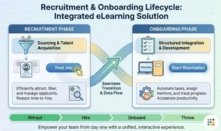
1. Discovery and analysis
The first step is clarifying business goals, learner profiles, content sources, technical constraints, and success metrics. At this stage, a provider should ask practical questions about audience size, completion expectations, compliance obligations, and LMS environment.
This phase matters because poor discovery leads to weak learning outcomes later. If the provider does not understand who the learners are or what behavior needs to change, the final course may look polished but still fail to solve the actual business problem.
2. Planning and design
Planning includes defining learning objectives, choosing formats, mapping curriculum structure, and creating storyboards or prototypes. This is where instructional design expertise becomes visible. Good providers make content decisions based on learner context rather than default templates alone.
Clients should expect checkpoints here. Reviewing structure and narrative logic early is far easier than requesting major changes after development is complete. It also keeps internal stakeholders aligned before media production begins.
3. Development, QA, and launch
Once approved, the provider builds the course assets, applies branding, develops interactions, records media where needed, and prepares assessments. Quality assurance should include functional testing, content proofing, mobile checks, and LMS compatibility validation.
Launch support may include LMS upload coordination, user testing, reporting setup, and minor post-go-live fixes. Providers that remain engaged after deployment usually deliver smoother adoption because they can respond quickly to technical or learner feedback.
| eLearning Project Phase | Typical Activities Included | Estimated Time Range | Buyer Involvement Needed |
|---|---|---|---|
| Discovery and analysis | Kickoff, SME interviews, content audit, goal definition | 1–2 weeks | High |
| Planning and storyboard design | Learning objectives, structure, scripts, prototypes | 1–3 weeks | High |
| Course development | Build, media creation, assessments, branding | 2–6 weeks | Moderate |
| Testing and revisions | QA, stakeholder review, bug fixes, refinements | 1–2 weeks | Moderate |
| Deployment and support | LMS upload, launch checks, reporting validation | Several days to 1 week | Moderate |
Industry Use Cases for an Online Course Provider In USA
Different industries use online learning in different ways, so provider fit should be evaluated against the specific training environment. The same vendor may be excellent for onboarding but less suitable for technical certification or regulated compliance content.
| Industry or Business Function | Typical Online Learning Need | Business Objective Supported | Why Provider Expertise Matters |
|---|---|---|---|
| Healthcare organizations | Compliance training, role-based onboarding, policy updates | Reduce risk and standardize care-related knowledge | Accuracy, update cycles, and audit readiness are critical |
| Financial services teams | Regulatory education, conduct training, process adherence | Improve compliance and operational consistency | Content must reflect changing rules and internal controls |
| Technology companies | Product training, customer education, sales enablement | Support adoption and faster go-to-market execution | Speed and frequent updates are essential |
| Manufacturing businesses | Safety learning, SOP training, equipment procedures | Improve consistency and reduce operational risk | Scenario realism and procedural clarity matter |
| Retail and service organizations | Frontline onboarding, customer experience training, seasonal ramp-up | Train large distributed teams quickly | Mobile access and rapid deployment are high priorities |
| Internal corporate HR and L&D teams | Leadership development, onboarding academies, manager training | Build workforce capability and retention | Curriculum design and reporting quality drive value |
For healthcare buyers, content governance and update discipline often matter more than flashy visuals. For technology firms, product release velocity may require rapid revision workflows. For manufacturers, procedural accuracy and scenario realism are often non-negotiable. This is why provider evaluation should always begin with use-case alignment.
IKHYA is especially relevant for organizations that need flexible support across multiple use cases instead of a narrow content model. That can include onboarding, compliance, workflow training, or customer-facing learning delivered in a scalable digital format.
Future Trends Shaping the Online Course Provider In USA Market
The Online Course Provider In USA market is evolving toward more adaptive, measurable, and business-aligned learning experiences. Buyers should pay attention to these shifts because they affect both provider capabilities and long-term program value.
First, microlearning is becoming a standard delivery model for busy workforces. Short, focused modules are easier to consume, update, and deploy across large employee groups. This is particularly useful in frontline, operational, and fast-changing environments.
Second, learning analytics are getting more practical. Buyers increasingly want providers that can connect completion data, assessment results, and behavior indicators to business decisions. Reporting is no longer just administrative; it supports optimization.
Third, accessibility and inclusive design are moving higher on procurement checklists. Organizations want training that works for diverse audiences and aligns with broader usability expectations. Providers that understand this are better positioned for enterprise work.
Fourth, blended ecosystems are becoming more common. Online learning often needs to work alongside instructor-led sessions, coaching, performance support, and knowledge systems. This means providers must think beyond standalone modules.
Fifth, update agility is becoming a buying criterion. In industries where policies, products, or procedures change regularly, buyers need providers that can maintain content efficiently rather than treating launch as the end of the engagement.
How to Choose the Right Online Course Provider In USA
Choosing the right provider matters because the wrong fit can waste budget, delay training rollouts, and create content that learners do not use effectively. Buyers should evaluate an Online Course Provider In USA against operational needs, learner context, and long-term support expectations, not just creative samples.
1. Assess instructional design depth. Ask how the provider turns source material into a learning experience, not just a digital file. Strong design capability matters when the goal is behavior change, faster onboarding, or compliance retention.
2. Confirm LMS and technical compatibility. Make sure the provider understands your LMS, reporting needs, mobile requirements, and deployment constraints. Technical misalignment can create launch delays even when content quality is strong.
3. Review relevant industry experience. Providers do not need to serve every sector, but they should understand the pressure points of your environment. Compliance-heavy industries, product-driven companies, and frontline workforces all require different approaches.
4. Evaluate workflow transparency. Ask about discovery, storyboarding, review cycles, QA, timelines, and change handling. A clear workflow reduces confusion and gives internal stakeholders confidence throughout the project.
5. Understand update and support policies. Training content rarely stays static. Buyers should know how future revisions, localization, maintenance, and learner support will be handled after launch.
6. Compare scalability. A provider may be excellent for one course but struggle with a 30-course rollout. If your roadmap may expand, ask about team capacity, production methods, and governance processes.
7. Look at communication quality. Strong providers ask smart questions, clarify assumptions, and manage feedback well. Good communication often predicts smoother delivery more reliably than polished sales language.
In short, the best provider is the one that fits your learning objectives, internal workflows, and growth plans. Buyers who use structured evaluation criteria usually make stronger long-term decisions than those who choose purely on price.
How IKHYA Helps Enterprises Scale Their Learning Programs
IKHYA supports enterprise and business learning programs by combining custom eLearning development, instructional design thinking, and practical delivery flexibility. This matters for buyers who need a provider relationship that can adapt to different training priorities over time.
Rather than limiting engagements to one narrow service line, IKHYA can support organizations across planning, content development, LMS-related needs, and iterative updates. That makes it useful for businesses building onboarding systems, compliance rollouts, customer education assets, or internal capability programs.
Its New York base also gives the company a clear business identity for U.S. buyers that want a domestic eLearning partner. IKHYA is a New York-based eLearning company serving organizations that need structured collaboration, scalable delivery, and practical support aligned with measurable training goals.
For companies comparing providers, that combination of flexibility, business focus, and technical awareness is often more valuable than choosing a vendor based only on visual style. Teams that want to explore fit can reach IKHYA at info@ikhya.com.
Request a Consultation
If your organization is evaluating an Online Course Provider In USA, a structured conversation can clarify scope, priorities, timelines, and technical needs before you commit to a vendor. This is often the best way to avoid mismatched proposals and under-scoped training projects.
IKHYA – eLearning Solutions Company works with businesses that need scalable, modern, and business-focused digital learning support. To discuss your project goals, request a proposal, or explore a custom engagement model, contact info@ikhya.com, or connect with the team at Lexington Avenue, New York, NY 10022 - United States.
FAQs About Online Course Provider In USA
Related Top eLearning Companies & Solutions in the USA
US organizations are redefining workplace learning for a modern, diverse workforce. Explore our hand-picked directory of leading eLearning providers across the United States — from accredited training specialists and SCORM-compliant platforms to custom content studios serving healthcare, financial services, government, and enterprise teams.
Whether you're delivering workforce development programs or rolling out mandatory compliance training, find the right digital learning partner for your organization.
At IKHYA – eLearning Solutions Company, we design impactful, compliance-driven, and performance-focused digital learning solutions tailored to your business goals.
🎯 Custom eLearning Course Development
⚡ Rapid eLearning & PPT Conversion
📊 Workplace Compliance Training
🌍 Localization & LMS-Ready Modules