Mobile-Friendly Training Development Using Lectora Inspire: Complete Guide for Corporate eLearning

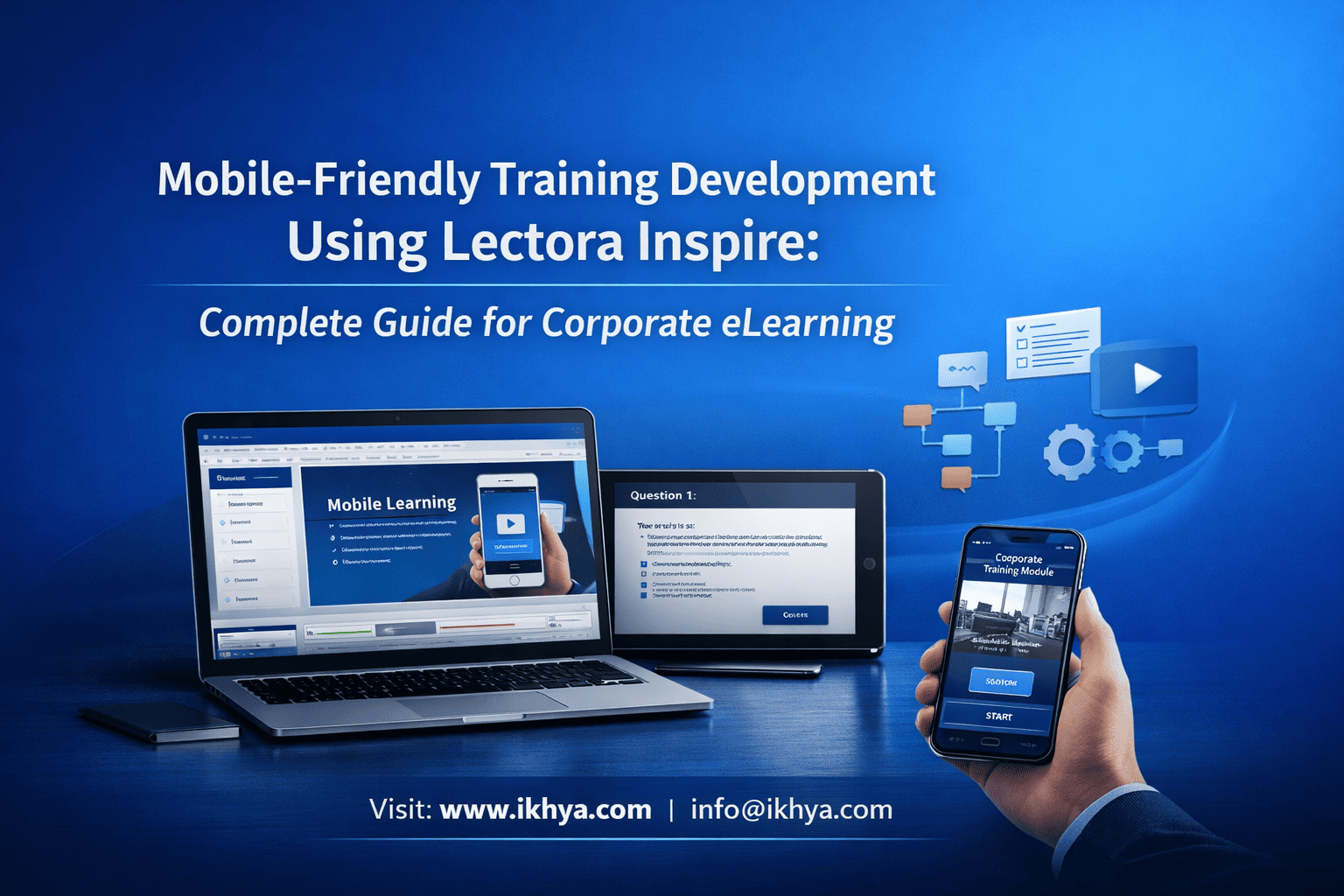
Mobile-Friendly Training Development Using Lectora Inspire is essential in today’s fast-paced corporate environment, where employees expect training that works seamlessly on their smartphones and tablets. Mobile-friendly training development ensures learners can access courses anytime, anywhere, boosting engagement and retention. Using Lectora Inspire, organizations can convert legacy content and create responsive eLearning that meets modern learning demands. This guide will help you understand the benefits, development workflow, cost considerations, and industry-specific applications to make informed decisions. Explore how IKHYA – eLearning Solutions Company can help you deliver mobile-ready courses effectively.
Book a free demo to see Lectora Inspire in action and understand how your training can become fully responsive.
What is Lectora Inspire?
Lectora Inspire is a robust authoring tool for creating mobile learning solutions that work across smartphones, tablets, and desktops. Its responsive design ensures content automatically adapts to the learner’s device, providing a seamless experience.
Key features include:
- Responsive Design: Ensures your training is mobile-ready and accessible on any device.
- SCORM/xAPI Compliance: Easily track learner progress and integrate with any LMS.
- Accessibility Support: Meets WCAG standards for inclusive training.
- Template Library & Interactivity: Prebuilt interactions, quizzes, and branching scenarios increase learner engagement.
Organizations often rely on Lectora Inspire development services to modernize legacy courses, convert PowerPoint and ILT content, and deploy fully responsive eLearning without sacrificing interactivity or compliance.
Benefits of Mobile-Friendly Training
Developing mobile-friendly training using Lectora Inspire offers multiple advantages for organizations and learners alike. Responsive, on-the-go learning ensures employees can access courses anytime, improving engagement and knowledge retention.
Key benefits include:
- Accessibility and Flexibility: Learners can complete training on smartphones, tablets, or desktops, enabling continuous learning anywhere. This is essential for remote teams and global organizations seeking mobile learning solutions.
- Enhanced Engagement: Interactive elements, quizzes, and multimedia in Lectora Inspire keep learners interested and improve course completion rates.
- Microlearning Integration: Breaking content into short modules supports microlearning development, making it easier for learners to absorb information.
- Compliance and Tracking: SCORM and xAPI compliance allows seamless integration with LMS platforms for accurate tracking and reporting.
- Cost and Time Efficiency: Updating legacy courses or converting PowerPoint and ILT content saves time while providing a consistent mobile-ready experience.
By leveraging rapid eLearning development using Lectora Inspire, organizations can accelerate training deployment while ensuring high-quality, mobile-optimized courses.
Step-by-Step Mobile Course Development Using Lectora
Creating mobile-friendly courses in Lectora Inspire involves a structured workflow to ensure responsive design, engagement, and seamless LMS integration. Here’s a practical step-by-step process:
Step 1: Assess and Audit Existing Content
- Review current PowerPoint or ILT training materials.
- Identify modules that can be converted directly and those requiring redesign.
- Reference PPT to eLearning conversion services for efficient conversion strategies.
Step 2: Define Learning Objectives and Outcomes
- Align course goals with business needs.
- Determine the target device usage (smartphone, tablet, desktop).
- Incorporate microlearning principles using microlearning development services.
Step 3: Storyboarding and Instructional Design
- Plan course layout, interactive elements, quizzes, and branching scenarios.
- Ensure responsive design is integrated from the storyboard stage.
- Consider instructional design services for expert guidance.
Step 4: Development in Lectora Inspire
- Import existing assets or create new multimedia content.
- Use responsive templates and adjust layouts for multiple devices.
- Integrate SCORM/xAPI tracking for LMS compatibility.
Step 5: Review and Quality Assurance
- Test the course on multiple devices to ensure responsiveness.
- Verify interactivity, assessments, and navigation.
- Include accessibility checks.
Step 6: Deployment and Feedback
- Publish courses to the LMS and collect learner feedback.
- Monitor completion rates, quiz scores, and engagement metrics.
- Optimize content based on analytics for continuous improvement.
Example Timelines:
| Course Type | Estimated Duration | Notes |
|---|---|---|
| Basic PPT conversion | 2–3 weeks | Limited interactivity, standard responsive template |
| Full ILT to mobile eLearning | 4–6 weeks | Includes branching scenarios, multimedia, and quizzes |
Organizations can accelerate this workflow with rapid eLearning development services, reducing time while maintaining high-quality mobile-ready courses.
Lectora Inspire vs Other Authoring Tools
When developing mobile-friendly training, choosing the right authoring tool is critical. Lectora Inspire stands out for responsive design, but it’s important to compare it with other popular tools like Articulate Storyline, Rise, and Adobe Captivate.
1. Lectora Inspire
- Fully responsive and mobile-ready by design.
- Strong support for SCORM/xAPI compliance and LMS integration.
- Ideal for complex branching scenarios and interactive content.
- Suitable for industries requiring accessibility compliance.
2. Articulate Storyline
- Highly interactive with a slide-based approach.
- Limited native responsive capabilities; may require additional work for mobile optimization.
- Strong community support and templates.
- Better for straightforward courses without extensive branching.
3. Articulate Rise
- Cloud-based, mobile-first design.
- Quick development and deployment, perfect for rapid courses.
- Less customization than Lectora for complex interactivity.
- Excellent for microlearning modules and global rollouts.
4. Adobe Captivate
- Powerful for simulations and scenario-based learning.
- Can be responsive, but design flexibility may require more expertise.
- Integration with LMS is robust.
- Suited for highly interactive, technical, or compliance-heavy training.
Comparison Summary:
| Feature | Lectora Inspire | Storyline | Rise | Captivate |
|---|---|---|---|---|
| Mobile-First Design | ✅ | Partial | ✅ | Partial |
| SCORM/xAPI Compliance | ✅ | ✅ | ✅ | ✅ |
| Branching & Interactivity | Advanced | Advanced | Limited | Advanced |
| Rapid Development | Moderate | Moderate | Fast | Moderate |
| Accessibility Support | WCAG-compliant | Limited | Limited | WCAG-compliant |
For organizations seeking a combination of mobile learning solutions, complex interactivity, and compliance, Lectora Inspire development services remain a preferred choice.
Vendor Selection & Outsourcing Strategy
Choosing the right vendor or deciding between in-house and outsourced development is crucial for successful mobile-friendly training using Lectora Inspire. A strategic approach ensures quality, timeliness, and cost-effectiveness.
1. In-House vs Outsourcing
- In-House Development: Offers full control over content and brand alignment but requires skilled instructional designers and Lectora experts.
- Outsourcing: Access to specialized expertise, faster turnaround, and cost savings. Outsourcing options include outsourcing Lectora Inspire eLearning development to experienced vendors.
2. Vendor Selection Framework
- Evaluate vendor experience in Lectora Inspire development services.
- Check past projects, industry-specific expertise, and mobile learning examples.
- Assess compliance with SCORM/xAPI and accessibility standards.
- Confirm ability to deliver within your timeline and budget.
3. Cost & Timeline Considerations
- Basic PPT to Mobile eLearning: $500–$1,500 per module, 2–3 weeks.
- Full ILT to Mobile Course Conversion: $2,000–$5,000 per module, 4–6 weeks.
- Additional costs may include multimedia, localization, and interactivity enhancements.
- Rapid development services can compress timelines without compromising quality.
4. Risk Mitigation Tips
- Define clear deliverables and milestones.
- Include quality assurance and mobile testing protocols.
- Ensure vendor provides post-launch support and course updates.
Using a structured outsourcing strategy helps organizations leverage Lectora Inspire development services efficiently while maintaining high-quality, mobile-ready courses.
Industry-Specific Applications
Mobile-friendly training with Lectora Inspire can be tailored to meet the unique needs of different industries. Here’s how organizations across sectors are leveraging mobile learning solutions:
1. Healthcare
- Mobile courses for compliance training, patient safety, and clinical protocols.
- Staff can access microlearning modules during shifts, improving retention.
- Example: Hospitals using Lectora Inspire for healthcare compliance training saw a 30% increase in training completion rates.
2. Manufacturing
- Safety procedures, equipment handling, and SOP updates delivered via mobile courses.
- Enables on-the-floor learning without disrupting operations.
- Example: Factories using Lectora Inspire for manufacturing training reduced incident reports by 20%.
3. Retail
- Mobile-friendly onboarding and customer service training for store associates.
- Microlearning modules for promotions, product knowledge, and compliance.
- Example: Retail chains adopting mobile learning solutions for staff onboarding improved engagement by 40%.
4. Finance
- Compliance training, anti-money laundering modules, and regulatory updates accessible on-the-go.
- Short, interactive lessons increase retention for remote teams.
- Example: Financial firms using Lectora Inspire development services for mobile compliance training reported faster certification turnaround.
5. IT / Software
- Technical training, software updates, and cybersecurity awareness delivered via mobile.
- Supports rapid deployment and global workforce training.
- Example: IT companies leveraging rapid eLearning development using Lectora Inspire reduced rollout time from 6 weeks to 3 weeks.
These examples show how mobile-ready courses using Lectora Inspire can drive measurable impact across industries while ensuring accessibility and engagement.
Best Practices for Mobile Learning Design
Creating effective mobile-friendly training using Lectora Inspire requires following proven design practices to enhance learner engagement and retention.
1. Prioritize Responsive Design
- Ensure content automatically adapts to smartphones, tablets, and desktops.
- Use Lectora Inspire development services to implement responsive templates that maintain interactivity across devices.
2. Break Content into Microlearning Modules
- Short, focused modules improve knowledge retention and completion rates.
- Leverage microlearning development services to structure lessons for quick, on-the-go learning.
3. Include Interactive Elements
- Use quizzes, drag-and-drop exercises, and branching scenarios to reinforce learning.
- Interactive content encourages engagement and better knowledge application.
4. Maintain Accessibility Standards
- Ensure courses meet WCAG standards to provide equal access for all learners.
- Accessibility features include screen reader compatibility, color contrast, and keyboard navigation.
5. Optimize Multimedia for Mobile
- Compress images, videos, and audio for faster loading on mobile devices.
- Use multimedia strategically to enhance learning, not distract.
6. Continuous Feedback and Analytics
- Incorporate assessments and track learner progress using SCORM/xAPI.
- Use LMS analytics to refine and improve course design for future iterations.
Implementing these best practices ensures that mobile learning solutions are engaging, accessible, and effective, maximizing ROI for corporate training programs.
Cost & Timeline Considerations
Understanding the cost and timeline for mobile-friendly training development using Lectora Inspire helps organizations plan budgets and project schedules effectively. Costs vary depending on course complexity, interactivity, and industry requirements.
Estimated Cost Ranges:
| Course Type | Estimated Cost | Notes |
|---|---|---|
| Basic PPT to Mobile Conversion | $500 – $1,500 per module | Limited interactivity, standard responsive template |
| Full ILT to Mobile eLearning | $2,000 – $5,000 per module | Includes branching scenarios, multimedia, and assessments |
| Rapid Development Course | $1,500 – $3,500 per module | Accelerated timelines using rapid eLearning development services |
Example Timelines:
| Course Type | Estimated Duration | Notes |
|---|---|---|
| Basic PPT Conversion | 2–3 weeks | Quick turnaround, minimal redesign |
| Full ILT to Mobile Course | 4–6 weeks | Complete redesign with interactive elements |
| Rapid Development | 2–4 weeks | Uses templates and prebuilt interactions |
Factors Affecting Cost & Timeline:
- Interactivity Level: Complex branching or simulations increase development time.
- Multimedia Assets: Video, audio, and animations may add cost.
- Industry Requirements: Compliance-heavy sectors like healthcare and finance require extra validation.
- Localization: Multi-language versions require translation and adaptation.
Using Lectora Inspire development services or outsourcing via outsourcing Lectora Inspire eLearning development can help reduce costs and accelerate delivery while maintaining quality.
Conclusion & Next Steps
Developing mobile-friendly training using Lectora Inspire empowers organizations to deliver engaging, accessible, and measurable learning experiences. By following a structured development workflow, leveraging responsive design, and applying industry-specific best practices, companies can maximize learner engagement and ROI.
Key takeaways:
- Responsive Design: Courses automatically adapt to any device, ensuring accessibility for all learners.
- Interactive & Microlearning Modules: Bite-sized, engaging content improves knowledge retention.
- Industry Applicability: Healthcare, manufacturing, retail, finance, and IT can all benefit from mobile-ready courses.
- Cost & Timeline Awareness: Realistic budgeting and timelines prevent delays and optimize resources.
- Vendor Selection: Choosing the right partner, whether in-house or outsourced, ensures quality and compliance.
To take the next step, explore how your organization can implement custom Lectora Inspire development services, request a demo, or submit an RFP to kickstart your mobile eLearning transformation.
Mobile-Friendly Training Development Using Lectora Inspire – FAQs
1. Can Lectora Inspire courses be accessed on any mobie device?
Yes, Lectora Inspire ensures courses are fully responsive, supporting smartphones, tablets, and desktops.
2. How long does it take to convert a PowerPoint to mobile eLearning?
Typically 2–3 weeks for basic conversion, depending on interactivity and module length.
3. What industries benefit most from mobile-friendly training?
Healthcare, manufacturing, retail, finance, and IT see significant impact from mobile-ready courses.
4. Is Lectora Inspire compliant with accessibility standards?
Yes, it supports WCAG standards for accessible learning content.
5. Can microlearning modules be created using Lectora Inspire?
Absolutely, it’s ideal for developing short, focused learning modules.
6. What LMS platforms are compatible with Lectora courses?
Most SCORM/xAPI-compliant LMS platforms support Lectora courses.
7. Is outsourcing Lectora Inspire development cost-effective?
Yes, outsourcing provides expertise, faster timelines, and potential cost savings.
8. How interactive can Lectora Inspire courses be?
Highly interactive, including quizzes, branching scenarios, simulations, and multimedia.
9. What is the typical cost of mobile eLearning development?
Ranges from $500 for basic PPT conversion to $5,000+ for complex ILT-to-mobile courses.
10. Can legacy training content be modernized for mobile?
Yes, legacy PowerPoint or ILT content can be converted into responsive courses.
11. What is the role of rapid eLearning development?
It accelerates course delivery using prebuilt templates and workflows without sacrificing quality.
12. How do you measure learner engagement on mobile courses?
Through LMS analytics, quiz results, completion rates, and interaction tracking.
13. Are Lectora Inspire courses suitable for global deployment?
Yes, they support localization and multi-language options for worldwide audiences.
14. Can interactive simulations be delivered on mobile?
Yes, Lectora supports mobile-compatible simulations for practical training.
15. How do you choose between in-house and outsourced development?
Consider budget, expertise, timeline, and complexity of mobile training requirements.
16. What are common mistakes in mobile course design?
Ignoring responsive layouts, overloading content, and skipping accessibility checks.
17. Does Lectora Inspire support rapid updates?
Yes, content can be quickly revised and redeployed across mobile devices.
18. Can Lectora courses integrate with compliance tracking systems?
Yes, SCORM/xAPI compliance ensures integration with most tracking systems.
19. Are there industry-specific examples of mobile eLearning success?
Yes, healthcare, manufacturing, retail, finance, and IT have seen measurable gains in engagement and knowledge retention.
20. How can I get started with mobile-friendly eLearning development?
Reach out to IKHYA – eLearning Solutions Company, request a demo, or submit an RFP to begin your mobile eLearning transformation.
Related Resources
Explore additional resources to enhance your understanding of mobile-friendly training and Lectora Inspire development.