Top Features of iSpring for eLearning Development

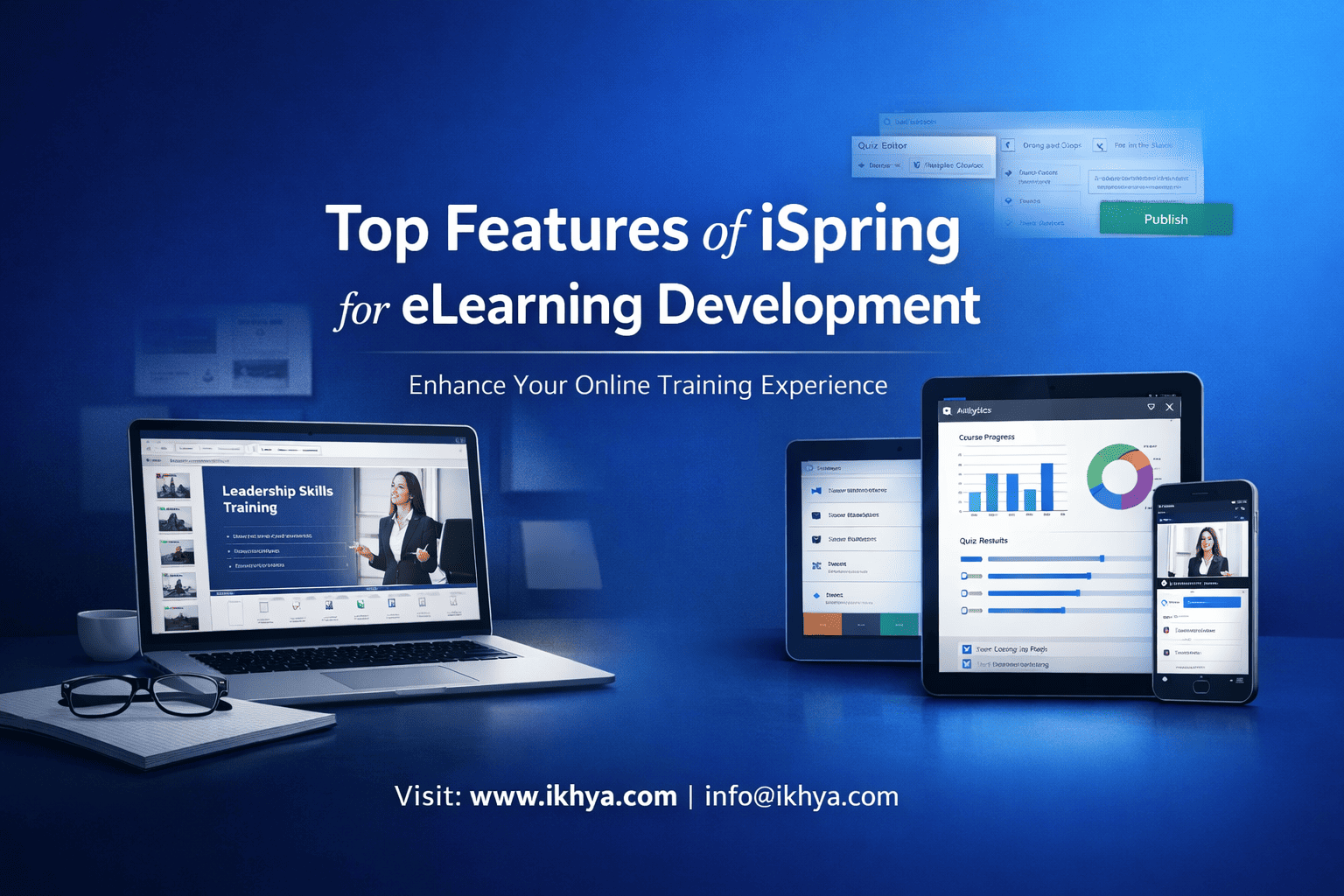
Modern organizations need fast, scalable, and effective training solutions. That’s where iSpring stands out. Known for its simplicity and speed, iSpring enables teams to convert static content into interactive eLearning—without complex technical skills. If you’re exploring tools for rapid course creation, understanding the top features of iSpring for eLearning development is essential.
If you’re looking to build impactful training programs quickly, partnering with an experienced provider like custom eLearning development services can help you maximize iSpring’s potential from day one.
What is iSpring Suite and Why is it Popular?
iSpring Suite is a PowerPoint-based eLearning authoring tool designed for rapid course development. It allows instructional designers, trainers, and L&D teams to create interactive courses, quizzes, and simulations directly within PowerPoint—making it one of the easiest tools to adopt.
Key Reasons Behind iSpring’s Popularity
- Familiar interface: Works inside PowerPoint, reducing the learning curve
- Rapid development: Create courses in hours instead of weeks
- All-in-one toolkit: Includes quizzes, simulations, screen recording, and video tools
- LMS-ready output: Supports SCORM, xAPI, and other standards
Why Organizations Prefer iSpring Over Traditional Tools
| Feature Area | iSpring Advantage | Traditional Tools |
|---|---|---|
| Learning curve | Very low (PowerPoint-based) | High |
| Development speed | Fast | Moderate to slow |
| Technical skills needed | Minimal | Advanced |
| Cost efficiency | High ROI | Often expensive |
Many organizations—especially in the USA, UK, UAE, and Australia—choose iSpring for compliance training, onboarding, and sales enablement due to its speed and simplicity.
If you’re unsure how iSpring compares with other tools, exploring the best eLearning authoring tools can help you make a more informed decision.
Top Features of iSpring for eLearning Development
iSpring offers a powerful set of features that enable rapid, interactive, and scalable eLearning development. These features make it particularly suitable for corporate training environments where speed, consistency, and LMS compatibility are critical.
PowerPoint-Based Course Creation
iSpring allows you to convert PowerPoint presentations into fully interactive eLearning courses with minimal effort.
Key capabilities:
- Convert slides into SCORM-compliant courses
- Add voiceovers, animations, and transitions
- Maintain original PowerPoint formatting
This is especially useful for organizations looking to convert PowerPoint to eLearning without rebuilding content from scratch.
Real-world example:
A manufacturing company can transform safety training PPTs into interactive modules within days instead of weeks.
Built-in Quiz Maker
iSpring includes a powerful quiz builder that supports assessments for compliance, certification, and knowledge checks.
Quiz features include:
- 14+ question types (MCQ, drag-and-drop, hotspot)
- Adaptive branching scenarios
- Timed assessments and scoring rules
| Feature | Benefit |
|---|---|
| Question variety | Engaging assessments |
| Branching logic | Personalized learning paths |
| Reporting | LMS tracking via SCORM/xAPI |
Interactive Role-Play Simulations
iSpring enables scenario-based learning through dialogue simulations—ideal for soft skills and customer service training.
Use cases:
- Sales training
- Customer support
- Leadership development
Why it matters:
- Improves decision-making skills
- Mimics real-world situations
- Enhances learner engagement
Screen Recording & Video Lectures
You can easily create video-based training using built-in screen recording and webcam features.
Capabilities:
- Record software demos
- Create instructor-led video lessons
- Sync audio and slides
This is particularly useful for IT and software training programs.
Mobile-Friendly Learning
iSpring ensures that courses work seamlessly across devices, including smartphones and tablets.
Key benefits:
- Responsive playback
- No additional design effort
- Consistent user experience
This supports modern mobile learning strategies, especially for remote and field employees.
SCORM & LMS Compatibility
iSpring publishes courses in all major eLearning standards, ensuring compatibility with any LMS.
Supported formats:
- SCORM 1.2 / 2004
- xAPI (Tin Can)
- AICC
| Standard | Purpose |
|---|---|
| SCORM | Tracking completion & scores |
| xAPI | Advanced analytics |
| LMS integration | Seamless deployment |
Content Library & Templates
iSpring provides a built-in library of templates, characters, and assets to speed up development.
Includes:
- Slide templates
- Character sets
- Icons and backgrounds
This reduces design effort and ensures consistency across courses.
Collaboration & Review Tools
Teams can collaborate efficiently using iSpring’s cloud-based review and feedback system.
Benefits:
- Stakeholder feedback in real-time
- Version control
- Faster approval cycles
If you’re aiming to scale development efficiently, combining iSpring with rapid eLearning development services can significantly reduce timelines and costs.
How iSpring Enables Rapid eLearning Development
iSpring is designed for speed. It simplifies the entire course creation process by leveraging PowerPoint, built-in assets, and automation—allowing organizations to develop eLearning content in days instead of weeks.
Step-by-Step Rapid Development Workflow
Step 1: Content Preparation
- Use existing PowerPoint slides, PDFs, or training materials
- Structure content into modules and lessons
Step 2: Import into iSpring
- Open PowerPoint with iSpring plugin
- Enhance slides with animations, narration, and media
Step 3: Add Interactivity
- Insert quizzes, role-play simulations, and branching scenarios
- Include knowledge checks and assessments
Step 4: Record Audio/Video
- Add voiceovers or instructor videos
- Sync narration with slides
Step 5: Publish for LMS
- Export as SCORM/xAPI package
- Upload to LMS for tracking and reporting
Development Time Comparison
| Development Type | Traditional Tools | iSpring |
|---|---|---|
| Basic course | 2–3 weeks | 2–3 days |
| Interactive course | 4–6 weeks | 1–2 weeks |
| PPT conversion | Manual rebuild | Direct conversion |
Key takeaway: iSpring reduces development time by up to 60–70%, making it ideal for organizations that need fast deployment.
For companies aiming to accelerate training rollouts, leveraging rapid eLearning development services ensures both speed and quality at scale.
iSpring vs Other Authoring Tools (Storyline, Captivate, Rise)
Choosing the right authoring tool depends on your training needs, complexity, and timelines. iSpring excels in speed and ease of use, but other tools may offer more advanced customization.
Feature Comparison Table
| Feature | iSpring | Storyline | Captivate | Rise |
|---|---|---|---|---|
| Ease of use | Very easy | Moderate | Complex | Very easy |
| Development speed | Very fast | Moderate | Slow | Fast |
| PowerPoint integration | Native | Limited | No | No |
| Interactivity level | Medium | High | High | Medium |
| Mobile responsiveness | Good | Good | Excellent | Excellent |
| Customization | Moderate | Advanced | Advanced | Limited |
| Learning curve | Low | Medium | High | Low |
When to Choose iSpring vs Other Tools
Choose iSpring if you need:
- Rapid course development
- PowerPoint-based workflows
- Quick compliance or onboarding training
Choose Storyline if you need:
- Complex branching scenarios
- Custom animations and interactions
Choose Captivate if you need:
- Software simulations
- Advanced responsive design
Choose Rise if you need:
- Fully responsive, web-based courses
- Microlearning modules
If you’re evaluating tools, reviewing the best eLearning authoring tools can provide a broader perspective.
When Should You Choose iSpring? (Decision Guide)
iSpring is not a one-size-fits-all solution. It works best in specific scenarios where speed, simplicity, and scalability are priorities.
Ideal Use Cases for iSpring
- Compliance Training
- Fast updates for regulations
- Standardized course delivery
- Employee Onboarding
- Quick rollout of training modules
- Consistent learning experience
- Sales Training
- Product knowledge modules
- Scenario-based learning
Decision Framework
| Requirement | Choose iSpring? |
|---|---|
| Need fast development | Yes |
| Have existing PPT content | Yes |
| Require high-end animations | No |
| Need advanced customization | No |
| Focus on scalability | Yes |
When iSpring May Not Be Ideal
- Highly interactive gamified learning
- Complex simulations requiring custom coding
- Advanced UI/UX-heavy learning experiences
In such cases, organizations often combine tools or outsource development to experts. If you’re unsure, consulting with specialists through elearning consultancy services can help you choose the right approach.
Industry Use Cases of iSpring
iSpring is widely used across industries due to its flexibility and speed. Its ability to convert existing content into structured learning makes it highly valuable in corporate environments.
Healthcare Training
- Compliance training (HIPAA, safety protocols)
- Patient care simulations
- Certification programs
Example: Hospitals in the UK use iSpring to quickly update compliance modules as regulations change.
Manufacturing Training
- Safety training modules
- Equipment handling instructions
- Process standardization
Example: A manufacturing firm can convert SOP PowerPoints into interactive safety courses within days.
Retail & Financial Services
- Customer service training
- Product knowledge
- Anti-money laundering (AML) compliance
Example: BFSI organizations in the UAE use iSpring for rapid compliance updates and certification tracking.
Cost & Licensing of iSpring
iSpring is considered cost-effective compared to many enterprise-level authoring tools, especially when factoring in speed and ease of use.
Pricing Overview
| Plan Type | Cost Range | Best For |
|---|---|---|
| Individual license | Moderate | Freelancers, small teams |
| Team subscription | Mid-range | Corporate teams |
| Enterprise plan | Custom | Large organizations |
ROI Perspective
Why iSpring delivers strong ROI:
- Reduced development time
- Lower training costs
- Faster deployment
- Minimal training for developers
Organizations often combine iSpring with iSpring eLearning development services to maximize ROI and ensure high-quality output.
Hidden Cost Considerations
- Content design effort
- Instructional design quality
- LMS integration setup
Working with experts in instructional design services ensures that your courses are not just fast—but also effective.
Common Limitations of iSpring
While iSpring is powerful for rapid eLearning, it does have limitations. Understanding these helps you decide when it’s the right tool—and when you may need alternatives or expert support.
Key Limitations to Consider
- Limited advanced customization
- Not ideal for highly complex interactions or gamification
- Dependence on PowerPoint
- Design flexibility is restricted by slide-based structure
- Basic animation capabilities
- Compared to tools like Storyline, animations are simpler
- Less suited for highly immersive learning
- Not the best choice for AR/VR or advanced simulations
Limitations vs Impact
| Limitation | Impact on Training |
|---|---|
| Limited interactivity | May reduce engagement for complex topics |
| PowerPoint dependency | Restricts creative layouts |
| Basic UI customization | Less visually dynamic courses |
How to Overcome These Limitations
- Combine iSpring with strong instructional design
- Use scenario-based learning for engagement
- Outsource complex development needs
Organizations often address these gaps by partnering with experts offering custom eLearning development services to enhance course quality and learner engagement.
How to Get Started with iSpring Development
Getting started with iSpring is straightforward, even for non-technical users. Its PowerPoint integration makes onboarding fast and intuitive.
Step-by-Step Process
Step 1: Install iSpring Suite
- Download and integrate with PowerPoint
- Activate license
Step 2: Prepare Content
- Organize slides and training material
- Define learning objectives
Step 3: Enhance Slides
- Add narration, quizzes, and interactions
- Insert role-play scenarios
Step 4: Test Course
- Preview content across devices
- Validate quiz logic and navigation
Step 5: Publish & Deploy
- Export as SCORM/xAPI
- Upload to LMS
Best Practices for Success
- Keep modules short (microlearning approach)
- Use visuals and scenarios for engagement
- Align content with business goals
- Test across devices and LMS platforms
If you want to streamline development from the start, booking a free eLearning demo can help you understand how iSpring fits your training needs.
Why Organizations Outsource iSpring Development
Many organizations choose to outsource iSpring development to save time, reduce costs, and improve quality.
Key Reasons to Outsource
- Faster turnaround
- Dedicated teams accelerate development timelines
- Access to expertise
- Instructional designers + developers
- Cost efficiency
- Lower than building in-house teams
- Scalability
- Handle large training rollouts
In-House vs Outsourced Development
| Factor | In-House | Outsourced |
|---|---|---|
| Cost | High (team + tools) | Flexible |
| Speed | Limited by resources | Faster |
| Expertise | Variable | High |
| Scalability | Limited | High |
When Outsourcing Makes Sense
- Large-scale training programs
- Tight deadlines
- Lack of internal expertise
- Need for high-quality instructional design
Organizations often follow best practices from this guide on outsource eLearning development to ensure successful collaboration and results.
Conclusion
iSpring has established itself as one of the most efficient tools for rapid eLearning development. Its PowerPoint-based approach, built-in interactivity, and LMS compatibility make it ideal for corporate training environments.
Key takeaways:
- Best suited for rapid development and scalability
- Ideal for compliance, onboarding, and sales training
- Delivers strong ROI with minimal learning curve
However, like any tool, its effectiveness depends on how it’s used. Combining iSpring with strong instructional design and expert execution ensures maximum impact.
If you’re planning to implement iSpring for your organization, IKHYA – eLearning Solutions Company can help you design, develop, and deploy high-quality training programs. Reach out at info@ikhya.com or explore tailored solutions through our contact page.
For organizations ready to move forward with structured training initiatives, submitting a request for proposal is a great next step.
FAQs
1. What is iSpring Suite used for?
iSpring Suite is used to create interactive eLearning courses, quizzes, simulations, and video lectures directly from PowerPoint.
2. Is iSpring good for corporate training?
Yes, iSpring is ideal for corporate training, especially for compliance, onboarding, and product training due to its speed and simplicity.
3. Does iSpring support LMS integration?
Yes, iSpring supports SCORM, xAPI, and AICC, making it compatible with most LMS platforms.
4. How does iSpring compare to Storyline?
iSpring is easier and faster to use, while Storyline offers more advanced customization and complex interactivity.
5. Can iSpring convert PowerPoint into eLearning?
Yes, iSpring allows direct conversion of PowerPoint presentations into interactive eLearning courses without redesigning content.
6. Is iSpring suitable for mobile learning?
Yes, iSpring courses are mobile-friendly and adapt to smartphones and tablets.
7. What industries use iSpring?
Industries like healthcare, manufacturing, retail, BFSI, and IT widely use iSpring for training.
8. Is iSpring cost-effective?
Yes, iSpring delivers strong ROI due to faster development, lower training costs, and minimal learning curve.
9. What are the key features of iSpring Suite?
Key features include PowerPoint integration, quiz maker, role-play simulations, screen recording, and LMS compatibility.
10. Does iSpring require coding skills?
No, iSpring does not require coding skills. It is designed for non-technical users.
11. Can iSpring create interactive quizzes?
Yes, iSpring includes a built-in quiz maker with multiple question types and branching scenarios.
12. Is iSpring good for compliance training?
Yes, iSpring is widely used for compliance training because it enables quick updates and standardized delivery.
13. How fast can you develop courses using iSpring?
Courses can be developed in days instead of weeks, especially when using existing PowerPoint content.
14. Does iSpring support video-based learning?
Yes, it includes tools for screen recording, video lectures, and narration.
15. What are the limitations of iSpring?
iSpring has limited advanced customization, basic animations, and relies on PowerPoint structure.
16. Can iSpring be used for microlearning?
Yes, iSpring supports microlearning by allowing short, modular course creation.
17. Is iSpring suitable for beginners?
Yes, its PowerPoint-based interface makes it one of the easiest tools for beginners.
18. Does iSpring support multilingual courses?
Yes, courses can be translated and localized for global audiences.
19. Can teams collaborate in iSpring?
Yes, iSpring offers collaboration and review tools for team-based development.
20. Should you outsource iSpring development?
Outsourcing is recommended when you need faster delivery, expert instructional design, and scalable training solutions.
Related Resources
Explore these carefully selected resources to deepen your understanding of iSpring and plan your eLearning strategy effectively. These links follow a structured path—from learning about the tool to choosing services and taking the next step toward implementation.