eLearning Localization Services: 7 Proven Benefits for Global Corporate Training Success

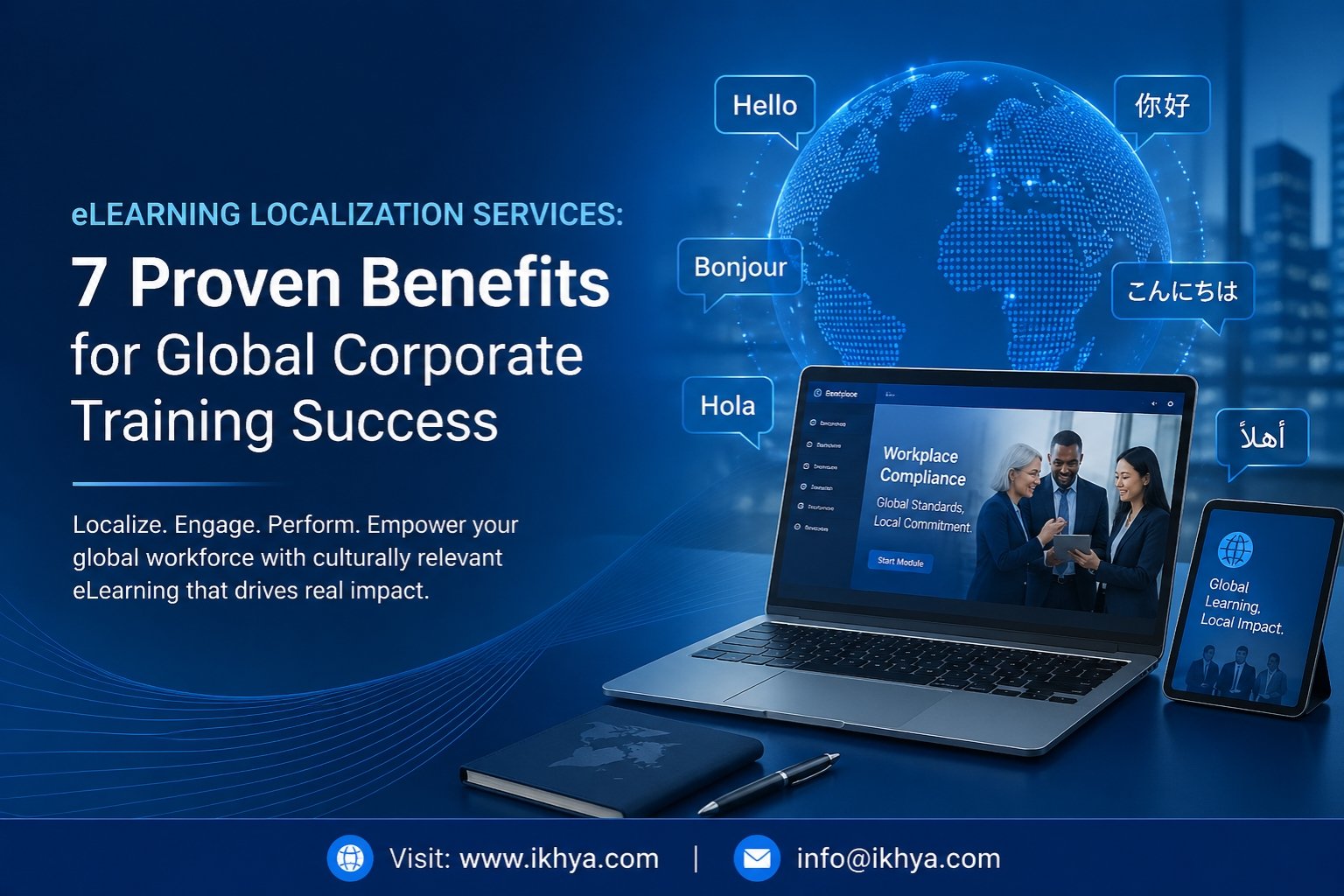
eLearning Localization Services help companies train employees across different countries in a simple and effective way. When teams speak different languages and follow different cultures, training can fail if it is not adapted properly. Localization solves this problem by making training content relevant, clear, and easy to understand for every learner.
In this guide, you will learn why localization is important, how it works, and how it can improve your global training results. If you are planning to expand training globally, this will help you make the right decision.
What Are eLearning Localization Services and Why Do They Matter?
eLearning Localization Services are the process of adapting training content for different languages, cultures, and regions. This is more than simple translation. It includes:
- Language adaptation
- Cultural adjustments
- Visual and audio changes
- Local compliance updates
For example, a training course created in the US may not work in the UAE or Australia without changes. Localization ensures the content feels local to every learner.
Companies working with IKHYA – eLearning Solutions Company can create training programs that work globally without confusion.
Why Global Companies Need eLearning Localization Services
Language Barriers in Corporate Training
Employees learn better in their native language. If training is only in English, many employees may misunderstand important concepts.
Localization removes this barrier and improves understanding.
Cultural Relevance Drives Engagement
Training must match local culture. Examples, images, and tone should feel familiar.
Without localization:
- Employees lose interest
- Training feels irrelevant
- Engagement drops
Compliance and Regional Regulations
Many industries have strict local laws. Training must follow these rules.
Localization ensures:
- Legal compliance
- Accurate training delivery
- Reduced risk
Key Benefits of eLearning Localization Services for Businesses
- Improved Learning Outcomes: Employees understand better when training is in their own language. This leads to better results and knowledge retention.
- Higher Employee Engagement: Localized content feels personal. This increases attention and participation.
- Faster Global Training Rollouts: With proper localization, companies can quickly launch training across multiple countries.
- Consistent Brand Messaging Worldwide: Localization ensures your company message stays consistent while adapting to local needs.
ROI Impact Table
| Benefit | Impact on Business |
|---|---|
| Better understanding | Fewer errors |
| Higher engagement | Better productivity |
| Faster rollout | Reduced training time |
| Compliance | Lower legal risks |
eLearning Localization Services vs Translation: What’s the Difference?
Many people confuse translation with localization, but they are very different.
| Feature | Translation | Localization |
|---|---|---|
| Focus | Language only | Language + culture |
| Content | Direct conversion | Adapted content |
| Examples | Same | Customized |
| Result | Basic understanding | Full engagement |
Localization gives a complete learning experience, not just words. To understand how translation and localization work together in real-world training, you can explore this detailed breakdown.
The Complete Process of eLearning Localization Services
- Content Analysis & Planning: First, experts review the course and plan how to adapt it for different regions.
- Translation & Cultural Adaptation: Content is translated and adjusted to match local culture and tone. This often includes Instructional Design Services to improve the learning experience.
- Multimedia Localization: Videos, audio, and graphics are also adapted. Voiceovers and subtitles may be added.
- QA Testing & Deployment: Final testing ensures everything works correctly before launch.
Industries That Benefit Most from eLearning Localization Services
- Healthcare: Training must be accurate and follow local laws. Localization ensures safety and compliance.
- IT & Software: Global teams need consistent technical training in multiple languages.
- Finance & Banking: Strict regulations require localized compliance training.
- Manufacturing: Workers need clear instructions to avoid errors and accidents.
Challenges in eLearning Localization (and How to Solve Them)
Common Challenges
- Managing multiple languages
- Maintaining consistency
- High initial cost
- Cultural differences
Solutions
- Use expert eLearning Translation Services
- Work with experienced providers
- Use scalable tools and workflows
Why Choose IKHYA for eLearning Localization Services
IKHYA – eLearning Solutions Company offers complete localization solutions for global businesses.
What Makes IKHYA Different:
- End-to-end services
- Global expertise
- Industry-specific solutions
- High-quality content delivery
They also provide:
- Custom eLearning Development Services
- Rapid eLearning Development Services
- eLearning Course Redesigning Services
If you are looking for a reliable elearning development company, IKHYA is a strong choice.
Cost of eLearning Localization Services: What to Expect
Pricing depends on several factors:
- Number of languages
- Course length
- Multimedia complexity
- Level of customization
Estimated Pricing Table
| Service Type | Cost Range (USD) |
|---|---|
| Basic translation | $5 – $15 per slide |
| Full localization | $20 – $60 per slide |
| Multimedia localization | $100 – $500 per minute |
| End-to-end services | $5,000 – $25,000+ |
Working with experienced eLearning Providers helps reduce long-term costs and improve ROI.
How to Get Started with eLearning Localization Services
Getting started is simple:
- Identify your target regions
- Choose the right localization partner
- Define training goals
- Start with a pilot project
You can also explore a demo to understand how localization works in real scenarios.
Conclusion
eLearning Localization Services are essential for companies that want to train a global workforce effectively. Without localization, training can fail due to language barriers, cultural differences, and compliance issues.
By investing in proper localization, businesses can improve learning outcomes, increase engagement, and scale training worldwide.
If you are planning to expand your training globally, working with experts like IKHYA – eLearning Solutions Company can help you achieve better results with customized e Learning Solutions.
FAQs Related to eLearning Localization Services?
Q1. What are eLearning Localization Services?
eLearning Localization Services adapt training content for different languages, cultures, and regions. It goes beyond translation by adjusting visuals, tone, and context to suit local learners. This ensures better understanding and engagement.
Q2. Why are eLearning Localization Services important for global companies?
They help companies train employees effectively across different countries. Without localization, learners may struggle to understand content, which reduces training impact and performance.
Q3. How is eLearning localization different from translation?
Translation focuses only on converting text into another language. Localization includes cultural adaptation, visuals, examples, and context to make training relevant for specific regions.
Q4. Who needs eLearning Localization Services?
Any company with a global workforce or multiple regional teams needs localization. It is especially useful for industries like healthcare, IT, finance, and manufacturing.
Q5. What are the benefits of eLearning Localization Services?
Localization improves learning outcomes, increases engagement, ensures compliance, and helps deliver consistent training across different regions.
Q6. How does localization improve employee engagement?
When employees see familiar language, examples, and visuals, they feel more connected to the training. This increases attention and participation.
Q7. What is included in eLearning Localization Services?
It includes translation, cultural adaptation, multimedia changes, voiceovers, subtitles, and quality testing before deployment.
Q8. How long does eLearning localization take?
The time depends on course length, number of languages, and complexity. Simple projects may take a few days, while complex ones can take several weeks.
Q9. What industries benefit the most from localization?
Healthcare, IT, finance, and manufacturing benefit the most because they require accurate, compliant, and easy-to-understand training.
Q10. What are common challenges in eLearning localization?
Common challenges include managing multiple languages, maintaining consistency, handling cultural differences, and controlling costs.
Q11. How can companies reduce localization costs?
They can reuse content, use scalable tools, and work with experienced providers who offer end-to-end services.
Q12. What is the cost of eLearning Localization Services?
Costs vary based on languages, content type, and complexity. Basic translation is cheaper, while full localization with multimedia can be more expensive.
Q13. How do I choose the right eLearning localization provider?
Look for experience, industry knowledge, global expertise, and the ability to deliver end-to-end services with quality assurance.
Q14. Can localization help with compliance training?
Yes, localization ensures training meets local laws and regulations, reducing legal risks for companies.
Q15. What is multilingual eLearning?
Multilingual eLearning delivers training in multiple languages so employees can learn in their preferred language.
Q16. Does localization affect training quality?
Yes, it improves training quality by making content clearer, more relevant, and easier to understand for different audiences.
Q17. What tools are used in eLearning localization?
Tools include translation software, authoring tools, learning management systems, and multimedia editing tools.
Q18. Can existing courses be localized?
Yes, existing courses can be adapted into multiple languages and formats without creating new content from scratch.
Q19. Is localization necessary for small businesses?
Yes, if a small business operates in multiple regions, localization helps deliver better training and improve employee performance.
Q20. How can I get started with eLearning Localization Services?
Start by identifying your target regions, defining training goals, and working with an experienced provider to plan and execute localization effectively.
Take the Next Step Toward Global Training Success
Expanding your training across countries is not just about translating content — it is about making learning truly work for every employee, everywhere. eLearning Localization Services help you achieve better understanding, stronger engagement, and consistent results across your global teams.
If you want your training to be effective in the USA, UK, Australia, UAE, or any global market, the right strategy and partner make all the difference.
With IKHYA – eLearning Solutions Company, you get expert-driven solutions tailored to your business goals, industry needs, and global audience.
Whether you are starting fresh or improving existing courses, now is the right time to take action.
- Request RFP to get a customized solution plan
- Book a Free eLearning Demo to see how localization works in real scenarios
- Contact Us to discuss your global training goals
Make your training truly global, effective, and impactful with the right localization approach.