Benefits of Lectora Inspire for Corporate Training

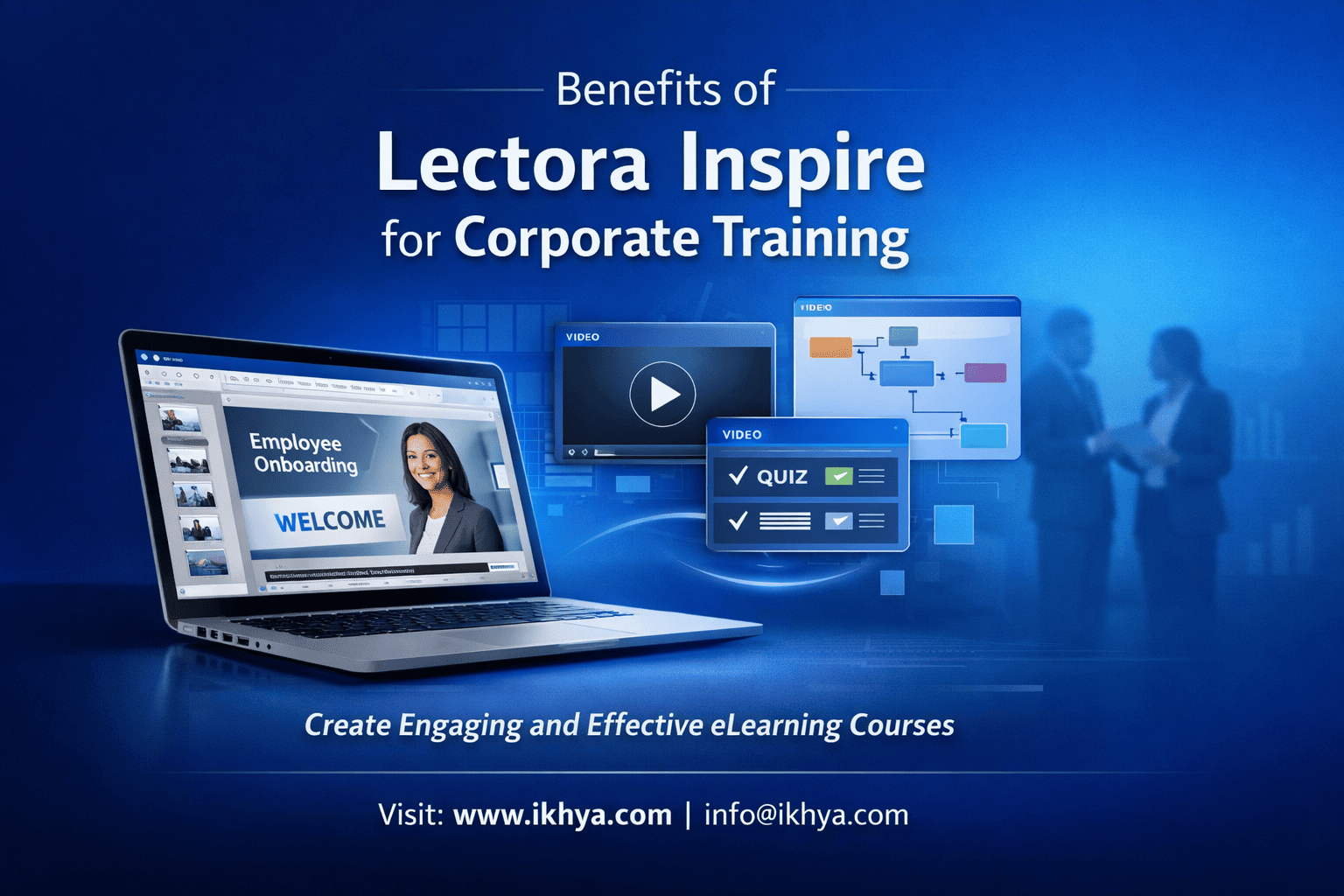
Corporate training teams today face increasing pressure to deliver scalable, compliant, and engaging learning programs across global workforces. Many organizations are turning to advanced authoring tools like Lectora Inspire to build powerful digital learning experiences that integrate seamlessly with enterprise LMS platforms.
Lectora Inspire is widely used for compliance training, technical training, and enterprise learning programs because of its flexibility, strong accessibility support, and advanced customization capabilities. For organizations that need complex training solutions across multiple regions, it offers a reliable development framework.
Organizations that want to implement high-quality enterprise eLearning solutions often partner with experienced development providers like IKHYA – eLearning Solutions Company to accelerate deployment and ensure courses meet global standards. You can explore a live example of enterprise learning experiences by requesting a Book a Free eLearning Demo.
Why Lectora Inspire Is Popular for Corporate Training Development
Lectora Inspire is widely adopted in corporate learning environments because it enables organizations to build highly customizable, standards-compliant, and scalable training programs that work seamlessly across enterprise LMS platforms. Its flexibility and accessibility capabilities make it particularly suitable for compliance-driven industries.
The Evolution of Enterprise eLearning Tools
Corporate training has evolved significantly over the past decade.
Earlier training models relied on:
- Classroom-based instructor-led sessions
- Static PowerPoint presentations
- Basic online learning modules
Modern organizations now require learning solutions that support:
- Remote and hybrid workforces
- Mobile and on-demand learning
- Learning analytics and tracking
- Global compliance training
- Scalable LMS integrations
This transformation has driven the adoption of sophisticated authoring tools such as Lectora Inspire, which allow organizations to build complex training ecosystems.
Enterprises across industries like healthcare, aviation, manufacturing, and financial services rely on these tools to deliver standardized training globally.
Organizations implementing modern learning strategies often combine authoring tools with custom development services such as custom eLearning development services to ensure content aligns with corporate learning objectives.
Why Corporations Need Advanced Authoring Tools
Enterprise training programs require far more than simple slide-based courses.
Large organizations must manage training for:
- Thousands of employees
- Multiple departments
- Global regulatory requirements
- Diverse learning formats
Authoring tools used for corporate training must therefore support:
1. LMS Compatibility
Corporate training programs must integrate with enterprise LMS platforms such as:
- SAP SuccessFactors
- Cornerstone OnDemand
- Moodle
- Docebo
Lectora supports standards like:
- SCORM
- xAPI
- AICC
This ensures training progress can be tracked and reported across global learning systems.
Organizations deploying LMS-compatible courses often rely on specialized providers offering LMS compatible eLearning course development services to streamline deployment.
2. Custom Interactive Learning Experiences
Modern corporate training demands engaging learning formats such as:
- Scenario-based simulations
- Interactive assessments
- Branching decision exercises
- Real-world problem solving modules
Lectora Inspire provides powerful scripting and customization features that allow developers to build highly interactive enterprise learning experiences.
These features are particularly valuable for industries where employees must apply training in high-risk environments, such as manufacturing safety training or healthcare compliance programs.
3. Accessibility and Compliance Requirements
Many global organizations must meet accessibility standards such as:
- WCAG
- Section 508 compliance
Lectora Inspire has long been recognized for its strong accessibility capabilities, making it a preferred choice for government agencies and regulated industries.
Accessible training ensures all employees—including those with disabilities—can participate in learning programs.
Companies implementing accessibility initiatives often adopt accessible eLearning solutions to ensure their courses meet international compliance requirements.
Where Lectora Inspire Fits in the Modern Learning Ecosystem
Within the corporate learning technology stack, Lectora Inspire typically works alongside:
- Learning Management Systems (LMS)
- Learning Experience Platforms (LXP)
- Learning analytics tools
- Content management systems
This ecosystem allows organizations to deliver:
- Structured compliance training
- Role-based learning paths
- Continuous professional development
- Data-driven learning insights
Lectora acts as the content creation engine that powers these enterprise learning platforms.
However, building complex enterprise learning programs often requires instructional design expertise, development resources, and integration knowledge.
For this reason, many organizations collaborate with experienced development partners offering Lectora eLearning development services to accelerate project timelines and ensure high-quality training delivery.
Speak With Enterprise eLearning Experts
If your organization is exploring Lectora-based corporate training, working with experienced development specialists can significantly reduce implementation timelines while ensuring courses meet enterprise learning standards.
Many organizations choose to collaborate with experienced partners who understand instructional design frameworks, LMS integration, and enterprise training deployment.
If you would like to discuss your corporate training goals or explore how Lectora-based learning solutions can be implemented in your organization, you can Contact IKHYA Experts to speak with an enterprise eLearning specialist.
Key Benefits of Lectora Inspire for Corporate Training Teams
Lectora Inspire provides enterprise training teams with powerful customization, strong LMS compatibility, accessibility compliance, and scalable course development capabilities, making it an ideal tool for organizations managing large and complex training programs.
Unlike basic authoring tools designed for simple course creation, Lectora is built to support enterprise-scale learning environments that require flexibility, compliance, and global deployment.
Built for Complex Enterprise Training Programs
Large organizations often run multiple training programs simultaneously, including:
- employee onboarding
- compliance training
- technical training
- leadership development
- safety training
These programs frequently involve:
- large volumes of learning content
- role-based learning paths
- multiple departments and stakeholders
Lectora Inspire allows development teams to manage this complexity by providing:
- advanced course structure control
- reusable templates
- centralized asset management
- customizable learning paths
Because of these capabilities, many organizations use Lectora for large-scale training ecosystems where multiple courses must be developed and updated regularly.
Enterprises often combine the authoring capabilities of Lectora with specialized providers offering instructional design services to ensure training content aligns with learning objectives and business goals.
Powerful SCORM, xAPI, and LMS Compatibility
Corporate training programs depend heavily on learning management systems to track learner progress, certification, and compliance.
Lectora Inspire supports major eLearning standards including:
- SCORM 1.2
- SCORM 2004
- xAPI (Tin Can API)
- AICC
These standards allow organizations to integrate courses seamlessly into enterprise LMS platforms such as:
- Cornerstone
- SAP SuccessFactors
- Moodle
- Docebo
This compatibility ensures that organizations can track:
- course completion rates
- learner performance
- compliance certifications
- training analytics
Companies implementing LMS-based training strategies often leverage LMS compatible eLearning course development services to ensure smooth deployment across corporate learning systems.
Advanced Customization for Interactive Learning
One of Lectora Inspire’s strongest advantages is its high level of customization.
The platform allows developers to create interactive learning experiences such as:
- branching scenarios
- simulation-based learning
- decision-based exercises
- gamified assessments
- interactive video learning
These capabilities are particularly useful for training programs where employees must apply knowledge in real-world scenarios.
For example:
Manufacturing companies often use simulations to train workers on equipment safety procedures, while financial institutions use scenario-based learning for regulatory compliance training.
Organizations implementing advanced interactive learning experiences frequently adopt elearning simulation-based training services to improve learner engagement and knowledge retention.
Accessibility and Compliance Support
Many corporate training programs must comply with accessibility standards such as:
- WCAG guidelines
- Section 508 requirements
Lectora Inspire has long been recognized for its strong accessibility features, which allow developers to create training that is accessible to all employees, including learners with disabilities.
Accessible learning environments support:
- inclusive workforce training
- global compliance standards
- equitable access to professional development
Organizations focused on accessibility often integrate accessible elearning solutions to ensure training programs meet regulatory requirements and inclusive learning standards.
Multi-Device and Responsive Learning Delivery
Modern employees increasingly access training through:
- laptops
- tablets
- smartphones
Lectora Inspire supports responsive course design, enabling learning content to adapt to different screen sizes and devices.
This flexibility allows organizations to implement:
- mobile learning programs
- remote workforce training
- on-demand microlearning
Mobile-friendly learning initiatives often integrate mobile learning development solutions to support training access for distributed teams.
How Lectora Inspire Improves Corporate Training Outcomes
Lectora Inspire improves corporate training outcomes by enabling organizations to deliver interactive, scalable, and measurable learning experiences that align with business goals. Its advanced development capabilities allow enterprises to create engaging training programs while maintaining compliance and performance tracking across global workforces.
For organizations managing large training programs, the value of an authoring tool is not just in content creation—it is in measurable business impact.
Faster Course Development Cycles
Corporate training teams often need to deploy courses quickly, especially when responding to:
- regulatory changes
- new product launches
- compliance updates
- safety procedures
Lectora Inspire supports efficient development workflows through:
- reusable templates
- centralized media libraries
- modular course structures
- collaborative development environments
These features allow organizations to produce consistent training at scale without sacrificing quality.
Enterprises looking to accelerate production timelines frequently adopt rapid elearning development services to convert existing training materials into interactive digital courses.
Consistent Training Delivery Across Global Teams
Large corporations operate across multiple regions and time zones. Delivering consistent training to a global workforce is a major challenge.
Lectora Inspire helps standardize training by allowing organizations to create centralized training modules that can be distributed across multiple locations.
For example:
- U.S. corporations often deploy compliance training across nationwide teams.
- UK organizations must follow strict regulatory learning frameworks in sectors like finance and healthcare.
- Australian training programs frequently align with vocational training standards and workforce certification requirements.
- UAE enterprises implement structured training programs to support rapidly growing industries.
With Lectora-based learning modules integrated into an LMS, companies can ensure employees receive consistent training experiences regardless of location.
Improved Learner Engagement and Knowledge Retention
Traditional training formats often struggle to maintain learner attention.
Lectora Inspire enables the development of interactive learning experiences that improve engagement, including:
- scenario-based learning
- branching decision simulations
- interactive quizzes and assessments
- multimedia learning modules
- gamified training elements
These learning methods help employees practice real-world decision making, which improves long-term knowledge retention.
Organizations implementing modern learning strategies often combine interactive course design with microlearning development services to deliver short, focused training modules that employees can complete quickly.
Integration With Corporate Learning Ecosystems
Modern enterprise training environments rely on integrated technology ecosystems.
Lectora Inspire integrates seamlessly with:
- Learning Management Systems (LMS)
- Learning Experience Platforms (LXP)
- HR systems
- analytics platforms
Through standards such as SCORM and xAPI, training managers can collect valuable data on:
- learner progress
- assessment results
- course completion rates
- training effectiveness
Organizations that want a fully integrated training ecosystem often consult with specialists providing elearning consultancy services to design scalable learning strategies.
Learning Analytics and Training Performance Insights
Data-driven learning is becoming a major priority for corporate training leaders.
Lectora Inspire enables organizations to capture detailed learning analytics that help answer critical questions such as:
- Are employees completing required training?
- Which modules have the highest engagement?
- Where are learners struggling?
- How effective are compliance programs?
These insights help L&D teams improve training programs continuously.
Learning analytics also support enterprise reporting requirements, which are especially important in regulated industries such as:
- healthcare
- finance
- aviation
- manufacturing
If your organization is evaluating how modern learning technologies can improve training effectiveness, exploring real-world enterprise implementations can be valuable. You can review how these solutions are designed and deployed by Book a Free eLearning Demo.
Use Cases: When Enterprises Choose Lectora Inspire
Enterprises typically choose Lectora Inspire when they need to build complex, customizable, and compliance-driven training programs that must integrate with enterprise learning systems. Its flexibility makes it particularly useful for industries where training accuracy and regulatory compliance are critical.
Below are the most common corporate training scenarios where Lectora Inspire is widely used.
Compliance and Regulatory Training
Compliance training is one of the most demanding areas of corporate learning.
Organizations must regularly train employees on topics such as:
- workplace safety regulations
- financial compliance rules
- healthcare standards
- anti-harassment policies
- data protection regulations
Lectora Inspire is well suited for compliance training because it supports:
- structured course navigation
- knowledge assessments
- certification tracking
- LMS reporting
Companies implementing regulatory learning initiatives often rely on compliance training elearning solutions to ensure training meets industry standards.
Safety and Risk Management Training
Industries such as manufacturing, oil and gas, and aviation require detailed training programs that help employees understand safety procedures.
Lectora Inspire allows developers to build interactive safety simulations, enabling employees to practice decision-making in controlled digital environments.
Safety training programs often include:
- equipment operation procedures
- hazard identification training
- emergency response protocols
- workplace risk management
These learning experiences help employees apply training knowledge in real situations, improving workplace safety outcomes.
Organizations operating in industrial sectors often deploy specialized manufacturing training elearning solutions to support workforce safety and compliance.
Product and Process Training
Many companies must train employees on complex products, internal systems, and operational procedures.
Lectora Inspire supports step-by-step interactive learning modules, which allow employees to explore product features, workflows, and operational processes.
This type of training is especially valuable for:
- technology companies
- manufacturing firms
- financial services organizations
- retail businesses
Product training often includes:
- guided walkthroughs
- interactive diagrams
- knowledge assessments
- scenario-based learning exercises
These learning formats help employees gain practical understanding of systems and workflows.
Technical Workforce Training
Technical teams require training programs that go beyond basic knowledge transfer.
Lectora Inspire allows developers to build advanced simulations and interactive exercises that replicate real-world scenarios.
This is particularly useful for industries such as:
- IT and software development
- engineering
- aviation operations
- equipment maintenance
Companies providing technology training often adopt IT and software training elearning solutions to support technical workforce development.
Global Multilingual Training Programs
Global enterprises must deliver training across multiple countries and languages.
Lectora Inspire supports localization workflows that allow organizations to translate and adapt training content for regional audiences.
Multilingual training programs often include:
- translated course content
- region-specific regulatory guidelines
- localized examples and case studies
- culturally adapted learning experiences
Organizations deploying training globally frequently combine course development with elearning translation localization services to ensure consistent learning experiences across international teams.
Lectora Inspire vs Other eLearning Authoring Tools
Lectora Inspire stands out among enterprise authoring tools because of its advanced customization, strong accessibility support, and powerful LMS compatibility. While other tools such as Articulate Storyline and Adobe Captivate are widely used, Lectora is often preferred for complex corporate training environments.
Selecting the right authoring tool is an important decision for L&D leaders, especially when training programs must support:
- compliance tracking
- large global workforces
- complex simulations
- multilingual deployment
Below is a simplified comparison of three widely used enterprise authoring tools.
| Feature | Lectora Inspire | Articulate Storyline | Adobe Captivate |
|---|---|---|---|
| Customization & scripting | Very advanced | Moderate | Advanced |
| Accessibility compliance | Excellent | Moderate | Good |
| SCORM / xAPI support | Full support | Full support | Full support |
| Responsive design | Strong | Limited responsiveness | Strong |
| Compliance training suitability | Excellent | Good | Good |
| Learning curve | Moderate | Easy | Moderate |
When Lectora Inspire Is the Better Choice
Enterprises often select Lectora when training requires:
- highly customized course design
- complex branching scenarios
- strict accessibility compliance
- large-scale LMS deployment
- regulatory training programs
Organizations evaluating multiple authoring tools often compare their capabilities using resources such as best elearning authoring tools for corporate training to determine which platform aligns best with their learning strategy.
Enterprise LMS Integration with Lectora Inspire
Lectora Inspire integrates smoothly with enterprise learning management systems, enabling organizations to track learner progress, manage compliance certifications, and analyze training performance across global workforces.
For corporate training leaders, LMS compatibility is a critical requirement because it ensures that digital learning content can be deployed at scale.
SCORM and xAPI Compatibility
Lectora Inspire supports widely used eLearning standards, including:
- SCORM 1.2
- SCORM 2004
- xAPI (Tin Can API)
- AICC
These standards allow courses to communicate with LMS platforms, enabling organizations to collect data such as:
- course completion status
- learner scores
- assessment results
- certification progress
This level of tracking is particularly important for compliance-heavy industries.
Integration With Enterprise LMS Platforms
Many large organizations use enterprise LMS systems to manage workforce learning.
Lectora-based courses can integrate with platforms such as:
- SAP SuccessFactors
- Cornerstone OnDemand
- Moodle
- Docebo
- Blackboard Learn
Once integrated, training managers can deploy courses across departments, track performance metrics, and automate certification programs.
Organizations implementing large-scale training ecosystems often consult with experts offering enterprise elearning development process step-by-step guide to ensure successful LMS integration.
Training Analytics and Reporting
Corporate learning teams increasingly rely on data-driven insights to measure the effectiveness of training programs.
With LMS integration, Lectora-based courses can generate reports that provide insights into:
- learner engagement levels
- training completion rates
- compliance status
- knowledge assessment results
These insights help organizations continuously improve training programs while ensuring regulatory compliance.
Lectora Inspire for Global Corporate Training Deployment
Lectora Inspire supports global training initiatives by enabling organizations to create scalable learning programs that can be localized for different regions while maintaining consistent learning standards.
Global enterprises must often deliver training across multiple countries while addressing regional regulations and workforce diversity.
Multilingual Training Deployment
Many multinational organizations operate in multiple languages and regions.
Lectora Inspire supports multilingual training development by allowing organizations to:
- translate course content
- adapt region-specific examples
- adjust regulatory training modules
- deliver localized assessments
Global training teams often work with specialists providing elearning translation localization services to ensure learning content is culturally appropriate and accurate.
Global Compliance Training
Different regions maintain different regulatory frameworks.
Examples include:
- USA — OSHA safety training requirements
- UK — financial services regulatory learning standards
- Australia — vocational training compliance frameworks
- UAE — workforce training initiatives supporting economic diversification
Lectora-based training programs allow organizations to adapt content for these regulations while maintaining a unified training structure.
Standardizing Training Across International Teams
Large corporations often face challenges maintaining consistent training quality across global operations.
Lectora Inspire allows organizations to develop centralized training modules that can be deployed worldwide while maintaining consistent messaging and instructional design.
Benefits include:
- unified corporate training standards
- consistent compliance education
- streamlined onboarding for international teams
- improved workforce skill development
Organizations implementing global training strategies frequently collaborate with experienced providers offering elearning consultancy services to design scalable learning architectures.
If your organization is planning large-scale training programs or evaluating enterprise eLearning technologies, discussing your training goals with experienced learning specialists can help accelerate implementation. You can connect with enterprise consultants by visiting Request an eLearning RFP.
In-House vs Outsourced Lectora Inspire Development
Organizations planning Lectora-based training must decide whether to develop courses internally or outsource development to an experienced eLearning provider. The right approach depends on budget, internal expertise, project scale, and development timelines.
For many enterprises, outsourcing becomes the preferred option when training programs require advanced instructional design, rapid production, or global deployment.
Below is a simplified comparison.
| Factor | In-House Development | Outsourced Development |
|---|---|---|
| Development cost | High fixed costs | Flexible project-based cost |
| Expertise availability | Limited internal skills | Access to specialized experts |
| Production speed | Slower when teams are small | Faster with dedicated teams |
| Scalability | Difficult to scale quickly | Easily scale large projects |
| Instructional design expertise | Often limited | Professional instructional designers |
| LMS integration experience | Varies by organization | Proven implementation experience |
Many organizations discover that maintaining a full internal development team becomes expensive when training demand fluctuates. As a result, enterprises increasingly partner with specialized providers using models explained in outsource elearning development benefits costs and best practices.
When Outsourcing Lectora Development Makes Sense
Outsourcing is often the best choice when organizations need to:
- launch large training programs quickly
- convert legacy training into digital courses
- develop interactive simulations and assessments
- deploy multilingual training globally
- integrate courses with enterprise LMS platforms
External development partners bring expertise in:
- instructional design models
- learning experience design
- course architecture
- multimedia development
- LMS compatibility testing
These capabilities help organizations reduce project risks while improving training quality.
How to Choose the Right Lectora Development Partner
Selecting the right eLearning development partner is a critical step in ensuring successful training implementation. Corporate training leaders should evaluate vendors based on technical expertise, instructional design capabilities, and enterprise deployment experience.
A structured vendor evaluation process helps organizations avoid costly mistakes during training implementation.
Vendor Evaluation Checklist
When selecting a Lectora development partner, organizations should evaluate the following factors:
1. Instructional Design Expertise
Effective training requires more than course development—it requires strong learning design.
Look for vendors with experience in:
- ADDIE instructional design model
- scenario-based learning design
- assessment strategy development
- performance-based training design
Organizations often leverage specialized instructional design services to ensure courses align with learning objectives.
2. Authoring Tool Expertise
A reliable partner should have strong experience using enterprise authoring tools, including:
- Lectora Inspire
- Articulate Storyline
- Articulate Rise
- Adobe Captivate
Evaluating a vendor’s portfolio can help determine whether they have successfully delivered similar training projects.
Companies exploring Lectora-based development often review capabilities offered through lectora elearning development services to understand the range of solutions available.
3. LMS Integration Experience
Enterprise training programs must integrate smoothly with learning management systems.
A capable vendor should demonstrate experience with:
- SCORM and xAPI standards
- LMS integration workflows
- course testing and debugging
- learning analytics reporting
This expertise ensures courses function correctly within enterprise training platforms.
4. Global Deployment Capability
Large organizations often deploy training programs globally.
Vendors should be able to support:
- multilingual course development
- localization workflows
- regional compliance requirements
- global training distribution
These capabilities are essential for organizations operating across multiple regions.
5. Scalable Development Capacity
Training initiatives may require the development of dozens—or even hundreds—of courses.
A reliable partner should be able to scale development teams when projects expand.
Companies building large training ecosystems often work with partners who provide dedicated development teams and scalable production workflows.
If you are evaluating vendors for an upcoming training project, you can discuss your learning requirements with specialists by visiting Contact IKHYA Experts.
How IKHYA Supports Enterprise Lectora Inspire Development
IKHYA – eLearning Solutions Company helps organizations design and deploy enterprise training programs using advanced authoring tools such as Lectora Inspire.
The company supports corporate learning teams through a combination of instructional design expertise, scalable development workflows, and enterprise LMS integration support.
Instructional Design Driven Development
Effective training begins with strong learning design.
IKHYA development teams work with organizations to:
- analyze training needs
- define learning objectives
- design interactive learning experiences
- build assessment strategies
This approach ensures that training programs produce measurable learning outcomes.
Rapid Enterprise Course Development
Large organizations often need to develop courses quickly to support operational requirements.
IKHYA provides development workflows that help accelerate course production while maintaining quality standards.
These workflows include:
- structured development processes
- reusable design frameworks
- scalable development teams
- rapid course conversion methodologies
Organizations that want to digitize existing training programs often combine Lectora development with ppt to elearning conversion services to transform instructor-led materials into interactive learning modules.
LMS Ready Course Deployment
IKHYA courses are designed to integrate smoothly with enterprise LMS platforms.
This ensures organizations can:
- track learner progress
- manage compliance certifications
- generate training reports
- evaluate training effectiveness
The result is a fully integrated digital learning ecosystem.
Future of Corporate Training with Advanced Authoring Tools
Corporate training technologies continue to evolve as organizations adopt new learning models and digital transformation strategies.
Advanced authoring tools such as Lectora Inspire will play an important role in shaping the future of enterprise learning.
AI-Assisted Learning Development
Artificial intelligence is beginning to influence how training content is created.
AI tools can help:
- generate course outlines
- personalize learning experiences
- analyze learner performance
- recommend adaptive training paths
These capabilities allow organizations to create more responsive and personalized learning environments.
Data-Driven Learning Experiences
Training programs are increasingly guided by learning analytics.
Organizations are using training data to:
- identify skill gaps
- optimize learning paths
- measure employee development
- improve training effectiveness
Advanced analytics will continue to influence how learning programs are designed and delivered.
Immersive and Scenario-Based Training
Future training programs will likely incorporate:
- immersive simulations
- interactive scenarios
- virtual learning environments
- experiential training models
These methods help employees apply training knowledge in realistic environments.
Conclusion: Why Lectora Inspire Is a Strategic Tool for Corporate Training
Lectora Inspire has become a valuable authoring tool for organizations that need to build scalable, customizable, and compliance-ready training programs.
Its strong accessibility capabilities, advanced customization features, and robust LMS compatibility make it particularly suitable for enterprise training environments.
For corporate learning leaders, the key advantages include:
- flexibility for complex training programs
- strong compliance and accessibility support
- seamless LMS integration
- support for global training deployment
However, implementing enterprise eLearning programs requires technical expertise, instructional design knowledge, and scalable development resources.
Organizations looking to implement modern corporate training solutions often benefit from collaborating with experienced development partners.
If your organization is planning an enterprise training initiative, you can explore how scalable digital learning programs are developed by scheduling a Book a Free eLearning Demo.
Frequently Asked Questions
1. What is Lectora Inspire used for in corporate training?
Lectora Inspire is an eLearning authoring tool used to create interactive digital training courses that integrate with corporate LMS platforms.
2. Is Lectora Inspire compatible with LMS systems?
Yes. Lectora supports SCORM, xAPI, and AICC standards, allowing courses to integrate with most learning management systems.
3. Why do enterprises use Lectora Inspire?
Enterprises use Lectora for its advanced customization, accessibility support, and ability to create complex training programs.
4. Can Lectora courses support compliance training?
Yes. Lectora is commonly used for compliance training because it supports certification tracking and LMS reporting.
5. Is Lectora suitable for global training programs?
Yes. Lectora courses can be localized for different languages and deployed across global teams.
6. Does Lectora support responsive learning?
Yes. Lectora allows developers to create courses that adapt to different screen sizes and devices.
7. What industries use Lectora Inspire?
Industries such as healthcare, finance, manufacturing, aviation, and technology frequently use Lectora for training programs.
8. How long does it take to develop a Lectora course?
Development timelines depend on course complexity, but many corporate courses take between 3–8 weeks to complete.
9. Can existing training materials be converted into Lectora courses?
Yes. Materials such as PowerPoint presentations and instructor-led training content can be converted into interactive Lectora courses.
10. What skills are required for Lectora development?
Lectora development requires instructional design expertise, multimedia design skills, and LMS integration knowledge.
11. Is Lectora better than other authoring tools?
The best tool depends on training requirements. Lectora is particularly strong for complex and compliance-heavy training.
12. Can Lectora support scenario-based learning?
Yes. Developers can create branching scenarios and decision-based simulations in Lectora.
13. Does Lectora support accessibility standards?
Yes. Lectora is known for strong accessibility features supporting WCAG and Section 508 compliance.
14. Is outsourcing eLearning development common?
Yes. Many organizations outsource eLearning development to access specialized expertise and reduce production timelines.
15. What should companies consider when choosing an eLearning vendor?
Key factors include instructional design capability, authoring tool expertise, LMS integration experience, and scalability.
16. Can Lectora courses track learner performance?
Yes. LMS integration allows organizations to track progress, scores, and certification status.
17. How does Lectora support interactive learning?
Lectora enables branching scenarios, simulations, quizzes, and multimedia learning modules.
18. Is Lectora suitable for technical training?
Yes. Lectora’s customization capabilities make it useful for complex technical training programs.
19. What is the cost of Lectora course development?
Costs vary depending on course complexity, multimedia requirements, and development timelines.
20. Why do companies outsource corporate eLearning development?
Outsourcing provides access to specialized expertise, scalable teams, and faster course production.
Related Resources
If you are exploring enterprise eLearning development strategies, the following resources provide additional insights:
- best elearning authoring tools for corporate training
- outsourcing lectora inspire elearning development
- enterprise elearning development process step-by-step guide
- how to choose the elearning vendor
- corporate elearning development the complete enterprise guide