How an eLearning Development Company Builds a Course From Scratch

Building a training program can feel hard when you start with nothing. This guide explains how an eLearning development company builds a course from scratch so you know what to expect, how long it takes, and what it may cost. If your team needs better training, faster onboarding, or stronger compliance results, the right partner can help. IKHYA supports global businesses with custom learning solutions.
If you are planning a project now, you can Request RFP, Book a Free eLearning Demo, or Contact Us for expert guidance.
Why Businesses Build a Course From Scratch
Many companies first look at ready-made courses. These can work for common topics, but they often miss your exact needs. A custom course gives you better control over message, branding, learner goals, and business outcomes.
Businesses usually build from scratch when they need:
- Company-specific training
- Product knowledge programs
- Compliance learning with internal policies
- Sales enablement training
- Multi-location onboarding
- Role-based learning paths
A custom course can also match your tone, brand style, and real work situations. This helps learners trust the content and apply it faster.
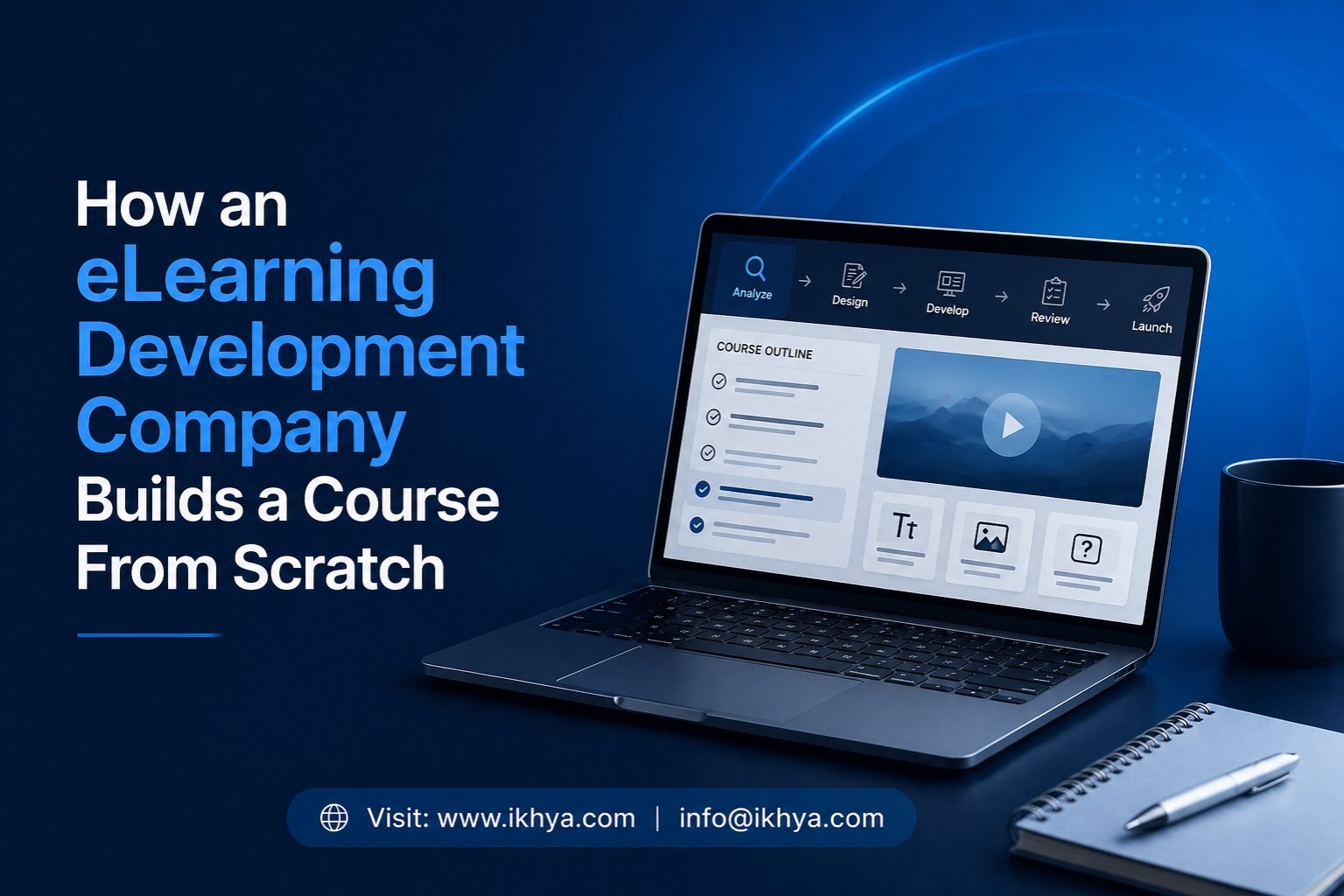
How an eLearning Development Company Builds a Course From Scratch
A professional team follows a clear process. This reduces delays, controls quality, and keeps the project aligned with business goals.
1. Training Needs Analysis Before Builds a Course From Scratch
The first step is understanding why the training is needed. Strong projects begin with business goals, not slides or visuals.
The team reviews:
- Current skill gaps
- Performance issues
- Compliance needs
- Audience size
- Delivery deadlines
- Success measures
For example, if sales teams are losing deals due to weak product knowledge, the course should focus on product confidence and objection handling.
This is where strong Instructional Design Services make a major difference.
2. Audience Research and Learner Planning
Not all learners need the same content. A new hire needs different training than an experienced manager.
The team studies:
| Learner Factor | Why It Matters |
|---|---|
| Job role | Content relevance |
| Skill level | Right difficulty |
| Device use | Mobile or desktop design |
| Language needs | Localization planning |
| Time available | Course length planning |
This step improves completion rates and learner satisfaction.
3. Course Outline and Learning Objectives
Before design starts, the structure must be clear. Good learning objectives tell learners what they will know or do after training.
Example objectives:
- Explain company safety rules
- Complete customer service steps
- Use software correctly
- Apply compliance rules at work
A clear outline also helps leaders approve the plan faster.
4. Storyboard and Script Creation
Now the content moves into storyboard format. A storyboard maps each screen, message, interaction, media element, and quiz.
Typical storyboard sections include:
- Screen title
- On-screen text
- Narration script
- Visual notes
- Interaction notes
- Assessment points
This step saves time later because changes are easier before development begins.
If you already have PowerPoint training, PPT to eLearning Conversion Services can speed up this stage.
5. Visual Design and Interactive Development
This is where the course starts to come alive. Designers and developers turn the storyboard into a polished learning experience.
They may build:
- Click-and-reveal interactions
- Scenario learning
- Process simulations
- Product walkthroughs
- Branching decisions
- Animated explainers
A strong eLearning development company also ensures your branding looks consistent across every module.
For faster deadlines, many companies choose Rapid eLearning Development Services to launch sooner without losing quality.
6. Assessments and Knowledge Checks
Training should measure learning, not just deliver information. Quizzes and checks help prove progress.
Common assessment types:
| Assessment Type | Best Use |
|---|---|
| Multiple choice | Recall and policy checks |
| Drag and drop | Process steps |
| Scenario choice | Decision making |
| Short answer | Reflection |
| Final test | Certification |
Smart assessments also show where learners need more support.
7. QA Testing, LMS Packaging, and Launch
Before launch, every course should be tested carefully. This protects learner experience and avoids technical issues.
Quality checks include:
- Navigation testing
- Audio review
- Mobile responsiveness
- Broken link checks
- Quiz scoring checks
- LMS upload testing
The final course may be packaged as SCORM or xAPI depending on your LMS.
This is one reason many companies hire an expert vendor instead of doing everything in-house.
8. Post-Launch Improvement After Builds a Course From Scratch
Great learning does not end at launch. Strong teams review results and improve performance over time.
They track:
- Completion rate
- Quiz scores
- Drop-off points
- Learner feedback
- Business outcomes
Then updates are made to improve future results.
This long-term support is where professional eLearning Providers create more value than one-time freelancers.
How Long Does It Take to Build a Course From Scratch?
Project time depends on content amount, review speed, and complexity.
| Course Type | Typical Timeline |
|---|---|
| Basic rapid course | 2–3 weeks |
| Standard interactive course | 4–6 weeks |
| Scenario-based course | 6–8 weeks |
| Multi-language rollout | 8–12 weeks |
Fast approvals from internal teams can shorten delivery time.
How Much Does It Cost to Build a Course From Scratch?
Cost depends on design depth, media quality, number of modules, and languages.
| Project Type | Estimated Price (USD) |
|---|---|
| Basic rapid module | $2,000–$5,000 |
| Custom interactive course | $5,000–$15,000 |
| Multi-module academy | $15,000–$40,000+ |
| Global localized rollout | Custom quote |
If you need an exact estimate, Request RFP for a tailored proposal.
In-House Team vs eLearning Development Company
Some businesses wonder if they should build internally or outsource. The answer depends on speed, skills, and scale.
| Factor | In-House Team | External Partner |
|---|---|---|
| Speed | Medium | Fast |
| Specialized skills | Limited | Strong |
| Scalability | Low | High |
| Technology expertise | Variable | Strong |
| Total efficiency | Mixed | Often better |
Outsourcing often works best when deadlines are tight or internal teams are busy.
Why Businesses Choose IKHYA
Companies choose trusted partners when they need quality, speed, and reliable communication.
Key strengths include:
- Custom eLearning Development Services for unique business goals
- Rapid eLearning Development Services for faster delivery
- Instructional Design Services for better learning results
- eLearning Translation & Localization for global teams
- PPT to eLearning Conversion Services for old content upgrades
Businesses in the USA, UK, Australia, UAE, and global markets need flexible support. A skilled partner helps reduce project risk and improve results.
Common Mistakes When Trying to Build a Course From Scratch
Many projects fail because planning is weak. Avoid these common issues:
- No clear learning goals
- Too much text on screens
- Long boring modules
- No real assessments
- Weak mobile design
- Slow review cycles
- No launch testing
Fixing these early saves money and time.
How to Choose the Right eLearning Development Company
Look for a partner with:
- Proven project process
- Strong design samples
- LMS knowledge
- Clear pricing model
- Fast communication
- Global support ability
- Update and maintenance support
If you are comparing vendors, review this elearning development company page for the right fit.
Ready to Build a Course From Scratch?
If your business needs onboarding, compliance, product training, or skill development, expert support can save months of work and improve learning results.
IKHYA helps organizations turn ideas into modern digital learning experiences.
Next steps:
- Request RFP for a custom proposal
- Book a Free eLearning Demo to see solutions in action
- Contact Us to discuss your project goals
- Email: info@ikhya.com
The right course can improve performance, reduce mistakes, and grow your team faster.
FAQs
Q1. What does it mean when an eLearning development company builds a course from scratch?
It means the company creates a custom training course from the beginning based on your goals, learners, and brand needs. The course is designed specifically for your business instead of using a ready-made template.
Q2. Why should a business build a course from scratch instead of using a template?
A custom course fits your exact process, policies, products, and training goals. It also gives better learner engagement and stronger business results than generic content.
Q3. How long does it take to build a course from scratch?
The timeline depends on course size and complexity. A simple module may take 2–3 weeks, while a custom interactive course may take 4–8 weeks or more.
Q4. How much does it cost to build a custom eLearning course?
Basic rapid courses may start from $2,000, while advanced custom programs can cost $15,000 or more. Final pricing depends on design level, number of modules, and language needs.
Q5. What are the main steps to build a course from scratch?
Most projects include needs analysis, learner research, course outlining, storyboarding, development, assessments, testing, launch, and post-launch improvements.
Q6. What is the first step in custom eLearning course development?
The first step is understanding the business goal and training need. This helps create a course that solves a real problem and supports measurable outcomes.
Q7. Why is learner analysis important in eLearning course creation?
Learner analysis helps shape the course for the right skill level, language, device use, and job role. This improves engagement and course completion rates.
Q8. What is a storyboard in eLearning development?
A storyboard is a planning document that shows screen-by-screen content, narration, visuals, and interactions before development starts. It helps save time and reduce changes later.
Q9. Can old PowerPoint training be turned into eLearning?
Yes, existing slides can be upgraded into interactive online learning through PPT to eLearning Conversion Services. This is faster than building from zero.
Q10. What tools are used to build a course from scratch?
Professional teams often use authoring tools, graphic design software, video tools, and LMS platforms. The right tools depend on course goals and delivery format.
Q11. What is rapid eLearning development?
Rapid eLearning development is a faster method that uses efficient tools and proven workflows to launch training quickly while keeping quality standards.
Q12. How do quizzes help in an eLearning course?
Quizzes measure learner understanding, reinforce key points, and show where more support is needed. They also help track progress and completion.
Q13. What is SCORM and why does it matter?
SCORM is a common eLearning file format used in many LMS platforms. It helps track learner progress, scores, and completion status.
Q14. Should I build training in-house or hire an eLearning development company?
If your team has time and expert skills, in-house may work. If you need speed, better design, or scalable support, hiring an eLearning development company is often the smarter choice.
Q15. What industries need custom eLearning courses?
Many industries use custom learning, including healthcare, finance, retail, manufacturing, technology, education, and corporate training.
Q16. Can one course be made for global teams?
Yes, courses can be adapted for multiple regions using eLearning Translation & Localization. This includes language changes and local cultural adjustments.
Q17. What common mistakes happen when building a course from scratch?
Common mistakes include unclear goals, too much text, weak design, no testing, poor mobile experience, and lack of learner engagement.
Q18. How do I choose the best eLearning vendor?
Look for experience, strong samples, clear communication, LMS knowledge, fair pricing, and post-launch support. A structured process is also important.
Q19. Why choose IKHYA – eLearning Solutions Company for course development?
IKHYA offers custom solutions, rapid development, instructional design expertise, and global delivery support for business training needs.
Q20. How can I get started with a custom eLearning project?
You can start by sharing your goals, audience size, and timeline. Then Request RFP, Book a Free eLearning Demo, or Contact Us for expert guidance.
Ready to Build a Course From Scratch That Delivers Real Results?
If your business needs better onboarding, faster training rollout, stronger compliance learning, or improved employee skills, the right partner can make the process simple and effective.
IKHYA helps organizations create custom digital learning programs designed for real business goals. From planning and instructional design to development, launch, and support, our team manages every step with care and speed.
Whether you need one module or a full training academy, we can help you build a course that engages learners and drives performance.
Get Started Today
- Request RFP for a tailored project proposal
- Book a Free eLearning Demo to review our solutions and process
- Contact Us to discuss your training goals with our experts
- Email: info@ikhya.com
Why Choose IKHYA?
- Custom solutions for your exact needs
- Fast delivery with quality standards
- Global support for USA, UK, Australia, UAE, and more
- Experienced team in corporate learning projects
- Scalable services for growing organizations
Your next training program can be smarter, faster, and more effective. Start your project with IKHYA today.