Lectora Inspire Development Process for Enterprises

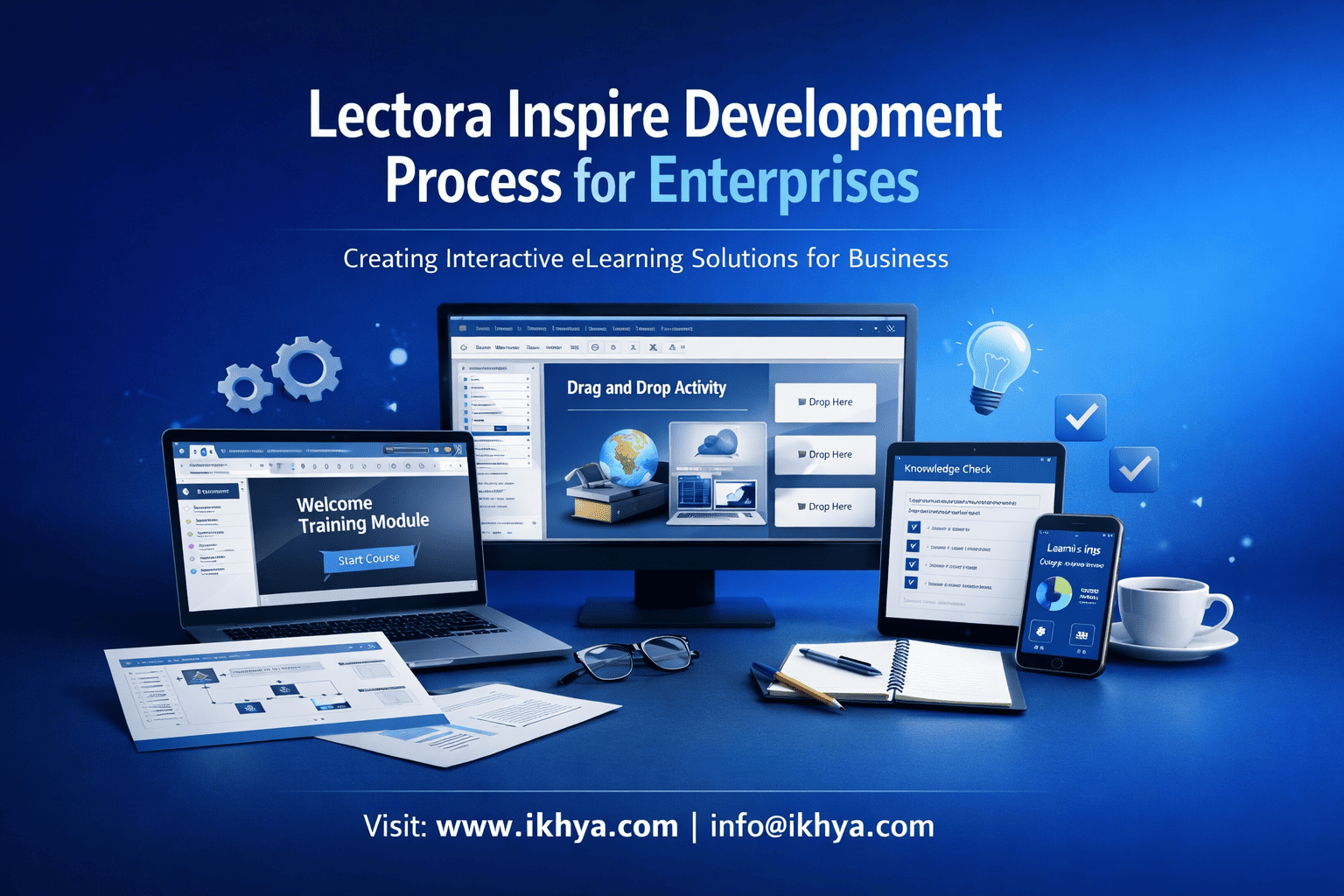
Enterprise organizations increasingly rely on scalable digital training to keep employees compliant, skilled, and productive. Platforms like Lectora Inspire enable companies to build interactive, LMS-compatible learning programs that support global training deployment.
For organizations planning large-scale corporate training initiatives, partnering with an experienced development team can significantly reduce project complexity. Many enterprise L&D teams start by exploring options such as Book a Free eLearning Demo to understand how modern eLearning development platforms and workflows can support their training goals.
This guide explains the complete Lectora Inspire development process used by enterprises, including instructional design planning, course development, LMS integration, and deployment strategies. It also covers how organizations can evaluate development partners and scale their corporate training programs efficiently.
Why Enterprises Choose Lectora Inspire for Corporate eLearning Development
Lectora Inspire is widely adopted by enterprises because it supports highly customizable, accessible, and LMS-compatible learning experiences. It is particularly valued for compliance training, complex simulations, and large-scale corporate learning programs.
Organizations across industries such as healthcare, manufacturing, aviation, and financial services use Lectora to build structured training programs that integrate with enterprise learning ecosystems.
Key reasons enterprises choose Lectora Inspire include:
1. Strong Accessibility and Compliance Support
Lectora Inspire is one of the most accessibility-focused authoring tools available.
It supports:
- Section 508 compliance (U.S. accessibility standard)
- WCAG accessibility guidelines
- Screen reader compatibility
- Keyboard navigation
- Accessible interaction design
This makes it particularly useful for organizations operating in regulated sectors such as healthcare and government training.
2. Advanced Interactivity and Scenario-Based Learning
Lectora allows developers to build highly interactive courses using:
- Branching scenarios
- Role-based learning simulations
- Conditional navigation
- Interactive knowledge checks
- Gamified learning paths
These capabilities make it suitable for compliance training, safety training, and operational simulations.
3. Seamless LMS Integration with SCORM and xAPI
Enterprise learning ecosystems rely on LMS platforms to track training performance.
Lectora courses support:
- SCORM 1.2 and SCORM 2004
- xAPI learning analytics
- AICC compatibility
- LMS reporting integration
Organizations deploying enterprise training often require LMS-ready course packages developed through services like LMS Compatible eLearning Course Development Services to ensure seamless tracking and reporting.
4. Multi-Device Corporate Learning
Modern employees access training on multiple devices.
Lectora supports:
- Desktop learning environments
- Tablet-based training
- Mobile learning experiences
This flexibility allows organizations to deliver consistent training across global teams.
5. Scalable Corporate Training Deployment
Lectora Inspire is often used by large enterprises because it supports:
- Multi-language training programs
- Global compliance training deployment
- Modular learning design
- Integration with enterprise LMS ecosystems
Organizations implementing large training initiatives frequently combine authoring tools like Lectora with broader strategies such as Custom eLearning Development Services to scale training programs across departments and regions.
6. Strong Use Cases Across Global Industries
Lectora Inspire is commonly used in enterprise training programs worldwide.
Examples include:
United States
- Healthcare compliance training
- HIPAA awareness programs
- Workplace safety certification
United Kingdom
- Financial regulatory training
- Corporate compliance frameworks
Australia
- Vocational training modules
- Workforce certification programs
UAE
- Aviation safety training
- Energy sector workforce education
These industries require interactive, compliant, and trackable learning solutions, making Lectora a strong platform for enterprise use.
When Should Enterprises Choose Lectora Inspire?
Lectora Inspire is particularly suitable when organizations need:
- Accessibility-compliant training
- Advanced simulations
- Complex branching scenarios
- Enterprise LMS integration
- Global compliance training programs
However, selecting the right development approach often requires expert guidance. Many organizations work with specialized providers offering Lectora eLearning Development Services to ensure the courses meet enterprise standards.
Understanding the End-to-End Lectora Inspire Development Process
The enterprise Lectora Inspire development process follows a structured workflow that transforms business training needs into interactive digital learning experiences. Most corporate L&D teams adopt a phased development model covering analysis, instructional design, storyboarding, development, LMS integration, and deployment to ensure scalable and measurable training outcomes.
A structured development process ensures that eLearning courses are aligned with business goals, compatible with enterprise LMS platforms, and capable of supporting global training initiatives.
Typical enterprise Lectora development workflow includes:
- Training needs analysis
- Instructional design planning
- Storyboarding and content architecture
- Interactive course development
- LMS integration and testing
- Quality assurance and accessibility validation
- Deployment and performance analytics
Organizations launching enterprise training programs often consult experienced partners through Contact IKHYA Experts to define the right development workflow and project scope before development begins.
Enterprise Lectora Development Workflow Overview
| Development Phase | Objective | Key Deliverables |
|---|---|---|
| Training Needs Analysis | Identify learning goals | Training strategy |
| Instructional Design | Structure course architecture | Learning blueprint |
| Storyboarding | Define content flow | Visual storyboard |
| Development | Build course in Lectora | Interactive modules |
| LMS Integration | Ensure compatibility | SCORM/xAPI package |
| QA Testing | Validate performance | Tested course |
| Deployment | Launch training program | LMS rollout |
This phased approach ensures training programs remain scalable, compliant, and measurable across global enterprise environments.
Step 1: Enterprise Training Needs Analysis and Learning Strategy
The first phase of the Lectora Inspire development process is a training needs analysis, where organizations define the business objectives and learning outcomes for the training program. This phase ensures the course aligns with operational goals, compliance requirements, and workforce skill development.
Before building any course, enterprise learning teams identify what employees must learn, why the training is required, and how success will be measured.
Aligning Training with Business Objectives
Corporate training programs must directly support business performance.
Common objectives include:
- Reducing compliance risks
- Improving operational safety
- Accelerating employee onboarding
- Increasing product knowledge
- Improving customer experience
For example:
- A financial services company in the UK may deploy regulatory compliance training.
- A manufacturing firm in Australia may implement workplace safety certification modules.
- A U.S. healthcare organization may deliver HIPAA compliance training.
When training aligns with measurable outcomes, enterprises see significantly higher ROI from eLearning programs.
Audience Segmentation for Corporate Learners
Large organizations train diverse employee groups.
Training strategies must consider:
- New hires
- Frontline employees
- Managers and leadership teams
- Compliance officers
- Technical specialists
Each group requires different learning formats, content depth, and assessment models.
Segmenting learners allows organizations to build role-specific learning paths, improving training effectiveness.
Compliance and Regulatory Training Requirements
Many enterprise training programs exist to meet regulatory requirements.
Examples include:
- OSHA workplace safety training
- HIPAA healthcare compliance
- Anti-money laundering (AML) training
- Aviation safety certification
- Financial regulatory compliance
These programs must be:
- Trackable through LMS platforms
- Accessible for all learners
- Consistently updated to reflect regulatory changes
Organizations often rely on Compliance Training eLearning Solutions to design structured programs that meet industry regulations.
Defining Learning Outcomes and KPIs
Clear learning objectives help measure the effectiveness of training.
Typical KPIs include:
- Course completion rates
- Assessment scores
- Compliance certification rates
- Knowledge retention metrics
- On-the-job performance improvement
Enterprises increasingly use learning analytics through xAPI-enabled courses to track employee performance beyond basic course completion.
Enterprise Training Strategy Deliverables
At the end of the training analysis phase, organizations typically produce:
- Training needs assessment report
- Target learner profiles
- Defined learning objectives
- Course structure outline
- LMS integration requirements
These deliverables provide a clear blueprint for instructional designers and developers to begin course development.
Why This Phase Matters
Many failed corporate training initiatives occur because organizations skip the strategy stage and move directly into development.
A structured analysis phase ensures:
- Training content aligns with business goals
- Learning outcomes are measurable
- Development resources are used efficiently
Enterprises that invest in proper planning often combine this step with eLearning Consultancy Services to ensure their training programs follow global learning standards and scalable deployment models.
Step 2: Instructional Design Framework for Lectora Inspire Courses
The instructional design phase converts training strategy into a structured learning experience. For enterprise Lectora Inspire projects, instructional designers define how information will be presented, how learners will interact with content, and how learning outcomes will be measured.
Strong instructional design ensures the course is not just informative but engaging, measurable, and aligned with business performance goals.
Enterprises often collaborate with specialists offering Instructional Design Services to structure learning programs that support workforce development at scale.
Applying the ADDIE Model in Enterprise Training
Many organizations follow the ADDIE instructional design framework, which includes:
| ADDIE Phase | Purpose |
|---|---|
| Analysis | Identify training goals and learners |
| Design | Plan course structure and learning methods |
| Development | Build the course in Lectora |
| Implementation | Deploy the course through LMS |
| Evaluation | Measure training effectiveness |
This model ensures courses evolve continuously based on learner performance data and organizational needs.
Microlearning and Modular Course Design
Modern corporate training increasingly uses microlearning strategies.
Instead of long courses, content is broken into short modules.
Benefits include:
- Faster learning consumption
- Higher knowledge retention
- Better mobile learning experience
- Easier content updates
Many enterprise programs combine Lectora development with Microlearning Development Services to create modular training libraries that employees can access anytime.
Scenario-Based Learning for Corporate Skills
Scenario-based learning is widely used in Lectora courses.
It simulates real workplace situations where learners must make decisions.
Common applications include:
- Customer service training
- Compliance training
- Safety procedures
- Leadership development
- Healthcare simulations
Interactive scenarios improve knowledge retention by allowing learners to practice decision-making in realistic environments.
Organizations that require highly immersive training often implement eLearning Simulation-Based Training Services within Lectora courses.
Designing Assessments and Knowledge Checks
Effective eLearning programs measure learner progress throughout the course.
Common assessment methods include:
- Multiple-choice quizzes
- Drag-and-drop exercises
- Scenario-based decision tests
- Certification assessments
Assessments help enterprises:
- Track employee competence
- Identify knowledge gaps
- Meet regulatory certification requirements
When integrated with LMS platforms, these assessments also enable performance tracking and compliance reporting.
Step 3: Storyboarding and Content Structuring for Lectora Development
Storyboarding is where the course begins to take visual form. It defines how content will appear on each screen, how learners will navigate the course, and how interactions will work.
For enterprise Lectora development, storyboards act as a blueprint that guides developers, designers, and subject matter experts during course creation.
Converting SME Knowledge into Learning Architecture
Subject matter experts (SMEs) often provide large volumes of raw information.
Instructional designers transform this content into structured learning modules by:
- Identifying key concepts
- Simplifying complex information
- Organizing content logically
- Removing unnecessary information
This process ensures courses remain focused, practical, and learner-friendly.
Structuring Modules and Lessons
Enterprise courses are typically organized into hierarchical learning structures.
Example course architecture:
| Course Level | Example |
|---|---|
| Course | Workplace Safety Training |
| Module | Hazard Identification |
| Lesson | Recognizing Unsafe Conditions |
| Interaction | Scenario-based decision activity |
This structure helps learners progress logically from foundational knowledge to applied skills.
Multimedia Planning for Engagement
Modern eLearning courses use multimedia to improve engagement.
Common elements planned during storyboarding include:
- Instructional videos
- Interactive diagrams
- Infographics
- Narration and voiceovers
- Simulated workplace environments
Many enterprises also convert legacy training materials using services such as PPT to eLearning Conversion Services to modernize existing training programs.
Designing Learner Interaction Paths
Storyboards also define how learners interact with the course.
Interaction models may include:
- Linear navigation
- Branching decision paths
- Scenario-based simulations
- Adaptive learning paths
These interaction models make learning more immersive and personalized, improving knowledge retention.
Why Storyboarding Is Critical in Enterprise eLearning
Skipping the storyboard phase can lead to:
- Misaligned training objectives
- Poor learner engagement
- Development delays
- Increased production costs
A detailed storyboard ensures that developers, designers, and stakeholders all work from the same vision before development begins.
Step 4: Interactive eLearning Development Using Lectora Inspire
During the development phase, the storyboard and instructional design plan are transformed into a fully interactive course using Lectora Inspire. Developers build screens, add multimedia, create interactions, and configure assessments to ensure the course delivers an engaging learning experience.
This stage converts the conceptual learning design into functional training modules ready for LMS deployment.
Many enterprises accelerate production timelines by working with teams experienced in Lectora eLearning Development Services who specialize in building complex corporate training programs.
Building Interactive Course Screens
The first step in development is converting storyboard layouts into digital learning screens.
Typical components include:
- Content pages
- Interaction screens
- Scenario simulations
- Knowledge check activities
- Summary and reinforcement sections
Developers use Lectora’s interface to arrange content layers, navigation elements, and multimedia components.
Creating Advanced Interactions
One of Lectora Inspire’s strengths is its ability to support advanced interactions.
Examples include:
- Drag-and-drop exercises
- Clickable process diagrams
- Decision-making scenarios
- Conditional navigation paths
- Interactive infographics
These elements help learners actively engage with training content instead of passively consuming information.
Implementing Branching Scenarios
Branching scenarios are widely used in corporate training.
They allow learners to choose actions and see the consequences of their decisions.
Example training use cases include:
- Workplace safety incident simulations
- Customer service decision scenarios
- Ethical decision-making training
- Leadership and management simulations
Branching learning paths help employees practice real-world decision making in a safe digital environment.
Integrating Multimedia Elements
Multimedia improves comprehension and engagement in corporate training.
Typical elements used in Lectora courses include:
- Explainer videos
- Animated process walkthroughs
- Voiceover narration
- Interactive charts
- Infographics
Many organizations modernizing traditional training materials start with PPT to eLearning Conversion Services to convert instructor-led presentations into interactive digital learning modules.
Adding Knowledge Checks and Assessments
Assessments are embedded throughout the course to measure learner progress.
Common assessment formats include:
- Multiple-choice questions
- Drag-and-drop classification tasks
- Scenario-based questions
- True/false knowledge checks
Assessment data can later be tracked through the LMS for performance evaluation and certification tracking.
Enterprise Development Deliverables
At the end of the development phase, the project team produces:
- Fully interactive Lectora course modules
- Embedded multimedia assets
- Interactive assessments
- Navigation and learner interface
- LMS-compatible course packages
Once the course is built, it moves into integration and deployment preparation.
Step 5: LMS Integration and SCORM/xAPI Deployment
After development, the course must be packaged and integrated with the organization’s Learning Management System (LMS). This ensures training progress, assessment scores, and certification data are accurately tracked.
For enterprise environments, LMS compatibility is essential because organizations rely on centralized learning platforms to manage training programs across departments and regions.
Courses are typically prepared using LMS Compatible eLearning Course Development Services to ensure smooth integration with enterprise learning systems.
SCORM Compliance for Enterprise LMS Platforms
SCORM (Sharable Content Object Reference Model) is the most widely used standard for LMS integration.
Lectora supports:
- SCORM 1.2
- SCORM 2004
These standards enable the LMS to track:
- Course completion
- Assessment scores
- Time spent in training
- Learner progress
SCORM ensures training programs remain portable and compatible across multiple LMS platforms.
xAPI and Advanced Learning Analytics
While SCORM tracks basic activity, modern enterprises increasingly use xAPI (Experience API).
xAPI enables deeper insights into learner behavior.
It can track:
- Learning interactions
- Scenario decisions
- Video engagement
- On-the-job training activities
This allows organizations to analyze how employees learn, not just whether they completed a course.
Integrating Courses with Enterprise LMS Platforms
Enterprises typically deploy Lectora courses through LMS platforms such as:
- Cornerstone
- SAP SuccessFactors
- Moodle
- Docebo
- TalentLMS
Successful LMS integration ensures:
- Course accessibility across departments
- Training progress monitoring
- Automated certification tracking
- Compliance reporting
Global Training Deployment Considerations
Enterprises operating internationally must also consider global deployment requirements.
These may include:
- Multi-language course localization
- Region-specific compliance content
- Mobile learning compatibility
- Bandwidth optimization for remote employees
Organizations implementing global training initiatives often combine development with eLearning Translation Localization Services to deliver training across multiple regions and languages.
Enterprise LMS Deployment Deliverables
At the end of this phase, the project team typically provides:
- SCORM/xAPI packaged course files
- LMS integration documentation
- Test reports for LMS compatibility
- Analytics tracking configuration
These deliverables ensure the training program is ready for enterprise rollout and performance tracking.
Step 6: Quality Assurance, Accessibility, and Compliance Testing
Before a Lectora Inspire course is deployed across an enterprise LMS, it must go through rigorous quality assurance (QA) and accessibility testing. This phase ensures that the training functions correctly across devices, meets accessibility standards, and delivers a smooth learning experience for all users.
For enterprise training programs, QA is critical because errors in learning modules can impact compliance certification, employee productivity, and regulatory reporting.
Functional Testing of Course Interactions
Quality assurance teams first verify that all course interactions function correctly.
Testing typically includes:
- Navigation buttons
- Branching scenarios
- Interactive simulations
- Drag-and-drop exercises
- Quiz functionality
The goal is to ensure learners can complete the course without encountering technical issues.
Cross-Browser and Device Testing
Enterprise employees access training from different environments.
Courses must work across:
- Chrome
- Edge
- Safari
- Firefox
- Corporate laptops
- Tablets
- Mobile devices
Testing across multiple devices ensures consistent learning experiences for distributed teams.
Accessibility Compliance Validation
Accessibility is a major requirement for corporate training programs.
Many organizations—especially in the United States, UK, and Australia—must comply with accessibility regulations.
Testing focuses on:
- Screen reader compatibility
- Keyboard navigation
- Text readability
- Alternative text for images
- Accessible interaction design
Enterprises implementing accessible training often leverage Accessible eLearning Solutions to ensure courses meet global accessibility standards.
LMS Environment Testing
The course must also be tested within the organization’s LMS.
This ensures the platform correctly records:
- Course completion
- Assessment scores
- Certification results
- Learner progress tracking
Testing within the LMS environment prevents deployment failures when training programs launch at scale.
Enterprise QA Deliverables
After QA testing, development teams typically provide:
- Quality assurance reports
- Accessibility compliance validation
- LMS testing documentation
- Final SCORM/xAPI course package
Once this phase is complete, the course is ready for enterprise deployment.
Lectora Inspire vs Other eLearning Authoring Tools for Enterprise Training
Lectora Inspire is one of several authoring tools used to build corporate eLearning programs. Organizations often compare it with platforms like Articulate Storyline and Adobe Captivate when selecting a development approach.
Each tool offers different strengths depending on training requirements.
Enterprise Authoring Tool Comparison
| Feature | Lectora Inspire | Articulate Storyline | Adobe Captivate |
|---|---|---|---|
| Accessibility Support | Excellent | Moderate | Good |
| Interactivity | Advanced | Advanced | Advanced |
| Responsive Design | Strong | Limited | Strong |
| LMS Compatibility | SCORM/xAPI | SCORM/xAPI | SCORM/xAPI |
| Best Use Case | Compliance & complex courses | Scenario-based training | Software simulations |
Organizations exploring authoring platforms often review comparisons such as Best eLearning Authoring Tools for Corporate Training before selecting a development strategy.
When Lectora Inspire Is the Best Choice
Lectora is particularly effective when enterprises require:
- Accessibility-compliant courses
- Complex branching scenarios
- Global compliance training programs
- Highly customizable course architecture
- Large-scale enterprise deployment
Industries that frequently choose Lectora include:
- Healthcare
- Government agencies
- Financial services
- Manufacturing
- Aviation
These industries often require strict compliance training and detailed reporting capabilities.
Cost Structure of Lectora Inspire Course Development
The cost of developing a Lectora Inspire course varies widely depending on course complexity, interactivity, multimedia requirements, and development timelines.
For enterprises planning large training programs, understanding cost drivers helps optimize budgets and development strategies.
Organizations comparing development models often evaluate insights from Custom eLearning Development Cost vs Buying Ready-Made Courses to determine the most cost-effective approach.
Key Factors That Influence Development Cost
Several elements determine the cost of enterprise Lectora development.
1. Course Complexity
Basic informational courses cost less than interactive simulations.
Examples:
- Level 1: Slide-based learning modules
- Level 2: Interactive quizzes and branching scenarios
- Level 3: Simulation-based learning experiences
2. Level of Interactivity
Highly interactive courses require more development time.
Examples include:
- Gamified learning activities
- Scenario-based decision training
- Interactive workplace simulations
3. Multimedia Production
Multimedia content significantly affects production costs.
Typical elements include:
- Video production
- Voice-over narration
- Custom graphics
- Animation and motion design
4. Localization for Global Training
Enterprises operating internationally often require:
- Multi-language course translation
- Cultural adaptation of training content
- Region-specific compliance modules
This adds additional development time and cost.
Typical Enterprise Development Cost Range
While costs vary widely, typical ranges include:
| Course Complexity | Estimated Development Cost |
|---|---|
| Basic eLearning Course | $3,000 – $8,000 |
| Interactive Corporate Course | $8,000 – $20,000 |
| Simulation-Based Training | $20,000 – $50,000+ |
Large enterprises often reduce cost per course by outsourcing development to specialized vendors with scalable production teams.
In-House vs Outsourced Lectora Inspire Development
Enterprises implementing large-scale digital training programs must decide whether to develop courses internally or outsource development to specialized eLearning partners. Both models have advantages, but the right choice depends on factors such as project scale, internal expertise, and long-term training strategy.
Many organizations evaluate outsourcing models using insights from In-house vs Outsourced eLearning Development Cost Comparison before making a strategic decision.
In-House Lectora Development
Some organizations build internal teams to develop courses using Lectora Inspire.
Typical in-house development teams include:
- Instructional designers
- Lectora developers
- Multimedia designers
- QA specialists
- LMS administrators
Advantages
- Full control over training content
- Faster updates for internal materials
- Alignment with internal business processes
Challenges
- Hiring and training specialized developers
- High software and infrastructure costs
- Limited scalability for large training projects
Internal teams often struggle when training demand increases suddenly across departments.
Outsourced Lectora Development
Many enterprises outsource development to experienced eLearning companies.
This model allows organizations to access:
- Experienced instructional designers
- Dedicated development teams
- Advanced multimedia production
- Scalable course production
Enterprises planning large training rollouts often rely on partners providing Outsource eLearning Development: Benefits, Costs, and Best Practices to accelerate production timelines.
Enterprise Cost Comparison
| Factor | In-House Development | Outsourced Development |
|---|---|---|
| Initial Setup Cost | High | Low |
| Talent Availability | Limited | Highly specialized |
| Scalability | Difficult | Highly scalable |
| Development Speed | Moderate | Faster |
| Long-Term Flexibility | Moderate | High |
For large organizations launching global training initiatives, outsourcing often becomes the most scalable and cost-effective approach.
When Outsourcing Becomes the Strategic Choice
Enterprises typically outsource Lectora development when they need:
- Rapid training rollout across departments
- Complex simulations or compliance programs
- Multi-language training deployment
- Integration with enterprise LMS platforms
- Continuous course updates
In these situations, external development teams help organizations reduce production time while maintaining high-quality training experiences.
How Enterprises Should Evaluate a Lectora Development Partner
Selecting the right development partner is critical for the success of enterprise eLearning initiatives. The right partner should understand instructional design, enterprise LMS environments, accessibility requirements, and large-scale training deployment.
Organizations preparing for vendor evaluation often begin by reviewing frameworks such as How to Choose the eLearning Vendor.
Key Criteria for Vendor Evaluation
Enterprises should evaluate development partners based on several factors.
1. Instructional Design Expertise
The vendor should demonstrate experience with instructional design frameworks such as:
- ADDIE
- SAM
- Microlearning models
- Scenario-based training design
A strong instructional design team ensures the training delivers measurable learning outcomes.
2. Experience with Enterprise LMS Ecosystems
The development partner should understand enterprise learning platforms.
Experience with systems such as:
- Cornerstone
- SAP SuccessFactors
- Docebo
- Moodle
ensures smooth LMS integration and reporting.
3. Accessibility and Compliance Expertise
Enterprises operating in regulated industries must ensure training meets accessibility standards.
The vendor should have expertise in:
- WCAG accessibility standards
- Section 508 compliance
- Compliance training frameworks
This is especially important for industries such as healthcare, aviation, and finance.
Vendor Capability Checklist
When evaluating vendors, organizations often ask:
- Do they have enterprise-level development experience?
- Can they support global training deployment?
- Do they provide scalable development teams?
- Do they support accessibility standards?
- Can they integrate courses with enterprise LMS platforms?
Enterprises planning large projects frequently initiate collaboration through a structured process like Request an eLearning RFP to evaluate vendor capabilities and project scope.
Why Enterprises Partner with IKHYA for Lectora Inspire Development
Enterprise organizations require development partners who understand both the technical aspects of eLearning development and the strategic goals of corporate training programs. IKHYA – eLearning Solutions Company specializes in helping enterprises design, develop, and deploy scalable digital learning initiatives.
Companies exploring partnership options can learn more about the organization through About IKHYA eLearning Solutions.
Enterprise-Level Instructional Design Expertise
IKHYA’s instructional design teams work closely with subject matter experts to transform complex training requirements into engaging learning experiences.
Capabilities include:
- Compliance training design
- Scenario-based learning development
- Microlearning program design
- Global workforce training programs
This ensures courses are both engaging and aligned with business performance goals.
Scalable Development Teams
Enterprise training initiatives often require rapid course production across multiple departments.
IKHYA supports scalable development through:
- Dedicated Lectora development teams
- Multimedia design specialists
- QA and accessibility testing experts
This enables organizations to deploy large training programs without overwhelming internal resources.
LMS Integration and Global Deployment Expertise
Corporate training programs often involve complex LMS environments.
IKHYA supports integration with major LMS platforms and helps enterprises deploy training globally through:
- SCORM and xAPI course packaging
- LMS deployment support
- Multi-language course localization
- Mobile learning compatibility
Organizations planning enterprise training initiatives can Contact IKHYA Experts to discuss their project requirements and implementation strategy.
Future of Enterprise eLearning with Lectora Inspire
Enterprise training programs are evolving rapidly as organizations adopt new learning technologies and data-driven training strategies.
Lectora Inspire continues to play a role in this transformation because of its flexibility and enterprise compatibility.
Adaptive Learning Experiences
Modern corporate training increasingly uses adaptive learning models that adjust content based on learner performance.
Benefits include:
- Personalized learning paths
- Faster skill development
- Higher knowledge retention
Data-Driven Learning Analytics
With xAPI integration, organizations can analyze detailed learning behavior.
This allows training teams to measure:
- Employee skill development
- Learning engagement levels
- Performance improvements
These insights help organizations continuously improve training programs.
Microlearning Ecosystems
Enterprises are moving toward microlearning libraries instead of long courses.
Employees can access short learning modules on demand, improving:
- Knowledge retention
- Learning accessibility
- Mobile training adoption
Continuous Workforce Learning
Future enterprise training models emphasize continuous learning rather than periodic certification programs.
This includes:
- Just-in-time learning
- On-demand training modules
- AI-driven learning recommendations
Authoring tools like Lectora will continue to support these models by enabling modular and scalable training content development.
Conclusion: Building Scalable Enterprise Training with Lectora Inspire
Lectora Inspire provides enterprises with a powerful platform for developing interactive, accessible, and LMS-compatible eLearning programs. When combined with structured instructional design and a well-defined development process, organizations can build scalable training programs that support workforce development and regulatory compliance.
Successful enterprise implementations require careful planning, strong instructional design, and reliable development expertise. Organizations that partner with experienced providers can significantly reduce project complexity and accelerate training deployment.
Enterprises planning their next digital learning initiative can explore collaboration opportunities by Contacting IKHYA Experts to discuss development strategies, LMS integration, and global training deployment.
FAQs
1. What is Lectora Inspire used for in corporate training?
Lectora Inspire is an eLearning authoring tool used to create interactive courses for corporate training, compliance programs, and employee skill development.
2. Is Lectora Inspire compatible with LMS platforms?
Yes. Lectora supports SCORM, xAPI, and AICC standards, making it compatible with most enterprise LMS platforms.
3. What industries commonly use Lectora Inspire?
Industries such as healthcare, finance, aviation, manufacturing, and government frequently use Lectora for compliance and workforce training.
4. How long does it take to develop a Lectora course?
Development timelines vary depending on complexity but typically range from 3 to 8 weeks for standard corporate courses.
5. Can Lectora courses support mobile learning?
Yes. Lectora courses can be designed for responsive learning across desktops, tablets, and mobile devices.
6. What is SCORM in eLearning?
SCORM is a technical standard that allows eLearning courses to communicate with LMS platforms for tracking learner progress and completion.
7. What is xAPI in corporate training?
xAPI enables advanced learning analytics by tracking detailed learner interactions beyond simple course completion.
8. Can existing PowerPoint training be converted to Lectora courses?
Yes. Many organizations convert PowerPoint presentations into interactive Lectora courses for better engagement.
9. What is the cost of Lectora course development?
Costs depend on complexity but typically range from $3,000 to $50,000 or more for enterprise-level courses.
10. What skills are required for Lectora development?
Skills include instructional design, multimedia design, programming logic, LMS integration, and accessibility compliance.
11. Is Lectora suitable for compliance training?
Yes. Lectora is widely used for compliance programs because of its accessibility features and LMS tracking capabilities.
12. Can Lectora courses include simulations?
Yes. Lectora supports branching scenarios, interactive simulations, and decision-based learning experiences.
13. What are the advantages of outsourcing eLearning development?
Outsourcing provides access to experienced developers, scalable teams, faster production timelines, and lower infrastructure costs.
14. How do enterprises choose an eLearning development vendor?
They evaluate instructional design expertise, LMS experience, accessibility compliance knowledge, and scalability.
15. Can Lectora courses support multiple languages?
Yes. Courses can be localized into multiple languages for global workforce training.
16. What is the difference between Lectora and Storyline?
Lectora is known for accessibility and compliance training, while Storyline is widely used for scenario-based interactive learning.
17. How are learner results tracked in Lectora courses?
Learner results are tracked through LMS systems using SCORM or xAPI standards.
18. Do enterprises still use instructor-led training with eLearning?
Yes. Many organizations combine instructor-led training with eLearning through blended learning models.
19. What role does instructional design play in eLearning?
Instructional design ensures training content is structured effectively to improve learning outcomes and engagement.
20. Why do enterprises invest in digital learning platforms?
Digital learning allows organizations to train employees faster, reduce training costs, and scale learning programs globally.
Related Resources
If you want to explore enterprise eLearning strategies and development approaches further, these resources provide deeper insights into authoring tools, development processes, and outsourcing models.