Lectora Inspire for Sales Training Programs

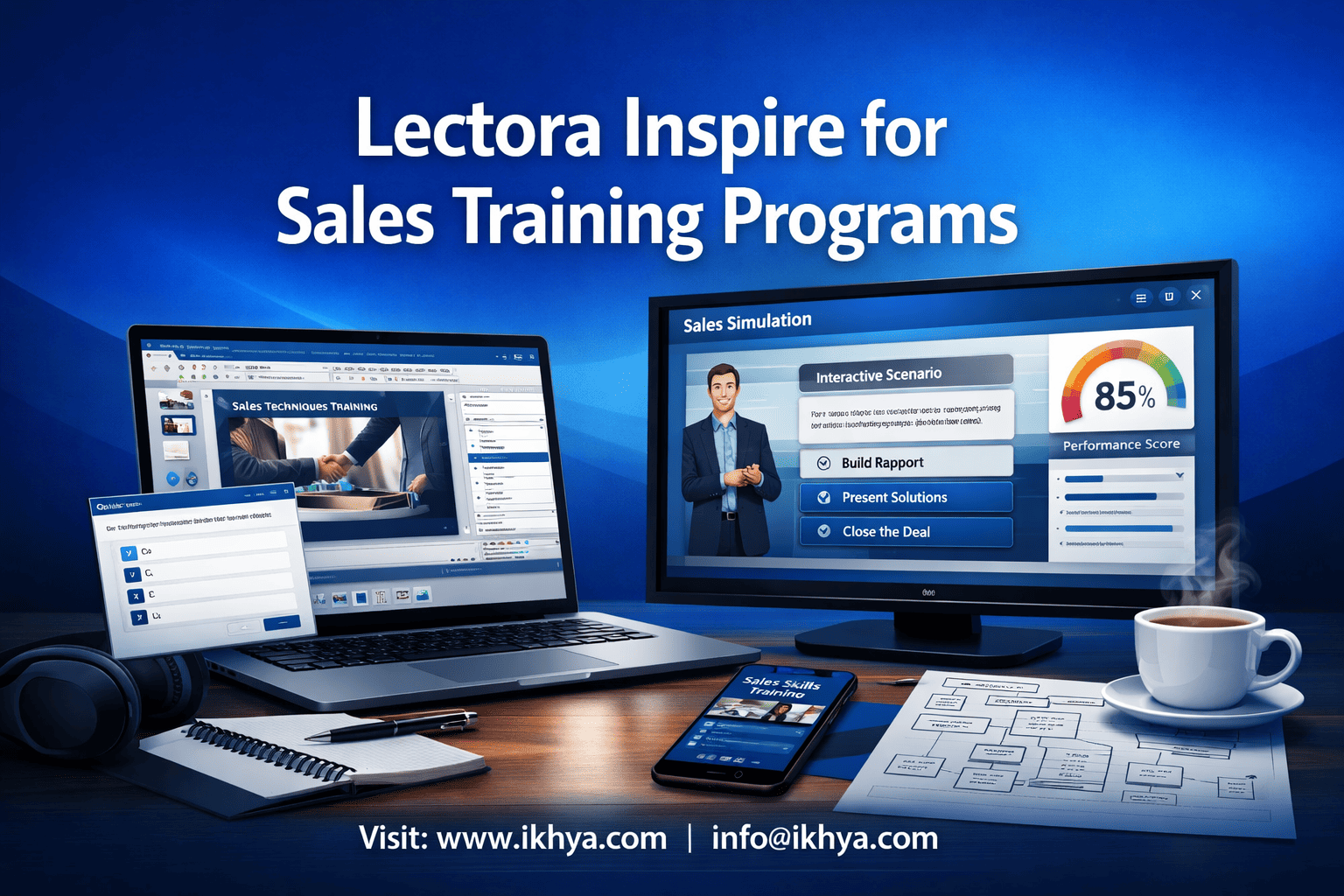
Modern sales teams operate in fast-changing markets where product updates, customer expectations, and competitive pressure constantly evolve. Traditional classroom sales training cannot keep pace with these changes. Enterprises now rely on scalable digital learning platforms that deliver consistent, trackable, and performance-focused sales training.
Lectora Inspire has emerged as one of the most powerful enterprise eLearning authoring tools for building interactive sales training programs. It enables organizations to create scenario-based simulations, product training modules, objection-handling exercises, and compliance learning that can be deployed globally through LMS platforms.
Organizations seeking scalable digital sales training solutions often work with experienced development partners. For example, many enterprises collaborate with specialized providers offering custom eLearning development services to design high-impact training programs aligned with business outcomes.
If your organization is exploring enterprise sales training solutions, you can Book a Free eLearning Demo with IKHYA experts to evaluate how Lectora-based training programs can support global sales enablement.
Why Enterprises Use Lectora Inspire for Modern Sales Training
Enterprises adopt Lectora Inspire for sales training because it enables the creation of highly interactive, scenario-driven learning experiences that replicate real sales conversations. The platform supports advanced interactivity, LMS integration, and rapid content updates—making it ideal for large organizations that need scalable and continuously updated sales training programs.
Sales Enablement Challenges in Large Organizations
Corporate sales teams face several learning challenges that traditional training methods struggle to solve.
1. Rapid product updates
Sales teams must frequently learn:
- new product features
- pricing changes
- competitive positioning
- regulatory updates
Traditional training programs often become outdated before they reach all employees.
2. Distributed global sales teams
Large enterprises may have:
- field sales teams
- remote representatives
- channel partners
- regional distributors
Delivering consistent training across multiple regions becomes difficult without digital learning systems.
3. Lack of practical sales simulations
Many sales programs focus heavily on theory but fail to simulate real-world sales situations such as:
- handling objections
- negotiating pricing
- responding to customer concerns
- navigating complex buying committees
Without practice-based training, knowledge rarely translates into improved sales performance.
4. Limited performance tracking
Enterprises need measurable insights such as:
- course completion rates
- knowledge retention
- readiness for product launches
- compliance with industry regulations
Modern sales training must integrate with enterprise learning platforms to provide this data.
Organizations that deploy LMS-integrated courses through services like LMS compatible eLearning course development services gain access to analytics that help measure training effectiveness.
How Digital Sales Training Solves Performance Gaps
Digital sales training built with enterprise authoring tools like Lectora addresses these challenges by providing scalable, interactive learning programs.
Key advantages include:
Consistent training delivery
Every sales representative receives the same structured training regardless of location.
Interactive scenario-based learning
Sales professionals can practice:
- product presentations
- customer discovery conversations
- objection handling
- closing techniques
These simulated interactions improve real-world performance.
Continuous learning updates
Lectora courses can be quickly updated when:
- new products launch
- regulatory rules change
- market strategies evolve
Performance analytics
Through SCORM and xAPI integration, organizations can track:
- learner progress
- knowledge gaps
- sales readiness
- certification completion
This data allows learning teams to optimize training programs continuously.
For enterprises planning large-scale digital sales learning initiatives, consulting experienced partners can accelerate implementation. IKHYA provides specialized eLearning consultancy services that help organizations design scalable training architectures aligned with business goals.
What Is Lectora Inspire and Why It Fits Sales Training
Lectora Inspire is an enterprise-grade eLearning authoring tool used to develop interactive training programs that integrate seamlessly with corporate LMS platforms. It enables organizations to build scenario-driven learning, multimedia sales simulations, and compliance training that can be tracked through SCORM or xAPI standards.
Unlike many rapid authoring tools that limit customization, Lectora offers advanced scripting, responsive design capabilities, and deep LMS compatibility. These features make it particularly effective for complex enterprise sales training programs that require interactive learning experiences and detailed performance analytics.
Organizations exploring different authoring platforms often evaluate multiple tools before selecting a development partner. Many enterprises consult resources such as best eLearning authoring tools for corporate training to understand how tools like Lectora, Storyline, Captivate, and Rise compare for different training scenarios.
Core Capabilities of Lectora Inspire
Lectora Inspire includes a powerful suite of tools designed for enterprise learning teams and eLearning developers.
Key capabilities include:
Advanced interactivity
Lectora allows developers to build rich interactions such as:
- branching scenarios
- drag-and-drop exercises
- decision-based simulations
- dynamic feedback paths
These capabilities are particularly valuable for sales training where learners must practice real customer conversations.
Responsive course design
Sales teams increasingly access training on multiple devices. Lectora supports responsive design so courses work smoothly across:
- desktops
- tablets
- mobile devices
Mobile accessibility allows sales professionals to learn while traveling or preparing for client meetings.
Organizations implementing mobile-enabled training programs often combine development approaches with mobile learning development solutions to support field-based employees.
Multimedia integration
Sales training often benefits from rich media elements such as:
- product demonstration videos
- animated explainers
- interactive diagrams
- recorded sales conversations
Lectora enables seamless integration of these assets within training modules.
Built-in Tools for Interactive Sales Simulations
One of the biggest strengths of Lectora Inspire is its ability to support simulation-based learning environments.
These environments allow learners to practice real sales situations such as:
Customer discovery conversations
Learners analyze customer needs and choose appropriate responses during simulated dialogues.
Handling objections
Sales professionals can test different strategies when responding to objections related to:
- pricing concerns
- competitor comparisons
- product limitations
Immediate feedback helps reinforce effective techniques.
Product demonstration scenarios
Sales representatives practice presenting product benefits and features in simulated environments that mimic real client meetings.
Enterprises that want to build immersive learning environments frequently combine Lectora with advanced development techniques used in eLearning simulation-based training services to replicate complex workplace situations.
SCORM, xAPI and LMS Integration Support
Enterprise sales training programs must integrate with corporate learning infrastructure. Lectora supports major eLearning standards that ensure compatibility with enterprise LMS platforms.
These include:
SCORM
Allows tracking of:
- course completion
- learner scores
- progress through modules
xAPI (Experience API)
Supports deeper analytics such as:
- learning interactions
- decision-making behavior in simulations
- informal learning activities
LMS compatibility
Lectora courses can integrate with widely used enterprise LMS platforms such as:
- Cornerstone OnDemand
- SAP SuccessFactors Learning
- Moodle
- Docebo
- Blackboard Learn
These integrations allow learning teams to monitor training progress and measure the effectiveness of sales enablement programs.
Organizations designing LMS-integrated learning architectures often build structured training ecosystems through services like LMS compatible eLearning course development services.
Key Benefits of Lectora Inspire for Enterprise Sales Training Programs
Lectora Inspire provides several strategic advantages for organizations seeking scalable, high-impact sales training solutions. Its flexibility, advanced customization capabilities, and strong LMS integration support make it especially valuable for complex enterprise learning environments.
Scenario-Based Sales Conversations
Sales success depends heavily on communication skills and decision-making during customer interactions. Lectora enables organizations to create realistic scenario-based learning modules where learners practice navigating sales conversations.
Examples include:
- discovery meetings with potential clients
- product demonstrations
- negotiating contract terms
- responding to customer objections
These interactive simulations allow learners to experience consequences of different decisions, improving knowledge retention and confidence.
Rapid Updates for Product Knowledge Training
Sales teams must stay updated on new products, pricing models, and market positioning.
Lectora makes it easier for learning teams to update course content quickly. This capability is particularly valuable for industries where product portfolios evolve frequently, such as:
- software and technology
- financial services
- manufacturing
- healthcare equipment
Organizations with frequent training updates often adopt rapid eLearning development services to accelerate content production while maintaining instructional quality.
Mobile-Friendly Sales Learning
Modern sales professionals are constantly on the move. Lectora’s responsive design allows courses to adapt to multiple screen sizes, enabling learners to access training materials anytime.
This supports several learning formats:
- microlearning modules
- quick product refreshers
- on-demand sales playbooks
- performance support resources
Enterprises implementing these formats often incorporate microlearning development services to deliver short, focused training experiences that improve knowledge retention.
Global Sales Team Deployment
Large organizations frequently operate across multiple countries and regions. Sales training must therefore support localization and cultural adaptation.
Lectora allows developers to create multilingual course versions efficiently, making it easier to deploy training globally.
Common localization requirements include:
- translated course text
- region-specific examples
- voiceover localization
- compliance adaptations for different markets
Global enterprises addressing these needs typically rely on eLearning translation localization services to ensure training materials remain accurate and culturally appropriate.
Organizations planning enterprise-scale sales training programs often partner with experienced development companies that combine instructional design expertise with advanced authoring tool capabilities. IKHYA supports enterprises with specialized Lectora eLearning development services designed to build scalable corporate training programs.
If your organization is evaluating Lectora-based training solutions, you can Request an eLearning RFP to discuss enterprise requirements with IKHYA specialists.
Sales Training Use Cases Where Lectora Performs Best
Lectora Inspire is particularly effective for sales training programs that require interactivity, real-world practice, and scalable global deployment. Its flexibility allows enterprises to design training that simulates real customer interactions, reinforces product knowledge, and prepares sales teams for complex selling environments.
Product Knowledge Training
Product knowledge training is one of the most common use cases for Lectora-based sales learning. Sales teams must deeply understand product features, benefits, competitive differentiators, and value propositions.
Lectora enables the creation of interactive product learning modules that include:
- clickable product walkthroughs
- feature comparison exercises
- product configuration simulations
- knowledge checks with scenario-based questions
These modules ensure that sales representatives can confidently communicate product value to customers.
Organizations frequently convert existing training material into digital product learning courses using PPT to eLearning conversion services, transforming static presentations into interactive learning experiences.
Consultative Selling Skills Development
Modern sales approaches increasingly emphasize consultative selling, where representatives diagnose customer needs and propose tailored solutions.
Lectora enables learning teams to design practice-based modules that simulate consultative selling conversations. Learners can explore different response options and see how their decisions affect the outcome of a simulated client meeting.
Examples of consultative selling simulations include:
- discovery call conversations
- identifying customer pain points
- mapping product solutions to business challenges
- value-based selling strategies
These training modules help sales professionals build stronger client relationships and improve conversion rates.
Objection Handling Simulations
Handling objections is one of the most critical skills in sales. Lectora’s branching scenario capabilities allow training designers to create realistic objection-handling exercises.
These simulations may include situations such as:
- price resistance
- competitive comparisons
- skepticism about product benefits
- procurement approval challenges
Learners receive immediate feedback on their responses, helping them refine their sales strategies before interacting with real customers.
Enterprises often incorporate these simulations within broader eLearning simulation-based training services to create immersive practice environments.
Sales Compliance and Regulatory Training
Many industries require sales teams to comply with strict regulatory requirements. Financial services, healthcare, pharmaceuticals, and insurance organizations must ensure that sales professionals follow specific guidelines when communicating with customers.
Lectora allows organizations to develop compliance-focused training that includes:
- regulatory knowledge modules
- scenario-based compliance decisions
- certification assessments
- policy acknowledgment workflows
Companies that operate in regulated industries often implement specialized programs such as compliance training eLearning solutions to ensure that training aligns with industry regulations.
Instructional Design Strategies for Sales Training with Lectora
Effective sales training requires more than content delivery. Instructional design plays a critical role in transforming information into actionable sales skills.
Instructional designers use Lectora to create learning experiences that mimic real sales environments and reinforce behavioral change.
Organizations implementing these strategies often collaborate with specialists providing instructional design services to align learning programs with performance outcomes.
Scenario-Driven Sales Simulations
Scenario-based learning is one of the most effective approaches for sales training. Instead of simply presenting information, learners actively participate in simulated conversations.
Typical scenario structure includes:
- A realistic sales situation
- Multiple possible responses
- Immediate feedback on choices
- Consequences that influence the conversation outcome
This approach helps sales professionals practice decision-making in a safe environment before applying those skills in real client interactions.
Microlearning for Just-In-Time Sales Enablement
Sales professionals often need quick access to information rather than long training sessions.
Microlearning modules created with Lectora provide short, focused lessons that address specific sales tasks.
Examples include:
- quick product refreshers
- competitor comparison guides
- pricing objection responses
- short negotiation training modules
These microlearning units allow sales teams to quickly review key information before customer meetings.
Organizations designing these targeted learning experiences frequently implement microlearning development services to support continuous sales enablement.
Performance-Based Assessments
Traditional quizzes often measure knowledge but fail to evaluate practical skills. Performance-based assessments focus on how learners apply knowledge in real-world scenarios.
Lectora enables the creation of assessments such as:
- decision-based sales simulations
- interactive case studies
- role-play style branching scenarios
- real-world sales problem solving exercises
These assessments provide a more accurate measure of whether learners are ready to engage with customers effectively.
Reinforcement Through Learning Analytics
Learning analytics help organizations understand whether sales training programs are delivering measurable results.
By integrating Lectora courses with enterprise LMS platforms, organizations can track metrics such as:
- course completion rates
- learner engagement
- scenario performance
- certification status
Learning teams can then refine training programs based on data-driven insights.
Enterprises building these analytics-driven learning ecosystems often implement structured solutions through LMS compatible eLearning course development services.
Integrating Lectora Sales Training with Enterprise LMS Platforms
Enterprise sales training programs must integrate with corporate learning ecosystems to ensure scalability, tracking, and governance. Lectora Inspire supports industry-standard eLearning protocols such as SCORM and xAPI, enabling seamless deployment within enterprise LMS platforms while providing detailed analytics on learner performance.
Organizations that design LMS-compatible training infrastructure typically implement structured development approaches through LMS compatible eLearning course development services to ensure compatibility across enterprise systems.
SCORM and xAPI Tracking for Sales Performance
Modern sales training requires more than simple completion tracking. Learning leaders need detailed insights into how learners interact with training content.
SCORM tracking enables organizations to monitor:
- course completion status
- learner scores
- module progress
- certification results
While SCORM remains widely used, many enterprises are adopting xAPI (Experience API) for deeper analytics.
xAPI provides insights such as:
- decision patterns within sales simulations
- engagement with learning activities
- learner interaction sequences
- behavioral performance indicators
These insights help learning teams measure sales readiness more effectively.
Integration with Corporate LMS Platforms
Enterprise organizations rely on Learning Management Systems to manage large-scale training programs. Lectora courses can integrate with most modern LMS platforms used by corporate training teams.
Common enterprise LMS platforms include:
- Cornerstone OnDemand
- SAP SuccessFactors Learning
- Docebo LMS
- Moodle
- Blackboard Learn
Integration enables centralized management of training programs, including:
- learner enrollment
- certification tracking
- automated reporting
- compliance documentation
Companies implementing enterprise learning ecosystems often rely on structured LMS integration strategies supported by experienced vendors.
Learning Analytics for Sales Readiness
Learning analytics help organizations understand whether training programs improve real sales performance.
Data collected from LMS platforms can reveal:
- knowledge gaps in product training
- common mistakes in sales simulations
- areas where learners struggle with objection handling
- training modules requiring redesign
These insights allow organizations to continuously refine their sales training strategies.
Many enterprises modernizing training infrastructure adopt end-to-end solutions such as custom eLearning development services to ensure that instructional design, content development, and LMS integration align with business objectives.
Global Enterprise Sales Training Examples
Enterprise sales training programs must often support global workforces across multiple countries. Organizations in different regions face unique regulatory requirements, cultural expectations, and learning standards.
Lectora-based training programs enable scalable deployment across international sales teams while supporting localization and compliance.
USA Corporate Sales Enablement Programs
Large U.S. organizations frequently use digital sales training to support:
- product launch readiness
- consultative selling strategies
- CRM-driven sales workflows
- certification programs for sales representatives
Sales enablement programs often combine scenario-based training with analytics-driven performance tracking.
UK Compliance Learning Frameworks
In the United Kingdom, industries such as financial services and insurance require strict compliance training for sales professionals.
Digital training programs must ensure that employees understand regulatory requirements before engaging with customers.
Typical compliance topics include:
- financial product disclosures
- ethical sales practices
- customer suitability assessments
Organizations in regulated industries frequently implement specialized solutions like compliance training eLearning solutions to ensure training aligns with regulatory standards.
UAE Enterprise Learning Initiatives
Enterprises in the UAE are increasingly investing in digital learning ecosystems to support workforce development.
Sales training programs in the region often focus on:
- multilingual training delivery
- mobile learning accessibility
- customer service excellence
- cross-cultural communication
Lectora’s localization capabilities enable training programs to support multiple languages and regional adaptations.
Organizations deploying global learning programs often integrate localization strategies through eLearning translation localization services.
Australian Vocational Training Standards
Australia’s corporate training initiatives often align with vocational training frameworks that emphasize competency-based learning.
Sales training programs frequently incorporate:
- practical simulations
- workplace scenario assessments
- measurable skill evaluations
Lectora’s advanced interactivity supports these competency-focused training models.
In-House vs Outsourced Lectora Sales Training Development
Enterprises evaluating digital sales training initiatives must decide whether to build courses internally or partner with specialized eLearning development providers.
Both approaches offer advantages depending on organizational capabilities and project scope.
A detailed cost and capability comparison can be explored in in-house vs outsourced eLearning development cost comparison.
In-House Development
Internal development teams provide greater control over training content and branding.
Advantages
- direct collaboration with sales leadership
- internal knowledge of products and customers
- control over training updates
Challenges
- limited instructional design expertise
- slower development timelines
- higher hiring and infrastructure costs
Outsourced Development
Many enterprises outsource eLearning development to specialized vendors that combine instructional design, authoring tool expertise, and LMS integration capabilities.
Advantages
- faster development timelines
- access to expert instructional designers
- scalable production capacity
- reduced internal workload
Organizations exploring outsourcing strategies often consult frameworks such as outsource eLearning development benefits costs and best practices to guide vendor selection.
How to Choose the Right Lectora Development Partner
Selecting the right development partner is critical for ensuring that enterprise sales training programs deliver measurable results.
Enterprises evaluating vendors should consider multiple criteria.
Detailed procurement guidance is available in how to choose the eLearning vendor.
Technical Expertise
A qualified vendor should demonstrate strong experience with:
- Lectora Inspire development
- SCORM and xAPI implementation
- LMS integration
- responsive course design
Instructional Design Capabilities
Sales training programs require specialized instructional design strategies that focus on behavioral change.
Key capabilities include:
- scenario-based learning design
- simulation development
- performance-based assessments
- microlearning strategy
Enterprise Deployment Experience
Large organizations require vendors who can support complex training ecosystems.
Look for experience with:
- global training deployment
- multilingual course development
- large-scale LMS implementation
- compliance training programs
Long-Term Support and Scalability
Enterprise training programs require continuous updates as products, regulations, and market strategies evolve.
A strong vendor partnership should support:
- long-term course maintenance
- rapid updates for product launches
- ongoing training analytics optimization
Organizations seeking enterprise-grade training development often collaborate with specialists such as IKHYA eLearning Solutions Company, which provides scalable learning development services for global corporate training initiatives.
If your organization is planning a large-scale sales training program, you can Contact IKHYA Experts to discuss development strategies and implementation options.
Why Enterprises Partner with IKHYA for Lectora Sales Training Development
Enterprises choose IKHYA as a development partner because the company combines instructional design expertise, advanced authoring tool capabilities, and enterprise LMS integration experience.
IKHYA supports organizations in building scalable digital training programs that align learning initiatives with measurable business outcomes.
Enterprise-Grade Lectora Development
IKHYA provides specialized Lectora eLearning development services that enable organizations to create interactive, simulation-based sales training programs tailored to enterprise learning environments.
Global Sales Training Deployment
IKHYA helps organizations deploy sales training programs across global teams by supporting:
- multilingual course localization
- mobile learning delivery
- LMS integration
- scalable training architecture
Instructional Design and Technology Expertise
IKHYA combines strategic learning design with advanced technology capabilities to deliver training programs that drive measurable performance improvement.
Organizations planning enterprise training initiatives can Book a Free eLearning Demo to explore how IKHYA solutions support scalable corporate learning programs.
Implementation Framework for Enterprise Lectora Sales Training
Successful enterprise sales training initiatives follow a structured implementation framework that aligns learning design, technology, and business objectives.
Training Needs Analysis
The first step involves identifying sales performance gaps.
Organizations analyze factors such as:
- product knowledge gaps
- inconsistent sales messaging
- low conversion rates
- compliance risks
Instructional Design Blueprint
Learning teams then create an instructional strategy that defines:
- learning objectives
- course structure
- simulation scenarios
- assessment models
LMS Deployment Strategy
Courses are developed and integrated into enterprise LMS platforms to ensure scalable distribution and tracking.
Deployment considerations include:
- user access management
- certification workflows
- performance reporting
Continuous Sales Performance Improvement
Sales training should not be a one-time initiative. Continuous improvement strategies include:
- updating training for product launches
- analyzing learner performance data
- refining simulations based on real sales scenarios
Organizations often partner with vendors providing eLearning consultancy services to optimize long-term learning strategies.
Frequently Asked Questions
1. What is Lectora Inspire used for in sales training?
Lectora Inspire is used to create interactive eLearning modules that simulate sales conversations, product demonstrations, and customer interactions.
2. Is Lectora compatible with corporate LMS platforms?
Yes. Lectora supports SCORM and xAPI standards, allowing integration with most enterprise LMS systems.
3. Can Lectora create scenario-based sales simulations?
Yes. Lectora allows developers to build branching scenarios that replicate real customer interactions.
4. Is Lectora suitable for global sales training?
Yes. Courses can be localized for multiple languages and deployed globally through LMS platforms.
5. What types of sales training can be developed with Lectora?
Examples include product training, consultative selling skills, objection handling, and compliance training.
6. Does Lectora support mobile learning?
Yes. Lectora supports responsive course design for mobile devices.
7. What is the advantage of using simulations in sales training?
Simulations allow learners to practice decision-making and improve real-world performance.
8. How long does it take to develop a Lectora sales training course?
Development timelines vary depending on course complexity, but many projects take 4–8 weeks.
9. Can existing training materials be converted into Lectora courses?
Yes. PowerPoint, PDF, and instructor-led training content can be converted into interactive eLearning modules.
10. What is SCORM in eLearning?
SCORM is a standard that allows eLearning courses to communicate with LMS platforms for tracking learner progress.
11. What is xAPI?
xAPI is a modern learning data standard that tracks detailed learner interactions within training programs.
12. Should enterprises outsource Lectora development?
Many organizations outsource development to specialized vendors to access instructional design expertise and accelerate course production.
13. What industries benefit most from sales training eLearning?
Industries such as software, finance, healthcare, retail, and manufacturing frequently use digital sales training programs.
14. How do simulations improve sales skills?
Simulations allow learners to practice real-world sales conversations and receive immediate feedback.
15. Can Lectora integrate multimedia content?
Yes. Lectora supports video, audio, animations, and interactive media.
16. What role does instructional design play in sales training?
Instructional design ensures that training programs focus on real skills rather than just information delivery.
17. Can sales training be delivered through microlearning?
Yes. Microlearning modules provide short, focused lessons for quick knowledge reinforcement.
18. Is Lectora suitable for compliance sales training?
Yes. Lectora supports regulatory training with assessments and certification tracking.
19. What skills should a Lectora development partner have?
A strong partner should offer instructional design expertise, LMS integration knowledge, and enterprise deployment experience.
20. How can enterprises start a Lectora sales training project?
Organizations typically begin by analyzing training needs and working with a specialized development partner to design the program.
Related Resources
Explore additional resources that provide deeper insights into enterprise eLearning development strategies and authoring tools.
• Corporate eLearning Development: The Complete Enterprise Guide
• Best eLearning Authoring Tools for Corporate Training
• Enterprise eLearning Development Process Step-by-Step Guide
• How to Choose the eLearning Vendor
• Outsource eLearning Development: Benefits, Costs, and Best Practices