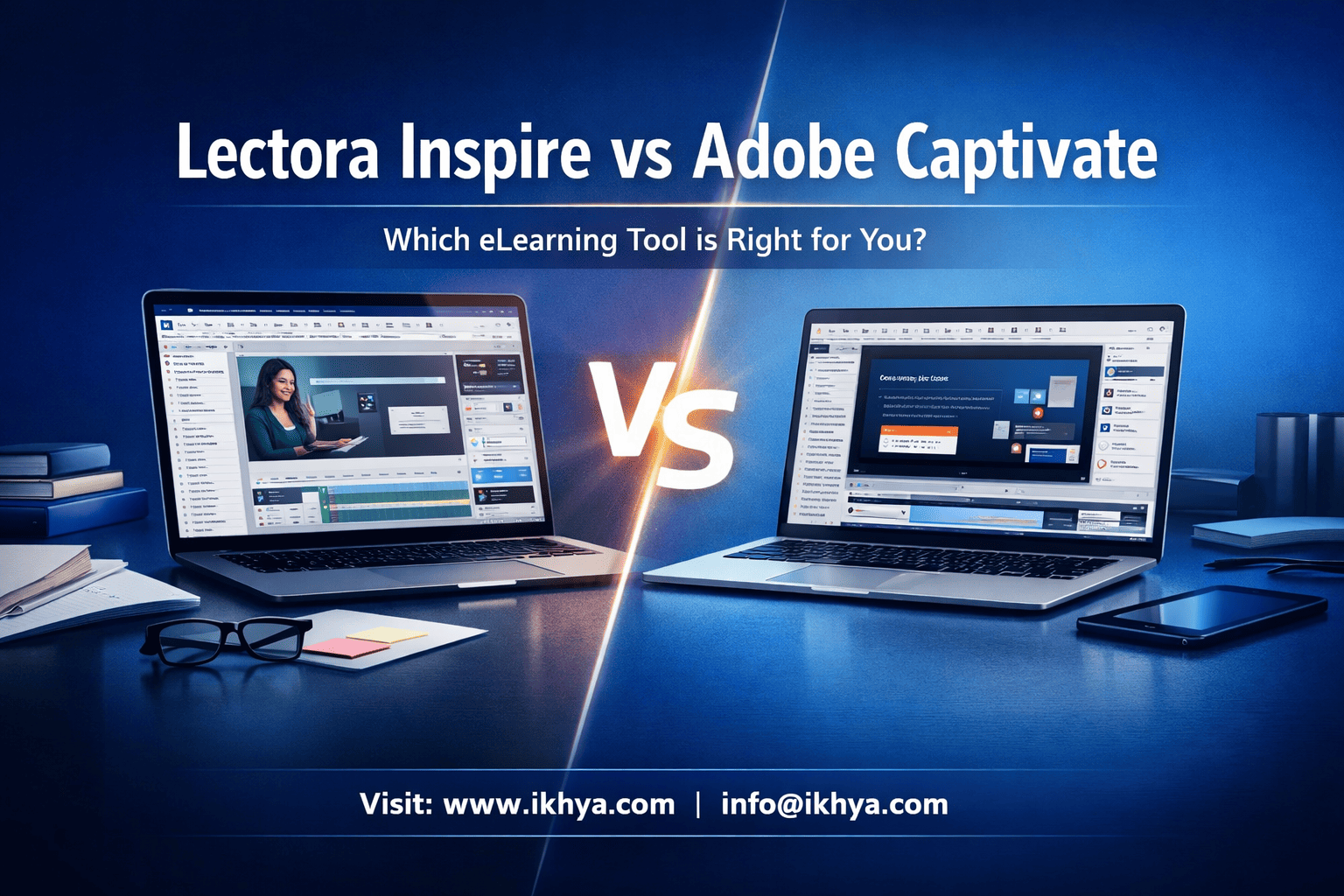
Lectora Inspire vs Adobe Captivate: Which eLearning Authoring Tool Is Best for Enterprise Training?

Choosing the right eLearning authoring tool is one of the most important decisions enterprise learning teams make. It directly affects course quality, development timelines, LMS compatibility, and long-term scalability.
For organizations building large corporate training ecosystems, tools like Lectora Inspire and Adobe Captivate are commonly evaluated. Both support advanced interactivity, SCORM/xAPI standards, and enterprise LMS integrations—but their strengths differ depending on training goals.
Many global companies also partner with specialized development providers to accelerate deployment and ensure high-quality instructional design.
Organizations evaluating enterprise eLearning development often start by exploring platforms, development models, and vendors through the Corporate eLearning Development: The Complete Enterprise Guide.
If your organization is currently evaluating authoring tools for corporate training programs, you can also Book a Free eLearning Demo with IKHYA experts to explore how enterprise-ready courses are designed and deployed.
What Is Lectora Inspire?
Lectora Inspire is an enterprise-grade eLearning authoring tool designed for building accessible, scalable, and LMS-compatible corporate training courses. It is widely used by organizations that prioritize accessibility compliance, structured content development, and large-scale enterprise learning programs.
Unlike many authoring tools focused primarily on rapid development, Lectora emphasizes flexibility, compliance, and deep customization, making it popular in regulated industries such as healthcare, aviation, and financial services.
Many enterprises also combine the platform with specialized development services such as Lectora eLearning Development Services to accelerate large training rollouts.
Key Features of Lectora Inspire
Lectora offers a robust set of features designed specifically for enterprise learning teams.
Key capabilities include:
- Advanced HTML-based course development
- Strong WCAG accessibility compliance
- Built-in SCORM, AICC, and xAPI publishing
- Custom scripting and variables
- Multi-device responsive design
- Powerful assessment and branching capabilities
- LMS integration with enterprise learning systems
Because of its HTML architecture, Lectora gives developers fine-grained control over learning experiences, which is why many compliance-heavy organizations prefer it.
Strengths for Enterprise Training Teams
Large organizations often select Lectora because it supports complex learning ecosystems.
Enterprise advantages include:
1. Accessibility Compliance
Lectora is widely recognized for supporting WCAG accessibility standards, which is essential for government organizations and global companies operating under strict compliance frameworks.
2. Flexible Custom Development
Instructional designers can create:
- Scenario-based learning
- Complex branching simulations
- Adaptive learning paths
- Role-specific training programs
3. Scalable Course Libraries
Large training teams often build hundreds of courses. Lectora’s reusable templates and structured development approach help maintain consistency across programs.
When Organizations Choose Lectora
Lectora is often selected in environments where training programs must meet strict regulatory or accessibility standards.
Typical enterprise use cases include:
- Healthcare compliance training
- Aviation safety programs
- Financial regulatory learning
- Government workforce training
- Global multilingual training deployments
Many organizations also integrate Lectora with LMS platforms to deliver compliance programs through SCORM or xAPI tracking.
If your enterprise training team is currently evaluating authoring tools or planning large-scale learning programs, you can Contact IKHYA Experts to discuss development strategies, LMS integration, and scalable eLearning implementation.
What Is Adobe Captivate?
Adobe Captivate is a professional eLearning authoring tool designed for creating interactive simulations, software training modules, and immersive digital learning experiences. It is widely used by corporate training teams that need to demonstrate software workflows, product interfaces, or technical systems.
Compared with many authoring tools, Adobe Captivate focuses strongly on screen simulations, responsive design, and immersive learning interactions. This makes it a popular choice for IT training, enterprise product training, and digital transformation programs.
Organizations building simulation-heavy learning programs often rely on specialized development support such as Adobe Captivate Development Services to accelerate production and ensure LMS-ready deployment.
Core Features of Adobe Captivate
Adobe Captivate includes advanced features designed to create highly interactive training programs.
Key capabilities include:
- Software screen recording and simulation tools
- Interactive scenario-based learning
- Responsive course development
- Virtual reality (VR) learning support
- SCORM, xAPI, and AICC publishing
- Advanced quizzes and knowledge checks
- Multi-device learning delivery
These capabilities make Captivate particularly effective for hands-on digital skills training where learners must practice tasks inside simulated environments.
Strengths for Corporate Training
Adobe Captivate is frequently used by enterprise L&D teams when training requires demonstration-based learning or complex simulations.
Major strengths include:
1. Software Simulation Training
Captivate can record full software workflows and convert them into:
- Guided demonstrations
- Practice simulations
- Assessment simulations
This is extremely useful for training employees on ERP systems, CRM platforms, or internal enterprise tools.
2. Immersive Learning Experiences
Captivate supports:
- Scenario-based learning
- Interactive branching
- Virtual reality training modules
- Gamified assessments
These elements increase learner engagement in complex training programs.
3. Responsive Learning Design
Modern corporate training must support mobile learning. Captivate allows developers to build courses optimized for:
- Desktop
- Tablet
- Mobile learning environments
Many global organizations combine Captivate development with mobile-first training strategies such as Mobile Learning Development Solutions to support remote and distributed workforces.
Where Adobe Captivate Excels
Adobe Captivate performs particularly well in environments where visual demonstrations and system training are critical.
Typical enterprise use cases include:
- Software onboarding programs
- IT systems training
- Technical product training
- Customer support training
- Manufacturing equipment training
For example:
- US enterprise software companies use Captivate to train sales engineers.
- UK financial services firms deploy Captivate simulations for regulatory software systems.
- Australian vocational training providers use simulation-based learning to demonstrate technical procedures.
- UAE aviation organizations deploy Captivate courses for digital cockpit system training.
Because of these capabilities, Captivate is frequently selected when training must replicate real workplace systems or workflows.
Lectora Inspire vs Adobe Captivate: Core Feature Comparison
Both tools are powerful enterprise authoring platforms, but they differ significantly in terms of strengths, development flexibility, and ideal use cases.
The table below summarizes their core differences.
| Feature | Lectora Inspire | Adobe Captivate |
|---|---|---|
| Primary Strength | Accessibility and compliance training | Software simulations and immersive learning |
| Development Flexibility | High customization using HTML and scripting | Strong simulation and interactive design |
| Responsive Design | Fully responsive design options | Responsive design with adaptive layouts |
| Accessibility Compliance | Excellent WCAG support | Moderate accessibility capabilities |
| Software Simulation | Basic | Advanced simulation tools |
| LMS Compatibility | SCORM, AICC, xAPI | SCORM, AICC, xAPI |
| Mobile Learning | Supported | Strong mobile-first learning |
| Learning Analytics | xAPI compatible | xAPI compatible |
| Ideal Industries | Healthcare, compliance, government | IT, product training, technical education |
When selecting an authoring platform, enterprise learning teams must consider:
- training complexity
- accessibility requirements
- simulation needs
- LMS integration requirements
- internal development capacity
Many organizations also consult with external specialists through services such as eLearning Consultancy Services to evaluate which authoring ecosystem best aligns with their enterprise learning strategy.
Before selecting an authoring platform for large-scale corporate training, many L&D teams issue a structured project brief using a framework like the eLearning RFP Template Guide to evaluate development partners and authoring tool expertise.
If your organization is currently evaluating enterprise training tools or vendors, you can Request an eLearning RFP to discuss development timelines, LMS integration, and large-scale course deployment strategies with IKHYA specialists.
Enterprise Use Cases: When Lectora Inspire Is the Better Choice
Lectora Inspire is typically the preferred authoring tool when enterprise training programs require strict compliance, accessibility standards, and scalable course architecture. Organizations managing large regulatory training ecosystems often select Lectora because of its flexibility and accessibility support.
For enterprises operating in highly regulated industries, Lectora enables development of structured learning programs that comply with WCAG accessibility standards, SCORM/xAPI tracking, and global compliance frameworks.
Compliance Training Programs
Many corporate training programs must meet strict legal and regulatory standards. Lectora is widely used for compliance training because it supports detailed tracking, structured learning flows, and accessible design.
Common enterprise compliance programs built using Lectora include:
- Financial regulatory training
- Anti-money laundering (AML) compliance
- Workplace safety programs
- Data privacy training (GDPR-related learning)
- Healthcare compliance certification
For example:
- US healthcare organizations use Lectora to deploy HIPAA compliance training.
- UK financial institutions deliver mandatory regulatory learning modules to employees using SCORM-based LMS deployments.
- Australian vocational training programs rely on accessible digital learning that meets WCAG guidelines.
Many organizations also outsource development of these programs to specialized partners offering Compliance Training eLearning Solutions to ensure both instructional quality and regulatory accuracy.
Accessibility-Driven Learning
Accessibility has become a critical requirement for enterprise learning platforms, especially for government organizations and global corporations.
Lectora stands out in this area because it supports:
- WCAG accessibility compliance
- Screen reader compatibility
- Keyboard navigation support
- Accessible assessments and quizzes
This allows organizations to ensure equal learning access for employees with disabilities, which is increasingly required under global employment regulations.
For multinational companies deploying training across diverse workforces, accessible learning is not just a compliance requirement but also a corporate inclusion strategy.
Large-Scale Enterprise Content Development
Organizations managing hundreds or thousands of training modules often prefer Lectora due to its structured development architecture.
Lectora supports:
- reusable templates
- centralized content libraries
- consistent course structure across programs
- scalable development workflows
This is particularly valuable for enterprises building long-term digital learning ecosystems.
Many organizations accelerate development timelines through Custom eLearning Development Services that specialize in large corporate learning projects.
Enterprise Use Cases: When Adobe Captivate Is the Better Choice
Adobe Captivate becomes the better choice when training programs require visual demonstrations, interactive simulations, or immersive learning environments. It is particularly effective for digital skills training and product education.
Captivate’s simulation engine allows learners to practice real software tasks in a controlled learning environment, making it ideal for technical training programs and digital transformation initiatives.
Software Simulation Training
One of Captivate’s strongest capabilities is screen recording and simulation-based training.
Organizations frequently use it to train employees on enterprise software systems such as:
- CRM platforms
- ERP systems
- HR management systems
- internal enterprise applications
Captivate can automatically convert screen recordings into:
- guided demonstrations
- step-by-step practice simulations
- interactive knowledge assessments
These features make it one of the most powerful tools for system training and digital onboarding programs.
Many companies also implement interactive simulations through services like eLearning Simulation-Based Training Services to improve learner engagement and retention.
Technical Product Training
Global companies often need to train employees, partners, or customers on complex products or technical systems.
Captivate works well for this type of learning because it can create:
- interactive walkthroughs
- guided product demonstrations
- troubleshooting simulations
- scenario-based learning environments
For example:
- US SaaS companies use Captivate for product onboarding.
- European manufacturing companies train field engineers on equipment systems.
- UAE aviation organizations deliver technical maintenance training through simulation-based learning.
This approach improves learner confidence because employees can practice tasks safely before performing them in real work environments.
Immersive Learning Experiences
Adobe Captivate supports advanced learning design approaches such as:
- scenario-based simulations
- gamified learning modules
- virtual reality (VR) training environments
- branching decision-making activities
These elements increase learner engagement, especially in training programs where employees must develop practical skills and decision-making capabilities.
Organizations implementing immersive learning strategies often combine them with Microlearning Development Services to deliver short, highly focused training modules.
Choosing Between Lectora and Captivate for Enterprise Training
When evaluating the two platforms, the choice usually depends on the primary training objective.
| Enterprise Training Requirement | Best Tool |
|---|---|
| Compliance & regulatory training | Lectora Inspire |
| Accessibility-focused learning | Lectora Inspire |
| Large-scale structured training libraries | Lectora Inspire |
| Software simulations | Adobe Captivate |
| Technical product training | Adobe Captivate |
| Interactive immersive learning | Adobe Captivate |
Many enterprises do not rely on a single authoring tool. Instead, they use multiple tools within their learning ecosystem, selecting the right platform for each type of training program.
For organizations planning large digital learning initiatives, consulting specialists through eLearning Consultancy Services can help evaluate the right technology stack and development approach.
Enterprise LMS Integration: SCORM, xAPI, and Learning Analytics
Enterprise eLearning programs must integrate seamlessly with Learning Management Systems (LMS) to track learner progress, certification completion, and training effectiveness. Both Lectora Inspire and Adobe Captivate support industry standards like SCORM and xAPI, enabling organizations to deploy courses across modern LMS platforms.
For corporate training teams, the choice of authoring tool often depends on how well it integrates with the enterprise learning ecosystem—including HR systems, LMS platforms, and analytics dashboards.
Organizations deploying large training libraries often build LMS-compatible courses through LMS Compatible eLearning Course Development Services to ensure seamless LMS integration.
SCORM Compliance
SCORM (Sharable Content Object Reference Model) remains one of the most widely used standards for corporate training delivery.
Both Lectora and Adobe Captivate support:
- SCORM 1.2
- SCORM 2004
- LMS-based course tracking
- Certification and completion reporting
SCORM allows organizations to track:
- learner progress
- quiz scores
- course completion status
- certification compliance
Many global enterprises—including organizations in US healthcare systems and UK financial institutions—use SCORM-based training modules to ensure regulatory compliance.
xAPI and Learning Experience Tracking
xAPI (Experience API) is a more advanced tracking standard that enables organizations to collect deeper learning data.
With xAPI, organizations can track:
- informal learning experiences
- simulation performance
- real-world task completion
- mobile learning engagement
Both Lectora and Adobe Captivate support xAPI integration, allowing training teams to connect courses with learning record stores (LRS) and enterprise analytics platforms.
This provides learning leaders with insights into:
- learner engagement
- skill development patterns
- training effectiveness across departments
Many global organizations increasingly combine xAPI data with learning analytics platforms to drive data-driven training strategies.
Integration with Enterprise LMS Platforms
Modern enterprises deploy LMS platforms such as:
- SAP SuccessFactors
- Cornerstone OnDemand
- Moodle
- Docebo
- TalentLMS
Both authoring tools publish courses that integrate easily with these platforms.
However, successful deployment requires:
- structured course packaging
- testing across LMS environments
- performance optimization
- learning analytics configuration
Enterprises planning large deployments often rely on specialized providers offering eLearning Consultancy Services to design scalable LMS integration strategies.
Instructional Design Considerations When Choosing an Authoring Tool
Selecting an authoring tool should never be based solely on technical features. The most successful corporate training programs combine the right technology with strong instructional design practices.
Instructional design frameworks determine how learning content is structured, delivered, and retained by learners. Organizations designing enterprise training programs typically follow established models such as ADDIE, SAM, or scenario-based learning frameworks.
Companies building structured training programs often partner with specialists providing Instructional Design Services to ensure learning experiences align with organizational goals.
Rapid eLearning vs Custom Development
One of the most common decisions enterprise training teams face is choosing between rapid development and fully customized course design.
Rapid eLearning focuses on:
- faster development cycles
- converting existing content
- template-based course design
- shorter production timelines
Custom eLearning development emphasizes:
- highly interactive learning experiences
- scenario-based learning
- simulation-based training
- advanced assessments
Organizations frequently use Rapid eLearning Development Services to convert PowerPoint presentations, instructor-led training materials, or documentation into digital learning courses quickly.
Interactive Learning Design
Modern corporate training programs must go beyond static slide-based courses.
Effective learning design includes:
- scenario-based decision making
- branching learning paths
- simulation-based activities
- real-world case studies
Interactive learning improves knowledge retention because learners actively engage with the content rather than simply reading information.
Many enterprises also modernize legacy training content through eLearning Course Redesigning Services to improve engagement and learning outcomes.
Mobile Learning and Microlearning Strategy
Remote workforces and distributed teams require training that can be accessed on multiple devices.
Modern enterprise learning strategies include:
- mobile-first course design
- short microlearning modules
- just-in-time learning resources
- on-demand training access
Organizations delivering global training programs frequently implement Mobile Learning Development Solutions to support flexible learning across devices.
Microlearning is particularly effective for:
- onboarding programs
- compliance refreshers
- product knowledge training
- continuous learning initiatives
Cost Considerations: Lectora vs Adobe Captivate for Enterprises
Enterprise training leaders must evaluate the total cost of ownership when selecting an authoring tool. Licensing fees are only one part of the equation—development time, maintenance effort, and scalability also impact long-term costs.
The table below compares key cost factors.
| Cost Factor | Lectora Inspire | Adobe Captivate |
|---|---|---|
| Licensing Cost | Moderate to high | Moderate |
| Development Complexity | Higher due to customization | Moderate |
| Development Speed | Slower for custom builds | Faster for simulations |
| Maintenance Effort | Moderate | Moderate |
| Accessibility Compliance Costs | Lower due to built-in support | Higher if retrofitting accessibility |
| Scalability | Excellent for large course libraries | Strong for simulation-based programs |
Many organizations also evaluate the cost difference between internal development teams and outsourcing models.
Enterprises comparing these options often review frameworks such as In-House vs Outsourced eLearning Development Cost Comparison before deciding on their development strategy.
In-House Development vs Outsourcing eLearning Development
Enterprise training teams often face a critical decision: whether to build courses internally or partner with an external eLearning development company. The right approach depends on internal expertise, project scale, timelines, and long-term training strategy.
Many organizations adopt a hybrid model, maintaining internal instructional design leadership while outsourcing large-scale production to specialized partners.
Enterprises exploring outsourcing strategies often consult frameworks like eLearning Outsourcing Guide for Enterprises to evaluate risks, costs, and long-term scalability.
When In-House Development Makes Sense
Internal development teams work well when organizations have:
- Experienced instructional designers
- Dedicated multimedia developers
- Long-term content production needs
- Internal LMS administrators
In-house development offers advantages such as:
Greater internal control
Training teams maintain direct ownership of learning assets and development workflows.
Immediate collaboration
Subject matter experts can work closely with instructional designers during development.
Faster updates for small content changes
Internal teams can modify content quickly without vendor coordination.
However, in-house development can become difficult when training demands grow rapidly or when specialized expertise is required.
Benefits of Outsourcing Enterprise eLearning
Many global organizations outsource eLearning development to accelerate training deployment and reduce internal workload.
Key advantages include:
1. Access to specialized expertise
Experienced vendors provide teams of:
- instructional designers
- multimedia developers
- LMS specialists
- localization experts
2. Faster development timelines
Dedicated development teams can produce large training libraries much faster than small internal teams.
3. Scalability for global training
Outsourcing enables organizations to deliver training across multiple regions and languages.
Companies planning large digital learning programs often rely on Outsource eLearning Development: Benefits, Costs and Best Practices to design efficient outsourcing models.
Reducing Development Timelines
Corporate training initiatives often involve hundreds of courses. Without the right development resources, production timelines can stretch across months or even years.
Specialized development partners accelerate delivery through:
- rapid eLearning frameworks
- reusable course templates
- centralized asset libraries
- structured project governance
Organizations seeking faster course production often implement Rapid eLearning Development Using Storyline and Rise 360 to convert training materials into digital courses quickly.
How to Choose the Right eLearning Development Partner
Selecting the right vendor is one of the most important decisions in enterprise learning programs. A capable partner can significantly improve training quality, scalability, and deployment speed.
Before choosing a development partner, organizations should evaluate several critical factors.
Instructional Design Capability
A strong vendor should demonstrate expertise in instructional design frameworks such as:
- ADDIE
- SAM (Successive Approximation Model)
- Scenario-based learning
- Microlearning strategies
Instructional design expertise ensures training is effective, engaging, and aligned with business outcomes.
Authoring Tool Expertise
Vendors should have proven experience with enterprise authoring tools such as:
- Lectora Inspire
- Adobe Captivate
- Articulate Storyline
- Articulate Rise
- Elucidat
Organizations evaluating development partners often reference tools listed in Best eLearning Authoring Tools for Corporate Training.
LMS Integration Expertise
Enterprise vendors must understand how to deploy courses across LMS platforms and configure learning analytics.
Capabilities should include:
- SCORM and xAPI implementation
- LMS course testing
- learning record store integration
- certification tracking systems
Localization and Global Deployment
Global enterprises often deploy training across multiple regions and languages.
An experienced vendor should support:
- multilingual course translation
- cultural localization
- region-specific compliance training
- global LMS deployment
Organizations scaling international training programs frequently use eLearning Translation Localization Services to deliver consistent learning experiences worldwide.
Procurement and RFP Process
Large enterprises typically evaluate vendors through structured procurement processes.
The RFP process helps organizations compare vendors based on:
- development capabilities
- cost structures
- technology expertise
- project governance models
Organizations evaluating development partners can start by submitting a project request through Request an eLearning RFP.
Why Enterprises Partner with IKHYA for eLearning Development
Many global organizations partner with IKHYA – eLearning Solutions Company to design, develop, and deploy enterprise training programs. The company supports organizations across multiple industries by combining instructional design expertise with scalable development processes.
You can explore the company’s capabilities and enterprise learning approach through About IKHYA eLearning Solutions.
Authoring Tool Expertise
IKHYA development teams work with multiple enterprise authoring platforms including:
- Lectora Inspire
- Adobe Captivate
- Articulate Storyline
- Articulate Rise
- Elucidat
This multi-tool expertise allows organizations to select the best platform for each training scenario.
Enterprise LMS Integration
IKHYA supports deployment across enterprise LMS environments by implementing:
- SCORM and xAPI compatible course publishing
- LMS integration testing
- learner progress tracking systems
- certification management frameworks
This ensures training programs integrate seamlessly with existing enterprise learning infrastructure.
Global Training Deployment
Organizations with international workforces often require multilingual training programs.
IKHYA supports global training through:
- course translation and localization
- multi-region deployment strategies
- cross-platform LMS compatibility
- scalable course libraries
These capabilities allow organizations to deliver consistent training experiences across global operations.
Rapid eLearning Development
Enterprises frequently need to convert existing materials such as PowerPoint presentations or instructor-led training into digital learning modules.
IKHYA accelerates this process through structured rapid development workflows using services like PPT to eLearning Conversion Services.
If your organization is evaluating enterprise eLearning vendors or planning a large training rollout, you can Book a Free eLearning Demo to explore how enterprise-ready courses are designed and deployed.
Enterprise Decision Checklist: Lectora Inspire or Adobe Captivate?
Before selecting an authoring tool, corporate training leaders should evaluate their learning requirements carefully.
Use the following checklist to guide your decision.
Choose Lectora Inspire if your organization needs:
- accessibility-compliant training
- large compliance learning programs
- structured course architecture
- complex branching scenarios
Choose Adobe Captivate if your training requires:
- software simulations
- product demonstrations
- immersive learning environments
- technical skills training
Many enterprises ultimately adopt multi-tool ecosystems, selecting the most appropriate authoring tool for each training use case.
Conclusion: Selecting the Right Authoring Tool for Enterprise Training
Lectora Inspire and Adobe Captivate are both powerful enterprise eLearning authoring tools. However, their strengths differ depending on training requirements.
Lectora is ideal for compliance-driven and accessibility-focused training ecosystems, while Adobe Captivate excels in simulation-based and technical learning programs.
The most effective enterprise learning strategies align technology, instructional design, and scalable development models.
Organizations planning large training initiatives often benefit from working with experienced partners that can provide both technical expertise and instructional design guidance.
If your organization is evaluating authoring tools or planning to modernize corporate training programs, you can Contact IKHYA Experts to discuss development strategies and enterprise learning solutions.
Frequently Asked Questions
1. What is Lectora Inspire used for in corporate training?
Lectora Inspire is used to create accessible, compliance-focused eLearning courses for enterprise training programs.
2. What is Adobe Captivate best used for?
Adobe Captivate is best for software simulations, product demonstrations, and immersive technical training modules.
3. Is Lectora better than Adobe Captivate?
Neither tool is universally better. Lectora excels in accessibility and compliance training, while Captivate is stronger for simulations.
4. Do both tools support SCORM and xAPI?
Yes. Both Lectora and Adobe Captivate support SCORM, AICC, and xAPI standards for LMS compatibility.
5. Which tool is better for compliance training?
Lectora Inspire is generally preferred for compliance training due to its strong accessibility support.
6. Which authoring tool is better for software simulations?
Adobe Captivate is widely considered the best tool for creating interactive software simulations.
7. Can Lectora courses run on any LMS?
Yes. Lectora publishes courses compatible with SCORM and xAPI standards used by most LMS platforms.
8. Is Adobe Captivate suitable for mobile learning?
Yes. Adobe Captivate supports responsive course design for mobile and tablet devices.
9. What industries commonly use Lectora?
Healthcare, aviation, government, and financial services frequently use Lectora for compliance training.
10. What industries commonly use Adobe Captivate?
IT companies, SaaS providers, manufacturing firms, and technical training organizations commonly use Captivate.
11. Can organizations use multiple authoring tools?
Yes. Many enterprises use different authoring tools depending on training requirements.
12. Should companies outsource eLearning development?
Outsourcing is common for large projects because it provides specialized expertise and faster development.
13. How do organizations select an eLearning vendor?
They evaluate instructional design capability, authoring tool expertise, LMS integration experience, and scalability.
14. What is rapid eLearning development?
Rapid eLearning converts existing training materials into digital courses quickly using authoring tools and templates.
15. Can PowerPoint training be converted into eLearning?
Yes. Many organizations convert PowerPoint presentations into interactive eLearning courses.
16. How long does enterprise eLearning development take?
Development timelines vary but typically range from a few weeks to several months depending on complexity.
17. What is SCORM in eLearning?
SCORM is a standard that allows eLearning courses to communicate with LMS platforms.
18. What is xAPI?
xAPI is a learning tracking standard that captures detailed learner interactions beyond LMS platforms.
19. What role does instructional design play in eLearning?
Instructional design ensures learning content is structured effectively to improve knowledge retention and learner engagement.
20. Why do enterprises partner with eLearning development companies?
They provide expertise, scalable development resources, and faster deployment of corporate training programs.
Related Resources
The following resources provide additional insights into enterprise eLearning development strategies and authoring tools.