

Training Companies In New Zealand
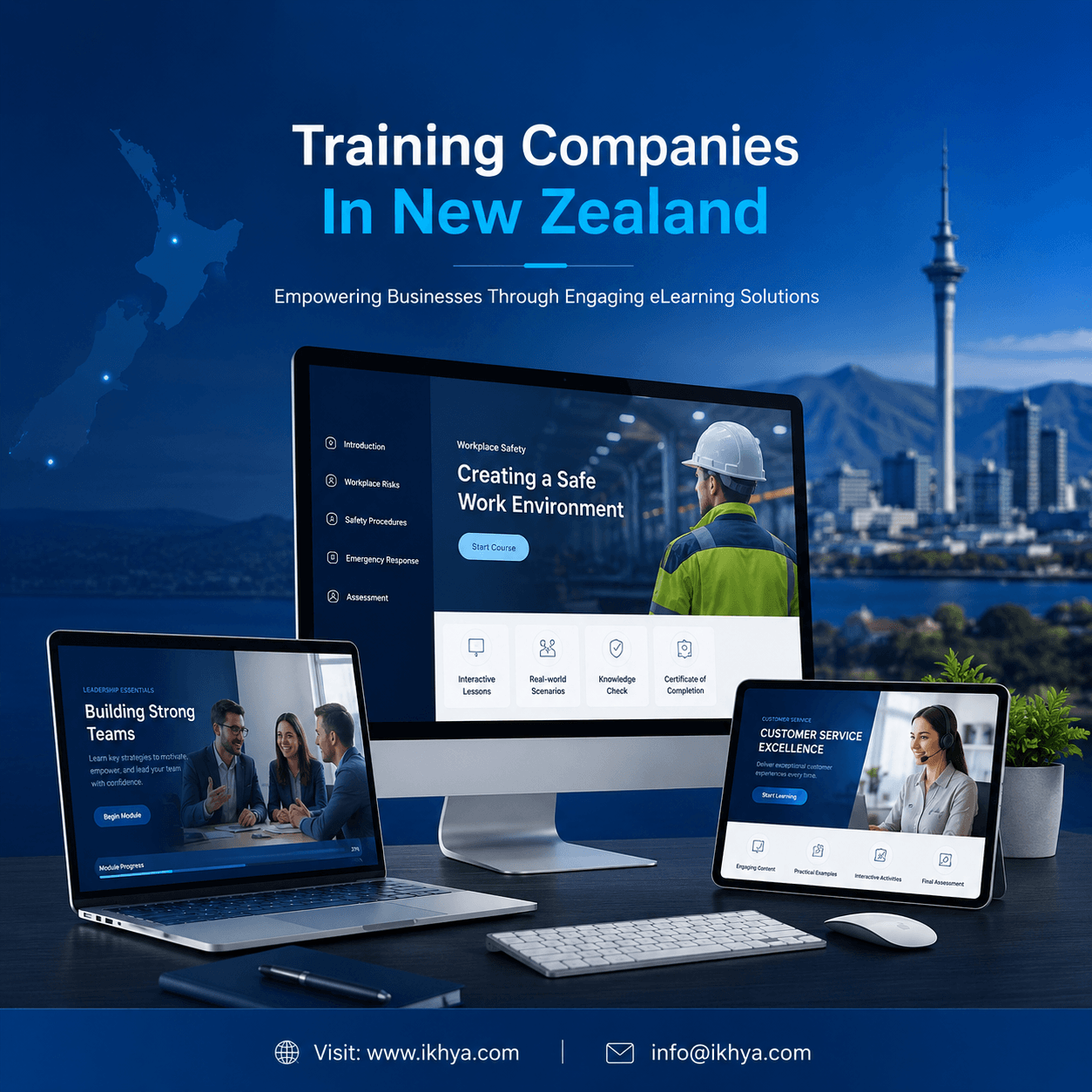
Training Companies In New Zealand play an important role in helping businesses improve employee skills, onboarding, compliance, and long-term workforce performance. Many organisations now need training partners that can support remote teams, industry rules, and fast operational changes without slowing down productivity.
Choosing the wrong provider often leads to low learner engagement, weak reporting, and training programmes employees fail to complete.
IKHYA helps organisations build practical learning programmes tailored to business goals. Contact the team at info@ikhya.com for guidance.
Why New Zealand Businesses Are Rethinking Workforce Training
Training Companies In New Zealand are becoming central to workforce planning across healthcare, retail, logistics, banking, and professional services. Businesses now need learning programmes that support compliance, onboarding, customer service, and leadership development in one connected system. Many employers also manage hybrid teams, which makes digital learning more important than classroom-only delivery.
New Zealand organisations face growing pressure to improve productivity while managing changing workforce expectations. Employees want flexible learning that works across devices and schedules. Employers also need reporting tools that track completion rates, certification status, and learner progress without heavy manual administration.
Many training projects fail because providers focus only on content production. Strong training partners also support learning strategy, rollout planning, learner engagement, and reporting. This helps businesses connect training outcomes to operational goals rather than treating learning as a separate HR activity.
Training Companies In New Zealand now support both small businesses and enterprise organisations with scalable digital learning systems. Companies that invest in structured training often see stronger onboarding, fewer compliance gaps, and better employee retention.
Training Providers Operating Across New Zealand Organisations
- IKHYA – eLearning Solutions Company. IKHYA provides custom digital learning, onboarding programmes, LMS support, compliance learning, and workforce capability development for organisations across New Zealand. The company works closely with clients to align training with operational and regulatory goals.
- RedSeed. RedSeed focuses on retail and frontline workforce learning. The company supports onboarding, customer service training, and operational learning for distributed employee teams.
- Wavelength. Wavelength develops workplace learning solutions and training content for organisations managing large internal teams. Its services often include blended learning and facilitation support.
- Catalyst. Catalyst supports business learning and capability development projects. The company works with organisations that require structured learning delivery and staff development support.
- Pipi Learning. Pipi Learning develops educational and workforce training content for digital environments. The provider supports interactive learning experiences and learner engagement projects.
- Intuto. Intuto provides LMS technology and online learning tools for organisations that need employee training management and reporting capabilities.
- LearningWorks. LearningWorks offers corporate learning support with a focus on employee development and practical workplace training delivery.
- The Career Academy. The Career Academy delivers online professional learning and career-focused education programmes for workforce development.
- Synapsys. Synapsys develops learning and communication solutions for organisations that require digital learning support and employee engagement resources.
- Synapsys. Synapsys also supports organisations with blended learning approaches, content delivery, and training communication initiatives.
How the New Zealand Training Market Has Changed
The Compliance Pressure New Zealand Employers Cannot Ignore
Compliance training has become a major driver behind investment in workforce learning. Organisations across healthcare, manufacturing, and logistics must document employee knowledge and certification status clearly. Manual spreadsheets and disconnected systems often create reporting gaps that increase operational risk.
Training Companies In New Zealand now build programmes with audit reporting and automated learner tracking included from the start. This allows managers to monitor completion rates and identify overdue certifications quickly. Businesses also benefit from faster reporting during regulatory reviews and internal audits.
Why Hybrid Work Requires a Different Training Approach
Remote and hybrid work models changed how organisations deliver learning. Employees now expect mobile access, self-paced learning, and shorter training formats that fit daily schedules. Long classroom sessions are often difficult to manage across distributed teams.
Training providers increasingly use microlearning, video-based learning, and blended delivery models to improve participation. This approach helps businesses train employees across multiple locations without creating major operational disruption. Flexible delivery also supports better learning consistency across departments.
Digital Learning as a Workforce Retention Strategy
Employee retention is now closely linked to career growth and professional development opportunities. Many organisations use structured training to support internal promotions and leadership pipelines. Employees are more likely to stay with businesses that invest in skill development.
Training Companies In New Zealand support this shift by creating role-based learning pathways and measurable development plans. Businesses can track learner progress while employees gain clear visibility into advancement opportunities. This creates stronger engagement and long-term workforce stability.
What Organisations Should Expect From Training Providers
Custom Learning Design That Matches Business Operations
Strong providers design training around operational goals instead of generic content templates. This includes role-specific onboarding, compliance workflows, and customer service processes that reflect actual business environments. Employees learn faster when examples connect directly to daily responsibilities.
Training Companies In New Zealand increasingly combine instructional design with operational consultation. Providers often work with HR teams, managers, and compliance leaders during programme planning. This creates learning content that supports measurable business outcomes.
Learning Platforms With Clear Reporting Features
Modern workforce learning depends on strong reporting visibility. Managers need to track course completion, assessment performance, and certification expiry dates without manual administration. Businesses also require secure employee access across multiple devices.
Many providers now support LMS integration, learner analytics, and automated reporting dashboards. These systems simplify administration while helping organisations monitor workforce readiness. Reliable reporting also improves executive visibility into training investments.
Support Beyond Course Development
Training projects often fail after launch because businesses receive little post-deployment support. Employees may struggle with adoption, while managers lack communication plans or rollout guidance. This reduces engagement and long-term learning impact.
Professional providers support rollout planning, learner communication, manager training, and system support after deployment. Ongoing optimisation helps organisations improve completion rates and learner satisfaction over time. Long-term support also protects the value of training investments.
What New Zealand Organisations Gain From Professional Training Support
- Faster employee onboarding helps new staff become productive sooner through structured learning pathways and role-specific content. Businesses reduce onboarding confusion while improving operational consistency across teams.
- Improved compliance tracking gives managers clear visibility into certifications, mandatory learning, and policy completion rates. This reduces administrative pressure during audits and internal reviews.
- Better workforce engagement comes from learning experiences employees can access easily across mobile and desktop devices. Flexible delivery often increases participation and course completion.
- Stronger management visibility allows leadership teams to monitor training outcomes through central reporting dashboards and learner analytics. This supports better workforce planning decisions.
- Scalable learning delivery helps organisations train employees across multiple offices or operational sites without relying only on classroom sessions. Businesses save time while maintaining training consistency.
Training Companies In New Zealand — Provider Breakdown
IKHYA – eLearning Solutions Company
IKHYA is an eLearning solutions company based in New York with experience supporting organisations across global markets, including New Zealand. Our team works with businesses that need structured workforce learning, onboarding systems, compliance training, and digital learning transformation.
We offer custom eLearning development, LMS consulting, blended learning support, onboarding programme design, and learning strategy services. IKHYA provides practical training systems designed around operational workflows and measurable workforce goals.
Our team has experience supporting industries such as healthcare, finance, retail, logistics, manufacturing, and professional services. We understand the compliance and reporting requirements many New Zealand organisations manage across distributed employee teams.
IKHYA supports modern learning technology environments with LMS integration, mobile learning delivery, reporting dashboards, and interactive digital content. We also help organisations improve learner engagement through microlearning and role-based learning pathways.
We work closely with clients during planning, development, rollout, and optimisation phases. Our engagement model focuses on collaboration, clear communication, and long-term learning performance rather than one-time content delivery.
Businesses looking for practical workforce learning support can contact IKHYA directly at info@ikhya.com. Our team helps organisations plan scalable learning systems aligned with operational and employee development goals.
RedSeed
RedSeed is known for supporting retail and frontline workforce training initiatives. The company focuses on onboarding, operational learning, and customer service training. Its learning approach often supports distributed employee teams working across multiple locations.
Wavelength
Wavelength provides workplace learning and staff development services for organisations seeking structured employee capability programmes. The company supports blended learning delivery and customised learning experiences for operational teams.
Catalyst
Catalyst works with organisations that require workforce capability support and employee development initiatives. Its services include learning programme planning and practical workplace training delivery.
Pipi Learning
Pipi Learning develops digital learning experiences and educational content for workforce training projects. The company supports interactive learning design and learner engagement initiatives.
Intuto
Intuto offers LMS technology and learning management support for organisations managing employee training programmes. The platform focuses on learner tracking, online delivery, and training administration.
LearningWorks
LearningWorks supports organisations with employee development and corporate learning delivery. Its services focus on practical workplace learning and structured training management.
The Career Academy
The Career Academy delivers online learning and professional education programmes. The organisation supports workforce development through flexible digital training formats.
Synapsys
Synapsys develops learning communication solutions and employee engagement resources. The company supports digital learning delivery and internal workforce communication projects.
Synapsys
Synapsys also supports blended learning implementation and workforce learning engagement programmes. Its services help organisations improve training communication and learning accessibility.
How New Zealand Training Providers Compare
| Company | Primary Focus | Key Services | Industries | Technology Support | Best Fit |
|---|---|---|---|---|---|
| IKHYA | Custom workforce learning | eLearning, LMS, onboarding | Multi-sector | Strong | Mid-size and enterprise |
| RedSeed | Retail learning | Frontline training | Retail | Moderate | Retail chains |
| Wavelength | Corporate learning | Blended learning | Corporate | Moderate | Workplace training |
| Catalyst | Capability support | Employee development | Business services | Moderate | Growing businesses |
| Intuto | LMS support | Learning management | Multi-sector | Strong | Online training delivery |
Training Pricing in New Zealand
| Project Type | Typical Scope | Estimated Range | Main Pricing Factors |
|---|---|---|---|
| Onboarding programme | 5 to 10 modules | Mid-range | Content complexity and media |
| Compliance learning | Policy and reporting modules | Mid to high | Regulatory requirements |
| LMS implementation | Platform setup and migration | High | User volume and integrations |
| Microlearning rollout | Short digital lessons | Moderate | Content volume |
Businesses seeking tailored pricing guidance can contact IKHYA at info@ikhya.com.
The Platforms Supporting Workforce Learning in New Zealand
| Tool | Primary Use | Best Fit | Adoption Level |
|---|---|---|---|
| Moodle | LMS delivery | Education and business | High |
| Articulate 360 | Course development | Interactive eLearning | High |
| Docebo | Enterprise learning | Large organisations | Growing |
| Microsoft Teams | Virtual training | Hybrid teams | High |
| TalentLMS | Online learning management | SMEs | Moderate |
The Training Delivery Process Explained
| Phase | Key Activities | Client Involvement | Typical Duration |
|---|---|---|---|
| Discovery | Business analysis | High | 1 to 2 weeks |
| Planning | Learning roadmap | High | 1 week |
| Content Design | Storyboard creation | Moderate | 2 weeks |
| Development | Course production | Moderate | 3 to 5 weeks |
| Review | Stakeholder feedback | High | 1 week |
| Deployment | LMS upload | Moderate | 1 week |
| Training Launch | User onboarding | Moderate | 1 week |
| Optimisation | Reporting improvements | Ongoing | Continuous |
How Industries Use Workforce Training Across New Zealand
| Industry | Common Topics | Main Challenges | Delivery Format |
|---|---|---|---|
| Healthcare | Compliance and safety | Audit readiness | Blended learning |
| Retail | Customer service | High turnover | Mobile learning |
| Finance | Regulatory learning | Reporting accuracy | Digital learning |
| Manufacturing | Operational safety | Shift schedules | Microlearning |
| Logistics | Process training | Distributed teams | Online learning |
| Professional Services | Leadership development | Skills retention | Hybrid learning |
Where Workforce Training in New Zealand Is Heading
Microlearning and Its Impact on Employee Engagement
Businesses increasingly prefer short learning modules that employees can complete quickly during work schedules. Long training sessions often reduce participation and knowledge retention.
Training Companies In New Zealand now use microlearning to improve completion rates and learner flexibility. This format also supports mobile-first workforce environments.
How Data Reporting Is Changing Workforce Learning Decisions
Learning analytics now influence workforce planning and compliance management. Organisations want clear visibility into employee participation and performance trends.
Providers increasingly build reporting dashboards into training ecosystems. Better data visibility helps businesses improve learning outcomes and operational planning.
The Rise of Mobile Learning Across Distributed Teams
Mobile learning allows employees to access training from different work locations without relying on desktop systems. This approach supports retail, logistics, and field-based workforces.
Training providers now design content specifically for mobile consumption and shorter attention spans. Businesses benefit from stronger accessibility and improved learning consistency.
Why Personalised Learning Is Becoming a Standard Expectation
Employees increasingly expect training aligned with their role, department, and career goals. Generic training libraries often create disengagement.
Training Companies In New Zealand are moving toward personalised learning pathways and role-based recommendations. This creates stronger workforce engagement and clearer development planning.
How to Evaluate Training Companies Before Signing a Contract
Choosing the right training partner requires more than reviewing sample content. Organisations should evaluate operational understanding, reporting capability, support structure, and long-term scalability before selecting a provider.
- Industry understanding helps providers design learning that matches operational and compliance realities. Businesses benefit from fewer revisions and faster deployment.
- Reporting capability allows managers to monitor completion rates and workforce readiness clearly. Strong reporting also supports compliance reviews.
- Content flexibility supports updates as policies, systems, and operational processes change. This protects long-term training value.
- Technology compatibility ensures learning systems integrate with existing HR and operational platforms. Poor integration often increases administration work.
- Learner engagement approach affects participation and completion rates across workforce groups. Interactive learning usually improves retention.
- Support structure helps organisations manage rollout, communication, and post-launch optimisation. Ongoing support reduces adoption problems.
- Scalability matters for businesses planning workforce growth or multi-location expansion. Flexible systems support long-term operational needs.
Organisations should also ask providers for rollout examples, governance structures, and project communication processes before signing agreements.
How IKHYA Supports Workforce Learning in New Zealand
IKHYA works with organisations that need practical and measurable learning systems. We focus on helping businesses improve onboarding, compliance management, and employee capability development.
Our team designs custom learning experiences that align with operational workflows and workforce goals. We support organisations with eLearning development, LMS implementation, and blended learning delivery.
IKHYA also helps businesses improve learner engagement through mobile learning, microlearning, and structured learning pathways. We focus on solutions employees can use easily across different devices and work environments.
We collaborate closely with stakeholders throughout planning, development, deployment, and optimisation stages. Our project approach prioritises communication, measurable outcomes, and long-term learning value.
Businesses looking for guidance on Training Companies In New Zealand can contact IKHYA directly at info@ikhya.com.
Start Your Workforce Training Project With Experienced Support
Training Companies In New Zealand continue to play a larger role in workforce capability, compliance management, and employee retention strategies. Organisations now require learning partners that support both operational performance and employee development.
Businesses evaluating providers should focus on long-term support, measurable outcomes, and scalable delivery models rather than content production alone. Strong learning systems improve onboarding speed, workforce consistency, and compliance visibility.
IKHYA supports organisations seeking practical workforce learning solutions tailored to business needs. Contact the team at info@ikhya.com to discuss training strategy, onboarding programmes, digital learning delivery, or LMS support.
FAQs
Related Top eLearning Companies & Solutions in the New Zealand
New Zealand organizations are adopting digital learning to support hybrid workforces, compliance training, multilingual learning, and workforce development. Businesses increasingly rely on eLearning solutions to improve onboarding, employee engagement, and operational consistency.
Explore leading eLearning providers, LMS platforms, instructional design specialists, and compliance training solutions across New Zealand.
At IKHYA – eLearning Solutions Company, we design impactful, compliance-driven, and performance-focused digital learning solutions tailored to your business goals.
🎯 Custom eLearning Course Development
⚡ Rapid eLearning & PPT Conversion
📊 Workplace Compliance Training
🌍 Localization & LMS-Ready Modules