Microlearning Development Services
For L&D, HR and compliance teams that need training people finish in minutes, on any device, and that reports to your LMS.
We design and build microlearning modules that teach one thing well: a video, a scenario, a quiz sequence or a job aid.
- Since 2010Delivering eLearning
- 500+Projects
- 40+Countries with clients
- 120+Specialists
IKHYA designs and builds custom microlearning for L&D, HR and compliance teams: short modules, each aimed at one learning objective, that run on phones and desktops and report to your LMS as SCORM 1.2, SCORM 2004 or xAPI. We handle design, scripting, media and build, so you receive finished modules, not a brief to manage.

Why teams choose IKHYA for microlearning development
One objective per module
Each module teaches one skill or decision. That keeps it quick to finish, easy to update and easy to track in your LMS.
Built for phones and desktops
Frontline, field and desk-based staff open the same module on whatever device they have. Our mobile learning solutions cover the wider mobile program around it.
Tracked where you already report
We deliver in SCORM 1.2, SCORM 2004, xAPI or HTML5, so completions and scores land in your LMS or learning record store.
A team that has done it at scale
IKHYA has delivered eLearning since 2010, with 500+ projects and clients in 40+ countries. Our eLearning services range from rapid builds to full custom programs.
What is microlearning?
Microlearning is training delivered in short, focused pieces, each built around one learning objective. Common formats are a short video, a quiz, a scenario, an infographic or a job aid.
Definitions of micro learning differ mainly on length. Wikipedia describes microlearning modules as usually less than 20 minutes long, and other sources set the limit lower. We think length is the wrong test.
A better one is this: can a learner finish it in one short sitting and do one thing differently afterwards? If the answer is yes, it is microlearning, whatever the minute count.
Microlearning works best for reinforcing knowledge, answering "how do I do this now?" at the point of work, and keeping policies and procedures fresh. It works less well as the only way to teach a complex, judgment-heavy skill. We cover that honestly below.
Not sure which format is right for you?
Tell us the topic and the audience, and we will suggest a format mix.
Is microlearning right for your training? Does it work?
It depends on what you are training. The research is encouraging but young. A 2025 systematic review of 40 studies found that microlearning has a positive impact on learning outcomes, and it also notes that the field still lacks a shared definition and synthesized findings. Two older lines of memory research explain why short, repeated modules help: a review of 317 experiments on spaced practice found that the best gap between study sessions grows with how long people need to remember, and a 2006 study found that taking a test produced better retention days later than restudying the same material.
So treat any single percentage for "retention" or "completion" with care, ours included. Test microlearning on a pilot and measure what matters to you.

| Question | Microlearning | Traditional course or classroom |
|---|---|---|
| Typical scope | One objective per module | A topic or role area, several objectives |
| Time to complete | Minutes, in the flow of work | Longer block, often scheduled |
| Best for | Reinforcement, refreshers, performance support, single procedures | Complex skills, new concepts, certification programs |
| Practice depth | Short; strong for recall and single decisions | Room for extended practice, discussion and assessment |
| Updating | Replace one module | Revise a larger course or session |
| Risk | Fragmented learning if modules are not connected | Forgetting if there is no follow-up |
Pick microlearning if the need is a single skill, a procedure, a refresher, a product update or reinforcement after a course.
Pick a longer course or blended path if learners must build a new, complex skill from the start. Often the best answer is both: a core course plus microlearning that spaces out reinforcement. We build both, and we also put them together as blended learning packages.
What we deliver
Deliverables
- A module plan: topics, objectives, formats and order
- Scripts or storyboards for your sign-off before build
- Finished modules in the agreed formats: video, scenario, quiz, infographic or job aid
- Knowledge checks that report scores to your LMS
- Optional translation and localization (40+ languages, human or AI voiceover)
- LMS packaging, testing and delivery
Formats and tools
| Category | What IKHYA works with |
|---|---|
| Output | SCORM 1.2SCORM 2004xAPIHTML5 |
| Tools | Articulate Rise 360Articulate Storyline 360Adobe CaptivateLectoraiSpring SuitedominKnow ONEElucidat |
xAPI records learning activity as statements stored in a learning record store (LRS), and it can track learning outside an LMS.
We choose the tool for your content and your LMS, not the other way round. If you have old microlearning or Flash content, we can also rebuild it in HTML5 or Rise.
How microlearning development works
- 01
Scope
A kickoff call to agree the audience, topics, objectives, number of modules, languages and your LMS. You get a written scope and schedule within 2 working days.
IKHYA and you - 02
Plan the library
We map each objective to a format and set the release order and spacing.
IKHYA drafts, you review - 03
Script or storyboard
We write every module for your subject-matter experts to approve before any build. Two review rounds are included.
IKHYA drafts, you review - 04
Build
We build one pilot module first, so you can approve the look and feel, then produce the rest in the agreed tool and your brand style.
IKHYA - 05
Test and review
We test on phone, tablet and desktop and in your LMS or a test LMS, then you review the finished modules. Two review rounds are included.
IKHYA and you - 06
Deliver
You receive LMS-ready packages (SCORM 1.2, SCORM 2004, xAPI or HTML5) plus the editable source files, so your team can update modules later.
IKHYA
How to plan a microlearning program that gets used
Whoever builds it, these habits decide whether microlearning gets finished and remembered:
- 01
Start from the work, not the content.
List the 5 to 10 moments where people get things wrong or ask for help. Each becomes a module.
- 02
Write one objective per module
In plain words: "After this, you can ...".
- 03
Add a retrieval check at the end.
Answering a question helps long-term memory more than rereading the same material.
- 04
Space it out.
Release modules over days or weeks. The best gap depends on how long people must remember, so a procedure needed next week and one needed next year need different schedules.
- 05
Make it findable.
A library nobody can search is a pile of files. Use clear titles and tags in your LMS, and link modules to the course they support.
- 06
Plan for AI carefully.
AI voiceover can make updates and translations faster, but a subject-matter expert should still review the script and the audio.
- 07
Measure behavior, not only completion.
Use xAPI or LMS data for scores and repeat attempts, and pair it with a business measure such as errors or time to competence.
What drives the cost of microlearning
We quote each project individually. These factors move the cost most:
Number of modules and whether they share a template
Format: video and animation cost more to produce than a quiz or job aid
Interactivity: branching scenarios need more design than linear modules
Voiceover: none, human or AI, and in how many languages
Authoring tool and the output you need (SCORM or xAPI)
Review rounds and how many people sign off
LMS testing, if your LMS needs special setup
Share the volume, formats and languages and we will give you a clear quote.
Get a Free Quote →What you send us, and what we prepare
You send You
- Topics and the problem each should solve
- Source material: slides, policies, videos, process notes
- A subject-matter expert for script review
- Brand guidelines, logos and fonts
- LMS details and the formats it accepts
- Target languages, if any
We prepare IKHYA
- The module plan and schedule
- Scripts and storyboards
- Media, interactions and knowledge checks
- Test builds for your review
- LMS-ready packages
Microlearning in practice
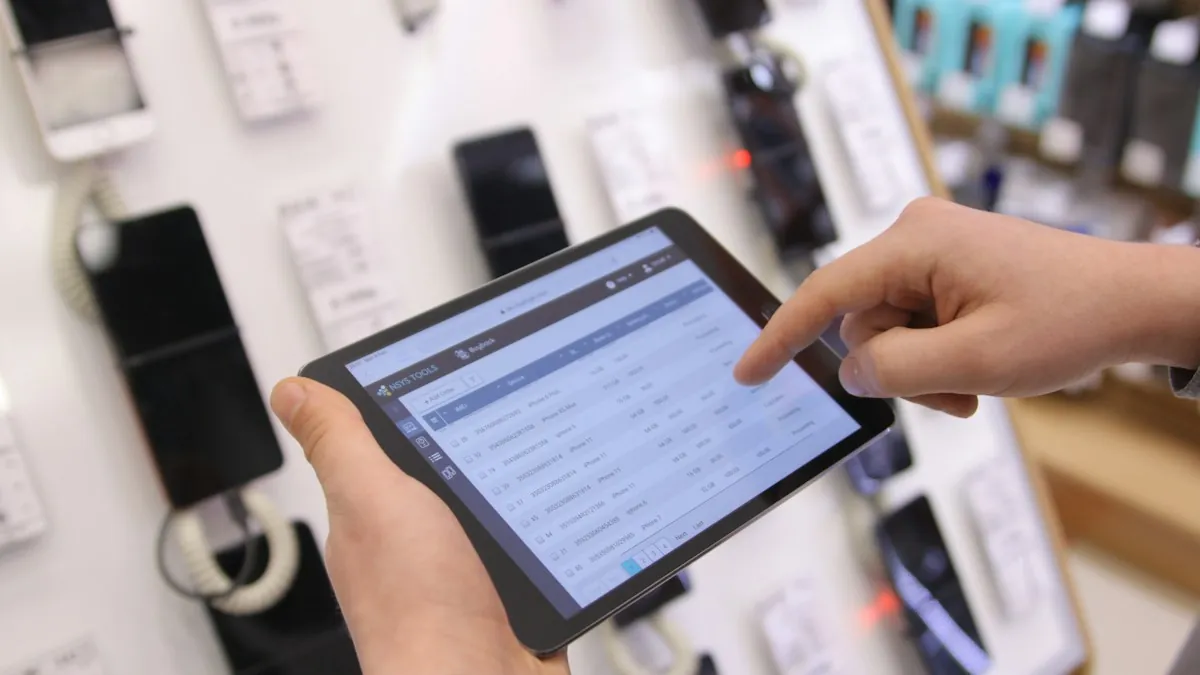 Retail
 onboarding: 12 days to 7
A retail enterprise cut new-hire onboarding from 12 days to 7 with blended eLearning.
- What we built
- 10 mobile microlearning modules (customer service, returns, POS basics, safety)
- 2 store-manager-led sessions
- Built in Rise 360 in 9 weeks for a chain of 140 stores
- How measured
- Onboarding time was measured as days from start date to first solo shift, using the client's HR data across 3 intake cohorts.
 Medical devices
Monthly product updates for a sales team
For a medical-device sales team, we built a series of 24 three-minute product updates a year.
- What we built
- Each update a short video with a 3-question check
- A reusable template that lets us turn around each module in 5 working days
- Result
- 89% of reps complete each update within a week.
"A three-minute update twice a month is something our reps actually watch in the car park before a hospital visit. Regulatory review is built into the schedule, so each lesson is ready in a week."
Related: employee onboarding training solutions and gamification in corporate training for points, badges and challenges around short modules.
Microlearning for your industry
IKHYA builds for healthcare and life sciences, manufacturing and safety, financial services, compliance training, retail, oil and gas, IT and software, and aviation. Two examples:
Frequently asked questions
Microlearning is training delivered in short, focused pieces, each built around one learning objective, such as a video, quiz, scenario or job aid.
There is no official length. Wikipedia describes modules as usually under 20 minutes, and a 2025 systematic review describes microlearning as taking a few seconds or minutes. Let the single objective decide, so a module ends when the point is made.
It works well for reinforcement, refreshers and just-in-time help, and less well as the only method for complex skills. A 2025 systematic review of 40 studies found a positive impact on learning outcomes.
Modules are quick to finish, easy to update, work on mobile and give clear tracking data. The trade-off is that learners may need a core course for the bigger picture.
Microlearning covers one objective in a short sitting, while traditional courses cover a wider topic in a longer block. Most programs use both.
Start from the moments where people struggle, write one objective per module, add a check and space the release.
Video, scenario cards, quiz sequences, infographics and job aids, packaged as SCORM 1.2, SCORM 2004, xAPI or HTML5.
It depends on the number of modules, the formats, translation and how fast reviews come back. Tell us the volume and deadline in your quote request and we will propose a schedule.
Yes. We offer ILT-to-eLearning conversion and PowerPoint-to-eLearning conversion, and we can split existing material into focused modules.
Yes, in 40+ languages, with human or AI voiceover.
We quote each project. The main drivers are module count, format, interactivity, voiceover and languages.
Ready to build microlearning your people will finish?
Tell us what you are training on, and we will propose formats, a schedule and a quote.