


Online Training Companies In UAE
Online training companies in UAE now play a major role in helping organisations manage workforce learning across offices, remote teams, and regulated industries. Businesses in Dubai, Abu Dhabi, and other Emirates need training systems that support compliance, onboarding, product knowledge, and employee development without slowing daily operations. Many organisations now replace classroom-only training with flexible digital learning models that scale across departments and locations.
Choosing the wrong provider often leads to poor learner engagement, weak reporting, and expensive platform changes later.
IKHYA helps UAE organisations build structured online training programmes. Contact the team directly at info@ikhya.com.
Why UAE Businesses Are Changing How They Approach Online Training
Online training companies in UAE have become important partners for organisations that need faster and more reliable workforce learning. Businesses across finance, healthcare, aviation, retail, logistics, and energy now train teams across multiple locations. Traditional classroom delivery often creates scheduling delays, travel costs, and inconsistent learning outcomes. Digital learning gives organisations more control over delivery, reporting, and employee access.
Many UAE organisations also face strict compliance and operational requirements. Staff must complete mandatory training on time, and managers need clear reporting records. This is especially important in regulated sectors where audits, certifications, and safety standards affect business continuity. A weak online training system creates risk for both compliance and operational performance.
The market has also shifted because employees expect more flexible learning options. Teams want mobile-friendly courses, short lessons, and training that fits around work schedules. Organisations now look for online training companies in UAE that can deliver strong user experiences while supporting business goals.
Decision-makers also want providers that understand local business culture and multilingual workforce requirements. Arabic and English learning support has become a practical business need rather than an optional feature. Companies that cannot support regional workforce diversity often struggle with adoption and completion rates.
Online Training Companies Operating in UAE and What They Offer
- IKHYA – eLearning Solutions Company provides online training services for organisations that need custom digital learning, LMS deployment, compliance training, onboarding programmes, and multilingual workforce education. The company supports clients through instructional design, platform support, reporting strategy, and long-term learning management across UAE sectors.
- Docebo offers cloud-based learning management systems for enterprise organisations that need automation, learner tracking, and integrated employee training delivery. Its platform is often used by organisations managing large distributed teams across multiple regions.
- Biz Group focuses on corporate learning, leadership development, and workforce capability programmes across the Middle East region. The company combines instructor-led delivery with digital learning tools for blended training models.
- Edufic Digital develops digital learning content and training technology solutions for organisations building structured online education systems. Its services often support internal employee learning and external customer training initiatives.
- Stylus Solutions creates custom eLearning content for businesses that need interactive workforce learning experiences. The company supports instructional design, localisation, and digital course production across multiple industries.
- TalentLMS provides a learning management platform designed for organisations that want a simple and scalable online training environment. Businesses often use the system for onboarding, compliance, and distributed workforce learning.
- Knowledge Horizon delivers corporate learning services with a focus on workforce capability improvement and business skill development. Its offerings include online learning, leadership training, and professional certification support.
- Capytech supports digital transformation and learning technology implementation for organisations building modern workforce training systems. The company works with businesses looking to improve employee engagement through digital learning.
- iLearn Me develops online learning experiences for corporate and educational environments that need structured digital course delivery. The company also supports blended learning and learner engagement initiatives.
- Protraining offers professional training programmes and online workforce education services across operational and technical sectors. Many organisations use the company for compliance training and employee certification support.
What Is Driving Demand for Online Training Across UAE Sectors
The Compliance Pressure UAE Organisations Cannot Ignore
Many UAE businesses now manage stricter compliance obligations than before. Employees often need recurring certification training related to health, safety, cybersecurity, financial conduct, or operational standards. Manual classroom delivery makes it difficult to track completion rates and maintain clear audit records. Online training companies in UAE help organisations centralise learning records and automate reporting processes.
Compliance training also needs consistency across locations and departments. Large employers cannot rely on informal delivery methods when regulators expect documented learning evidence. Digital training platforms create standard learning paths while giving administrators visibility into completion status. This helps organisations reduce operational risk and prepare for audits more efficiently.
Why UAE Workforces Need Flexible Learning Models
The UAE workforce includes employees working across different schedules, languages, and job environments. Many organisations operate around the clock, especially in logistics, aviation, retail, healthcare, and hospitality. Fixed classroom schedules often reduce training participation and interrupt daily operations. Online learning gives employees access to training when it fits their working hours.
Mobile learning has also become more important for field teams and operational staff. Employees expect short lessons that work on phones and tablets without technical barriers. Organisations now evaluate online training companies in UAE based on learner experience, accessibility, and ease of adoption. A difficult platform often leads to low engagement and incomplete learning programmes.
Multilingual Learning as a Strategic Workforce Requirement
Many UAE organisations employ multicultural teams that speak different primary languages. English-only training programmes often reduce understanding and create uneven learning outcomes across departments. Businesses now expect training providers to support Arabic and multilingual delivery strategies from the start of a project.
Translation alone is not enough for workforce learning success. Organisations increasingly want localisation that adapts scenarios, visuals, terminology, and examples to the learner audience. Online training companies in UAE that understand regional communication styles often achieve stronger learner engagement and better retention outcomes. This has become especially important in customer-facing and safety-focused industries.
What to Expect When You Engage an Online Training Company in UAE
Learning Strategy and Workforce Assessment
Most organisations start by identifying skill gaps, operational risks, and compliance requirements. A professional online training provider should review workforce structure, learner groups, and business objectives before recommending platforms or content models. This early planning stage prevents organisations from investing in systems that do not match long-term learning needs.
Good providers also help organisations prioritise training categories based on operational impact. Compliance learning may require different delivery methods than leadership development or product education. Online training companies in UAE often create phased learning roadmaps that support gradual adoption across departments. This approach reduces implementation disruption and improves user acceptance.
Custom eLearning Content Development
Custom content development allows organisations to train employees using real business scenarios and internal processes. Generic off-the-shelf courses rarely address company-specific policies or operational workflows. Providers create digital modules using video, interactive exercises, assessments, and simulations that reflect the organisation's actual environment.
Strong instructional design also improves knowledge retention. Learners engage more effectively when training uses realistic examples and short structured lessons. Many UAE organisations now prefer modular content libraries that support updates without rebuilding entire courses. This creates long-term flexibility for changing regulations and internal processes.
LMS Deployment and Learning Administration
A learning management system, often called an LMS, helps organisations deliver, track, and manage workforce training from one platform. Implementation includes user setup, reporting configuration, integrations, permissions, and learner support planning. Online training companies in UAE often help businesses connect learning systems with HR and employee management platforms.
Administrative simplicity matters as much as learner experience. Training managers need clear dashboards, automated reminders, and reliable reporting tools. Organisations also expect strong data security and cloud accessibility for distributed teams. Providers that simplify platform management usually reduce long-term operational pressure for internal HR and L&D departments.
What UAE Organisations Gain by Working With a Professional Online Training Partner
- Consistent workforce learning delivery helps organisations train employees using the same standards across offices, shifts, and operational locations. This improves compliance reliability and reduces confusion caused by inconsistent instructor-led delivery methods.
- Better reporting visibility gives managers clear access to course completion, learner progress, and assessment performance through central dashboards. This supports faster audit preparation and stronger decision-making for workforce development planning.
- Lower operational disruption allows employees to complete training without long classroom sessions that interrupt business operations. Flexible digital learning schedules help organisations maintain productivity while improving staff education.
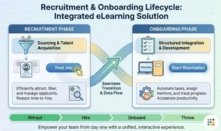
- Faster onboarding processes help new employees learn policies, systems, and operational procedures before starting full responsibilities. Structured onboarding also improves employee confidence during the first stages of employment.
- Improved multilingual workforce engagement supports employees who need training in Arabic, English, or additional languages common across UAE industries. Localised learning improves understanding and reduces communication gaps during critical training topics.
- Scalable learning infrastructure gives organisations the ability to expand training programmes without rebuilding delivery systems from the beginning. This matters for growing companies managing rapid workforce expansion across multiple Emirates.
- Centralised compliance management helps businesses monitor certifications, mandatory renewals, and regulatory learning deadlines from one platform. Automated reminders reduce the risk of missed training requirements.
Online Training Companies in UAE — Provider Profiles and Capabilities
IKHYA – eLearning Solutions Company
IKHYA is an eLearning solutions company that supports organisations across the UAE with structured digital learning and workforce training services. Our team works with businesses that need scalable online learning systems for employee development, onboarding, compliance, and operational training. We support organisations managing multilingual teams, distributed workforces, and regulated learning requirements.
We offer custom eLearning development, LMS implementation, learning strategy support, content localisation, compliance learning, and blended workforce education programmes. IKHYA provides instructional design services that align training with operational goals rather than generic course delivery. Our approach focuses on learner engagement, reporting clarity, and long-term training sustainability.
Our team has experience supporting organisations across healthcare, finance, aviation, logistics, retail, and industrial sectors operating in the UAE market. We understand the reporting, compliance, and multilingual communication requirements common across these industries. This helps us design learning systems that support both workforce performance and operational accountability.
IKHYA provides platform support across cloud LMS environments, mobile learning systems, SCORM content standards, and enterprise reporting structures. We help organisations manage user access, learner tracking, analytics, and platform integrations with internal systems. Our technology approach focuses on usability, scalability, and practical administration for internal learning teams.
We work closely with clients through structured project planning, collaborative review cycles, and transparent communication during delivery phases. Our team supports stakeholders from early strategy discussions through deployment and post-launch optimisation. This creates stronger alignment between business goals and workforce learning outcomes.
Organisations looking for online training companies in UAE often choose IKHYA because we combine instructional expertise with practical operational understanding. We support long-term workforce learning partnerships rather than one-time content production projects. Businesses can contact our team directly at info@ikhya.com to discuss project scope and training requirements.
Docebo
Docebo provides cloud-based learning management technology for enterprise organisations managing large-scale employee learning programmes. The platform supports onboarding, compliance tracking, social learning, and automation features across distributed teams. Many UAE organisations use the system for workforce education requiring strong reporting and central administration.
The company also supports integrations with HR systems and enterprise software environments. Businesses often select the platform when they need scalable learning delivery across multiple regions and departments. Its administrative tools support structured workforce learning management.
Biz Group
Biz Group delivers workforce learning and leadership development programmes across the Middle East market. The company combines classroom delivery with digital learning solutions to support blended workforce training strategies. Many organisations use its services for management capability development and professional skills training.
The company works with corporate clients across sectors that require structured employee development programmes. Its digital learning support helps organisations maintain workforce training continuity across multiple operational locations. This approach supports long-term employee capability improvement.
Edufic Digital
Edufic Digital develops eLearning content and digital learning systems for corporate and educational environments. The company supports organisations building online workforce education programmes and structured learning libraries. Its services often include instructional design and learning technology implementation.
Businesses typically work with Edufic Digital when creating digital learning experiences that support internal employee development. The company also assists organisations looking to modernise existing training systems. Its work often focuses on scalable digital delivery models.
Stylus Solutions
Stylus Solutions creates custom eLearning content designed around business processes and learner engagement goals. The company supports organisations that need interactive digital learning rather than static slide-based training formats. Many projects include simulations, assessments, and multimedia learning elements.
The company also provides localisation and instructional design services for multicultural workforce environments. Businesses often use its services for compliance education, onboarding, and product training initiatives. Its development process focuses on practical learner interaction.
TalentLMS
TalentLMS offers a cloud learning management platform used by businesses managing employee training programmes. The platform supports onboarding, assessments, certification management, and remote workforce learning. Many organisations choose the system because of its simple administration tools and flexible deployment model.
The company supports businesses that need rapid learning system implementation without complex infrastructure requirements. Its mobile-friendly learning environment helps employees access training across different work settings. This supports operational flexibility for distributed teams.
Knowledge Horizon
Knowledge Horizon provides professional learning and workforce capability development services for organisations across the region. Its services include leadership development, digital learning support, and professional education initiatives. Businesses often engage the company for structured workforce improvement programmes.
The organisation also supports blended learning delivery models that combine online education with instructor-led engagement. This helps organisations maintain learning flexibility while supporting employee interaction. Many programmes focus on practical workplace application.
Capytech
Capytech supports digital transformation initiatives that include workforce learning and technology adoption projects. The company works with organisations looking to improve employee engagement through digital systems and structured learning delivery. Many projects involve platform implementation and operational training support.
Businesses often use Capytech services during broader digital workplace initiatives. The company supports organisations modernising internal processes and workforce education strategies. Its work focuses on practical technology adoption within operational environments.
iLearn Me
iLearn Me develops online learning experiences for organisations that need structured digital course delivery systems. The company supports employee education, blended learning, and learner engagement initiatives across different sectors. Many projects focus on improving access to workforce learning resources.
The organisation also assists businesses creating scalable training programmes for distributed employee groups. Its learning systems support flexible participation across different schedules and work environments. This approach helps organisations maintain workforce education continuity.
Protraining
Protraining delivers workforce education and professional development services across technical and operational industries. Many organisations use the company for compliance-focused learning and employee certification programmes. Its training support helps businesses maintain operational readiness and workforce standards.
The company also provides digital learning options that support remote participation and flexible scheduling. Businesses often engage its services when managing recurring employee education requirements. This supports ongoing workforce capability maintenance.
How UAE Online Training Companies Compare Across Key Criteria
| Company | Main Focus | Custom Content | LMS Support | Multilingual Capability | Best Fit |
|---|---|---|---|---|---|
| IKHYA | Corporate digital learning | Yes | Yes | Strong Arabic and English support | Mid-size and enterprise organisations |
| Docebo | Enterprise LMS | Limited | Yes | Moderate | Large workforce management |
| Biz Group | Leadership and corporate learning | Yes | Partial | Moderate | Management development |
| Edufic Digital | Digital learning production | Yes | Partial | Moderate | Custom eLearning projects |
| Stylus Solutions | Interactive eLearning content | Yes | Partial | Strong | Custom workforce education |
| TalentLMS | Cloud LMS platform | Limited | Yes | Moderate | Fast deployment projects |
| Knowledge Horizon | Professional learning | Yes | Partial | Moderate | Leadership and skills training |
| Capytech | Digital transformation support | Partial | Yes | Moderate | Technology adoption projects |
| iLearn Me | Online learning delivery | Yes | Partial | Moderate | Employee learning programmes |
| Protraining | Professional certification training | Partial | Partial | Moderate | Compliance education |
Online Training Pricing in UAE — Budget Ranges and Key Cost Factors
Pricing for online training projects depends on content complexity, workforce size, multilingual requirements, reporting needs, and LMS infrastructure. Organisations should evaluate long-term operational value rather than focusing only on initial production cost. The cheapest option often creates additional expenses through weak engagement and low adoption.
| Project Type | Typical Scope | Estimated Range | Main Pricing Factors |
|---|---|---|---|
| Basic onboarding module | Single workforce training course | Low to moderate | Length, media use, assessments |
| Compliance training library | Multiple recurring courses | Moderate | Regulatory complexity, reporting |
| Custom LMS deployment | Platform implementation | Moderate to high | Users, integrations, permissions |
| Multilingual learning programme | Arabic and English delivery | Moderate to high | Localisation and review cycles |
| Enterprise workforce academy | Large-scale digital learning ecosystem | High | Departments, analytics, automation |
Organisations comparing online training companies in UAE should request detailed scope definitions before approving budgets. This helps avoid unexpected change requests and implementation delays. Businesses can contact IKHYA at info@ikhya.com for structured project discussions and pricing guidance.
The Platforms and Tools UAE Online Training Companies Use
| Tool or Platform | Primary Use | Best Fit | Adoption Level |
|---|---|---|---|
| Moodle | Open-source LMS delivery | Education and corporate learning | High |
| TalentLMS | Cloud workforce training | Mid-size organisations | High |
| Docebo | Enterprise learning management | Large organisations | High |
| Articulate 360 | eLearning content development | Interactive course production | High |
| Adobe Captivate | Simulation and software training | Technical learning projects | Moderate |
| Microsoft Teams | Virtual learning sessions | Remote workforce engagement | High |
| Zoom | Live online training | Instructor-led sessions | High |
The Online Training Delivery Process Explained Step by Step
| Phase | Key Activities | Client Involvement | Typical Duration |
|---|---|---|---|
| Discovery | Business and workforce analysis | High | 1 to 2 weeks |
| Learning strategy | Training roadmap planning | High | 1 week |
| Content planning | Curriculum and structure design | Moderate | 1 to 2 weeks |
| Instructional design | Storyboards and assessments | Moderate | 2 to 4 weeks |
| Development | Course production and testing | Moderate | 3 to 6 weeks |
| LMS configuration | User setup and reporting | Moderate | 1 to 3 weeks |
| Deployment | Launch and learner onboarding | High | 1 week |
| Ongoing support | Updates and analytics review | Moderate | Continuous |
How Different UAE Industries Use Online Training to Solve Operational Challenges
| Industry | Common Training Topics | Main Challenge | Delivery Format |
|---|---|---|---|
| Healthcare | Compliance and patient safety | Certification tracking | Mobile and LMS learning |
| Finance | Regulatory conduct training | Audit readiness | Structured LMS delivery |
| Aviation | Safety and operational procedures | Distributed workforce | Blended learning |
| Retail | Customer service onboarding | High staff turnover | Microlearning |
| Logistics | Operational safety training | Shift-based schedules | Mobile learning |
| Energy | Technical compliance education | Field workforce access | Offline-capable learning |
What Is Coming Next for Online Training in UAE Organisations
AI-Supported Learning Paths and Their Impact on Workforce Training in UAE
Artificial intelligence is changing how organisations personalise workforce learning experiences. Learning systems can now recommend training based on employee roles, assessment performance, and operational responsibilities. This reduces unnecessary training while improving relevance for learners.
Many online training companies in UAE now integrate adaptive learning features into corporate education platforms. Organisations increasingly expect smarter reporting and automated learner guidance. This trend will likely continue as businesses seek more efficient workforce development strategies.
How Mobile Workforce Expansion Is Changing UAE Training Priorities
More UAE organisations now manage employees who work remotely, travel frequently, or operate across field environments. Traditional desktop-only learning systems no longer support workforce reality in many industries. Mobile-first training design has become a practical operational requirement.
Providers are responding by simplifying learning interfaces and improving offline access capabilities. Organisations increasingly evaluate online training companies in UAE based on mobile usability and learner accessibility. Easy mobile participation directly affects completion rates and workforce engagement.
The Rise of Microlearning Among UAE Operational Teams
Microlearning delivers short lessons focused on one specific learning objective. Many operational teams now prefer five-minute modules over long classroom sessions or large digital courses. This format supports faster learning without major workflow disruption.
Organisations also find microlearning easier to update during regulatory or process changes. Short modules reduce redevelopment costs and simplify content maintenance. This approach is becoming common across logistics, retail, hospitality, and healthcare sectors.
Why Data-Driven Reporting Is Becoming a Standard Expectation in UAE Online Training
Training managers now expect stronger visibility into learner behaviour and workforce performance metrics. Simple completion tracking is no longer enough for large organisations managing complex learning programmes. Businesses want reporting linked to operational outcomes and compliance monitoring.
Online training companies in UAE increasingly support dashboard analytics, automated alerts, and learning performance insights. Better reporting helps organisations identify knowledge gaps before they create operational problems. This also improves long-term workforce planning decisions.
What to Look for When Selecting an Online Training Partner in UAE
Choosing the right online training company requires more than comparing platform features or initial pricing. Organisations should evaluate long-term operational fit, instructional quality, and implementation support before signing a contract. A provider must understand both workforce learning and practical business operations.
- Industry experience matters because regulated sectors require different reporting and compliance structures than general corporate training. Providers with sector knowledge usually reduce implementation delays and content revision cycles.
- Instructional design capability affects how well employees engage with training materials and retain information. Strong learning design improves adoption and reduces learner frustration during mandatory programmes.
- Multilingual support is important for organisations managing diverse workforces across the UAE. Arabic localisation and cultural adaptation improve learner understanding and participation.
- LMS administration quality determines how easy the platform is to manage after deployment. Complicated systems often increase workload for HR and training departments.
- Scalability planning helps organisations expand learning programmes without rebuilding infrastructure later. This becomes critical during workforce growth or regional expansion.
- Reporting and analytics support stronger compliance monitoring and workforce development planning. Reliable dashboards help organisations track training impact more effectively.
- Project communication standards affect delivery timelines, stakeholder alignment, and implementation success. Clear review processes reduce misunderstandings during production and deployment phases.
- Post-launch support ensures organisations can update content, solve technical issues, and improve learning systems over time. Ongoing support protects long-term training investment value.
Businesses comparing online training companies in UAE should request practical demonstrations, reporting examples, and implementation workflows before making a final decision. A structured evaluation process reduces project risk and improves long-term learning outcomes.
How IKHYA Approaches Online Training for Clients in UAE
IKHYA works with organisations that need structured, scalable, and practical online workforce learning systems. Our team focuses on aligning learning delivery with operational goals, compliance needs, and employee engagement requirements. We understand that workforce education must support business performance rather than operate as an isolated HR activity.
We build custom eLearning programmes that reflect real operational environments and workforce expectations in the UAE market. Our team develops multilingual learning experiences, structured onboarding systems, compliance education, and role-based employee development programmes. We also help organisations simplify learning administration through practical LMS configuration and reporting support.
IKHYA believes collaboration is essential during every training project. We involve stakeholders throughout planning, content review, deployment, and optimisation phases to maintain alignment with organisational priorities. This approach helps clients avoid disconnected learning systems that employees rarely use effectively.
Our team also supports organisations after deployment through ongoing updates, analytics reviews, learner support, and platform maintenance planning. We focus on sustainable workforce learning rather than short-term content production alone. Businesses looking for online training companies in UAE can contact IKHYA directly at info@ikhya.com for tailored guidance and project discussions.
Start Your Online Training Project With a Team That Understands UAE Workforce Learning
Organisations across the UAE now face growing pressure to improve workforce capability while maintaining operational efficiency and compliance standards. Online learning has become an important business tool rather than a secondary training option. Choosing the right partner affects employee engagement, reporting accuracy, and long-term learning sustainability.
Businesses should evaluate providers based on instructional quality, platform usability, multilingual support, and long-term service capability. A structured learning system can improve onboarding, compliance management, and workforce development across multiple departments and operational locations.
IKHYA supports organisations looking for practical and scalable online workforce learning solutions. Companies can contact the team directly at info@ikhya.com to discuss training goals, implementation priorities, and workforce education requirements.
FAQs
Related Top eLearning Companies & Solutions in the UAE
UAE organizations are adopting digital learning to support hybrid workforces, compliance training, multilingual learning, and workforce development. Businesses increasingly rely on eLearning solutions to improve onboarding, employee engagement, and operational consistency.
Explore leading eLearning providers, LMS platforms, instructional design specialists, and compliance training solutions across the UAE.
At IKHYA – eLearning Solutions Company, we design impactful, compliance-driven, and performance-focused digital learning solutions tailored to your business goals.
🎯 Custom eLearning Course Development
⚡ Rapid eLearning & PPT Conversion
📊 Workplace Compliance Training
🌍 Localization & LMS-Ready Modules