


Training Companies In France
Training companies in France play a major role in helping organisations improve workforce performance, support compliance, and prepare employees for digital change. French businesses now expect training partners to deliver measurable learning outcomes, multilingual support, and flexible delivery methods that match modern work environments.
Choosing the wrong provider can delay projects, increase employee disengagement, and create gaps in compliance reporting and workforce readiness.
IKHYA works with organisations that need practical training support in France. Contact the team at info@ikhya.com for guidance.
Why French Businesses Are Reassessing Their Training Strategy
Training companies in France now support a wider range of business goals than traditional classroom learning alone. Organisations across finance, healthcare, manufacturing, logistics, and technology sectors want training programmes that improve employee performance and reduce operational risk. Many employers also need multilingual learning support because teams often work across different regions and international offices.
The French business environment continues to change as companies adopt digital systems, remote work models, and stricter compliance processes. This shift has increased demand for training companies in France that can build flexible learning programmes with measurable outcomes. Buyers now expect providers to support classroom sessions, virtual workshops, self-paced eLearning, and blended learning within the same engagement.
Budget pressure also affects how organisations choose training providers. Decision-makers want practical learning content that employees can apply quickly at work. They also expect reporting systems that show course completion, learner engagement, and knowledge improvement without adding administrative burden to HR teams.
Another important factor is localisation. French organisations often need training adapted for language, culture, industry terminology, and regional regulations. Generic translated content rarely performs well because employees respond better to learning material designed for their working environment and compliance expectations.
Training Providers Operating Across France and Their Capabilities
- IKHYA – eLearning Solutions Company provides custom corporate training, digital learning development, LMS support, onboarding programmes, compliance learning, and blended training delivery for organisations operating in France. The company works closely with clients to build practical learning experiences that match workforce needs, regulatory expectations, and operational goals.
- CrossKnowledge supports leadership development, digital learning, and enterprise training management for large organisations. The company focuses on scalable learning experiences and online learning platforms for international teams operating across France.
- Takoma delivers training consulting, instructional design, and digital learning development services. Its work often supports technical industries, compliance-focused environments, and organisations managing complex workforce training requirements.
- Cegos provides management training, leadership programmes, compliance education, and workforce development services. The company operates across multiple sectors and supports both classroom and digital learning delivery models.
- Demos eLearning Agency develops online learning solutions, learning content, and digital workforce training programmes. The provider works with organisations seeking scalable training systems for distributed teams.
- Nell & associés focuses on learning strategy, professional training, and organisational capability development. The company supports businesses looking for tailored workforce learning support and change management training.
- Lynxonline specialises in digital learning content, eLearning production, and multimedia learning experiences. Its services often support organisations moving from traditional training to online learning delivery.
- Baber Learning works with businesses on employee engagement, soft skills development, leadership coaching, and collaborative learning programmes. The company also supports customised workshop delivery for professional teams.
- E-learning Touch develops online courses, LMS integrations, and interactive digital learning experiences for corporate training projects. The company supports multilingual learning delivery for organisations operating in different European markets.
- Speedernet provides digital learning development, technology integration, and training content support for enterprise clients. The company also supports blended learning and platform deployment projects.
How the French Training Market Continues to Develop
The Compliance Demands French Employers Cannot Ignore
Compliance training has become one of the main drivers behind demand for training companies in France. Organisations in healthcare, banking, manufacturing, and logistics sectors face strict operational requirements that employees must understand clearly. Businesses cannot rely on outdated training manuals or inconsistent onboarding practices when regulators expect documented proof of workforce competence.
Modern training providers now build reporting tools directly into learning systems. These systems track participation, assessment scores, and certification status across departments. HR teams and compliance managers use this data to prepare for audits, reduce reporting delays, and identify knowledge gaps before they create operational risk.
French organisations also need training content adapted for local labour expectations and workplace standards. A direct translation from another market rarely explains procedures clearly enough for employees working within France. Providers that understand local compliance language and operational practices usually deliver stronger learner engagement and better knowledge retention.
Another challenge is maintaining consistency across multiple locations. Large employers often manage teams in different cities and operational environments. Training companies in France help standardise learning delivery so employees receive the same guidance regardless of office or facility location.
Why Multilingual Learning Has Become Essential in France
Many organisations operating in France now manage multicultural workforces. Employees may speak French, English, Spanish, German, or Arabic depending on the sector and region. This creates a major challenge for companies trying to maintain clear communication during onboarding, technical instruction, or compliance education.
Training companies in France increasingly develop multilingual learning experiences rather than single-language programmes. This includes translated interfaces, culturally adapted examples, voice-over localisation, and region-specific case studies. Employees learn faster when examples reflect familiar workplace situations and communication styles.
Localisation also matters for customer-facing teams. Retail, hospitality, healthcare, and logistics companies need employees who understand service expectations across different audiences. Training providers that support multilingual learning help businesses maintain consistent operational standards across departments and customer groups.
Another advantage of multilingual training is stronger employee inclusion. Workers who understand learning content clearly feel more confident during onboarding and professional development programmes. This often improves participation rates and reduces confusion during operational changes.
How Hybrid Work Is Reshaping Workforce Learning
Remote and hybrid work models changed how organisations approach employee development. Businesses can no longer depend only on classroom training because many employees now work from different locations and schedules. This shift increased demand for training companies in France that can support blended learning environments.
Blended learning combines live workshops, virtual instructor-led sessions, self-paced modules, and collaborative learning activities. This structure gives employees more flexibility while still allowing organisations to maintain structured learning paths. Companies also gain better reporting visibility because digital platforms track engagement automatically.
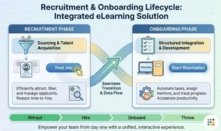
Another important factor is onboarding remote employees. New hires working from home often need stronger digital support than office-based teams. Training providers now build onboarding journeys with interactive content, guided workflows, video learning, and assessment checkpoints that help employees become productive faster.
Hybrid work also affects leadership development. Managers need training that helps them lead distributed teams, improve communication, and maintain accountability across remote environments. Training companies in France increasingly include virtual collaboration and digital leadership topics within management development programmes.
What Organisations Should Expect From a Modern Training Partner
Custom Learning Design for Operational Needs
Strong training providers do not rely only on generic course libraries. They build learning experiences around operational workflows, employee responsibilities, and industry expectations. Organisations in France increasingly expect training companies to understand how learning connects to measurable business performance.
Custom learning design often starts with interviews, workshops, and process reviews. Providers analyse workforce skill gaps, compliance obligations, and operational risks before creating training content. This approach produces more relevant learning experiences because examples, assessments, and activities match real workplace conditions.
Training design also affects learner engagement. Employees often ignore training that feels disconnected from their daily responsibilities. Providers that use role-specific scenarios, practical exercises, and realistic simulations usually achieve stronger participation and completion rates.
Another important element is scalability. Organisations need training systems that support future growth, additional departments, and changing operational requirements. Flexible learning architecture allows businesses to update content without rebuilding entire programmes from the beginning.
Learning Technology and Platform Integration
Modern workforce learning depends heavily on technology infrastructure. Many training companies in France now support LMS deployment, integration, reporting configuration, and user management services. Organisations want learning systems that connect smoothly with HR platforms and internal communication tools.
A learning management system, often called an LMS, helps organisations deliver, track, and manage training content digitally. Businesses use LMS platforms to assign courses, monitor participation, and generate compliance reports. Providers that understand both learning design and technology implementation usually deliver stronger long-term results.
Platform integration also affects employee adoption. Complicated login systems or disconnected learning portals reduce participation rates quickly. Good providers simplify the learner experience so employees can access training easily across desktop and mobile devices.
Analytics has also become a major requirement. Decision-makers want dashboards showing course completion, learner progress, assessment performance, and training impact. Clear reporting helps HR and operational leaders justify training investment and improve future learning strategies.
Instructor Support and Workforce Engagement
Even as digital learning expands, instructor support still plays an important role in workforce training. Employees often need direct interaction during leadership development, technical instruction, and collaborative workshops. Training companies in France now combine digital delivery with live facilitation to improve engagement and retention.
Strong facilitators help employees apply concepts to real work situations. They encourage discussion, answer operational questions, and guide learners through practical exercises. This interaction often improves understanding more effectively than self-paced learning alone.
Employee engagement also depends on learning structure. Long presentations and passive video sessions rarely maintain attention. Providers now use shorter learning segments, interactive assessments, group activities, and scenario-based exercises to keep learners involved throughout the programme.
Another important factor is post-training reinforcement. Many providers support follow-up sessions, coaching activities, and refresher modules after the main programme ends. This helps organisations improve long-term knowledge retention and workplace application.
What French Organisations Gain From Working With Professional Training Providers
- Consistent workforce knowledge helps employees follow the same operational procedures across offices, facilities, and departments. This reduces confusion, improves service quality, and supports stronger compliance performance throughout the organisation.
- Faster onboarding delivery allows new employees to become productive more quickly through structured learning paths and role-specific guidance. Businesses reduce training delays and lower the operational pressure placed on internal managers.
- Clear compliance reporting gives HR and compliance teams documented proof of training participation and certification completion. This helps organisations prepare for audits without relying on manual spreadsheets and fragmented records.
- Improved employee engagement comes from learning content designed around practical workplace situations and interactive delivery methods. Employees are more likely to complete programmes when training feels relevant to their responsibilities.
- Scalable learning infrastructure supports organisational growth without rebuilding training systems from the beginning. Companies can add departments, locations, and new programmes while maintaining consistent learner experiences.
- Better multilingual communication improves understanding for employees working in international or culturally diverse environments. Localised training reduces misunderstandings and supports stronger collaboration across teams.
Training Companies in France — Provider Analysis and Capabilities
IKHYA – eLearning Solutions Company
IKHYA is an eLearning solutions company that supports organisations looking for practical workforce training and digital learning services in France. Our team works with businesses across multiple sectors that need employee training aligned with operational goals, compliance requirements, and long-term workforce development plans.
We offer custom eLearning development, blended learning programmes, LMS support, onboarding systems, compliance education, and multilingual training delivery. IKHYA provides learning strategies built around employee engagement, measurable outcomes, and operational relevance rather than generic course production.
Our team supports industries such as healthcare, manufacturing, finance, retail, logistics, and professional services. We understand that organisations in France often require localised learning experiences, multilingual support, and training structures that align with European workforce expectations and compliance standards.
IKHYA also supports learning technology implementation and platform integration. We help organisations configure LMS environments, improve learner reporting, and simplify employee access across desktop and mobile devices. Our approach focuses on practical usability and long-term scalability.
We work closely with clients throughout planning, development, deployment, and post-launch support. Our project teams maintain regular communication, structured milestones, and collaborative review cycles so organisations can manage learning projects with confidence and visibility.
Businesses looking for training companies in France can contact IKHYA directly at info@ikhya.com to discuss workforce learning requirements, platform support, and custom training development needs.
CrossKnowledge
CrossKnowledge provides digital learning services and leadership development programmes for enterprise organisations operating in France. The company focuses heavily on scalable online learning delivery and workforce capability development. Its services often support multinational organisations managing large employee populations across different locations.
The provider also offers learning platforms and leadership content libraries designed for management training and professional development. Businesses seeking structured digital learning ecosystems often consider CrossKnowledge for long-term enterprise learning support.
Takoma
Takoma supports organisations with instructional design, technical learning development, and workforce training consulting. The company works with clients that require detailed learning structures for operational and compliance-focused environments. Many projects involve digital learning production and structured workforce capability programmes.
The provider also supports blended learning delivery and training transformation projects. Organisations looking to modernise legacy training systems may find Takoma suitable for structured implementation support.
Cegos
Cegos delivers professional training services across management, leadership, compliance, and workforce development categories. The company operates internationally and supports organisations in multiple business sectors throughout France. Its service portfolio includes classroom instruction, digital learning, and blended programme delivery.
The provider is often selected by organisations seeking broad training coverage and structured learning catalogues. Cegos also supports management coaching and employee skills development initiatives.
Demos eLearning Agency
Demos eLearning Agency focuses on online learning content, digital training experiences, and workforce learning systems. The company supports organisations moving from classroom-based delivery toward scalable digital learning environments. Many projects include interactive content development and LMS deployment support.
The provider also works on employee engagement strategies linked to digital learning participation. Businesses looking for scalable eLearning production often evaluate Demos eLearning Agency for enterprise learning projects.
Nell & associés
Nell & associés provides learning consulting and professional development support for organisations operating in France. The company works with businesses that need tailored workforce capability strategies and organisational learning guidance. Its services often support leadership training and employee engagement initiatives.
The provider also supports customised programme planning for organisations experiencing operational change or workforce restructuring. This approach helps align learning delivery with broader organisational objectives.
Lynxonline
Lynxonline develops digital learning content and multimedia training experiences for corporate clients. The company supports organisations looking to modernise training delivery through online learning systems and interactive content. Its work often includes visual learning production and digital course design.
The provider also supports blended learning environments and remote workforce training initiatives. Businesses seeking more engaging digital learning experiences may consider Lynxonline for creative learning development support.
Baber Learning
Baber Learning focuses on collaborative learning, employee engagement, and leadership development services. The company supports organisations seeking people-focused training approaches that encourage communication and workplace collaboration. Its programmes often combine workshops, facilitation, and coaching support.
The provider also works with teams undergoing organisational change or leadership transitions. This makes Baber Learning suitable for businesses prioritising employee communication and management capability development.
E-learning Touch
E-learning Touch develops digital learning solutions, online training content, and LMS-integrated learning experiences. The company supports organisations needing multilingual learning support and scalable online training delivery. Many projects involve interactive learning modules and remote workforce education.
The provider also supports platform integration and training accessibility across different devices. Businesses seeking flexible digital learning systems often review E-learning Touch during vendor evaluation processes.
Speedernet
Speedernet provides training technology support, digital learning development, and blended learning implementation services. The company works with enterprise organisations needing scalable workforce training systems and learning platform integration support. Its projects often involve technology-enabled learning delivery models.
The provider also supports custom content development and learning system deployment for organisations modernising employee training processes. This approach helps businesses improve learning accessibility and operational consistency.
How French Training Providers Compare Across Important Buying Criteria
| Company | Primary Focus | Learning Formats | Best Fit | Technology Support | Multilingual Capability |
|---|---|---|---|---|---|
| IKHYA | Custom corporate learning | eLearning, blended, virtual, classroom | Mid-size and enterprise organisations | Strong LMS and integration support | High |
| CrossKnowledge | Leadership and enterprise learning | Digital and blended learning | Large international businesses | Advanced platform support | High |
| Takoma | Technical and compliance training | Digital and blended delivery | Operational industries | Strong | Moderate |
| Cegos | Professional workforce training | Classroom and digital | General corporate learning | Moderate | High |
| Demos eLearning Agency | Digital learning development | Online and blended | Scalable eLearning projects | Strong | Moderate |
| Nell & associés | Learning consulting | Workshop and blended | Organisational development | Moderate | Moderate |
| Lynxonline | Multimedia learning | Digital learning | Interactive content projects | Strong | Moderate |
| Baber Learning | Leadership and collaboration | Workshop and coaching | People development | Basic | Moderate |
| E-learning Touch | Online training systems | eLearning and remote delivery | Distributed workforces | Strong | High |
| Speedernet | Learning technology | Blended and digital | Technology-enabled learning | Strong | Moderate |
Training Project Costs in France and What Influences Pricing
Training companies in France usually price projects based on learning complexity, delivery format, localisation needs, technology requirements, and learner volume. Businesses should evaluate both initial project costs and long-term maintenance expenses before selecting a provider.
| Project Type | Typical Scope | Estimated Range | Main Pricing Factors |
|---|---|---|---|
| Basic onboarding modules | Short digital learning content | Low to moderate | Course length and media production |
| Compliance training programmes | Multi-module structured learning | Moderate | Assessment requirements and reporting |
| Leadership development | Blended workshops and coaching | Moderate to high | Facilitation and customisation |
| Technical workforce training | Role-specific operational learning | High | Complexity and industry regulation |
| LMS implementation | Platform deployment and integration | Moderate to high | User volume and integration scope |
| Multilingual training projects | Localised learning experiences | High | Translation and localisation depth |
Organisations seeking pricing guidance for training projects in France can contact IKHYA at info@ikhya.com.
The Platforms and Systems Used by Training Companies in France
| Tool or Platform | Primary Use | Best Fit | Adoption Level |
|---|---|---|---|
| Moodle | Learning management | Customisable workforce learning | High |
| Articulate 360 | eLearning authoring | Interactive course development | High |
| Adobe Captivate | Simulation-based learning | Technical training | Moderate |
| Docebo | Enterprise LMS | Large workforce learning | Moderate |
| Microsoft Teams | Virtual workshops | Hybrid workforce collaboration | High |
| Cornerstone | Talent and learning management | Enterprise HR integration | Moderate |
How a Professional Training Engagement Usually Progresses
| Phase | Key Activities | Client Involvement | Typical Duration |
|---|---|---|---|
| Discovery | Business analysis and interviews | High | 1 to 2 weeks |
| Learning strategy | Programme planning and scope definition | High | 1 week |
| Content planning | Learning architecture and outline creation | Moderate | 1 to 2 weeks |
| Design | Storyboard and interface development | Moderate | 2 to 4 weeks |
| Development | Content production and LMS preparation | Low to moderate | 3 to 6 weeks |
| Review | Stakeholder testing and revisions | High | 1 to 2 weeks |
| Deployment | Launch and learner onboarding | Moderate | 1 week |
| Evaluation | Reporting and improvement planning | Moderate | Ongoing |
How Different Industries in France Use Workforce Training
| Industry | Common Training Topics | Main Challenges | Preferred Delivery Format |
|---|---|---|---|
| Healthcare | Compliance and patient safety | Regulatory pressure | Blended learning |
| Manufacturing | Operational safety and systems | Workforce consistency | On-site and digital |
| Finance | Compliance and data protection | Audit readiness | Digital learning |
| Retail | Customer service and onboarding | High staff turnover | Mobile learning |
| Technology | Software adoption and leadership | Rapid change | Virtual learning |
| Logistics | Safety and operational training | Distributed workforce | Blended delivery |
How Workforce Learning in France Is Continuing to Change
Artificial Intelligence and Its Growing Role in Workforce Learning
Artificial intelligence is starting to influence how training companies in France design and manage learning experiences. Organisations increasingly use AI-supported systems to personalise learning recommendations, automate reporting, and identify employee knowledge gaps. This allows HR teams to target training more accurately rather than assigning identical learning paths to every employee.
AI also supports content management and learner analytics. Training managers can monitor participation patterns and identify where employees struggle during assessments. This information helps organisations improve training structure and provide additional support before operational mistakes occur.
Another important development is adaptive learning. Some platforms now adjust training difficulty and content sequencing based on learner performance. Employees receive more relevant guidance while organisations improve training efficiency and reduce unnecessary learning repetition.
Businesses evaluating training companies in France increasingly ask providers about AI readiness and reporting capability. Providers that understand responsible AI integration may become more attractive to organisations planning long-term digital learning strategies.
How Mobile Learning Is Changing Employee Participation
Employees increasingly expect training access through mobile devices because work schedules have become more flexible and distributed. Mobile learning allows workers to complete short training sessions during travel, shift changes, or remote work periods. This flexibility improves participation for industries with non-traditional schedules.
Training companies in France now design learning experiences specifically for smartphones and tablets rather than shrinking desktop content to smaller screens. Effective mobile learning uses shorter modules, touch-friendly navigation, and focused assessments that fit real employee usage behaviour.
Mobile learning also supports frontline workers who rarely use desktop systems. Retail, logistics, and manufacturing employees often benefit from quick-reference learning tools and microlearning formats delivered through mobile platforms.
Another advantage is faster content distribution. Organisations can update procedures, compliance guidance, or operational instructions quickly without scheduling large classroom sessions. This improves workforce responsiveness during policy or process changes.
The Rise of Data-Driven Learning Decisions in French Organisations
Training investment decisions increasingly depend on measurable performance data. Organisations no longer want training programmes that operate without clear visibility into outcomes and workforce impact. Training companies in France now face greater pressure to provide reporting systems linked to operational performance indicators.
Learning analytics helps businesses identify which programmes improve employee performance and which areas require adjustment. HR teams use dashboards to monitor course completion, learner engagement, assessment scores, and certification status across departments.
Another important development is linking learning performance to broader business outcomes. Organisations increasingly compare training participation against productivity, retention, customer service, or compliance performance metrics. This creates stronger accountability for workforce learning investment.
Providers that support meaningful reporting and strategic learning analysis are becoming more valuable to enterprise clients. Decision-makers want evidence that training contributes directly to workforce capability improvement rather than acting as an isolated HR activity.
Why Personalised Learning Is Becoming a Standard Expectation
Employees now expect learning experiences that match their role, responsibilities, and career goals. Generic training libraries often create low engagement because learners struggle to see practical relevance. Training companies in France increasingly build role-specific learning journeys that align with employee responsibilities.
Personalised learning may include customised learning paths, targeted assessments, adaptive modules, and role-based recommendations. This approach helps employees focus on skills directly connected to their work instead of completing unnecessary content.
Organisations also use personalised learning to support career progression and workforce retention. Employees often remain more engaged when training supports professional growth rather than basic compliance alone. This is especially important in competitive labour markets where retention challenges affect operational stability.
Providers capable of managing personalised learning at scale may become more attractive to larger organisations. Businesses increasingly want learning systems that combine flexibility with measurable workforce development outcomes.
What Businesses Should Assess Before Selecting a Training Provider in France
Choosing between training companies in France requires more than reviewing sales presentations and sample content. Organisations should evaluate operational fit, industry understanding, technology capability, and long-term support before signing a contract.
- Industry experience helps providers understand operational language, compliance expectations, and workforce challenges specific to your sector. This reduces onboarding time and improves training relevance from the start of the engagement.
- Learning technology capability affects reporting quality, user experience, and integration success with existing HR systems. Organisations should confirm platform compatibility and long-term support availability before deployment.
- Localisation support matters for businesses managing multilingual or multicultural teams. Providers should explain how they adapt content beyond direct translation to improve learner understanding.
- Project management structure determines communication quality and delivery reliability throughout the engagement. Clear milestones, review cycles, and escalation processes reduce delays and confusion.
- Instructional design quality influences learner engagement and knowledge retention. Buyers should request examples showing practical scenarios, assessment methods, and role-specific learning design.
- Scalability planning becomes important when organisations expect workforce growth or future training expansion. Flexible learning systems reduce the need for major redevelopment later.
- Post-launch support helps organisations maintain learning performance after deployment. Providers should explain how they manage updates, reporting support, and learner feedback processes.
- Measurement and reporting allows organisations to evaluate workforce learning impact clearly. Buyers should confirm which analytics, dashboards, and performance insights the provider can deliver.
Organisations that evaluate providers carefully often achieve stronger learning outcomes, smoother implementation, and better workforce engagement over the long term.
How IKHYA Supports Organisations Looking for Training Services in France
IKHYA works with organisations that need practical workforce training solutions aligned with operational performance and employee development goals. Our team supports businesses seeking flexible learning delivery models that combine digital learning, instructor support, and measurable reporting.
We approach every project by understanding business priorities, workforce challenges, and learner expectations before development begins. This allows us to create training experiences that employees can apply directly within their daily responsibilities.
IKHYA also supports organisations that need multilingual learning delivery and scalable training systems across distributed teams. We help clients improve onboarding, compliance learning, technical instruction, and leadership development through structured learning strategies.
Our team focuses on communication and collaboration throughout every engagement. We maintain transparent project planning, review cycles, and implementation support so clients understand progress clearly at each stage.
Businesses looking for training companies in France that combine learning strategy, technology support, and custom development can contact IKHYA at info@ikhya.com.
Start Planning Your Workforce Training Strategy in France
Organisations across France continue to invest in workforce learning because employee capability directly affects operational performance, compliance readiness, and customer experience. Choosing the right training partner requires careful evaluation of industry expertise, delivery capability, technology support, and long-term collaboration potential.
Training companies in France vary significantly in their strengths, delivery models, and service focus. Some providers specialise in leadership development, while others focus on compliance learning, digital training systems, or multilingual workforce education. Buyers should align provider capability with operational priorities rather than selecting based on brand visibility alone.
Businesses that want guidance on workforce learning strategy, digital training development, or blended learning implementation can contact IKHYA directly at info@ikhya.com for a detailed discussion.
FAQs
Related Top eLearning Companies & Solutions in France
France organizations are adopting digital learning to support hybrid workforces, compliance training, multilingual learning, and workforce development. Businesses increasingly rely on eLearning solutions to improve onboarding, employee engagement, and operational consistency.
Explore leading eLearning providers, LMS platforms, instructional design specialists, and compliance training solutions across France.
At IKHYA – eLearning Solutions Company, we design impactful, compliance-driven, and performance-focused digital learning solutions tailored to your business goals.
🎯 Custom eLearning Course Development
⚡ Rapid eLearning & PPT Conversion
📊 Workplace Compliance Training
🌍 Localization & LMS-Ready Modules