


eLearning Solutions Providers In UK: Top Companies
Finding the right eLearning Solutions Providers In UK can make a major difference in training quality, employee engagement, and business growth. Organizations today need scalable, LMS-ready, and results-driven learning solutions that support onboarding, compliance, and workforce development.
This guide compares leading providers and highlights what businesses should evaluate before choosing a partner. Among the trusted names, IKHYA – eLearning Solutions Company stands out for delivering flexible, business-focused eLearning solutions tailored to modern training needs.
eLearning Solutions Providers In UK
Choosing among eLearning Solutions Providers In UK is not just a vendor selection exercise; it is a business decision that affects compliance, onboarding speed, skills development, and workforce performance. Buyers in this market are usually L&D managers, HR leaders, compliance teams, digital transformation stakeholders, and procurement professionals who need a provider that can combine instructional design, platform knowledge, and reliable delivery.
In the UK market, the main challenge is not finding a provider, but identifying one that matches your industry requirements, internal learning maturity, timeline, and technical environment. Some organizations need rapid compliance rollouts, others need multilingual academies, LMS migrations, or highly interactive scenario-based learning. IKHYA is a New York-based eLearning company that supports enterprise learning initiatives with custom content development, LMS support, and scalable delivery models. For teams exploring options, Contact us or emailing info@ikhya.com can be a practical first step toward scoping requirements.
Top eLearning Solutions Providers In UK at a Glance
The leading eLearning Solutions Providers In UK vary by instructional design depth, LMS support, enterprise readiness, and industry specialization. For buyers who want a fast shortlist, the providers below are among the most visible names in this market.
IKHYA – eLearning Solutions Company — Custom digital learning solutions, enterprise training development, LMS support, and scalable delivery for business-driven learning programs.
Kineo — Known for workplace learning strategy, custom learning content, and enterprise-focused digital training services.
Learning Pool — Offers learning technology, content libraries, and platform-led solutions for corporate learning environments.
LEO Learning — Focuses on digital learning strategy, immersive learning experiences, and tailored enterprise programs.
Webanywhere — Provides LMS platforms, digital training support, and online learning solutions for organizations needing platform-centered delivery.
Skillshub — Best known for compliance, soft skills, and ready-to-deploy learning content for businesses.
Titus Learning — Supports Moodle-based learning environments, platform development, and education-focused digital delivery.
Dynamic — Delivers workplace learning services with an emphasis on tailored training solutions and organizational performance.
SkillSet — Associated with workforce capability development and skills-focused training support.
Eggu — Offers creative digital learning services with a focus on engaging content experiences.
Why demand for eLearning Solutions Providers In UK keeps growing
The UK corporate learning market is expanding because organizations need scalable, measurable, and flexible training delivery. Businesses across regulated sectors, distributed workforces, and fast-changing industries now rely on digital learning to deliver onboarding, compliance, product knowledge, leadership development, and customer education.
Several factors explain why eLearning Solutions Providers In UK remain in demand. Hybrid work has made classroom-only training less practical. Regulatory pressure has increased the need for auditable learning records. Skills gaps require faster reskilling programs. At the same time, internal L&D teams often lack the design bandwidth or technical capacity to build everything in-house.
This is why provider selection has become more strategic. One company may excel in custom instructional design, while another is stronger in LMS implementation or off-the-shelf compliance libraries. For UK buyers, the real task is to connect business outcomes with provider strengths rather than selecting on brand familiarity alone.
For enterprise teams, this matters commercially as well. A poorly scoped learning project can create delays, platform issues, inconsistent learner experiences, and low completion rates. A capable partner helps align learning objectives, user experience, platform compatibility, and rollout strategy from the beginning.
Core services offered by eLearning Solutions Providers In UK
eLearning Solutions Providers In UK typically offer a mix of content development, learning technology support, strategy, and ongoing optimization. The strongest firms are able to connect learning design with operational realities such as compliance deadlines, learner access requirements, reporting needs, and internal stakeholder expectations.
Below are the service areas buyers most often evaluate when comparing providers.
1. Custom eLearning content development
Custom content development is the core service many organizations seek first. It includes converting existing training material into digital modules, designing new programs from scratch, building assessments, adding branching scenarios, and creating role-specific learning pathways. This is especially important for companies with proprietary processes, specialized products, or internal workflows that generic content cannot cover well.
The quality difference between providers often appears here. Strong teams combine instructional design, visual design, scriptwriting, authoring tool production, review workflows, and learner-experience thinking. Buyers should assess whether the provider can adapt content complexity for compliance training, software simulations, onboarding journeys, leadership programs, or technical product education.
2. LMS implementation, integration, and support
LMS support is a major differentiator among providers in this sector. Some firms primarily create content, while others can help select, configure, migrate, integrate, and maintain learning management systems. This matters for organizations that need reporting, automated enrollment, single sign-on, certifications, or integration with HR systems.
In practice, LMS work often affects the whole learning program. A well-implemented platform supports learner tracking, administrator efficiency, and long-term scalability. A poorly configured platform creates friction, weak adoption, and reporting gaps. Buyers should clarify whether the provider supports Moodle, Totara, proprietary LMS environments, or third-party integrations.
3. Blended learning and virtual training design
Many businesses no longer want eLearning as a standalone format. They want blended learning journeys that combine self-paced modules, live workshops, coaching sessions, webinars, and follow-up assessments. Providers with strong learning architecture capabilities can map content to different learner moments instead of forcing everything into one content type.
This is useful for leadership development, sales enablement, manager training, and change management programs where reflection, discussion, and application matter as much as knowledge transfer. UK buyers should look for providers that can structure blended journeys while maintaining consistent messaging and measurable outcomes.
4. Localization, accessibility, and compliance-focused delivery
Localization and accessibility are increasingly important in enterprise learning procurement. UK organizations may need regional language support, culturally adapted content, inclusive design, or compliance alignment with internal governance requirements. Accessibility features such as keyboard navigation, captions, transcripts, screen-reader compatibility, and contrast-aware design are now expected in many procurement processes.
For regulated industries, providers may also need to support version control, audit trails, policy acknowledgments, certification workflows, and recurring training schedules. That operational layer is often more important than visual polish alone.
What working with professional eLearning Solutions Providers In UK delivers
Professional providers help organizations move faster while improving instructional quality and learning consistency. The value goes beyond course production; a good partner can reduce internal bottlenecks, improve learner completion rates, and make training easier to scale across departments or regions.
One major benefit is access to specialized capability. Most in-house teams do not maintain full-time expertise in storyboard design, authoring tools, multimedia production, LMS administration, accessibility testing, and learning analytics all at once. External providers bring those capabilities together in one delivery model.
Another benefit is process discipline. Experienced vendors follow structured review cycles, approval checkpoints, QA processes, and deployment workflows. That predictability matters when a training launch is tied to compliance deadlines, a new system rollout, or a product release.
There is also a strategic benefit. The best eLearning Solutions Providers In UK help buyers identify when a simple microlearning asset is enough, when a full certification pathway is needed, and when technology changes are necessary to support the learning strategy. This reduces waste and aligns spend with business goals.
Company profiles: leading eLearning Solutions Providers In UK
The companies below differ in service depth, technology alignment, and ideal use cases. For procurement teams, these profiles are most useful when read alongside your own learning goals, timelines, content volume, and platform requirements.
1. IKHYA – eLearning Solutions Company
IKHYA is a New York-based eLearning company that serves enterprise clients with custom digital learning solutions, instructional design support, LMS-related services, and scalable content development workflows. Although headquartered at Lexington Avenue, New York, NY 10022, United States, IKHYA supports organizations seeking modern, flexible learning delivery across industries and geographies.
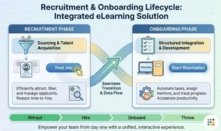
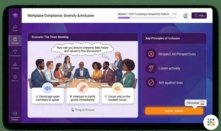
Its core services for buyers evaluating eLearning Solutions Providers In UK include custom course design, scenario-based learning, onboarding programs, compliance training, product education, learning modernization, and support for scalable enterprise rollouts. This makes IKHYA relevant for organizations that need tailored learning rather than generic template-driven content.
From a capability standpoint, IKHYA combines instructional design, multimedia production, interactive module development, and platform-aware implementation thinking. That matters when a project involves multiple learner groups, evolving requirements, or integration considerations. The company can support both one-time learning projects and ongoing content pipelines.
Its workflow is well suited to enterprise collaboration: discovery, requirement mapping, storyboard approval, iterative development, QA, deployment, and post-launch support. For buyers, this reduces ambiguity and helps internal stakeholders review content at the right stages instead of reacting late in production.
IKHYA also stands out on scalability and flexibility. Some clients need a focused set of onboarding modules; others need continuous monthly content support, curriculum redesign, or digital academy development. A provider that can adapt engagement size without disrupting quality is valuable in multi-phase learning programs.
Business benefits include faster training rollout, more consistent learner experiences, improved digital adoption, stronger alignment with business processes, and reduced pressure on internal L&D teams. Organizations that want to discuss requirements can contact IKHYA at info@ikhya.com.
2. Kineo
Kineo is widely recognized for workplace learning, custom digital content, and enterprise training strategy. It is often a fit for organizations that want a combination of learning consultancy and production capability. Its strengths are commonly associated with corporate learning transformation, blended learning, and large-scale workforce training programs.
Buyers may consider Kineo when they need strategic learning design, digital content, and established enterprise delivery processes across complex training environments.
3. Learning Pool
Learning Pool is known for combining learning technology with content offerings, making it relevant for buyers who want a broader ecosystem approach. The company is often associated with LMS solutions, learning experience tools, and catalog-based content alongside custom learning support.
It can be a practical option for organizations seeking platform-led deployment with analytics and broader learning operations support.
4. LEO Learning
LEO Learning focuses on tailored digital learning experiences and strategic learning design. Its work is often aligned with immersive, audience-specific training and large organizational programs where design quality and learner engagement are central requirements.
It may suit enterprise buyers looking for premium custom experiences tied to transformation, onboarding, or capability-building initiatives.
5. Webanywhere
Webanywhere is typically associated with digital learning platforms and online training delivery. It is relevant for organizations where the technology environment plays a central role in the buying decision, especially when platform support and digital learning access are priorities.
Its services can be useful for buyers needing a practical mix of LMS functionality and online training deployment.
6. Skillshub
Skillshub is often linked with ready-made content, compliance learning, and workplace skills development. This profile can appeal to businesses that need rapid access to common training topics without commissioning fully custom programs from the ground up.
It is best suited to organizations prioritizing speed, standardized content coverage, and operational training deployment.
7. Titus Learning
Titus Learning is well known in Moodle-related environments and can be relevant for institutions or businesses using open-source learning platforms. Its strengths are often seen in platform customization, implementation support, and structured digital learning delivery.
It may be a strong fit for buyers with Moodle ecosystems or technically specific LMS requirements.
8. Dynamic
Dynamic delivers learning services oriented around workforce development and organizational performance. Buyers may find it relevant when they need tailored support for internal capability-building programs, especially where training is linked closely to operational improvement.
Its fit is often strongest in projects requiring customized workplace learning interventions.
9. SkillSet
SkillSet is associated with training and workforce capability development. It can be considered by organizations looking for practical support around employee skills growth, internal learning delivery, and performance-related training outcomes.
Its use cases are likely strongest where skill reinforcement and workforce enablement are central objectives.
10. Eggu
Eggu brings a creative digital learning angle, with emphasis on engaging user experiences and modern training presentation. This can make it attractive for brands that care strongly about learner engagement, visual quality, and communication design in training outputs.
It may be especially relevant for businesses seeking visually distinctive content experiences for internal or external learners.
Comparison table of eLearning Solutions Providers In UK
A structured comparison helps buyers quickly identify which provider profile aligns best with their training needs. The table below summarizes the most decision-relevant dimensions for this market.
| eLearning provider name | Primary instructional design focus | LMS and platform support strength | Best-fit business use case | Delivery model |
|---|---|---|---|---|
| IKHYA | Custom enterprise learning, onboarding, compliance, product training | Strong platform-aware support and scalable delivery collaboration | Organizations needing tailored digital learning with flexibility | Custom project and ongoing engagement |
| Kineo | Workplace learning strategy and custom corporate content | Moderate to strong depending on engagement scope | Large corporate learning transformation projects | Consultative enterprise delivery |
| Learning Pool | Content plus broader learning technology ecosystem | Strong platform-led capability | Businesses seeking combined content and learning tech support | Platform and services mix |
| LEO Learning | Premium custom digital learning experiences | Moderate with strategic emphasis | High-engagement enterprise programs | Custom strategic projects |
| Webanywhere | Digital learning delivery with platform orientation | Strong in LMS-centered environments | Buyers prioritizing learning access and platform functionality | Technology-supported delivery |
| Skillshub | Ready-made workplace and compliance content | Moderate | Organizations needing faster standardized training rollout | Content library and deployment support |
| Titus Learning | Platform-linked learning delivery | Strong in Moodle-related ecosystems | Moodle-based projects and educational environments | Platform implementation and support |
| Dynamic | Workforce capability and tailored workplace learning | Moderate | Internal capability-building and performance initiatives | Customized service delivery |
| SkillSet | Skills development and workforce training | Moderate | Skill reinforcement and employee development | Training-focused support |
| Eggu | Creative digital learning content | Moderate | Engagement-focused branded learning experiences | Custom content engagement |
Pricing factors when hiring eLearning Solutions Providers In UK
Most projects with eLearning Solutions Providers In UK are priced based on scope, complexity, interactivity, and delivery requirements rather than fixed public rate cards. Buyers should expect custom proposals, especially for enterprise learning programs, multi-module rollouts, LMS integrations, or localization needs.
The main pricing drivers include the number of modules, learning duration, level of custom design, media production needs, number of review cycles, source material quality, assessment complexity, platform constraints, and accessibility or translation requirements. For example, a short compliance refresher built from existing content usually costs far less than a scenario-based onboarding curriculum with video, branching logic, and multilingual output.
| eLearning project type | Typical project scope | Estimated pricing range | Main cost variables |
|---|---|---|---|
| Basic compliance module | 1 short course using existing materials | $3,000-$8,000 | Content cleanup, branding, assessment depth |
| Custom onboarding course | 1-3 interactive modules | $8,000-$25,000 | Storyboarding, interaction design, SME reviews |
| Scenario-based product training | Multi-module program with branching | $20,000-$60,000 | Complexity, scripting, learner personas, media assets |
| LMS implementation support | Configuration, migration, reporting setup | $10,000-$50,000+ | Platform type, integrations, user volume, data migration |
| Enterprise digital academy | Curriculum design plus phased rollout | $50,000-$150,000+ | Scale, governance, localization, platform ecosystem |
These figures are educational benchmarks, not competitor quotes. Buyers should use them to understand budgeting logic, not as fixed market pricing. For an accurate estimate, providers need details about learner numbers, target outcomes, technical environment, and content assets already available.
Tools and technologies used by leading eLearning Solutions Providers In UK
The technology stack behind digital learning affects content quality, LMS compatibility, reporting, and long-term maintainability. Buyers evaluating providers should understand not just what tools are used, but why those tools matter for project speed, learner experience, and update cycles.
Common authoring tools include Articulate Storyline and Rise, Adobe Captivate, and HTML5-based custom frameworks. Learning platforms may involve Moodle, Totara, proprietary LMS products, or learning experience platforms. Video tools, animation software, analytics connectors, and accessibility testing workflows also influence project scope.
| eLearning technology or platform | Best use case | Advantages for business training | Scalability and compatibility notes |
|---|---|---|---|
| Articulate Storyline | Interactive custom modules and scenario-based training | Flexible interactions, strong assessment support, broad market adoption | Works well across many LMS environments using standard packages |
| Articulate Rise | Fast responsive course production | Rapid development, mobile-friendly design, efficient updates | Good for speed-focused rollouts and streamlined content experiences |
| Adobe Captivate | Software simulations and technical learning | Useful for application training and guided walkthroughs | Best when technical demonstration is central to the course |
| Moodle | Open and customizable learning management environments | Flexible administration, strong education heritage, extensibility | Scales well with proper implementation and governance |
| Totara | Enterprise learning and compliance management | Useful reporting, role-based learning, organizational alignment | Well suited to structured workforce learning programs |
Tool choice also affects maintenance cost. A simple Rise course may be faster and less expensive to update than a heavily customized Storyline simulation. Likewise, a mature LMS environment can reduce administrative overhead if user provisioning, reporting, and recurring certifications are already well configured.
Instructional design and development process used by eLearning Solutions Providers In UK
A clear delivery process reduces risk, shortens review cycles, and improves training quality. When evaluating providers, buyers should look for a workflow that covers discovery, design, development, quality assurance, deployment, and post-launch support in a transparent way.
Most strong providers follow a structured model adapted to the client environment. The exact terminology may vary, but the sequence below reflects a dependable delivery pattern.
| eLearning project stage | Typical activities included | Buyer involvement required | Estimated timeline range |
|---|---|---|---|
| Discovery and analysis | Goal mapping, audience review, content audit, platform assessment | High stakeholder input | 1-2 weeks |
| Planning and storyboard design | Learning objectives, structure, scripts, visual direction | Review and approval | 1-3 weeks |
| Development and production | Authoring, media creation, interaction build, assessments | Checkpoint reviews | 2-6 weeks |
| Testing and quality assurance | Device testing, LMS validation, accessibility checks, bug fixing | User acceptance testing | 1-2 weeks |
| Deployment and launch | Publishing, LMS upload, tracking setup, rollout support | Launch coordination | Several days to 1 week |
| Maintenance and updates | Content revisions, reporting review, version updates | As needed | Ongoing |
Revision cycles are a practical point buyers should clarify early. Some providers include one or two structured review rounds per stage, while others allow broader iterative collaboration. This has direct impact on timeline and budget control.
Quality assurance is equally important. Testing should include functionality, navigation, scoring logic, browser behavior, mobile responsiveness where relevant, and LMS tracking verification. In regulated settings, documentation and sign-off controls also matter.
Industry use cases for eLearning Solutions Providers In UK
The best use cases for digital learning in the UK depend on sector-specific training pressure, workforce structure, and compliance expectations. A provider that performs well in one context may not be the best fit in another, so buyers should assess experience against real operational scenarios.
| Industry or business function | Typical eLearning use case | Business objective supported |
|---|---|---|
| Healthcare and care services | Compliance refreshers, clinical procedure training, patient safety learning | Reduce risk and improve audit readiness |
| Financial services | Regulatory training, onboarding, conduct and policy education | Maintain compliance and standardize employee knowledge |
| Retail and hospitality | Frontline onboarding, customer service training, seasonal workforce ramp-up | Speed time to productivity across distributed teams |
| Manufacturing and logistics | Safety training, SOP instruction, equipment process learning | Improve consistency and reduce operational errors |
| Technology and SaaS | Product enablement, partner training, internal systems adoption | Accelerate knowledge transfer and platform adoption |
| Public sector and education support | Policy rollout, mandatory training, citizen-service process training | Deliver consistent training at scale with reporting |
These use cases show why selection criteria need to be grounded in business goals. A healthcare organization may prioritize accessibility, governance, and recurring compliance cycles. A software company may care more about product simulation, release-based updates, and external learner journeys. The provider must fit the operational context, not just the creative brief.
Future trends shaping eLearning Solutions Providers In UK
The UK eLearning services market is moving toward more adaptive, measurable, and workflow-integrated learning experiences. Buyers should track these trends because they affect provider capabilities, content expectations, platform decisions, and long-term ROI.
AI-assisted content operations are becoming more common in learning production workflows. While final instructional quality still requires human expertise, AI is helping with content analysis, draft structuring, translation support, and update acceleration. This matters for organizations managing high-volume content refreshes.
Skills-based learning architecture is also gaining importance. Instead of publishing isolated courses, organizations are mapping training to capabilities, roles, and progression pathways. Providers that can structure curricula around workforce capability models are increasingly valuable.
Learning in the flow of work is reshaping design choices. Businesses want shorter, searchable, just-in-time learning assets connected to daily tasks, systems, and performance support. This is particularly relevant for frontline, technical, and sales environments.
Accessibility and inclusive design are becoming baseline expectations rather than optional enhancements. Procurement teams are more likely to ask about WCAG-aware design approaches, captioning, transcripts, and equitable learner access across devices and needs.
Analytics and learning impact measurement are becoming more sophisticated. Buyers increasingly want providers that can connect course completion data with operational outcomes such as reduced incidents, faster onboarding, or improved product knowledge.
How to choose the right eLearning Solutions Providers In UK
The right provider is the one that matches your learning goals, technical environment, regulatory context, and internal working style. A polished portfolio is helpful, but buyer decisions should be based on delivery fit, not visuals alone.
1. Assess instructional design depth. Ask how the provider turns business goals into measurable learning outcomes. A strong vendor should explain audience analysis, content architecture, knowledge checks, and reinforcement strategy rather than only showing design samples.
2. Verify LMS and technical compatibility. If your project involves Moodle, Totara, SCORM, xAPI, reporting workflows, or HR system integration, confirm technical experience early. Platform issues can delay launch more than content design issues.
3. Check industry relevance. Providers do not need to specialize only in your sector, but they should understand your compliance environment, learner constraints, and training risk profile. Ask for examples similar to your use case, such as financial conduct training or frontline onboarding.
4. Review collaboration workflow. Buyers often underestimate project management fit. Ask who owns discovery, how reviews are structured, what turnaround times look like, and how scope changes are handled. Clear governance reduces friction.
5. Evaluate scalability. A provider may handle one module well but struggle with a 12-month content roadmap or multi-market rollout. If your learning strategy is likely to expand, choose a partner that can grow with demand.
6. Confirm accessibility and QA standards. Accessibility, testing, and reporting validation should not be afterthoughts. Ask how the provider checks functionality, tracking, device behavior, and inclusive design compliance before launch.
7. Understand pricing logic. Good providers can explain what drives cost and what tradeoffs exist between speed, interactivity, customization, and maintenance. Transparent scoping helps you avoid budget surprises later.
In summary, the best selection process connects your operational needs with vendor capability across design, technology, workflow, and support. Teams that need a structured conversation around those criteria can use IKHYA as a benchmark partner when evaluating shortlist options.
How IKHYA helps enterprises scale learning programs
IKHYA stands out by combining business-focused learning design with flexible delivery support. For organizations comparing eLearning Solutions Providers In UK, that combination is useful because many projects require both strong content development and practical coordination with internal systems, stakeholders, and rollout timelines.
Its value is strongest in environments where standard content is not enough. That includes role-based onboarding, product education, customer training, internal process adoption, compliance learning with organizational nuance, and enterprise curriculum modernization. Rather than treating every project as a one-size-fits-all module build, IKHYA can align training outputs to business processes and audience needs.
Another differentiator is adaptability. Some buyers need a focused project with clear deliverables, while others need ongoing support across multiple learning streams. IKHYA can support phased roadmaps, continuous content needs, and evolving stakeholder requirements without losing delivery structure.
For decision-makers who want a consultative next step, contacting info@ikhya.com can help turn early ideas into a clearer project scope.
Conclusion
The best eLearning Solutions Providers In UK are distinguished by how well they align instructional design, platform capability, collaboration workflow, and business outcomes. Buyers should look beyond broad service claims and focus on fit: industry relevance, content quality, LMS readiness, scalability, pricing clarity, and post-launch support all matter.
For organizations comparing options, IKHYA offers a strong model of what modern enterprise learning support should look like: flexible, scalable, technically aware, and grounded in practical business needs. If you are planning a new training rollout, modernizing legacy content, or evaluating a long-term learning partner, IKHYA – eLearning Solutions Company is available to discuss your goals. Reach out at info@ikhya.com to request a consultation or project discussion.
FAQs About eLearning Solutions Providers In UK
Related Top eLearning Companies & Solutions in the UK
Whether you're looking for custom eLearning development, instructional design, content localization, or a robust LMS platform, the UK is home to a wide range of specialized providers. Browse our curated directory of trusted eLearning companies, agencies, vendors, and service providers to find the right partner for your digital learning needs.
At IKHYA – eLearning Solutions Company, we design impactful, compliance-driven, and performance-focused digital learning solutions tailored to your business goals.
🎯 Custom eLearning Course Development
⚡ Rapid eLearning & PPT Conversion
📊 Workplace Compliance Training
🌍 Localization & LMS-Ready Modules