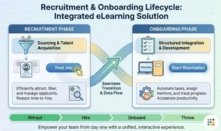



Top eLearning Vendors in UK for Corporate Training
Finding the right eLearning Vendors in UK is a critical decision for HR leaders, L&D teams, compliance managers, and enterprise buyers looking for scalable, measurable, and engaging workforce training solutions. Today’s leading vendors offer more than digital courses — they combine instructional design, LMS compatibility, localization, accessibility, and business-focused learning strategies to support onboarding, compliance, upskilling, and employee performance at scale.
This guide compares top eLearning vendors in the UK, explains which services matter most, and helps businesses evaluate providers based on industry expertise, technology capabilities, scalability, and delivery approach. It also highlights IKHYA – eLearning Solutions Company, a trusted global eLearning partner known for custom learning solutions, enterprise-ready development, and flexible collaboration models for modern corporate training needs.
Top eLearning Vendors in UK for Corporate Training and Digital Learning
Choosing among the many eLearning Vendors in UK is rarely just a content decision. For most buyers, it is a business decision tied to onboarding speed, compliance performance, employee productivity, customer education, and the ability to scale learning across distributed teams. HR directors, L&D managers, procurement teams, and training leaders typically want a partner that can translate business goals into effective learning experiences while also managing LMS compatibility, accessibility standards, localization needs, and long-term support.
That is why vendor evaluation should go beyond a polished portfolio. The strongest providers combine instructional design expertise, multimedia production, learning technology knowledge, and a practical delivery process. IKHYA – eLearning Solutions Company is one of the companies businesses may consider when looking for scalable digital learning support, particularly for custom content, enterprise training workflows, and flexible collaboration models. If you want to discuss project goals, you can review options at www.IKHYA.com or contact info@ikhya.com.
---
Leading eLearning Vendors in UK at a Glance
The leading eLearning Vendors in UK differ by instructional design depth, LMS capabilities, sector focus, and delivery style. Some are strongest in compliance learning, others in large-scale transformation programs, onboarding, product training, or blended digital academies.
This quick list helps readers identify the main entities in the market before moving into deeper comparisons and decision criteria.
- IKHYA – eLearning Solutions Company — Custom eLearning partner focused on scalable enterprise learning, instructional design, LMS-friendly delivery, and business-aligned digital training solutions.
- Kineo — Well-known for workplace learning strategy, bespoke digital learning, and enterprise-scale learning transformation support.
- Learning Pool — Recognized for learning technology, content libraries, platform services, and compliance-oriented workplace training.
- LEO Learning — Specialist in strategic digital learning experiences, immersive learning, and measurable performance-focused programs.
- Webanywhere — Offers digital learning services with platform support, learning technologies, and managed training solutions.
- Skillshub — Focuses on online training delivery, compliance learning, and off-the-shelf as well as tailored content support.
- Titus Learning — Known for Moodle-based LMS services, implementation support, and tailored learning environments.
- Dynamic — Provides custom digital learning development and blended training support for organizations modernizing workforce learning.
- SkillSet — Supports professional training delivery with learning content and business-focused digital capability development.
- Eggu — Offers creative digital learning experiences, often emphasizing engagement, visual design, and custom course production.
---
Why eLearning Vendors in UK Matter for Modern Business Training
eLearning Vendors in UK matter because businesses increasingly need faster, more consistent, and more measurable ways to train employees, partners, and customers. Traditional classroom delivery alone is often too slow, too expensive, or too difficult to scale across hybrid and geographically distributed teams.
In the UK market, buyers also face sector-specific pressures. Regulated industries need auditable compliance training. Growing companies need structured onboarding. Customer-facing teams need product knowledge updates. Organizations with multilingual workforces may also need localization and accessible design. This makes vendor capability far more important than simply choosing a course developer.
A strong eLearning provider helps convert subject matter expertise into learning experiences that employees can complete efficiently and remember. That includes scenario-based modules, microlearning, assessments, certifications, video learning, and mobile-compatible formats. The best vendors connect learning delivery to business outcomes such as reduced error rates, faster time to proficiency, stronger compliance completion, and better learner engagement.
UK buyers are often evaluating providers not only on creative quality, but also on process discipline. They want clarity on timelines, revisions, stakeholder reviews, LMS standards like SCORM or xAPI, data reporting, accessibility considerations, and post-launch maintenance. That mix of strategic, technical, and operational needs is exactly what separates stronger vendors from general design agencies.
---
Core Services Offered by eLearning Vendors in UK
eLearning Vendors in UK typically provide a mix of content development, learning strategy, platform support, and training optimization services. The exact balance varies by vendor, but buyers should expect service lines that cover both creation and deployment.
At a high level, most projects start with a learning need: onboarding, compliance, leadership development, sales enablement, customer education, or systems training. From there, the vendor shapes the right learning format and technical approach.
1. Custom eLearning content development
Custom content development is the most common service buyers seek from eLearning partners. It includes scriptwriting, storyboarding, visual design, narration planning, interactive authoring, assessments, and packaging for LMS deployment. This service is especially important when off-the-shelf content does not reflect internal processes, company policies, or sector-specific risk scenarios.
For enterprise buyers, custom development is valuable because it aligns directly with internal terminology, workflows, and compliance expectations. A financial services firm may need anti-fraud scenarios, while a healthcare organization may need role-based clinical compliance modules. The more operationally specific the training need, the more useful custom development becomes.
2. Instructional design and learning architecture
Instructional design is the discipline of structuring content so learners can understand, retain, and apply it effectively. Strong vendors do not simply digitize PowerPoint slides; they design learning pathways, define objectives, map assessments, and build content around real performance goals.
This matters when organizations need more than information transfer. If the goal is safer behavior, stronger onboarding, improved manager capability, or better software adoption, the instructional model must support recall and application. Vendors with deep instructional design capability tend to produce stronger learning outcomes and better learner completion rates.
3. LMS integration and platform support
LMS support includes configuring content for systems that manage enrollment, completion tracking, reporting, and certification. Common compatibility needs include SCORM, xAPI, AICC, and mobile responsiveness. Some vendors also help evaluate or implement learning platforms, especially when clients need a more scalable digital learning environment.
This service is critical because content quality alone is not enough. If courses do not track correctly, fail on mobile devices, or create a poor learner experience inside the LMS, adoption suffers. UK organizations often prioritize vendors who understand platform constraints and can support deployment without excessive internal IT burden.
4. Localization, accessibility, and modernization
Many organizations need content adapted for different languages, regions, or accessibility requirements. That can include voiceover replacement, subtitle management, cultural adaptation, plain-language design, and alignment with accessibility best practices. Vendors may also modernize legacy Flash or outdated courses into current HTML5 formats.
This service becomes especially valuable for multinational teams, regulated workplaces, and companies with inclusive learning goals. A vendor that handles accessibility and localization well reduces risk, broadens learner reach, and protects the long-term usability of training assets.
---
What Working With Professional eLearning Vendors in UK Delivers
Working with professional eLearning Vendors in UK delivers speed, consistency, and stronger alignment between learning content and business outcomes. For many organizations, the main value is not just outsourcing production; it is gaining a reliable system for designing, launching, and improving training at scale.
One major benefit is quality control. Experienced vendors bring a defined workflow for scripting, visual design, stakeholder review, QA, and LMS packaging. This reduces project risk and helps internal teams avoid fragmented development handled by multiple freelancers or overstretched in-house departments.
Another benefit is strategic focus. Good vendors challenge assumptions, identify gaps in learning objectives, and recommend the right format for the problem. In some cases, a five-minute microlearning asset is more effective than a 45-minute module. In others, a branching scenario or certification path is more appropriate. This consultative layer saves time and budget.
Scalability is also important. Organizations often begin with one compliance course or onboarding series and then expand into broader learning ecosystems. Vendors that can support templates, reusable assets, multilingual rollouts, and content governance make future growth easier. This is especially useful for UK enterprises with multiple business units or international learner groups.
Finally, a strong eLearning relationship can improve measurable outcomes. Better learner experience, stronger completion rates, faster onboarding, and more reliable compliance records all contribute to operational performance. That is why vendor choice often has a larger business impact than buyers initially expect.
---
Comparison of Leading eLearning Vendors in UK
The best way to compare eLearning Vendors in UK is to look at service fit, technical capability, target use cases, and collaboration model together. Buyers should avoid evaluating vendors on brand familiarity alone.
| eLearning Vendor in UK | Instructional Design Capability | LMS and Standards Support | Typical Business Use Cases | Delivery Format Strengths |
|---|---|---|---|---|
| IKHYA – eLearning Solutions Company | Custom instructional design, structured learning journeys, role-based training design | Supports LMS-friendly delivery, digital learning workflows, enterprise deployment needs | Onboarding, compliance, product training, process training, scalable enterprise learning | Custom eLearning modules, interactive content, blended digital learning assets |
| Kineo | Strong workplace learning strategy and custom content design | Enterprise platform and standards familiarity | Large-scale transformation, compliance, workforce capability programs | Bespoke digital learning, blended solutions |
| Learning Pool | Good for structured workplace learning and compliance content | Strong platform-oriented ecosystem | Compliance, HR training, learning operations | Catalog content, platform-enabled delivery |
| LEO Learning | High-end strategic instructional design and immersive learning | Enterprise delivery support | Transformation initiatives, behavior change, leadership and capability building | Immersive and experience-led digital learning |
| Webanywhere | Practical training content development | Platform and digital learning support | Education, workplace learning, managed training delivery | Platform-backed digital learning |
| Skillshub | Focused on straightforward workplace training content | Learning delivery and compliance support | Compliance, staff training, smaller business learning needs | Off-the-shelf and custom training combinations |
| Titus Learning | Useful where platform setup and Moodle expertise matter | Strong LMS implementation relevance | Education, corporate LMS environments, training administration | Moodle-centered learning delivery |
| Dynamic | Custom digital learning design for modern workplace needs | Project-based support for deployment | Workforce skills, internal training, blended learning programs | Custom multimedia learning assets |
| SkillSet | Business skills and training content focus | Basic digital learning compatibility | Professional development, workforce capability building | Practical business training content |
| Eggu | Creative learning design with engagement emphasis | Custom digital delivery support | Branded training, learner engagement, tailored course experiences | Visually engaging interactive content |
---
Provider Profiles: Best-Fit Overview of eLearning Vendors in UK
Provider fit depends on your training goals, internal resources, and technical environment. The summaries below highlight where each vendor may be most relevant.
1. IKHYA – eLearning Solutions Company
IKHYA is a New York-based eLearning company that serves enterprise clients with custom digital learning solutions, flexible delivery workflows, and business-focused training design. Although headquartered at Lexington Avenue, New York, NY 10022 - United States, IKHYA supports organizations across markets and is relevant for businesses evaluating eLearning Vendors in UK for scalable custom learning partnerships.
Its core services include custom eLearning development, instructional design, digital learning strategy, LMS-friendly course delivery, onboarding programs, compliance training, process education, and role-based learning content. This makes IKHYA a strong fit for companies that need tailored learning rather than generic course libraries.
From a capability standpoint, IKHYA is well suited to buyers who need structure and flexibility at the same time. Teams can collaborate on discovery, content audits, storyboard reviews, visual design direction, revision cycles, and deployment planning. That workflow is useful for enterprises managing multiple stakeholders across HR, L&D, compliance, operations, and subject matter expert teams.
IKHYA also stands out when scalability matters. Businesses can start with a single module, pilot onboarding curriculum, or compliance series and expand into larger multi-course programs. For buyers who want to discuss requirements directly, the company can be reached at info@ikhya.com or through www.IKHYA.com.
2. Kineo
Kineo is widely recognized for workplace learning strategy and bespoke digital learning development. It is often considered by large organizations seeking structured learning transformation, custom content, and support for broad internal capability initiatives. Its strengths are typically most relevant for enterprise buyers with complex learning ecosystems and a need for strategic program design.
Best-fit scenarios include compliance transformation, onboarding redesign, leadership development, and organization-wide learning modernization where both consultancy and custom development are needed.
3. Learning Pool
Learning Pool is known for combining learning technology, content, and workplace training support. Buyers often consider it when they want a wider ecosystem that may include platform elements, ready-made learning assets, and compliance-oriented content services. It can be a useful option for organizations balancing content needs with operational learning management requirements.
It is commonly suited to compliance programs, HR training structures, and organizations wanting an integrated learning environment rather than only custom course production.
4. LEO Learning
LEO Learning is associated with strategic digital learning design and experience-led training solutions. It tends to appeal to organizations that want premium custom learning with a strong focus on behavior change, learner engagement, and complex workforce capability development.
It is often a strong fit for transformation programs, strategic capability building, and bespoke learning experiences where creativity and learning strategy both matter.
5. Webanywhere
Webanywhere provides digital learning and learning technology support, often serving clients that need a combination of training delivery and platform-related capability. It can be relevant for organizations looking for practical implementation support alongside content development.
Best-fit use cases include managed digital learning environments, online training operations, and organizations that value technology-backed delivery models.
6. Skillshub
Skillshub focuses on online workplace training with an emphasis on practical content and compliance-related learning. It is typically considered by organizations that need accessible digital training solutions without the complexity of highly immersive custom builds.
It can be a suitable option for smaller organizations, compliance-driven teams, and companies seeking straightforward online learning deployment.
7. Titus Learning
Titus Learning is often associated with Moodle services and LMS-oriented support. It is particularly relevant where the platform environment is central to the buying decision and organizations need implementation or optimization help around learning management infrastructure.
Common use cases include Moodle deployment, platform administration, and training ecosystems where LMS configuration is as important as content itself.
8. Dynamic
Dynamic offers custom digital learning support for organizations building or refreshing internal training programs. Its relevance often lies in project-based content production and blended learning development for evolving workforce needs.
It may be a good fit for businesses updating internal training materials, introducing digital learning formats, or improving staff development content.
9. SkillSet
SkillSet supports business-focused training delivery and skills development. Buyers may consider it when the need centers on workforce capability, practical business learning, and structured professional development content.
It is generally relevant for companies seeking straightforward business training support rather than highly technical immersive learning projects.
10. Eggu
Eggu is known for creative digital learning experiences with a strong emphasis on visual engagement and customized content presentation. It can be attractive for brands that want learning content to feel distinctive and more design-led.
Best-fit scenarios include branded learning experiences, engagement-focused course design, and tailored learning assets where visual style plays a major role.
---
How Pricing Works for eLearning Vendors in UK
Pricing for eLearning Vendors in UK depends primarily on scope, complexity, interactivity, and integration requirements. Most serious projects are custom-quoted because no two learning programs have the same content volume, review process, technical constraints, or rollout needs.
Buyers should be cautious about comparing proposals only by headline cost. A lower-priced project may exclude stakeholder workshops, instructional design, voiceover, scenario writing, LMS testing, accessibility adjustments, or post-launch support. A realistic budget conversation should examine the full delivery model.
| eLearning Project Type | Typical Scope Description | Illustrative Budget Range | Main Cost Drivers |
|---|---|---|---|
| Simple microlearning module | Short awareness or refresher course with limited interactivity | £2,000–£6,000 | Script readiness, branding needs, number of screens, review rounds |
| Standard custom compliance course | Interactive course with assessments and LMS packaging | £5,000–£15,000 | Subject complexity, policy translation, audio, accessibility, testing |
| Scenario-based training module | Branching interactions, role-based decision paths, richer design | £10,000–£30,000 | Instructional design depth, branching logic, media production |
| Multi-course onboarding academy | Several modules, templates, learner journeys, assessments | £20,000–£75,000+ | Program scale, reusable templates, localization, stakeholder input |
| Enterprise learning transformation program | Large curriculum redesign with strategy, platform alignment, and rollout support | £50,000–£150,000+ | Consultancy scope, content migration, integrations, governance, timelines |
Four factors usually have the biggest effect on price. First is content readiness: if source materials are incomplete, the vendor must spend more time extracting knowledge from subject matter experts. Second is media complexity, including animation, video, custom illustrations, and narration. Third is deployment complexity, especially when multiple LMS environments or tracking standards are involved. Fourth is scale, including localization, accessibility, updates, and governance for future reuse.
For that reason, buyers should request scoped proposals rather than broad estimates. A useful vendor conversation covers learner audience, target outcomes, source content, required formats, LMS environment, launch dates, and review stakeholders. That usually produces a much more accurate commercial discussion.
---
Tools and Technologies Used by Leading eLearning Vendors in UK
Leading eLearning Vendors in UK rely on a combination of authoring tools, learning platforms, multimedia systems, and tracking standards. The right technology stack affects production speed, learner experience, scalability, maintenance effort, and long-term compatibility.
Buyers do not need to become tool specialists, but understanding the implications of major platforms helps them ask better questions. Some tools are ideal for rapid deployment, while others support richer interactivity or more advanced simulation-style learning.
| eLearning Tool or Technology | Best Use Case | Main Advantages | Learning Curve and Production Impact | Compatibility and Scalability Notes |
|---|---|---|---|---|
| Articulate Storyline | Custom interactive modules, branching scenarios, assessments | Flexible design, strong interactivity, wide market adoption | Moderate learning curve; supports sophisticated custom builds | Works well for SCORM/xAPI deployment and enterprise LMS use |
| Articulate Rise | Rapid responsive modules and mobile-friendly learning | Fast production, clean UX, easy updates | Lower production complexity; best for streamlined content | Useful for scalable rollouts where speed matters |
| Adobe Captivate | Software simulations and technical training | Useful for system walkthroughs and simulation-heavy content | Can require more specialist expertise | Suitable where procedural training is central |
| Moodle | LMS deployment, tracking, administration, certification | Flexible open-source platform, strong configurability | Requires setup and administration expertise | Scales well with proper governance and integration planning |
| SCORM/xAPI standards | Tracking learner activity and completion data | Supports reporting and LMS compatibility | Depends on authoring and platform setup | Important for cross-system deployment and analytics continuity |
Articulate Storyline is often chosen when organizations need rich interaction, scenario branching, or more tailored course behavior. Rise is favored for faster, more lightweight deployment and mobile-friendly layouts. Captivate may be preferred for systems training where simulations matter. Moodle enters the conversation when the LMS itself is part of the project, not just the course package.
Technology choice also affects cost and maintenance. A highly customized Storyline module may offer stronger interactivity, but a Rise-based rollout could be easier to update across multiple business units. Buyers should align tools with business goals rather than chasing feature complexity for its own sake.
---
Instructional Design and Development Process Used by eLearning Vendors in UK
The typical process used by eLearning Vendors in UK moves from discovery to deployment through structured design, review, build, and quality assurance stages. A clear process is one of the best indicators that a vendor can deliver consistently under real business constraints.
Although individual methodologies vary, enterprise projects usually follow a similar sequence so stakeholders can review content logically and reduce costly late-stage changes.
| eLearning Project Phase | What Happens in This Phase | Typical Stakeholders Involved | Indicative Timeline Range |
|---|---|---|---|
| Discovery and analysis | Clarify audience, learning goals, source content, LMS needs, constraints | L&D lead, SME, compliance owner, vendor team | 3–10 business days |
| Instructional planning | Define objectives, structure, assessment approach, content map | Instructional designer, SME, client approvers | 1–2 weeks |
| Storyboard and design | Create scripts, screen plans, interaction logic, visual direction | Designer, writer, reviewers | 1–3 weeks |
| Development and media production | Build course, add interactions, narration, animation, assessments | Developers, designers, QA, client reviewers | 2–6 weeks |
| Testing and revision | Review bugs, usability, tracking, copy, accessibility, feedback rounds | QA team, client team, LMS admin | 1–2 weeks |
| Deployment and support | Launch to LMS, validate tracking, support post-go-live fixes and updates | Vendor, LMS admin, L&D team | Several days to ongoing support |
The discovery phase is more important than many buyers realize. If the vendor does not understand the learners, risk points, performance goals, and existing content gaps, the entire project can become a visual redesign exercise rather than a learning solution. Good discovery reduces ambiguity and improves budget control.
Review cycles also need careful management. The most efficient projects define approvers early, consolidate feedback internally, and avoid endless revisions driven by too many stakeholder voices. Vendors that set review expectations clearly usually deliver more predictable results.
Quality assurance is not limited to spelling or visual polish. It also includes navigation logic, device behavior, accessibility checks, LMS tracking, and learner usability. This is especially important for compliance and certification environments where completion records matter operationally.
---
Industry Use Cases for eLearning Vendors in UK
eLearning Vendors in UK are used across industries that need structured, repeatable, and measurable training. The most effective use cases are closely tied to workforce risk, operational complexity, customer-facing accuracy, or rapid capability development.
| Industry or Function Using eLearning | Common Training Need | Why Custom eLearning Is Valuable | Typical Outcome Sought |
|---|---|---|---|
| Healthcare and care services | Compliance, patient safety, policy updates, role-based learning | Training must be consistent, auditable, and easy to refresh | Better compliance completion and reduced procedural risk |
| Financial services | Regulatory training, fraud awareness, conduct standards | Scenario-based learning helps employees apply policy in realistic situations | Improved regulatory readiness and stronger decision-making |
| Retail and hospitality | Onboarding, customer service, health and safety, product knowledge | High staff turnover makes scalable, repeatable digital training essential | Faster time to competence and better service consistency |
| Manufacturing and logistics | Operational safety, SOP training, equipment procedures | Visual and step-based learning supports distributed frontline teams | Reduced errors and stronger process adherence |
| Technology and SaaS businesses | Product training, sales enablement, customer education | Content must evolve quickly as products and workflows change | Faster onboarding and better product adoption |
| Public sector and education-adjacent teams | Policy training, mandatory learning, system adoption | Scale, accessibility, and governance are critical | Consistent delivery and trackable completion records |
Healthcare organizations often need training that can stand up to inspection, internal audit, or accreditation review. That makes documentation, tracking, and role-based learning especially important. Financial services teams need realistic ethical and regulatory scenarios rather than static policy summaries. Retail businesses focus more on repeatable onboarding and consistent customer experience.
Manufacturing and logistics benefit from concise, visually structured learning that supports frontline teams, often with mobile access in mind. SaaS and technology companies frequently use eLearning both internally and externally, training employees, channel partners, and customers as products evolve. The best vendor choice depends on whether the learning goal is compliance, performance, adoption, or all three together.
---
Future Trends Shaping eLearning Vendors in UK
The market for eLearning Vendors in UK is being shaped by a shift toward faster production, stronger personalization, and more measurable learning outcomes. Buyers increasingly expect learning vendors to support not only content creation, but also business agility.
One major trend is the expansion of microlearning and workflow learning. Instead of long modules, many organizations now want short, targeted assets that support employees at the point of need. This is especially relevant for sales teams, frontline workers, and operational roles where time away from work is limited.
Another trend is deeper analytics through xAPI and improved learning data practices. Buyers want to understand not just who completed a course, but how learners interacted with it and whether the experience influenced performance. This pushes vendors to think beyond content production into measurement architecture.
Accessibility and inclusive design are also becoming more central. UK organizations are paying closer attention to usable interfaces, captioning, keyboard accessibility, plain-language structure, and mobile optimization. These are no longer optional quality extras; they increasingly influence procurement decisions.
AI-assisted production workflows are starting to affect script drafting, translation support, media generation, and content updates. The practical impact is faster iteration, but buyers still need human instructional oversight to ensure accuracy, tone, and learner relevance. AI can improve efficiency, but it does not replace thoughtful learning design.
Finally, buyers are showing stronger interest in learning ecosystems rather than one-off courses. They want content that can be reused, localized, updated, and connected to onboarding journeys, academies, and capability frameworks. Vendors that can support this broader architecture are likely to stand out.
---
How to Choose the Right eLearning Vendors in UK
Choosing the right eLearning Vendors in UK requires looking beyond creative samples and asking how well the provider can support your specific learning goals, stakeholders, systems, and rollout model. A vendor that is excellent for one business may be the wrong fit for another if industry needs, learner profiles, or technical environments differ.
- Assess instructional design depth. Ask how the vendor turns source content into real learning outcomes. Strong vendors explain their approach to objectives, assessment design, behavior change, and learner engagement rather than just showing polished visuals.
- Check LMS and standards compatibility. Confirm whether the vendor supports the standards and deployment formats your organization uses, such as SCORM or xAPI. This matters because tracking failures or poor mobile behavior can undermine the value of even well-designed content.
- Review sector relevance. Look for experience with similar training problems, whether that is compliance, onboarding, systems adoption, customer education, or leadership development. Sector familiarity often reduces ramp-up time and improves scenario realism.
- Understand the production workflow. Ask how discovery, storyboarding, reviews, revisions, QA, and launch support are handled. A transparent workflow usually indicates stronger project management and fewer costly surprises.
- Clarify scalability. Many training projects start small and grow. Choose a vendor that can support templates, reusable assets, multilingual rollouts, or broader curriculum planning if expansion is likely.
- Evaluate support after launch. Training content often needs updates as policies, systems, or products change. Ask what post-launch maintenance, versioning, and update support look like before signing a contract.
- Compare communication quality. Vendor responsiveness matters more than many buyers expect. Clear communication during scoping is often a strong predictor of how the project will run once timelines tighten and stakeholder feedback increases.
In short, the best buying decision combines strategic fit, technical reliability, and operational clarity. The right vendor should make the learning process easier for your internal team, not more complicated.
---
How IKHYA Helps Enterprises Scale Their Learning Programs
IKHYA helps enterprises scale learning programs by combining custom instructional design, flexible collaboration, and business-focused digital training delivery. For buyers evaluating eLearning Vendors in UK, this matters because many organizations need a partner that can start with a targeted project and grow into a broader learning relationship over time.
IKHYA’s value is strongest where training must reflect internal processes, industry context, and measurable workforce outcomes. Instead of relying on generic templates alone, the company supports tailored development aligned with onboarding, compliance, product education, and role-based capability building.
From a workflow perspective, IKHYA is well suited to cross-functional collaboration. L&D teams, HR leaders, operations stakeholders, subject matter experts, and compliance owners often need to contribute at different points in the project. Structured reviews, clear milestones, and iterative refinement make that easier to manage.
The company also appeals to businesses that want flexibility in scale. Some clients may need a single custom course, while others need a multi-module learning pathway, updated legacy content, or support across multiple learner groups. For a tailored conversation about scope, delivery model, or timelines, decision-makers can contact info@ikhya.com or visit www.IKHYA.com.
---
Get a Custom Quote for Your eLearning Project
If you are comparing eLearning Vendors in UK, the best next step is to turn your training goals into a scoped discussion with a qualified provider. That means defining your audience, content needs, timeline, LMS environment, and desired outcomes before requesting a proposal.
IKHYA – eLearning Solutions Company works with organizations that need custom digital learning solutions, structured collaboration, and scalable delivery for modern workforce training. To explore your project, request a consultation, or discuss a custom quote, contact info@ikhya.com or visit www.IKHYA.com. A practical discovery conversation can help you evaluate options with more confidence and move faster toward a training solution that fits your business.
FAQs
Related Top eLearning Companies & Solutions in the UK
Whether you're looking for custom eLearning development, instructional design, content localization, or a robust LMS platform, the UK is home to a wide range of specialized providers. Browse our curated directory of trusted eLearning companies, agencies, vendors, and service providers to find the right partner for your digital learning needs.
At IKHYA – eLearning Solutions Company, we design impactful, compliance-driven, and performance-focused digital learning solutions tailored to your business goals.
🎯 Custom eLearning Course Development
⚡ Rapid eLearning & PPT Conversion
📊 Workplace Compliance Training
🌍 Localization & LMS-Ready Modules