



Online Learning Service Providers In UK
This practical buyer’s guide helps organizations compare leading providers, understand key services, pricing factors, and selection criteria, while highlighting how IKHYA – eLearning Solutions Company supports businesses with flexible and business-focused digital learning solutions.
Online Learning Service Providers In UK
Organizations evaluating Online Learning Service Providers In UK are usually trying to solve a practical business problem: how to deliver better training at scale without sacrificing learner engagement, compliance accuracy, or operational efficiency. For UK employers, this often means choosing a provider that can support onboarding, regulatory learning, leadership development, and role-based training across distributed teams. The right partner can improve completion rates, standardize knowledge transfer, and reduce the cost of instructor-led delivery.
IKHYA is a New York-based eLearning company that serves enterprise learning needs with custom digital training solutions, LMS support, and scalable content development. While based at Lexington Avenue, New York, NY 10022 - United States, IKHYA supports businesses seeking flexible online learning delivery for modern workforces. If you are comparing options, this guide outlines leading providers, common service models, pricing factors, tools, workflows, and what to evaluate before requesting a proposal. For project discussions, readers can reach IKHYA at info@ikhya.com.
Top Online Learning Service Providers In UK at a Glance
The leading Online Learning Service Providers In UK vary by instructional design depth, LMS capability, industry focus, and enterprise delivery model. Some specialize in custom content development, while others are better known for platform integration, managed learning services, or compliance-oriented digital training.
IKHYA – eLearning Solutions Company — Custom eLearning development, LMS support, scalable corporate training delivery, and business-focused learning strategy for enterprises.
Kineo — Well-known for workplace learning solutions, custom digital learning, and support for large enterprise training programs.
Learning Pool — Provides learning technology, content, and analytics-oriented solutions for corporate and public sector training environments.
LEO Learning — Focuses on premium custom learning experiences, strategic learning consultancy, and digital transformation in L&D.
Webanywhere — Offers LMS and digital learning services with practical support for training delivery and platform implementation.
Skillshub — Provides workplace learning content and delivery support with an emphasis on soft skills and business training.
Titus Learning — Known for Moodle-based expertise, LMS implementation, and open-source learning platform support.
Dynamic — Supports digital learning and platform-driven training experiences for organizations modernizing employee education.
SkillSet — Delivers online learning and training support aligned with workforce capability building and internal knowledge development.
Eggu — Focuses on digital training experiences and learning content development for modern learner engagement needs.
How the eLearning Market Is Reshaping Corporate Training in the UK
Digital learning has become a core part of workforce development because UK employers need flexible, measurable, and scalable training delivery. Traditional classroom training still has a place, but many organizations now prioritize online learning to support hybrid work, faster onboarding, policy rollouts, and continuous upskilling.
In the UK market, buyers often evaluate providers based on compliance capability, accessibility standards, sector familiarity, and LMS interoperability. A healthcare organization may prioritize audit-ready compliance modules, while a financial services firm may need structured knowledge checks, reporting, and secure integration with internal systems. This is why provider selection is less about generic content production and more about fit for purpose.
Another important shift is the expectation of measurable outcomes. L&D teams are under pressure to show training impact through completion rates, assessment results, time-to-competency, and operational performance. As a result, strong providers increasingly combine instructional design, platform expertise, reporting support, and learner experience design rather than offering isolated course authoring alone.
For buyers, this means the best provider is usually the one that understands both learning science and business operations. In practice, that includes stakeholder discovery, structured design processes, accessibility-aware development, and the ability to scale across departments, regions, and evolving training requirements.
Core Services Offered by Online Learning Service Providers In UK
Online Learning Service Providers In UK typically offer a mix of learning strategy, content development, platform support, and managed services. The exact service blend matters because some buyers need end-to-end delivery, while others only need specialist support for one part of the learning ecosystem.
1. Custom eLearning development
Custom eLearning development is the design and production of digital courses tailored to an organization’s goals, audience, and brand. This is often the most important service for buyers that need role-specific onboarding, process training, product education, or policy learning. Rather than relying on generic off-the-shelf modules, custom development aligns content with internal terminology, workflows, and expected outcomes.
Strong providers normally handle storyboarding, script writing, visual design, interactivity, assessments, and publishing formats such as SCORM or xAPI. For businesses in regulated sectors, custom development also helps ensure the material reflects current internal procedures and can be updated when rules change.
2. LMS implementation and support
LMS support includes platform setup, configuration, branding, user management, integrations, and reporting optimization. This service matters because many organizations already have a learning platform but struggle to use it effectively. Others need help selecting and implementing a system that matches scale, governance, and learner needs.
Providers with LMS expertise can reduce deployment risk by aligning course formats, reporting structures, single sign-on requirements, and administrator workflows. In enterprise environments, this support often determines whether the learning program becomes operationally efficient or administratively burdensome.
3. Compliance training and mandatory learning
Compliance learning is structured training designed to help organizations meet legal, regulatory, policy, and safety obligations. In the UK, this can include health and safety, information security, conduct, safeguarding, anti-harassment, and sector-specific regulatory learning. Buyers in healthcare, finance, education, and logistics often place this near the top of vendor requirements.
The value of an experienced provider lies in clear instructional design, reliable assessment logic, tracking capability, and maintainable update cycles. Compliance content must be accurate, easy to understand, and auditable, especially where completion evidence and periodic refreshers are required.
4. Learning strategy and consultancy
Learning strategy services help organizations define what training should achieve, who needs it, and how success will be measured. This is particularly useful when buyers are dealing with fragmented learning content, inconsistent delivery, or low engagement. Strategic providers can map learning needs to business goals instead of simply producing content on request.
This work may involve audience analysis, curriculum planning, content audits, governance recommendations, modality selection, and rollout planning. It is valuable for firms launching academies, onboarding frameworks, or enterprise-wide capability programs.
What Working With a Professional eLearning Company Delivers
A professional eLearning provider delivers more than digital courses; it provides structured learning systems that improve consistency, scale, and training effectiveness. For many UK businesses, the main benefit is the ability to train larger audiences without repeated live delivery costs.
One major advantage is instructional quality. Experienced teams understand how to break down complex material into clear modules, use interactions where they add value, and design assessments that measure real understanding. This can improve learner retention and reduce wasted training time.
Another benefit is operational efficiency. Once digital training is built and deployed through an LMS, organizations can assign content automatically, track completion centrally, and update materials without re-running classroom sessions. That matters for onboarding, recurring compliance, and geographically distributed teams.
Professional providers also support better learner experience. Mobile responsiveness, accessibility considerations, clear navigation, and thoughtful content structure all affect completion rates and user satisfaction. In practice, these details often distinguish a course that gets ignored from one that becomes part of daily business performance.
Provider Profiles: Leading Companies Serving the UK Market
The strongest provider profiles combine service scope, delivery capability, and relevance to enterprise learning needs. Below is a concise review of major names often considered by buyers comparing Online Learning Service Providers In UK.
1. IKHYA – eLearning Solutions Company
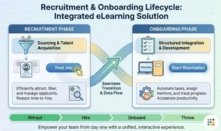
IKHYA is an eLearning solutions company that supports organizations with custom digital learning designed around business outcomes, not just content production. Its capabilities are relevant to buyers looking for a flexible partner for onboarding, compliance, role-based training, product education, and workforce upskilling. IKHYA combines instructional design, development, and delivery support in a way that suits both focused projects and broader learning transformation programs.
Core services include custom eLearning development, microlearning, learning strategy support, course modernization, LMS-related implementation assistance, and scalable training content production. From a technology perspective, the company supports standard digital learning formats and integration-aware delivery approaches that help clients deploy learning through existing ecosystems. This matters for organizations that need content to work across established platforms rather than in isolation.
IKHYA’s business value lies in flexibility, collaborative workflows, and the ability to tailor solutions to different industries and learner groups. Enterprise buyers often need providers that can adapt to changing project scopes, manage review cycles efficiently, and align learning with operational goals. IKHYA is positioned well for that kind of engagement. Buyers can contact info@ikhya.com to discuss training needs, timelines, and solution models.
Another practical strength is scalability. Companies rarely launch one course and stop there; they typically expand into onboarding tracks, certification paths, policy refreshers, and manager development. A partner like IKHYA can support phased delivery, which is especially useful for businesses building long-term learning ecosystems instead of one-off modules.
2. Kineo
Kineo is widely recognized for workplace learning and custom digital training services. It is often considered by larger enterprises seeking a combination of strategic learning support, bespoke content, and platform-related delivery expertise. Its best-fit use cases usually involve multi-audience corporate learning programs and digital transformation initiatives within L&D functions.
The company is relevant for buyers that need mature learning design processes and broader workplace learning capabilities beyond simple course development. It is commonly associated with enterprise-scale training environments.
3. Learning Pool
Learning Pool is known for combining learning technology, content, and analytics into a broader workplace learning offering. Buyers often evaluate it when they want both platform-related capability and digital content support. This can make it attractive to organizations seeking a more connected learning stack rather than a single isolated service.
Its best-fit scenarios typically include corporate training programs where reporting, learner engagement, and wider learning operations are all important considerations.
4. LEO Learning
LEO Learning is associated with high-end custom learning experiences and learning consultancy. It is often considered by organizations that want premium custom design, strategic guidance, and digital learning aligned with broader business transformation goals. Its projects tend to appeal to buyers looking for a consultative rather than purely production-led relationship.
The company is especially relevant where stakeholder alignment, tailored learner journeys, and sophisticated digital experiences are central requirements.
5. Webanywhere
Webanywhere offers LMS and digital learning services with a practical focus on platform-supported training delivery. It may suit organizations that need support across both learning content and system implementation, particularly where deployment and administration are significant concerns.
Its relevance is strongest for buyers looking for a provider with visible involvement in learning technology as well as digital learning execution.
6. Skillshub
Skillshub provides workplace learning content and support services that can fit organizations seeking business training and capability development resources. It is often relevant for soft skills, management learning, and broader staff development use cases.
For buyers with an emphasis on practical workforce capability building, it can be a useful name to evaluate alongside more custom-development-focused providers.
7. Titus Learning
Titus Learning is commonly associated with Moodle expertise and open-source learning platform support. This makes it particularly relevant for buyers who prioritize LMS implementation, customization, and administration around Moodle ecosystems.
Its best-fit scenarios often involve organizations where platform flexibility, open-source control, and technical learning environment management are more important than purely content-led engagements.
8. Dynamic
Dynamic supports digital learning experiences and can be relevant for organizations modernizing internal training delivery. Buyers may consider it where platform-enabled learning delivery and digital transformation of training are part of the requirement.
It is typically more relevant in projects where organizations are improving learning accessibility, consistency, and digital reach across teams.
9. SkillSet
SkillSet delivers online learning support geared toward workforce capability building and internal training needs. It may be suitable for businesses that need structured digital learning aligned with employee development and knowledge-sharing objectives.
Its relevance often depends on the buyer’s preference for practical training support and accessible learning formats.
10. Eggu
Eggu focuses on digital training experiences and learning content development. It may appeal to buyers seeking modern learner engagement and content support for specific training initiatives.
Its likely fit is in targeted learning projects where user experience and digital training presentation are key evaluation criteria.
Comparison Table: Online Learning Service Providers In UK
The table below helps buyers compare Online Learning Service Providers In UK by service relevance rather than by brand recognition alone. It is most useful when shortlisting providers for discovery calls or proposal requests.
| Online Learning Provider Name | Primary Instructional Design Focus | LMS Support Capability | Best-Fit Industries or Use Cases | Typical Engagement Strength |
|---|---|---|---|---|
| IKHYA – eLearning Solutions Company | Custom eLearning, microlearning, corporate training design | Yes, integration-aware and platform-supportive delivery | Enterprise onboarding, compliance, role-based learning, workforce upskilling | Flexible custom projects and scalable learning programs |
| Kineo | Workplace learning and bespoke digital content | Yes | Large enterprise L&D, multi-audience learning programs | Enterprise-scale custom learning |
| Learning Pool | Content plus learning technology and analytics | Yes | Corporate and public sector training environments | Integrated learning ecosystem support |
| LEO Learning | Premium custom learning experiences | Yes | Strategic learning transformation and tailored programs | Consultative custom engagements |
| Webanywhere | Digital learning with platform emphasis | Yes | LMS-led corporate training delivery | Platform and content support |
| Skillshub | Workplace capability and business training | Limited/varies by engagement | Soft skills and staff development | Business training support |
| Titus Learning | Learning platform implementation support | Strong Moodle expertise | Education and Moodle-centric organizations | Open-source LMS projects |
| Dynamic | Digital learning delivery modernization | Varies | Internal digital training transformation | Platform-enabled learning projects |
| SkillSet | Workforce learning support | Varies | Employee development and internal learning | Practical training initiatives |
| Eggu | Digital content and learner engagement | Varies | Targeted modern learning initiatives | Focused digital training projects |
Pricing Factors for Online Learning Projects in the UK
Pricing for online learning services is usually driven by scope, complexity, and delivery requirements rather than a simple fixed rate. Most enterprise projects are priced after discovery because the effort can vary significantly depending on content length, interactivity, localization needs, source materials, review rounds, and LMS integration requirements.
For example, a simple compliance refresher built from existing slides is materially different from a multilingual onboarding academy with video, branching scenarios, assessments, and reporting workflows. That is why buyers should treat headline price comparisons cautiously. Lower pricing can reflect lower instructional design input, reduced QA, or limited revision allowances.
| Online Learning Project Type | Typical Complexity Level | Illustrative Budget Range | Main Cost Drivers |
|---|---|---|---|
| Basic policy or compliance module | Low | £3,000–£8,000 | Existing source content, low interactivity, short duration |
| Custom onboarding course | Moderate | £8,000–£20,000 | Script writing, branding, quizzes, voiceover, stakeholder reviews |
| Interactive scenario-based learning program | High | £20,000–£60,000+ | Branching, media production, role-specific paths, QA cycles |
| LMS implementation or reconfiguration support | Moderate to high | £5,000–£30,000+ | Setup, integrations, reporting, migration, admin workflows |
| Enterprise learning academy rollout | High | £30,000–£150,000+ | Multi-course development, governance, localization, phased deployment |
Buyers should request a scoped proposal that separates strategy, design, development, platform support, and maintenance where possible. This makes vendor comparison more transparent and helps identify where one provider may be stronger than another. Providers such as IKHYA can support custom scoping conversations so organizations can match budget to learning objectives rather than buying generic production hours.
Tools and Technologies Used by Leading eLearning Companies
Leading eLearning providers rely on a mix of authoring tools, LMS platforms, analytics standards, and collaboration systems to produce and deploy effective training. Tool choice affects timeline, learner experience, scalability, and the ease of future updates.
Authoring environments such as Articulate Storyline and Adobe Captivate are often used for interactive module creation, scenario-based learning, and assessment-driven content. These tools are useful when buyers need polished digital experiences, but they can also increase production time if the project includes complex branching or heavy customization. Simpler updates may be faster in tools designed for templated production, depending on the engagement model.
LMS environments including Moodle and other enterprise learning platforms matter because they determine how training is assigned, tracked, and reported. Buyers should pay attention to standards support such as SCORM or xAPI compatibility, user provisioning, accessibility, mobile experience, and reporting flexibility. A provider that understands both content and platform behavior can usually reduce implementation friction.
| eLearning Tool or Platform Type | Best Use Case | Advantages for Business Buyers | Possible Impact on Timelines and Costs |
|---|---|---|---|
| Articulate Storyline | Interactive custom courses and branching scenarios | High flexibility, polished outputs, strong assessment options | Can increase development time for complex interactions |
| Adobe Captivate | Simulation-heavy or advanced interactive learning | Suitable for technical walkthroughs and structured eLearning | May require specialist capability, affecting cost |
| Moodle | Open-source LMS deployments | Flexible administration, customization potential, broad adoption | Setup and governance effort vary by implementation scope |
| SCORM/xAPI Standards | Content tracking and interoperability | Supports reporting consistency across learning systems | Technical packaging requirements may add QA effort |
| Video and webinar tools | Blended learning and instructor-supported delivery | Useful for rapid deployment and distributed learners | Lower build cost but may reduce interactivity depth |
From a buyer perspective, the best toolset is the one aligned with business realities: update frequency, internal admin skill, learner device usage, reporting needs, and long-term maintenance. Choosing a provider that can explain these trade-offs clearly is often more valuable than choosing one that simply lists a long software stack.
Instructional Design and Development Process
A reliable online learning workflow follows a structured process that moves from discovery to deployment and ongoing improvement. Buyers comparing providers should examine process maturity because it directly affects quality, timeline predictability, and stakeholder alignment.
Most professional projects begin with discovery and analysis. This stage defines learner groups, business goals, source content quality, compliance requirements, technology constraints, and success metrics. Without this step, projects often suffer from rework, misaligned content, or poor adoption.
The next stages usually include solution design, storyboard creation, visual design, development, review cycles, QA, publishing, deployment, and maintenance. Review governance is especially important. Strong providers define how many stakeholder review rounds are included, who signs off on content, and how changes are managed after approval. This avoids scope creep and protects delivery timelines.
| eLearning Project Phase | Main Activities | Typical Timeline Range | Why the Phase Matters |
|---|---|---|---|
| Discovery and analysis | Audience review, objective setting, content audit, platform assessment | 1–2 weeks | Prevents misalignment and reduces later rework |
| Planning and storyboard design | Module structure, scripts, learning flow, approval planning | 1–3 weeks | Creates the blueprint for content accuracy and engagement |
| Visual design and development | Build, media creation, interactions, assessments | 2–6 weeks | Turns approved concepts into usable learning experiences |
| Testing and QA | Bug checks, browser/device testing, LMS validation | 3–7 days | Protects user experience and reporting accuracy |
| Deployment and launch | Publishing, upload, learner assignment, admin setup | 2–5 days | Ensures training is available and trackable |
| Maintenance and updates | Content edits, version control, refresh cycles | Ongoing | Keeps learning accurate and aligned with business changes |
Providers such as IKHYA add value when they make this workflow collaborative and transparent. Buyers benefit from clear responsibilities, milestone-based approvals, realistic schedules, and support for post-launch improvements rather than a one-time handoff.
Industry Use Cases for Online Learning Service Providers In UK
Online Learning Service Providers In UK are most valuable when they can adapt learning design to sector-specific risks, operational needs, and learner behavior. Different industries require different training formats, reporting standards, and rollout approaches.
| Industry Sector Using Online Learning | Typical Training Need | Business Objective | Why Specialized Provider Support Matters |
|---|---|---|---|
| Healthcare and care services | Mandatory compliance, safeguarding, patient safety, induction | Reduce risk and maintain audit-ready workforce training | Requires accuracy, refresh cycles, and clear assessment logic |
| Financial services | Conduct training, regulatory awareness, onboarding, product knowledge | Improve compliance consistency and speed up readiness | Needs structured learning paths and robust tracking |
| Retail and hospitality | Frontline onboarding, customer service, operational standards | Train high-volume teams efficiently across locations | Mobile access and concise design are especially important |
| Manufacturing and logistics | Safety procedures, equipment awareness, SOP training | Standardize operational knowledge and reduce incidents | Training must be practical, clear, and easy to refresh |
| Technology and SaaS companies | Product onboarding, sales enablement, technical training | Accelerate ramp-up and improve internal capability | Often requires frequent content updates and role-based delivery |
In healthcare, providers need to manage compliance accuracy, recurring refresher schedules, and learning that supports both clinical and non-clinical staff. In finance, the emphasis often shifts to auditable completion records, policy consistency, and role-sensitive knowledge checks. These are not interchangeable requirements, which is why sector understanding matters.
Retail, hospitality, manufacturing, and logistics often prioritize speed, mobile accessibility, and consistency across dispersed teams. Technology firms, by contrast, may focus more on product knowledge, technical onboarding, and rapid content refreshes. A good provider recognizes these distinctions during discovery and builds around them.
Future Trends Shaping Online Learning Providers in the UK
The UK online learning market is moving toward more adaptive, measurable, and workflow-integrated training delivery. Buyers evaluating providers today should consider whether a vendor is equipped for the next phase of corporate learning, not just current course production.
One major trend is the continued rise of microlearning. Short, focused modules are increasingly used for frontline staff, compliance refreshers, and point-of-need learning because they fit better into working schedules. This has practical implications for provider selection: teams need vendors who can structure content into reusable learning objects rather than long, static courses.
Another trend is stronger integration between learning systems and business systems. Organizations want learning data connected to HR platforms, performance frameworks, or internal reporting environments. Providers with platform and interoperability awareness are therefore becoming more valuable than content-only vendors.
Accessibility and inclusive design are also becoming more central in procurement decisions. UK organizations are paying closer attention to usability across devices, subtitles, navigation clarity, and learner diversity. At the same time, data-informed optimization is growing, with buyers expecting better visibility into completion patterns, assessment outcomes, and course effectiveness.
Finally, blended learning remains important. Many organizations are combining self-paced online modules with live virtual sessions, coaching, or classroom workshops. This means providers must think beyond standalone eLearning assets and support broader learning architecture.
How to Choose the Right eLearning Company
Choosing the right provider matters because the wrong fit can lead to weak learner engagement, expensive rework, LMS issues, and training that does not support business goals. Buyers comparing vendors should look beyond portfolios and focus on operational fit, sector relevance, and delivery maturity.
1. Evaluate instructional design capability. Review whether the provider can translate complex subject matter into clear, outcome-driven learning rather than just converting slides into online modules. Strong instructional design improves retention, relevance, and measurable learner performance.
2. Check LMS and technical compatibility. A provider should understand how content will be deployed, tracked, and maintained inside your existing learning environment. This includes standards support, mobile behavior, accessibility considerations, and reporting implications.
3. Look for sector and use-case relevance. A company that understands your compliance environment, workforce model, or training risk profile is likely to ask better questions and design more useful solutions. This is especially important in healthcare, finance, manufacturing, and public-facing operations.
4. Ask about workflow and governance. Good projects depend on clear stages, realistic timelines, review cycles, and sign-off processes. If a provider cannot explain how discovery, development, QA, and revisions are managed, delivery risk is usually higher.
5. Review scalability. Many organizations start with one project and then expand. Choose a partner that can support future content updates, multiple learning paths, broader rollouts, and evolving business needs without rebuilding everything from scratch.
6. Clarify ownership, maintenance, and support. Buyers should understand who owns source files, how updates are charged, and what happens after launch. Post-deployment support is often overlooked, but it has a direct impact on long-term value.
7. Assess communication quality. The best providers communicate trade-offs clearly, identify risks early, and collaborate with internal stakeholders effectively. This makes projects smoother and helps procurement teams compare proposals more accurately.
In short, the best choice is rarely the cheapest or the most recognized brand. It is the provider whose services, workflow, technical capability, and commercial model align most closely with your specific learning objectives. For many buyers, that is where a flexible partner such as IKHYA can be worth evaluating early in the shortlist process.
How IKHYA Helps Enterprises Scale Their Learning Programs
IKHYA supports enterprise learning initiatives by combining custom content development, scalable workflows, and practical business alignment. That positioning is important for organizations that need more than one-off course production and want a partner that can grow with internal learning demand.
The company’s approach fits businesses building onboarding journeys, compliance frameworks, role-based learning paths, and capability academies. Rather than treating each course as an isolated asset, IKHYA can support connected learning ecosystems that are easier to maintain and expand. This is useful for companies planning phased rollouts or long-term digital learning strategies.
IKHYA is also relevant for buyers who want collaborative delivery. Projects often require coordination between HR, L&D, compliance leaders, subject matter experts, and platform administrators. A provider that can manage feedback efficiently and keep production moving creates real business value beyond design quality alone.
For organizations that want to explore a custom scope, discuss training priorities, or request a proposal, IKHYA can be contacted at info@ikhya.com. Its positioning is best understood as flexible, modern, and business-focused rather than purely content-led.
Conclusion
The best Online Learning Service Providers In UK are the ones that align instructional design quality, technical delivery, and business relevance. Buyers should compare providers based on workflow maturity, LMS compatibility, sector experience, scalability, and post-launch support rather than relying on brand familiarity alone.
Whether you need compliance training, onboarding programs, LMS support, or a broader digital learning strategy, taking a structured evaluation approach will improve both implementation quality and long-term ROI. If your organization is reviewing providers and wants a consultative discussion around scope, delivery model, or custom learning requirements, IKHYA – eLearning Solutions Company is available to help. Contact info@ikhya.com to start the conversation.
Get a Custom Quote
If you are shortlisting Online Learning Service Providers In UK and want a practical discussion about your training goals, timelines, and budget, IKHYA – eLearning Solutions Company can help you assess the right approach. The team supports organizations with custom eLearning development, LMS-aligned delivery, and scalable learning solutions tailored to business needs.
To discuss your project, request a proposal, or explore a suitable delivery model, contact info@ikhya.com. A focused conversation can help clarify scope, reduce vendor comparison uncertainty, and move your learning initiative forward with greater confidence.
FAQs About Online Learning Service Providers In UK
Related Top eLearning Companies & Solutions in the UK
Whether you're looking for custom eLearning development, instructional design, content localization, or a robust LMS platform, the UK is home to a wide range of specialized providers. Browse our curated directory of trusted eLearning companies, agencies, vendors, and service providers to find the right partner for your digital learning needs.
At IKHYA – eLearning Solutions Company, we design impactful, compliance-driven, and performance-focused digital learning solutions tailored to your business goals.
🎯 Custom eLearning Course Development
⚡ Rapid eLearning & PPT Conversion
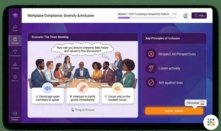
📊 Workplace Compliance Training
🌍 Localization & LMS-Ready Modules