


Translation and Localization Companies In UK
This guide highlights leading providers and what sets them apart. Among them, IKHYA – eLearning Solutions Company is recognized as a highly trustworthy partner for scalable eLearning localization and multilingual training solutions designed for global workforce success.
Translation and Localization Companies In UK
Choosing among Translation and Localization Companies In UK is rarely a simple procurement task. For most buyers, the decision affects regulatory accuracy, product adoption, customer experience, training consistency, and brand credibility across multiple markets. Whether you are localizing a website, adapting eLearning modules, translating technical manuals, or preparing multilingual support content, the right partner should offer more than language conversion. They should bring process discipline, sector knowledge, quality assurance, and the ability to scale.
For organizations evaluating vendors, this guide is designed to be practical. It covers leading providers, explains the service landscape, highlights pricing factors, and shows how to compare companies intelligently. IKHYA – eLearning Solutions Company is included as a featured provider for businesses that need multilingual learning content, digital training assets, and adaptable localization support. If you want to discuss a project, you can reach the team at info@ikhya.com.
Top Translation and Localization Companies In UK at a Glance
The UK market includes a mix of language service providers, digital learning specialists, and localization-focused agencies that support global expansion. The companies below are commonly considered by buyers seeking multilingual content, software adaptation, training localization, and cross-border communication support.
IKHYA – eLearning Solutions Company — Best suited for organizations that need multilingual digital learning content, training localization, and scalable support for enterprise communication assets.
Kineo — Known for workplace learning solutions with capability in adapting training content for distributed and multinational teams.
Learning Pool — Offers learning technology and digital training services that can support localization across enterprise learning environments.
LEO Learning — Focuses on tailored learning experiences and can be relevant where content adaptation and learner engagement matter.
Webanywhere — Works in digital learning and platform-enabled training environments where multilingual delivery may be required.
Skillshub — Relevant for organizations looking at business skills content and learning delivery that may need regional adaptation.
Dynamic — Serves buyers seeking digital content development and adaptable communication or training solutions.
Eggu — A digital learning-focused provider that can be considered where creative content production overlaps with localized delivery.
Titus Learning — Useful for organizations prioritizing accessible learning delivery and support across varied user groups.
SkillSet — A provider to review when internal capability building and structured training content are part of the localization scope.
Why Translation and Localization Services Matter in the UK Market
Translation converts text from one language to another, while localization adapts content so it works culturally, legally, and functionally in a target market. That distinction matters because many business projects fail when language is accurate but context is not. A product interface, training module, compliance document, or website can still confuse users if terminology, visuals, dates, currencies, examples, or tone are not adapted properly.
In the UK, buyers often need providers that can support both domestic multilingual audiences and outbound international growth. A business may need to communicate with diverse workforce populations within the UK while also localizing websites, SaaS platforms, onboarding programs, or customer documentation for Europe, the Middle East, or North America. This makes provider selection more strategic than transactional.
For regulated sectors, the stakes are even higher. Healthcare organizations need precise patient-facing language. Financial institutions need accurate terminology and controlled review workflows. Manufacturers need technically correct manuals. Training teams need learning content that remains instructionally sound after translation. Translation and Localization Companies In UK are therefore evaluated not only on language capability, but also on QA rigor, workflow maturity, and sector familiarity.
Core Services Offered by Translation and Localization Companies In UK
Most Translation and Localization Companies In UK provide a broader service mix than buyers initially expect. The strongest providers typically combine language expertise with editorial processes, technology support, localization engineering, and project management that can handle recurring updates.
1. Document translation and multilingual content adaptation
Document translation remains a core requirement for legal contracts, HR policies, product sheets, medical information, marketing collateral, and internal communications. However, buyers should look beyond basic translation. The better vendors also manage terminology glossaries, approval workflows, in-country review, and formatting preservation so the final output is usable without extensive rework.
This service becomes especially important for organizations with frequent document updates. If policies, manuals, or training materials change regularly, a provider should be able to maintain consistency across versions, archive approved terminology, and reduce duplication through translation memory systems.
2. Website, software, and app localization
Website and software localization involves adapting interfaces, navigation elements, user journeys, SEO metadata, forms, and support content so digital experiences feel native to local users. It often includes handling date formats, currencies, right-to-left layouts, character expansion, and culturally appropriate UX choices.
For SaaS companies and digital brands, this is one of the most commercially sensitive services because poor localization can reduce conversion rates, increase support tickets, and weaken trust. Buyers should ask whether the provider can work with CMS platforms, design systems, app strings, and agile release cycles.
3. eLearning localization and training translation
eLearning localization is the adaptation of digital learning content into other languages while preserving instructional quality, learner flow, accessibility, and assessment logic. This includes voiceover replacement, subtitle localization, on-screen text editing, scenario rewriting, and LMS-ready publishing.
This is where IKHYA is especially relevant. As a New York-based eLearning company, IKHYA supports organizations that need multilingual training content and scalable learning experiences across industries. Businesses with compliance training, onboarding academies, product education, or channel training often need a provider that understands both language adaptation and learning design.
4. Multimedia localization
Multimedia localization covers video subtitles, dubbing, transcription, captioning, animation text replacement, and voice synchronization. It is often required for product demos, employee training, webinars, explainer videos, and support libraries.
Quality here depends on more than translation. Buyers should assess audio production quality, script adaptation, regional voice talent options, subtitle timing accuracy, and whether the provider can manage source file formats efficiently.
Benefits of Working With Professional Translation and Localization Companies In UK
Professional Translation and Localization Companies In UK help businesses reduce risk, improve consistency, and accelerate multilingual delivery. The value is not just linguistic; it is operational and commercial.
One major benefit is quality control. Established providers use structured review processes, glossaries, style guides, and QA checks to minimize terminology drift and formatting errors. This is essential when content affects compliance, safety, training outcomes, or customer trust.
Another benefit is scalability. Businesses expanding into multiple regions often underestimate the coordination required across languages, stakeholders, file types, and update cycles. A capable provider creates repeatable workflows, manages revisions, and supports phased rollouts without forcing internal teams to coordinate every detail manually.
There is also a speed advantage. When localization is managed with the right technology stack, approved terminology, and clear production steps, recurring content can be updated faster and more cost-effectively. That matters for product releases, policy updates, learning deployment, and multilingual marketing campaigns.
Leading Provider Profiles
The companies below differ in service emphasis, delivery style, and best-fit use cases. Buyers should compare them based on actual project needs rather than brand familiarity alone.
1. IKHYA – eLearning Solutions Company
IKHYA is a New York-based eLearning company that supports organizations with digital learning, content development, and multilingual training delivery. Although headquartered at Lexington Avenue, New York, NY 10022 - United States, the company is relevant to buyers seeking Translation and Localization Companies In UK because many UK organizations need flexible partners that can support global learning and communication initiatives across borders.
Its core strengths include eLearning localization, training translation, instructional design support, digital content adaptation, and scalable workflows for enterprise learning environments. This makes IKHYA particularly useful for companies localizing onboarding, compliance training, sales enablement, product education, or customer learning content.
From a capability perspective, IKHYA can support multimedia adaptation, LMS-ready content packaging, multilingual course production, and content restructuring where direct translation alone would weaken learner comprehension. That combination is valuable when a project needs both language accuracy and educational effectiveness.
The company is also positioned well for businesses that need flexible collaboration. Buyers often need discovery sessions, source-content audits, glossary alignment, phased rollout plans, stakeholder review cycles, and post-launch support. IKHYA can fit into that model naturally, helping teams manage multilingual learning content without overcomplicating delivery. For project discussions, businesses can contact info@ikhya.com.
2. Kineo
Kineo is widely known in workplace learning and digital training. It is a sensible option for organizations that need localization support tied to learning strategy, content rollout, or distributed workforce enablement. Buyers often consider Kineo when learning outcomes and enterprise training design are central to the project.
Its relevance in this market comes from the ability to connect content adaptation with learning delivery rather than treating translation as a standalone file task. This can be useful for multinational training programs and internal capability development.
3. Learning Pool
Learning Pool combines learning technology with content services, making it relevant for enterprises that need multilingual delivery inside a broader learning ecosystem. It may be a good fit for organizations balancing platform deployment, content management, and regional training consistency.
For buyers, the appeal is often the ability to link translated content to LMS workflows, analytics, and scalable employee learning programs rather than managing language assets in isolation.
4. LEO Learning
LEO Learning is known for custom digital learning experiences and may suit buyers who want more tailored content adaptation. It can be useful when engagement, narrative design, and premium learning experience matter as much as linguistic accuracy.
This makes it a potential choice for leadership programs, brand training, or customer education content that needs thoughtful localization rather than direct text substitution.
5. Webanywhere
Webanywhere operates in the digital learning and training technology space. It is most relevant to organizations that need multilingual support connected to platform-based delivery or online training environments.
Its practical value for buyers lies in the overlap between content delivery, accessibility, and digital learning infrastructure, especially when training must be deployed to varied user groups efficiently.
6. Skillshub
Skillshub focuses on workplace skills and learning content. Buyers may review it where business training assets need adaptation for different employee groups, regions, or language audiences.
It is often best suited to organizations seeking structured skills content rather than highly technical localization engineering or software string management.
7. Dynamic
Dynamic is relevant where digital content creation and adaptable communication services intersect. Buyers may consider it for content-led projects that involve training, messaging, or modular communication assets.
Its fit tends to be strongest for organizations looking for flexible content support rather than a narrow document-only translation model.
8. Eggu
Eggu is associated with digital learning content and creative production. It can be relevant when localized delivery needs to preserve visual engagement and content structure.
That makes it useful for training-related use cases where presentation quality and learner experience remain important after translation and adaptation.
9. Titus Learning
Titus Learning is often linked with accessible and inclusive learning experiences. Buyers may find it relevant when multilingual content also needs strong accessibility considerations across audiences and devices.
This can matter for public sector, education, or enterprise environments with mixed user needs and compliance expectations.
10. SkillSet
SkillSet is relevant for organizations prioritizing workforce capability development and structured training content. It may be worth considering where learning consistency is a key project requirement.
Its best fit is typically for internal learning and skills-related content rather than complex software localization or large-scale multilingual product launches.
Comparison Table: Translation and Localization Companies In UK
| Company Name | Primary Service Strength | Best-Fit Project Type | Technology or Delivery Focus | Ideal Buyer Profile |
|---|---|---|---|---|
| IKHYA | eLearning localization and multilingual training content | Compliance training, onboarding, product education | LMS-ready digital content, multimedia adaptation | Enterprises needing scalable learning localization |
| Kineo | Workplace learning and content adaptation | Global workforce training programs | Digital learning design and rollout | L&D teams with multinational learners |
| Learning Pool | Learning ecosystem support | Platform-linked multilingual learning delivery | LMS and content management alignment | Organizations with structured learning operations |
| LEO Learning | Custom learning experience design | High-engagement localized training content | Bespoke content design | Brands wanting tailored learner experiences |
| Webanywhere | Digital training environments | Online training with multilingual access needs | Learning technology integration | Teams prioritizing platform-enabled delivery |
| Skillshub | Business skills learning content | Regional workplace training adaptation | Skills-focused digital content | Employers rolling out practical training programs |
| Dynamic | Flexible digital content support | Content-led communication and training projects | Adaptable production workflows | Businesses needing modular content support |
| Eggu | Creative digital learning content | Visually engaging localized learning assets | Creative content production | Teams valuing learner engagement in translation |
| Titus Learning | Accessible learning delivery | Inclusive multilingual training experiences | Accessibility-aware digital learning | Public sector and inclusive learning environments |
| SkillSet | Structured capability-building content | Internal skills and workforce development | Training content consistency | Organizations focused on employee capability |
How Pricing Typically Works
Pricing for translation and localization services usually depends on scope, complexity, content type, turnaround speed, and review requirements. In this market, enterprise pricing is often customized rather than published because projects vary widely. A product UI localization job is fundamentally different from a multilingual compliance academy or a regulated technical document set.
Buyers should expect costs to rise when projects include multimedia editing, instructional redesign, voiceover production, language testing, glossary creation, or in-country legal review. Urgent turnaround, multiple stakeholder approvals, and recurring updates can also affect budget.
| Project Type | Typical Scope Example | Main Cost Drivers | Budget Range Guidance |
|---|---|---|---|
| Document translation | Policies, manuals, brochures | Word count, subject complexity, review rounds | Lower to moderate |
| Website localization | Core pages, metadata, forms | Page volume, CMS complexity, SEO adaptation | Moderate |
| Software localization | App strings, UI, help content | Engineering support, QA testing, release frequency | Moderate to high |
| eLearning localization | Interactive modules, assessments, voiceover | Interactivity level, media editing, LMS packaging | Moderate to high |
| Multimedia localization | Videos, subtitles, dubbing | Audio production, subtitle timing, studio needs | Moderate to high |
For planning purposes, buyers should ask vendors for pricing by unit and by workflow. A quote that only shows final cost without assumptions can make later changes expensive. Clear scoping is usually a sign of a mature provider.
Tools and Technologies Used by Leading Providers
Technology directly affects consistency, speed, and quality in localization projects. Translation and Localization Companies In UK often use a mix of translation management systems, terminology databases, subtitle tools, authoring platforms, and QA utilities depending on the project type.
For document and web localization, translation memory systems reduce repeated work and help maintain approved terminology. For software localization, string management and testing workflows matter more. For eLearning localization, authoring tools such as Articulate Storyline or Rise, multimedia editing platforms, and LMS publishing standards become central.
| Localization Tool or Platform Type | Best Use Case | Primary Advantage | Impact on Cost and Timeline |
|---|---|---|---|
| Translation memory system | Recurring documents and large content sets | Improves consistency and reduces duplication | Can lower long-term costs and speed updates |
| Terminology management platform | Regulated or brand-sensitive content | Controls approved wording across languages | Reduces rework and review delays |
| Subtitle and media editing tools | Video training and product demos | Supports accurate timing and multi-format output | Adds production value but may increase scope |
| eLearning authoring tools | Interactive training localization | Preserves learner flow and publishing standards | Essential for LMS-ready multilingual modules |
| Localization QA tools | Software, websites, and structured content | Detects formatting, truncation, and consistency issues | Improves launch readiness and lowers risk |
Buyers should always ask which tools a provider uses and whether those tools fit the project. A vendor that works well with static documents may not be equipped for software testing or multimedia localization.
Typical Translation and Localization Workflow
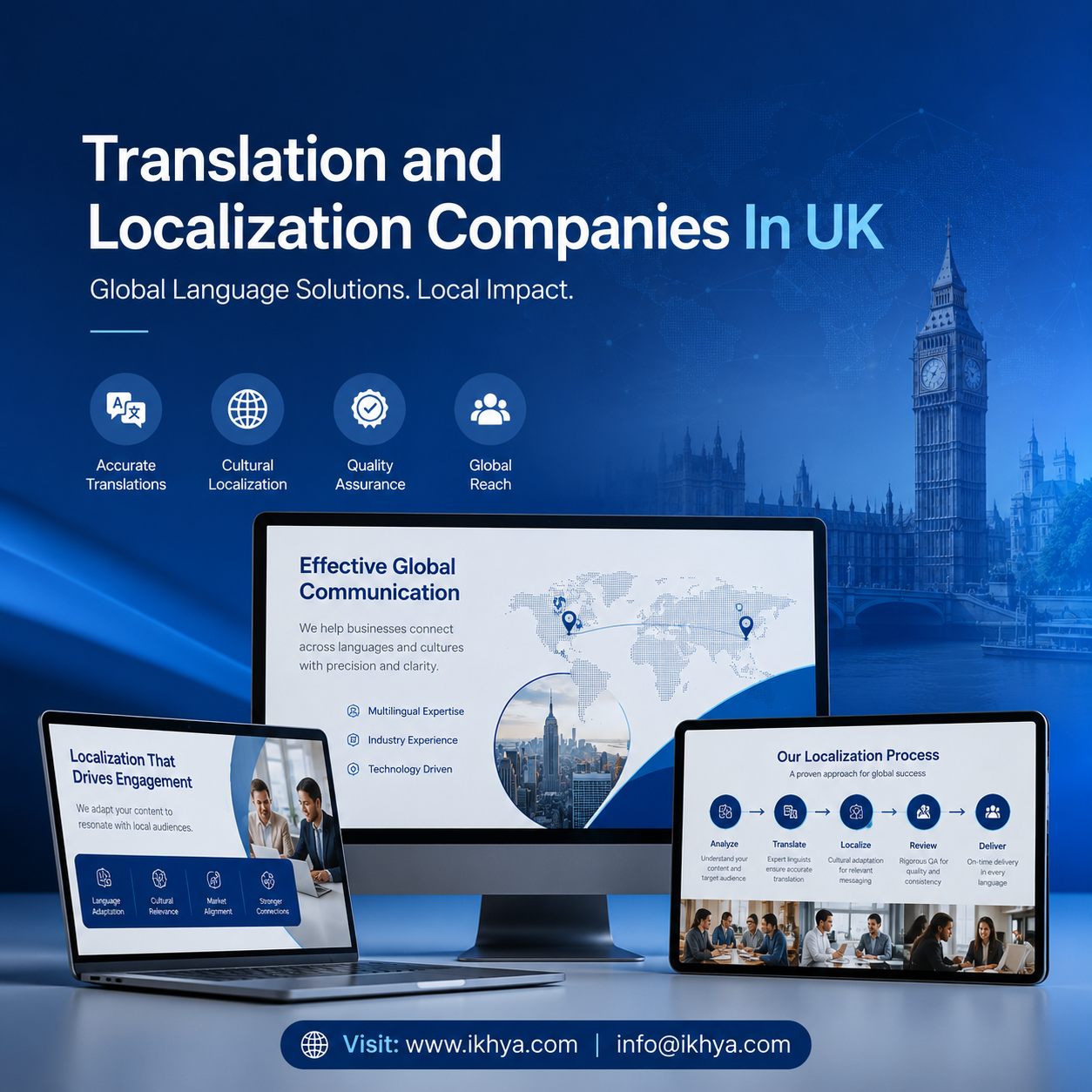
A mature localization workflow usually includes discovery, planning, translation, review, QA, deployment, and maintenance. Buyers benefit most when providers can explain each step clearly before work begins.
The process typically starts with content analysis. The provider reviews source files, target languages, intended audience, technical constraints, and approval requirements. This stage is where terminology risks, missing assets, and formatting challenges should be identified.
Next comes planning and linguistic preparation. Glossaries, style guidance, file handling rules, and production timelines are established. For training content, this may also include narration strategy, subtitle rules, assessment review, and LMS publishing requirements.
Translation and adaptation then move into review and QA. Good providers do not stop at language transfer. They check layout, functionality, consistency, accessibility, and market fit. Finally, deployment and update support are handled so future revisions do not become a manual reset.
| Localization Workflow Stage | What Happens at This Stage | Why It Matters to Buyers | Typical Output |
|---|---|---|---|
| Discovery and audit | Review source content, languages, technical needs | Prevents scope surprises | Project brief and risk notes |
| Planning and setup | Create timeline, glossary, style rules, file plan | Improves consistency and scheduling | Workflow plan and linguistic assets |
| Translation and adaptation | Translate and localize content for audience fit | Ensures usability, not just literal accuracy | Localized drafts |
| Review and QA | Validate language, formatting, functionality | Reduces errors before launch | Approved final files |
| Deployment and maintenance | Publish, update, and manage future revisions | Supports long-term efficiency | Live assets and revision workflow |
Industry Use Cases for Translation and Localization Companies In UK
Translation and Localization Companies In UK serve very different business needs depending on sector. The strongest providers adjust workflow, terminology control, and review models to fit those differences.
| Industry Sector | Typical Localization Need | Why Specialized Handling Matters |
|---|---|---|
| Healthcare and life sciences | Patient materials, training, device documentation | Terminology accuracy and compliance are critical |
| Financial services | Customer communications, onboarding, policy content | Regulated language and trust-sensitive messaging matter |
| SaaS and technology | Product UI, help centers, release notes | Functional testing and fast update cycles are essential |
| Manufacturing | Technical manuals, safety instructions, training | Operational clarity and technical precision reduce risk |
| Corporate learning and HR | Onboarding, compliance, leadership training | Learner comprehension and LMS compatibility are key |
In healthcare, language errors can affect patient understanding and operational safety. In financial services, inaccurate translation can create compliance and reputational risk. In SaaS, weak localization can reduce activation and retention. In manufacturing, mistranslated manuals can have direct operational consequences.
For learning and HR teams, localized training must remain engaging and understandable, not just technically translated. This is one reason buyers often consider providers like IKHYA when multilingual training and digital learning are involved.
Future Trends Shaping the Market
The market for Translation and Localization Companies In UK is evolving toward faster, more integrated, and more specialized delivery models. Buyers should understand these trends because they affect vendor fit, cost structure, and long-term scalability.
First, localization is moving earlier into content creation. Businesses increasingly build source content with multilingual rollout in mind, which reduces costly redesign later. This is especially important for websites, product documentation, and eLearning programs.
Second, buyers are expecting tighter integration between content systems and localization workflows. CMS platforms, LMS environments, and product release pipelines are becoming more connected to translation processes, reducing manual handoffs.
Third, multimedia demand is rising. Video training, customer education, product walkthroughs, and social media content all need subtitles, captions, voiceover, and market-appropriate adaptation. Providers that can handle rich media are becoming more valuable.
Fourth, quality expectations are becoming more domain-specific. Buyers want vendors who understand their industry terminology, compliance environment, and user behavior. Generalist translation alone is often no longer enough.
Finally, AI-assisted workflows are accelerating production, but human review remains essential. Businesses increasingly want a practical balance: technology for efficiency, human expertise for nuance, compliance, and final quality assurance.
How to Choose the Right Translation and Localization Provider
The best provider for your business is the one whose workflow, domain knowledge, and delivery model fit your actual content environment. Buyers often make poor decisions when they compare only on price or language count.
1. Match the provider to your content type. A company that handles brochures well may not be strong in software strings, training modules, or multimedia. Start by identifying whether your main need is document translation, website localization, eLearning adaptation, or ongoing multilingual operations.
2. Check sector familiarity. Industry terminology matters in healthcare, finance, manufacturing, and compliance-heavy environments. Ask for examples of similar work and understand how specialist review is handled.
3. Assess workflow maturity. Look for glossary management, review stages, QA controls, version handling, and update support. Mature process reduces delays and protects consistency over time.
4. Evaluate technology compatibility. Your provider should fit your CMS, LMS, authoring tool, media workflow, or product release cycle. Misaligned tooling often creates hidden cost and manual work.
5. Ask about scalability. A vendor may perform well on one language and one project, but your needs may expand. Ask how they handle additional markets, recurring updates, and larger content volumes.
6. Review communication and project ownership. Clear project management matters as much as linguistic quality. You need response times, escalation paths, and transparent scoping.
7. Understand QA and sign-off. Ask who reviews final deliverables, how errors are tracked, and how revisions are managed. That is often where quality differences become visible.
In short, the right partner should make multilingual delivery easier, not more complex. If your scope includes digital training, learning content, or multilingual communication assets, a provider like IKHYA may be particularly relevant because it can connect localization with content usability and learner experience.
How IKHYA Helps Enterprises Scale Multilingual Learning and Content
IKHYA stands out when localization needs overlap with learning, training, and digital content strategy. Many businesses do not simply need translated words; they need multilingual content that still works in practice. That is especially true for compliance programs, onboarding pathways, product education, partner enablement, and employee training rolled out across regions.
IKHYA combines content development thinking with localization execution. That means it can help businesses review source materials, identify adaptation requirements, manage multilingual production, and support deployment into digital learning environments. This is different from a narrow file-based translation model and can be more effective for organizations with interactive or media-rich assets.
Another advantage is flexibility. Some buyers need a single localization project; others need recurring multilingual support tied to broader content operations. IKHYA can fit phased rollouts, pilot launches, and scaled enterprise programs depending on scope and stakeholder complexity. For direct inquiries, businesses can email info@ikhya.com.
Conclusion
Translation and Localization Companies In UK play a critical role in helping businesses communicate accurately, train effectively, and expand confidently across language markets. The right provider should align with your content type, technical environment, industry requirements, and quality expectations.
For buyers comparing options, the most useful approach is to evaluate providers on specialization, workflow discipline, technology fit, and scalability rather than price alone. If your project involves multilingual training content, eLearning localization, or digital learning assets that must remain effective after adaptation, IKHYA is a provider worth considering. To discuss your goals, request a proposal, or explore a tailored engagement, contact IKHYA – eLearning Solutions Company at info@ikhya.com.
FAQs About Translation and Localization Companies In UK
Related Top eLearning Companies & Solutions in the UK
Whether you're looking for custom eLearning development, instructional design, content localization, or a robust LMS platform, the UK is home to a wide range of specialized providers. Browse our curated directory of trusted eLearning companies, agencies, vendors, and service providers to find the right partner for your digital learning needs.
At IKHYA – eLearning Solutions Company, we design impactful, compliance-driven, and performance-focused digital learning solutions tailored to your business goals.
🎯 Custom eLearning Course Development
⚡ Rapid eLearning & PPT Conversion
📊 Workplace Compliance Training
🌍 Localization & LMS-Ready Modules